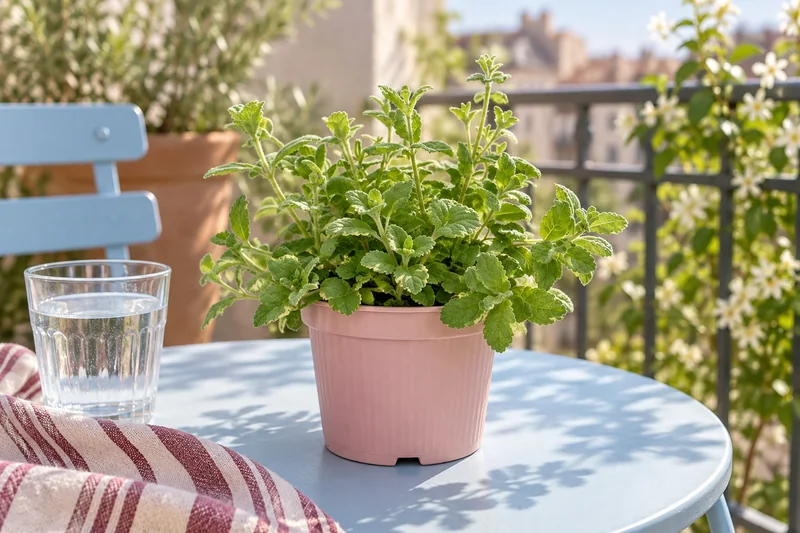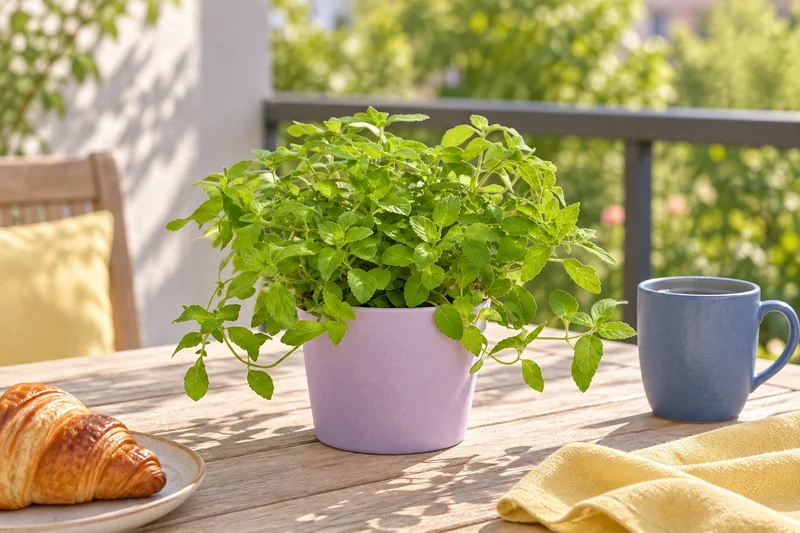
This plant at Exotenherz
Check the shop offer for current availability, price and what is included.
Check the selected shop offer for price, availability and delivery contents.
Your care table
| Topic | What to do | Why it helps |
|---|---|---|
| Light | Choose sun to partial shade and accustom gradually after transport. | Water use rises quickly in small pots in heat. |
| Water | Keep each root ball reliably slightly moist and water thoroughly in good time. | Mints are no herbs for permanently dried-out soil. |
| Drainage | Let excess drain. | Moisture needs do not justify constantly wet roots. |
| Containers | Preferably keep the three mints separate with enough root space. | Runners and scent identification stay easier to manage. |
| Soil | Use humus-rich draining herb compost or suitable potting soil. | It must store water while letting it drain. |
| Harvest | Cut healthy young tips above a leaf pair. | Remaining foliage and buds allow further growth. |
| Nutrients | During strong growth, feed moderately according to the fertiliser label. | Harvesting and root space are considered together with existing substrate supply. |
| Winter | Place pots protected and protect roots in severe frost. | Above-ground dieback can be normal; the root ball must neither waterlog nor dry out. |
Check the compost and pot weight. The care table explains how far the compost may dry.
Water only when needed. The water should reach the root ball without spilling over the rim.
Remove surplus water from the saucer or cachepot. Then return the plant to a suitable position.
Three scents want to be discovered separately
Pineapple, strawberry and banana mint invite a little comparison. Take a separate moment for each plant and first look at its foliage before a leaf gently releases scent between your fingers. Commercial names describe different aromatic directions, not real pineapple, strawberry or banana fruits on the shoots. The offer names these three mints but no consistently confirmed botanical cultivar list. We therefore retain the shop names. For a small herb corner especially, this distinction is useful: each pot later receives a written identification so the scent discovery is not lost.
The delivery plant is not yet a tall herb bush
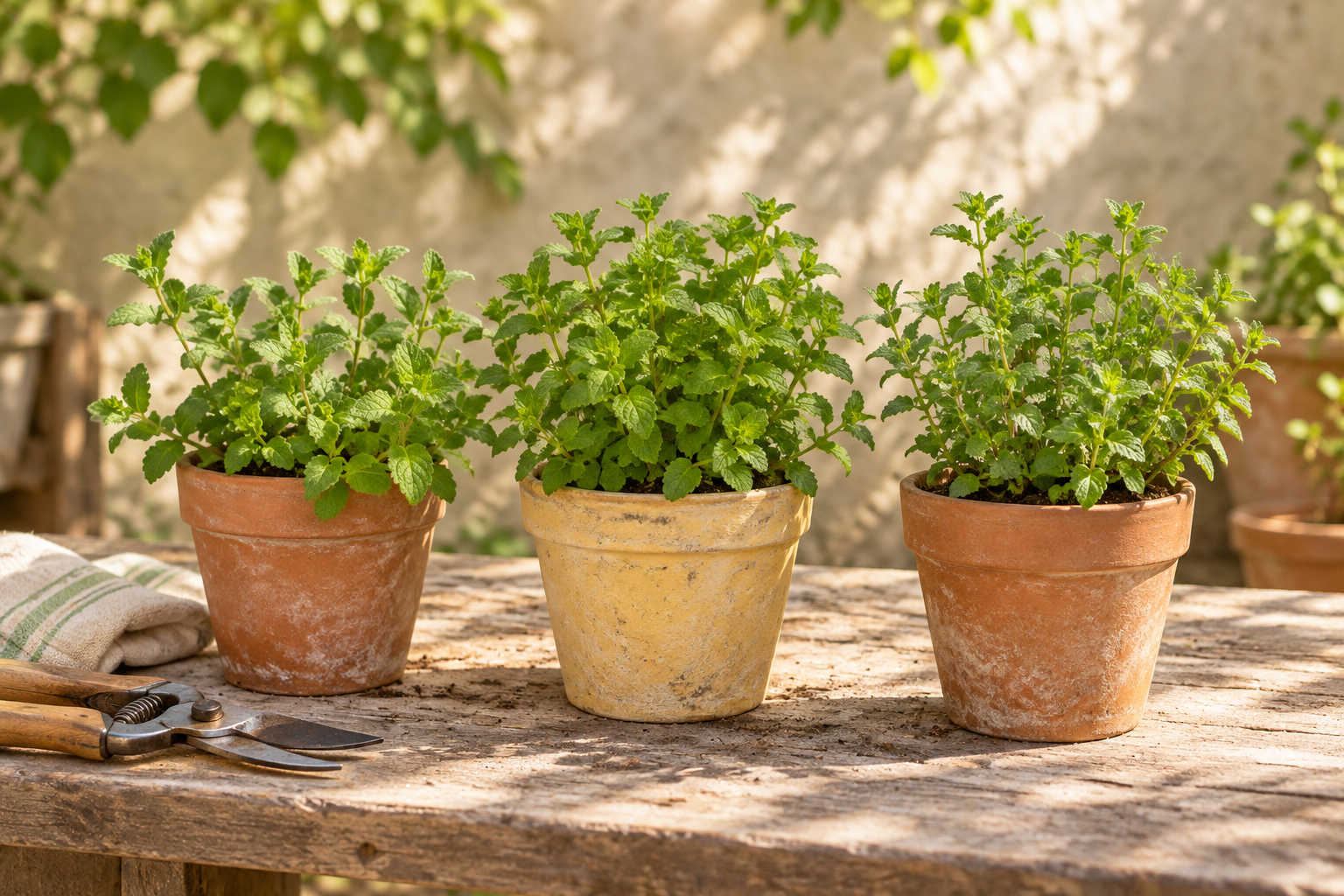
The set contains three plants, each in a twelve-centimetre pot. No fixed overall delivery height is stated. The forty to sixty centimetres growth height generally mentioned in the shop is a guide to later development, no promise for every individual mint. Accordingly, our scene shows young compact herbs. Keep the three name labels and note them in the plant book if needed. Decorative containers, scissors and scene furnishings are not included in delivery. After unpacking, the first concern is good stability and a checked root ball, not a particularly large first harvest.
An accessible outdoor place makes care easier
Sun to partial shade suits mints. Small nursery pots can lose water quickly in a hot dry place, however. An accessible potting table or bright balcony corner with some protection at the hottest time makes checks easier. Introduce stronger sun gradually after transport. A bright kitchen may serve for viewing and harvesting; a dark worktop is not declared a permanent plant position. Look at actual light and whether all three containers can be taken out conveniently. A tight decorative arrangement is only useful when care continues to work.
Mint gets room for its runners
Individual sufficiently large containers help keep the three mints distinct. Underground shoots may spread and crowd other plants in a shared box. A twelve-centimetre nursery pot is the beginning, not indefinitely sufficient root space. If a mint becomes densely rooted or dries noticeably quickly, it receives suitable fresh soil and more space. Humus-rich freely draining substrate and clear holes in the pot base belong together. For bed planting, choose frost-free soil and suitable weather. Spacing follows the actual delivered cultivar and its width; an invented uniform centimetre figure is no help here.
Supply leaves and root ball together
Check moisture more frequently on warm days. Water thoroughly before strong drying and let excess drain. A still-moist root ball is not watered again just because of the other two pots. If a shoot looks limp, first look at warmth, moisture and root space. Fresh soil may already contain nutrients; extra fertiliser is adapted moderately according to the label during strong growth. The three plants need not grow at the same pace. Compare fresh shoots rather than immediate height alone. This makes it easier to recognise whether a position or supply has improved.
Small harvests leave new foliage behind
Cut healthy young shoot tips above a leaf pair and spread harvesting over several shoots. Take only a little initially from freshly delivered small plants. Wash foliage before use; for foods and drinks, use only clearly identified herbs intended for that purpose and observe existing treatment instructions. This portrait describes gardening and culinary use, no healing effect. Flower heads may develop in summer; exact timing and colour remain cultivar-dependent. After flowering, a healthy vigorous stand may be cut back. A weakened heat-stressed mint first receives reliable supply.
A quiet winter belongs to the next harvest
Perennial mints may lose their above-ground shoots in winter. A pot looking emptier is therefore not automatically a dead plant. Stand containers protected, prevent permanent waterlogging and protect the limited root space in severe frost. Check moisture on frost-free days. In spring, an older dense clump can be divided and rebuilt with fresh soil. Check leaf undersides for unusual spots or animals during new growth and harvesting. Suspicious foliage does not go into the kitchen. Short personal notes about scent, cutting and division turn the trio into a manageable little herb collection.
One plant, several views
Good to know
Do little fruits grow on the mint?
No. Pineapple, strawberry and banana describe the offered mints and their aromatic directions.
How tall are the plants at delivery?
No fixed delivery height is stated. Each of the three plants stands in a 12 cm pot.
Can I plant all three in one box?
Individual containers preserve identification and make vigorous runners easier to control.
Is 40–60 cm the certain ultimate height of each mint?
No. This is the general shop guide; growth and cultivation differ among the mints.
How do I start harvesting?
Cut a little from healthy young tips and leave enough foliage to continue growth.
Is a pot that has died back in winter lost?
Not necessarily. Perennial mints may shoot again in spring from a healthily overwintered rootstock.
Sources and editorial note
- Exotenherz: offer and original images (02.10.2026)
- RHS: mint care in beds and containers (02.10.2026)
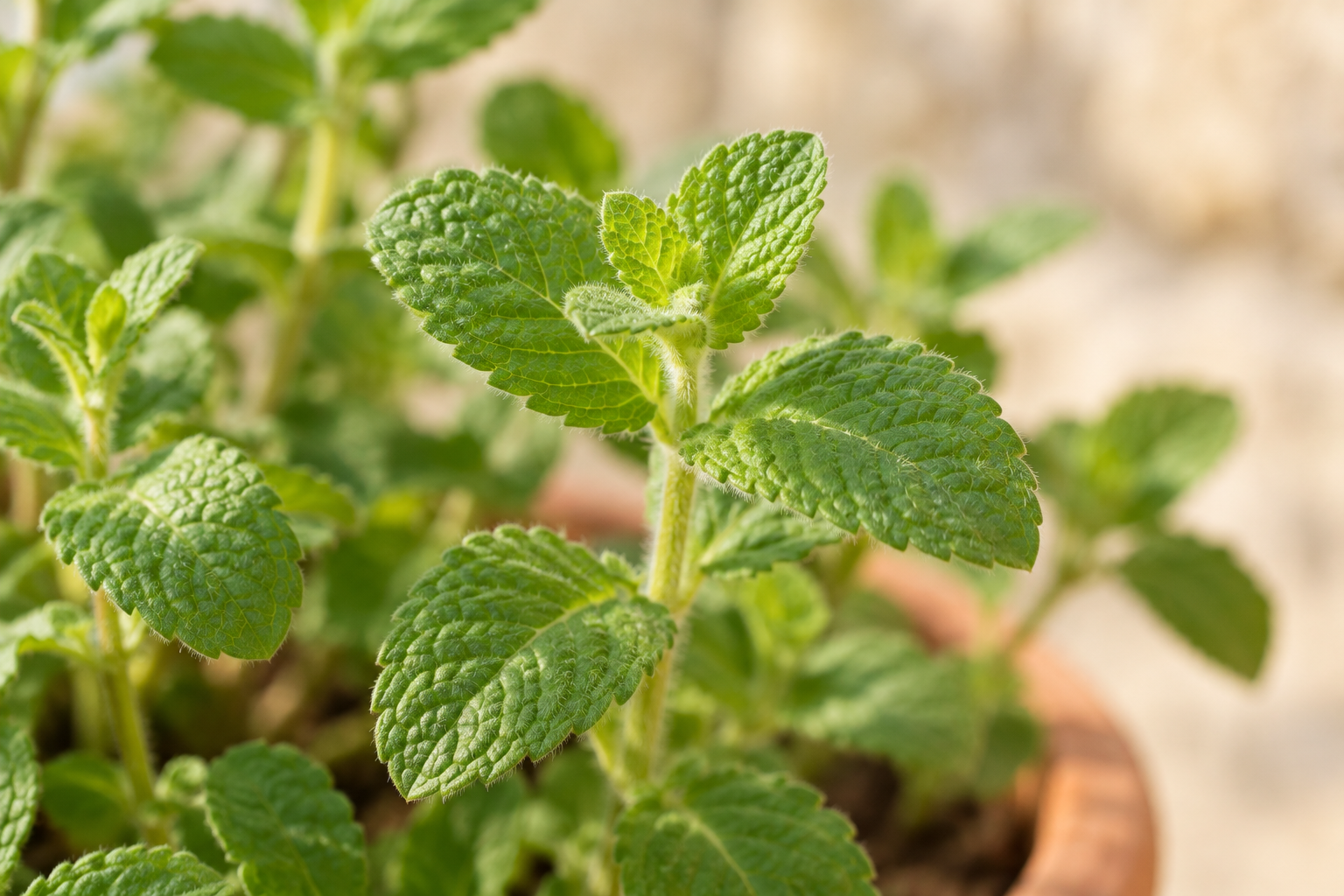
Shop offer, article number, GTIN, availability and original images checked directly on 02.10.2026. Specialist sources read directly. No fixed botanical hybrids inferred from unconfirmed commercial names. No delivery height or general flower colour invented. Scene checked directly against the original picture on 02.10.2026: plant quantity, leaf or head shape, habit, size proportions and labelling suitable. First scene discarded because of unsupported pale leaf edges. New scene shows only green mints according to originals. Original shop pictures with Blu supplier labels stored internally unchanged; public gallery uses a clearly marked leaf-detail scene.