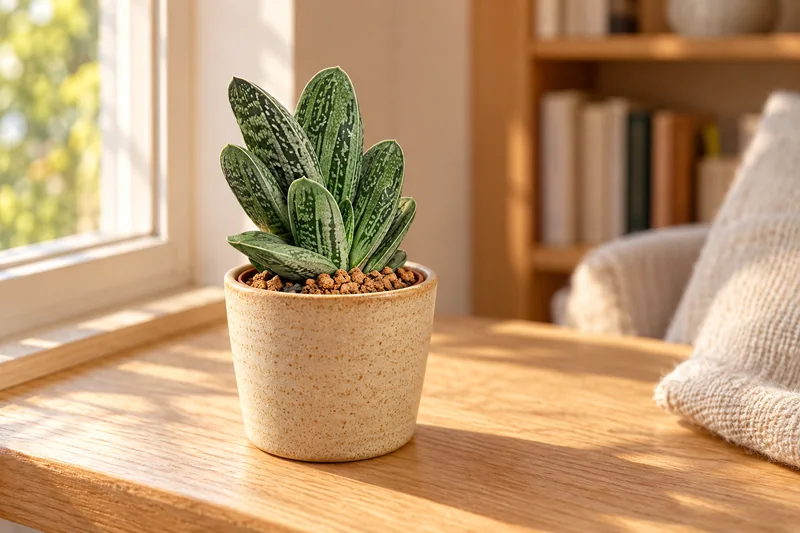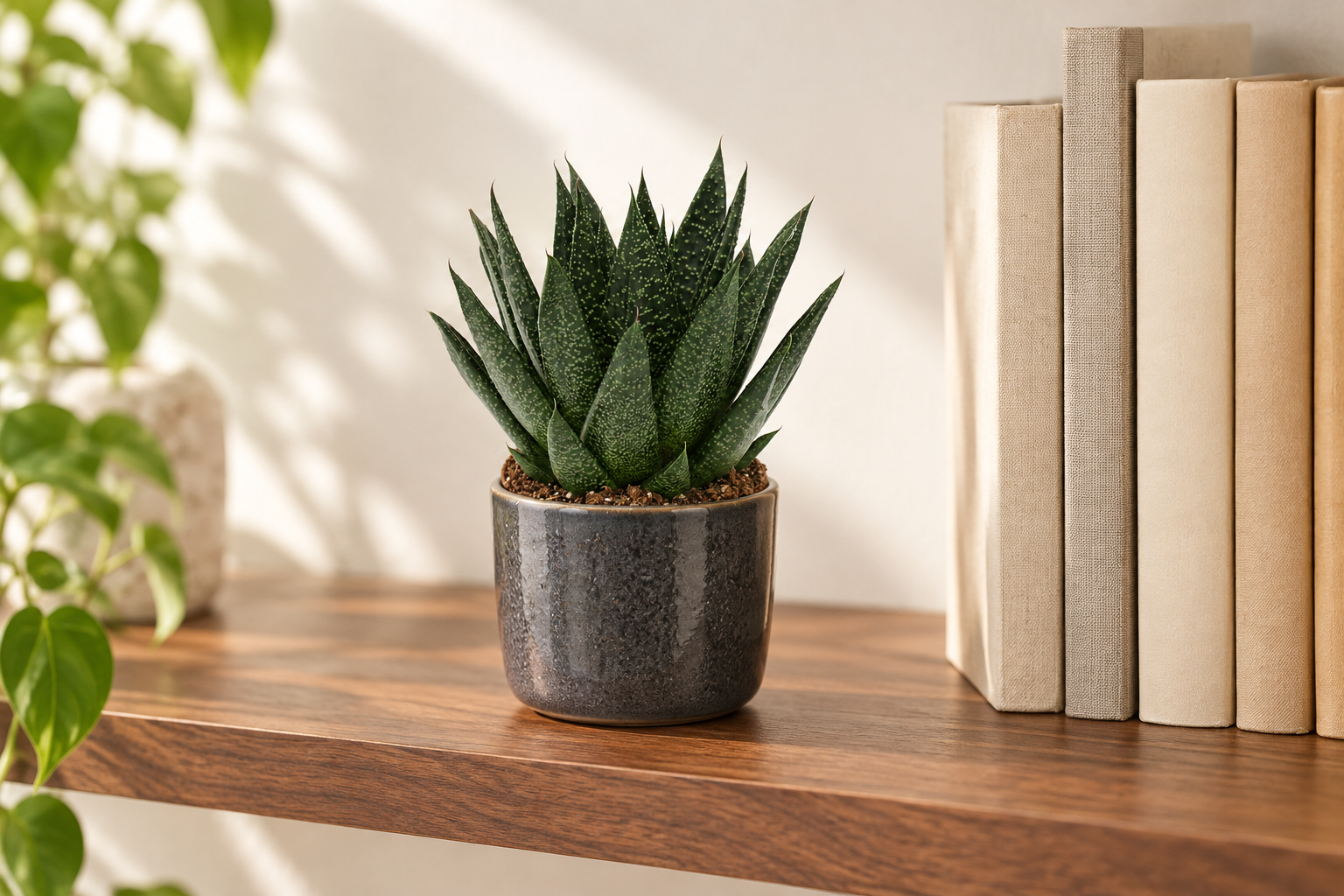
This plant at Exotenherz
Check the shop offer for current availability, price and what is included.
Check the selected shop offer for price, availability and delivery contents.
Your care table
| Topic | What to do | Why it helps |
|---|---|---|
| Light | Place bright with filtered daylight. | Hot direct sun after a position change may damage leaves. |
| Water | Let the root ball dry considerably between waterings. | Fleshy leaves store water. |
| Drainage | Water thoroughly, then remove excess completely. | A filled decorative pot keeps roots unnecessarily wet. |
| Soil | Choose a draining succulent mixture with mineral components. | Airy structure supports drying of the small root ball. |
| Fertiliser | During recognisable growth, feed sparingly according to the label. | Compact slow growth needs no strong permanent feeding. |
| Repotting | When densely rooted, move into a suitable next size in spring. | Extra large soil quantities dry more slowly inside. |
| Winter | Keep bright and frost-free, adjusting water to cooler slower growth. | The plant needs considerably less supply in the low-light period. |
| Care | Remove only dry outer leaves gently and leave the heart undamaged. | The rosette grows from the centre and needs no shaping trim. |
Check the compost and pot weight. The care table explains how far the compost may dry.
Water only when needed. The water should reach the root ball without spilling over the rim.
Remove surplus water from the saucer or cachepot. Then return the plant to a suitable position.
Dark green that comes alive close up
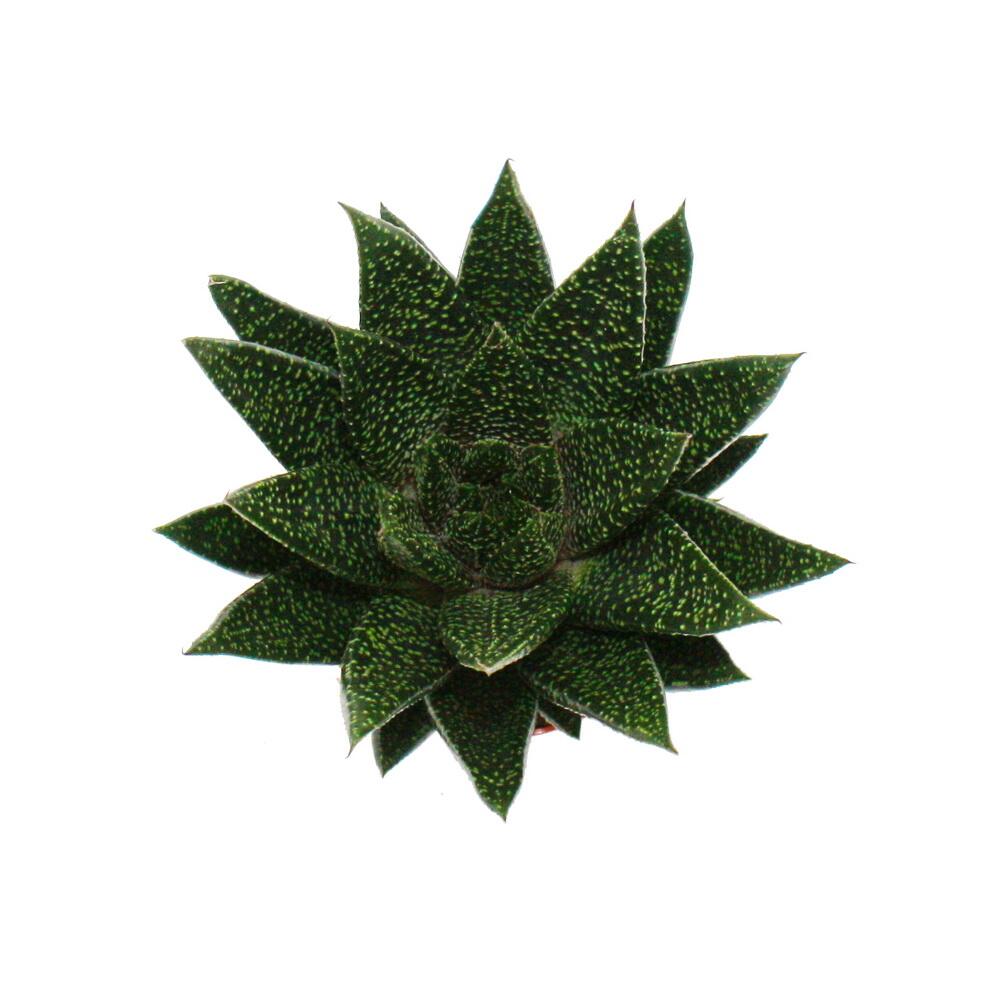
D Due is no plant that must occupy much space to attract attention. Strong dark-green leaves stand close together and taper upwards. Little pale spots spread across the surface. On a quiet wooden shelf, this creates a lovely contrast with plain books or ceramics. We like to position it so the rosette can also be viewed from the side. Its appeal lies in leaf shape, not a large cloud of flowers. Do not squeeze the fleshy leaves or treat them with shine products.
Understand the small offered form correctly
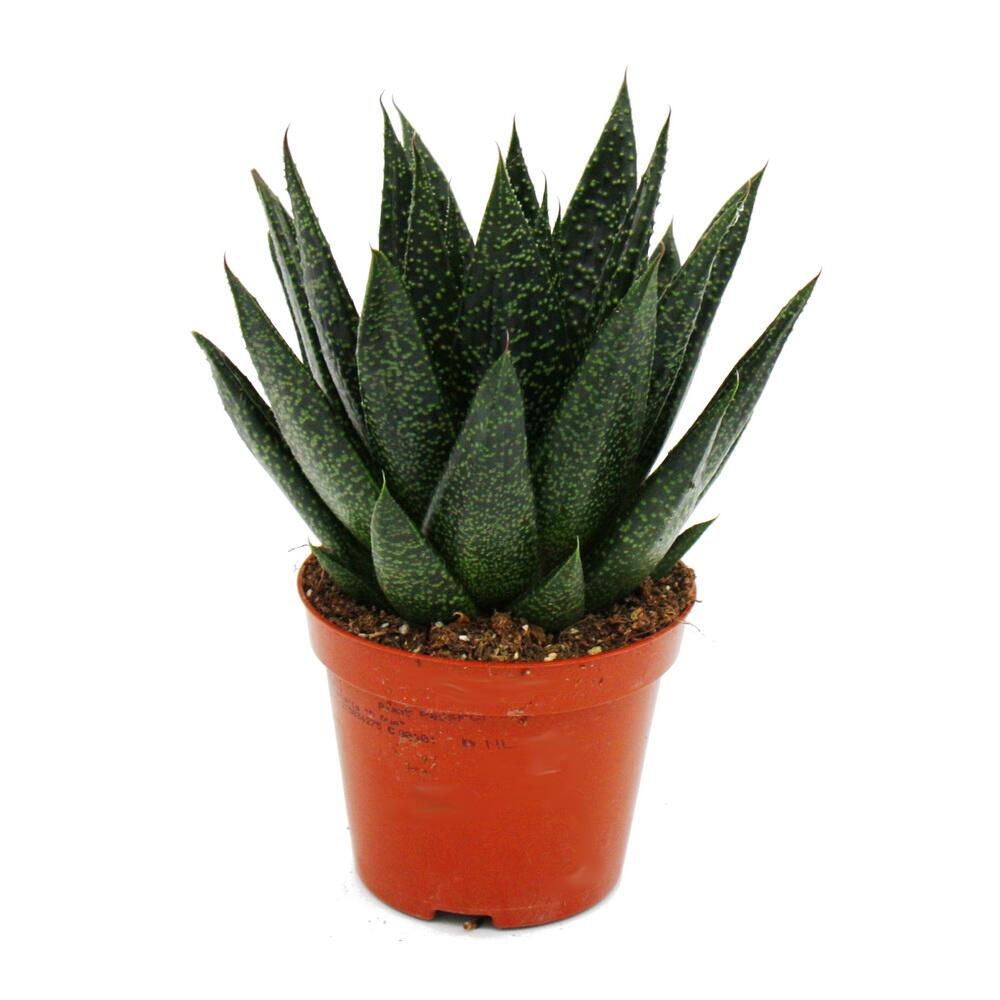
The shop lists the plant as Gasteria D Due. This commercial designation is retained; no particular species or hybrid parentage is inferred from leaf shape alone. It is offered in an 8.5 cm pot at about 10 to 12 cm overall height including pot. Initially it remains a manageable companion for a bright little plant position. This delivery specification describes neither ultimate height nor a guaranteed leaf count. A decorative pot belongs to the domestic scene. For the actual plant and its current growth form, the original photograph remains the most important guide.
A shelf is a good position only with daylight
The scene shows D Due on a wooden shelf. For a similar place to work at home, enough indirect daylight must reach it. A deep dark compartment is insufficient even if the plant looks attractive from the front. Bright filtered light is a good foundation. Increase hot direct sun slowly after transport and protect from strongly heated glass in high summer. The rosette should stand free without constantly bumping objects. A little distance from the next decoration also makes care simpler.
The small root ball may become drier between waterings
Fleshy leaves store water. Therefore let the root ball dry considerably before another watering and compare the inner pot’s weight. Then water slowly and thoroughly and let it drain completely. Empty the decorative pot even if it contains only a little water. Frequent little sips on a calendar fit changing evaporation poorly. A cool position needs less supply than a warm bright summer spot. We consider leaf firmness and root-ball moisture together without using every individual leaf as a watering indicator. If in doubt, a wet plant receives a check first.
Airy soil protects quiet development
A draining succulent mixture with mineral components supports drying. The attractive surface of a gravel layer says nothing yet about the soil below. When roots fill the pot densely, careful moving into the next suitable size in spring makes sense. Support the rosette at its base rather than pulling on a leaf tip. An oversized bowl creates unnecessary amounts of soil that stay damp a long time. During recognisable growth, feed sparingly according to the fertiliser label and consider nutrients already present in fresh soil. Slow growth does not automatically become healthier through more fertiliser.
The leaf appearance remains central
No specific flower colour is documented for this commercial form, so none is borrowed from another Gasteria. Development can be followed well without flowers too. New leaves appear in the centre and gradually change the outline. Remove dry outer remains carefully once they can be loosened; healthy leaves need no shaping trim. In winter, position bright and frost-free and adapt watering to reduced growth. Cooler root balls dry slowly. A summer habit is therefore not carried unchanged through darker months.
A small plant invites precise observation
Spots belong to D Due, but damaged soft areas deserve attention. With a change, first consider moisture, position changes and possible strong sun. Also occasionally check leaf axils and pot rim for pests. An individual dry tip is not repaired by several simultaneous interventions. We prefer correcting an identifiable cause and observing the next leaves. This leaves the plant its quiet rhythm. Those who regularly lift the little inner pot and learn its drying usually find suitable care more easily than through a fixed weekly water quantity.
One plant, several views
Good to know
What species is D Due?
The shop lists Gasteria D Due as a commercial designation. An exact species or hybrid parentage is not documented by this.
How large is the delivery plant?
In an 8.5 cm pot, about 10–12 cm overall height including pot.
Can it stand on a bookcase?
Yes, if the compartment gets enough indirect daylight. A dark inner compartment is insufficient.
Are the pale dots normal?
They belong to the leaf appearance visible in the original photograph. Check soft or newly damaged areas separately.
Should I give a little water each week?
Water according to actual drying of the root ball, then remove excess.
Does it need pruning?
No. Only remove dry outer remains carefully; preserve healthy leaves and the rosette centre.
Sources and editorial note
- Exotenherz: offer and original images (02.10.2026)
- RHS: Gasteria, cultivation using G. batesiana as an example (02.10.2026)
- SANBI: Gasteria visseri, cultivation and growth of the genus (02.10.2026)
- NParks: Gasteria obliqua, position and water needs (02.10.2026)
Shop offer, article number, GTIN, availability and original images checked directly on 02.10.2026. Specialist sources read directly. Commercial name without invented species attribution. Measurements directly from shop text, no fixed flower colour or unchecked ultimate height.