This plant at Exotenherz
Check the shop offer for current availability, price and what is included.
Check the selected shop offer for price, availability and delivery contents.
Your care table
| Topic | What to do | Why it helps |
|---|---|---|
| Light | Place bright with filtered daylight. | Hot direct sun after a position change may damage leaves. |
| Water | Let the root ball dry considerably between waterings. | Fleshy leaves store water. |
| Drainage | Water thoroughly, then remove excess completely. | A filled decorative pot keeps roots unnecessarily wet. |
| Soil | Choose a draining succulent mixture with mineral components. | Airy structure supports drying of the small root ball. |
| Fertiliser | During recognisable growth, feed sparingly according to the label. | Compact slow growth needs no strong permanent feeding. |
| Repotting | When densely rooted, move into a suitable next size in spring. | Extra large soil quantities dry more slowly inside. |
| Winter | Keep bright and frost-free, adjusting water to cooler slower growth. | The plant needs considerably less supply in the low-light period. |
| Care | Remove only dry outer leaves gently and leave the heart undamaged. | The rosette grows from the centre and needs no shaping trim. |
Check the compost and pot weight. The care table explains how far the compost may dry.
Water only when needed. The water should reach the root ball without spilling over the rim.
Remove surplus water from the saucer or cachepot. Then return the plant to a suitable position.
A small rosette with its own leaf appearance
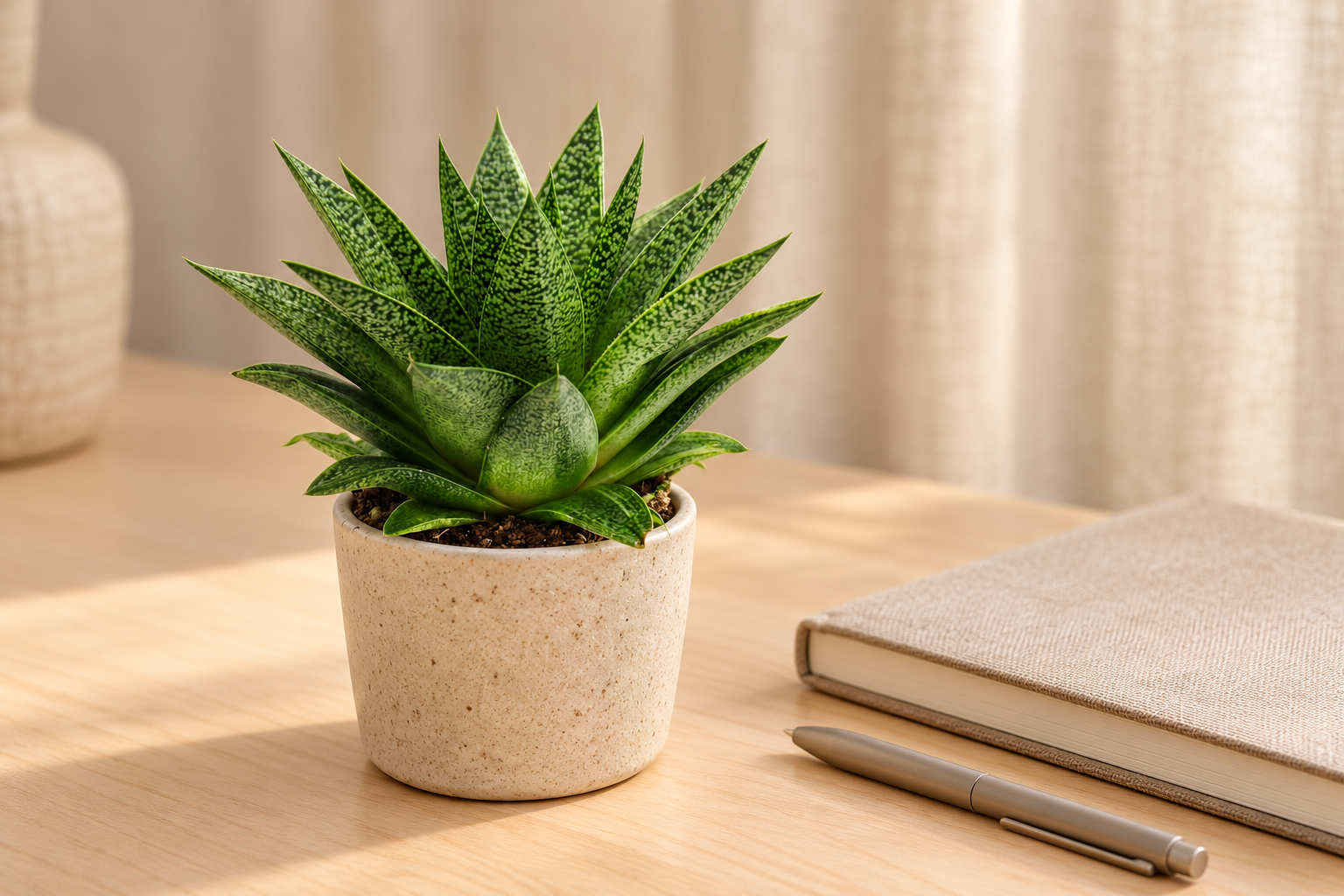
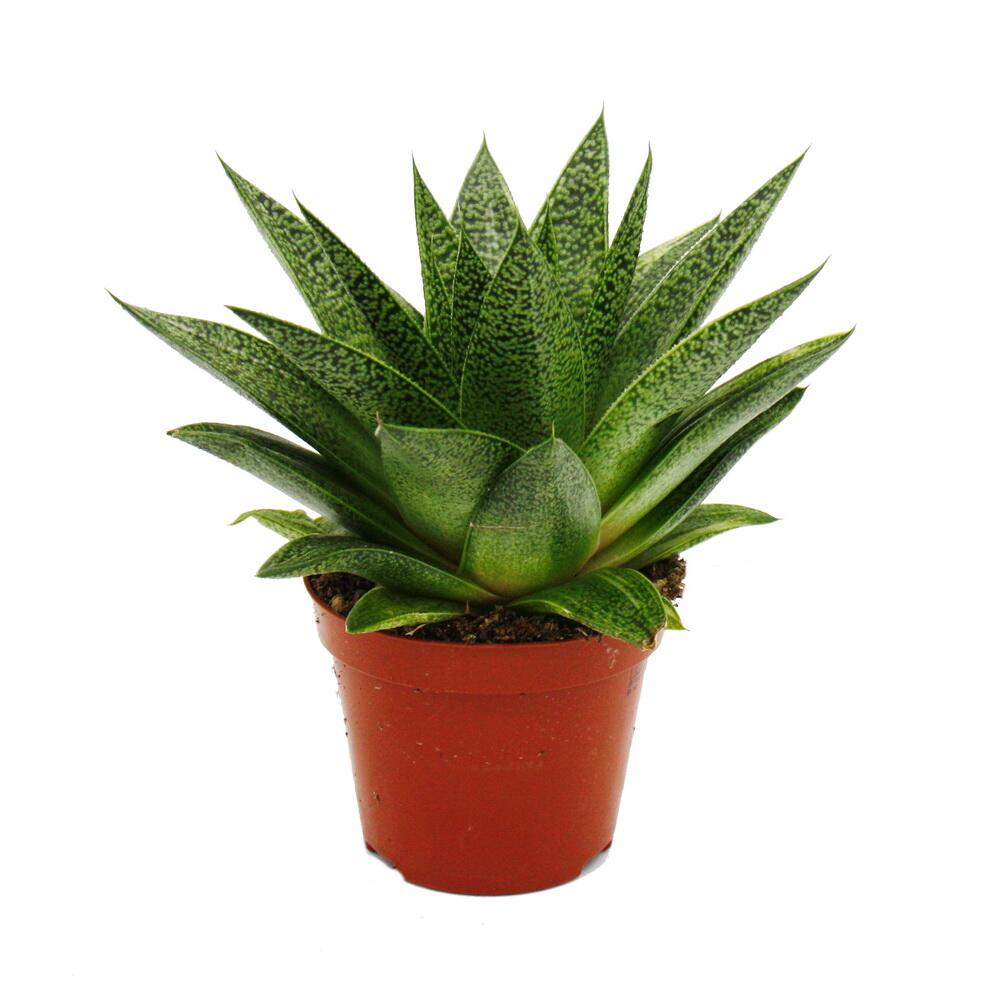
D Tiga stands out through strong green leaves and fine pale markings. In the original, tapering leaves stand closely around a shared centre. The rosette looks paler and more open than dark D Due without needing entirely different care. Its pattern can be viewed well on a plain desk or bright side shelf. We like such little plants because one new leaf already changes the whole shape. Foliage remains untouched; the lovely surface needs neither polish nor artificial shine.
The commercial name remains an honest guide
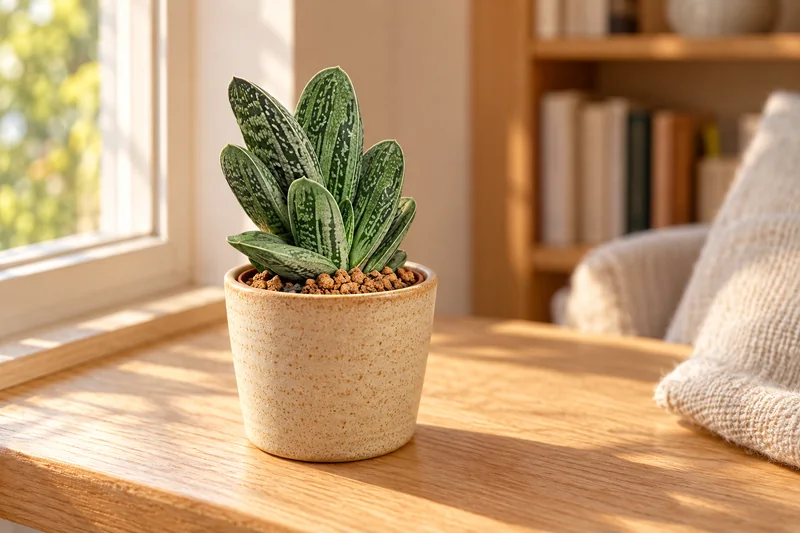
The designation Gasteria D Tiga comes from the shop. It documents no precise species or particular cross, so no such parentage is invented from the picture. The offered plant comes in an 8.5 cm pot at about 10 to 12 cm overall height including pot. The scene places this small delivery form in a decorative pot. That belongs to styling, not delivery contents. Later leaves and possible side shoots may change the outline. Stated overall height is therefore a delivery guide, no lasting size promise.
At the workplace, actual daylight counts
A bright workplace is pleasant if the rosette receives sufficient filtered daylight there. A switched-on desk lamp alone does not turn a dark room corner into a suitable plant position. Check the shelf in the morning and later in the day. Do not suddenly increase hot direct sun behind glass after transport. A place beside a bright window may work, as may an open shelf where foliage stands freely. The plant should not constantly bump papers or your working hand. A small footprint may still include a little distance from the surroundings.
Watering starts with a look beneath the surface
Strong leaves help the plant store water. The root ball may dry considerably between waterings. Lift the small inner pot occasionally and compare its weight with the condition after watering. When supply is needed, water slowly and thoroughly, then remove excess. Looking only at the top decorative layer is not enough, as soil may still be moist below. A fixed weekly amount suits warm workdays and cool weeks poorly. We prefer learning how long this specific pot retains moisture at its position.
The decorative pot must suit care
A plain decorative pot reveals the green rosette attractively. It remains practical if the inner pot can easily be removed and checked for standing water. A draining succulent mixture with mineral components helps roots. When repotting in spring, choose only a suitable next size once the existing root ball is densely rooted. Do not use foliage as a handle. D Tiga is supported gently at its base. Fresh soil may contain nutrients; adapt extra feeding sparingly according to the label during recognisable growth. A quiet structure is more valuable than particularly rapid leaf production.
Care stays attentive through winter
During the lower-light period, the little rosette often grows more slowly. Position bright and frost-free and adapt watering to actual drying. A cool root ball dries very differently from the same pot in summer. Healthy leaves remain; only fully dry outer remains are removed carefully. D Tiga needs no regular shaping trim. Exact flower colour of this commercial form is unsupported and is not transferred from another species. If its own flower head appears later, that is a lovely extra moment without the foliage plant having been incomplete beforehand.
New leaves show whether the position works well
Look occasionally into the centre where fresh foliage forms. Development can usually be assessed better there than on an old dry leaf tip. With changes, first consider water condition and position together. Strong sun after moving, constantly moist soil and mechanical damage may have different causes. Check leaf axils and pot rim too. Not every small irregularity immediately demands a new pot or more fertiliser. We prefer improving an identifiable care point and giving the rosette time. The small plant thus becomes a familiar companion whose slow growth is a pleasure to notice.
One plant, several views

Good to know
Is D Tiga a precisely identified Gasteria species?
The shop designation is a commercial name. No specific species or cross is documented.
How large is it at delivery?
In an 8.5 cm pot, about 10–12 cm overall height including pot.
Can it stand on my desk?
Yes, if enough filtered daylight reaches it and leaves are not constantly touched.
Why should the root ball dry?
Fleshy leaves store water; permanent wetness does not fit recommended cultivation.
Does it need the same water in winter?
Usually considerably less. Actual drying and reduced growth decide.
Must I prune it into shape?
No. The rosette develops its own shape; only remove dry outer remains carefully.
Sources and editorial note
- Exotenherz: offer and original images (02.10.2026)
- RHS: Gasteria, cultivation using G. batesiana as an example (02.10.2026)
- SANBI: Gasteria visseri, cultivation and growth of the genus (02.10.2026)
- NParks: Gasteria obliqua, position and water needs (02.10.2026)
Shop offer, article number, GTIN, availability and original images checked directly on 02.10.2026. Specialist sources read directly. Individual portrait of the documented commercial form with its original leaf appearance. No invented species, flower colour or guaranteed ultimate height.