This plant at Exotenherz
Check the shop offer for current availability, price and what is included.
Product and delivery details are given in the individual offer.
Your care table
| Topic | What to do | Why it helps |
|---|---|---|
| Light | Choose a sunny warm position. | The airy flowering display needs a suitable garden position. |
| Soil | Prepare well-drained soil with reliable water drainage. | Heavy permanently wet soil endangers roots. |
| Planting | Moisten the root ball thoroughly, set at its previous height and water in. | Young plants first need to root beyond their small pot root balls. |
| Spacing | Allow roughly 60–90 cm for later broad flowering stems. | An airy planting looks different from densely positioned young pots. |
| Water | Supply attentively while establishing; later check during persistent drought. | Tolerance of established plants is not a watering ban for young ones. |
| Feeding | Feed moderately and avoid very nutrient-rich soil. | Overly soft long shoots can fall apart more readily. |
| Pruning | Reduce spent flower stems as needed; main cutting in spring. | Orderly cutting can support new development. |
| Winter | Maintain a sheltered position and drainage; provide loose dry protection if needed. | Wetness and frost act together, particularly in containers. |
For young plants, feel the soil directly at the root ball. The surface and deeper soil may have different moisture levels.
Water thoroughly after planting; later, water according to the soil, weather and establishment rather than a fixed calendar.
Avoid standing water. For plants in containers, also check that water runs out of the drainage hole.
Pink flowers with plenty of air between them
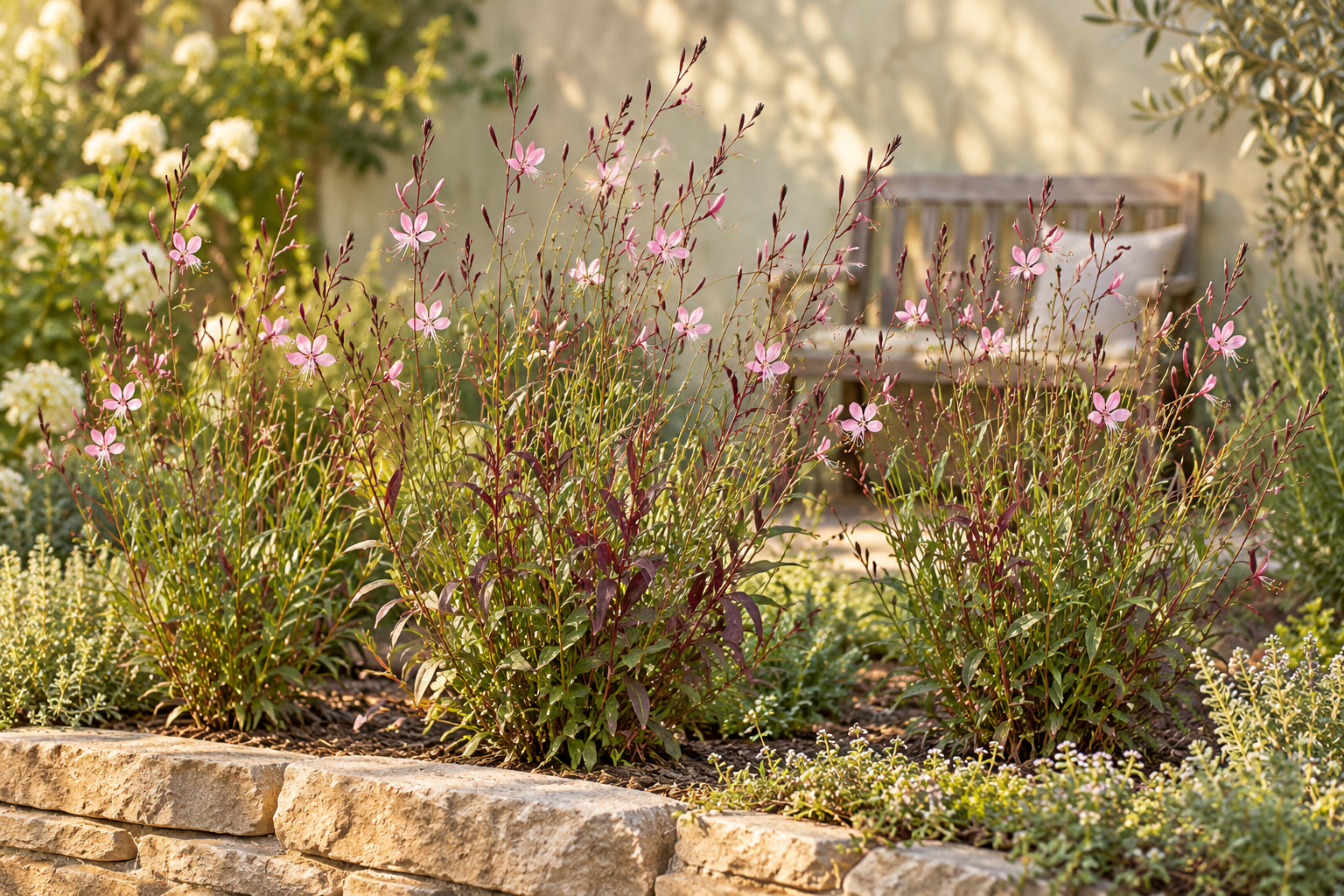
A gaura does not have to fill every gap with colour. The empty spaces between its fine stems are precisely what make the flowers look light. In Siskiyou Pink, small pink flowers open from darker buds. Four petals and far-projecting stamens give them a distinctive shape reminiscent of little butterflies. Below sit narrow leaves, some with reddish tones. One gust of wind is enough to change the planting’s posture. The familiar name Gaura lindheimeri appears in the shop; botanically, gaura is now placed in Oenothera. For design, the decisive point remains giving this airy perennial room to make its effect.
Sun and drainage belong together
I look for a sunny warm garden position with well-drained soil. An open bed or perennial border fits better than a permanently wet hollow. Later root development can help bridge dry spells, but standing water remains unfavourable. With heavy soil, therefore, the whole planting spot is considered rather than merely filling a small pocket with different earth. A large container is possible too if surplus water drains reliably. The flowers combine beautifully with airy grasses and calmer neighbouring perennials. These neighbours can help support the fine shoots without turning gaura into a rigid tightly bound bundle.
From the small set to the later garden picture
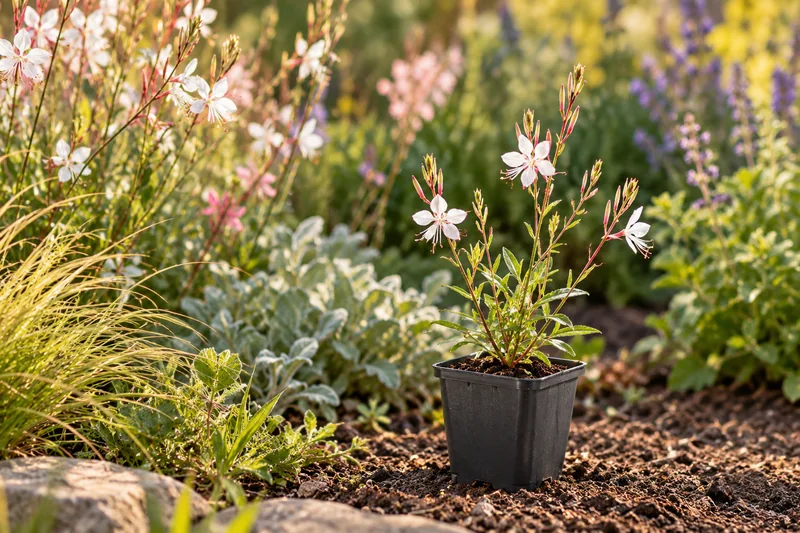
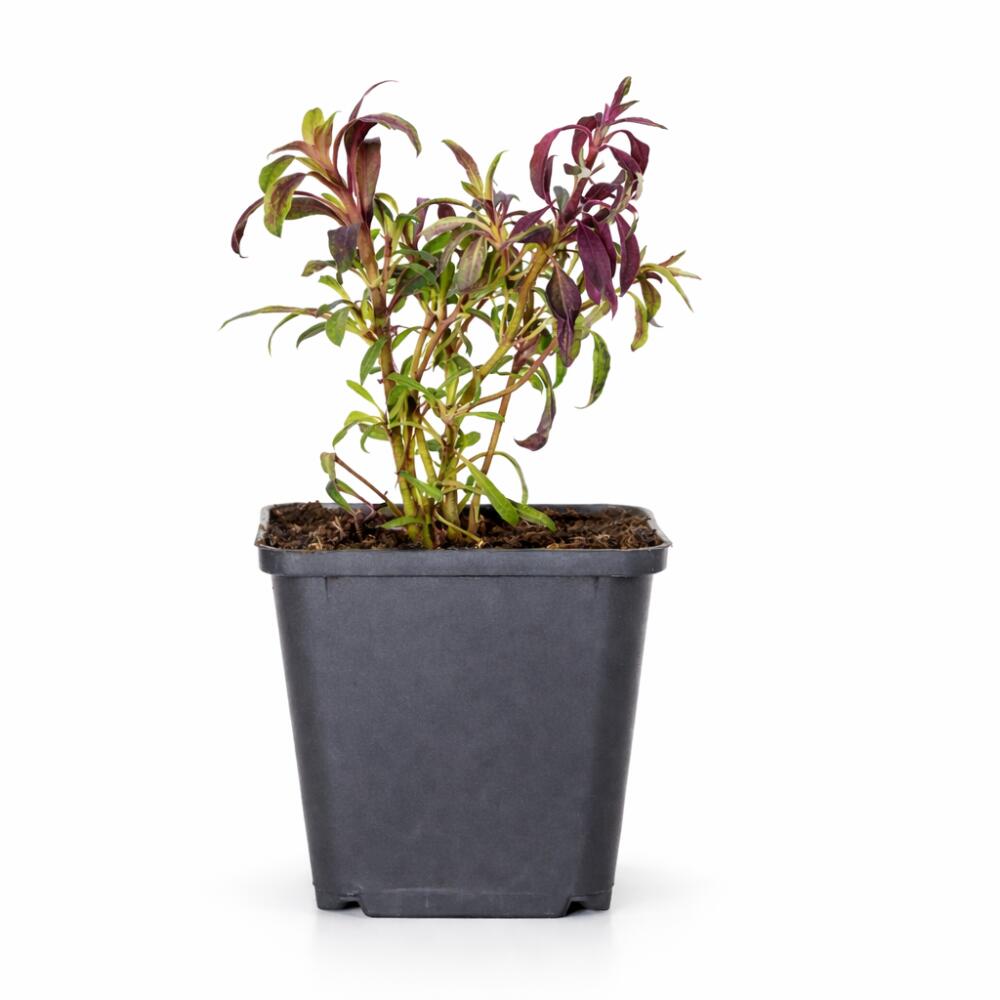
Delivered plants stand in nine-centimetre pots and are approximately ten to twenty-five centimetres tall. Later they carry considerably longer flowering stems, often about eighty to one hundred centimetres and sometimes taller under certain cultivation conditions. That is not the immediate delivery state. I plan roughly sixty to ninety centimetres spacing for developed groups as a guide and consider neighbouring plants’ width. For a whole area, place the young plants provisionally before setting them in. The direct shop offers lead to six, twelve, twenty-four, forty-eight or sixty plants. A small selection can be used as one loose group; a greater quantity needs a correspondingly larger sensible area.
Do not reckon with an adult plant during establishment
Spring is a good starting point for planting. The soil must be frost-free and workable; a calendar date does not make a cold wet planting position suitable. Root balls are moistened, set at their previous height and watered in. During the first weeks, I check dryness at the original planting spot. An established gaura behaves differently from a young plant with little root space. After establishment, watering can become more restrained, but prolonged dry periods are still observed. In containers, reserves run out faster. I therefore water according to condition and weather without promising identical quantities every summer.
A long succession of flowers with natural interruptions
Flowering can start in late spring and run through summer into autumn. Not every bud opens simultaneously, and not every day shows the same abundance of flowers. This belongs to the loose character of the variety. Spent flowering stems can be reduced as needed so that the plant continues developing and the group looks orderly. Moderate cutting is different from constantly cutting off every shoot completely. Lots of fertiliser provides no reliable shortcut to long flowering. In very rich soil, stems can become soft and fall apart. Better to provide appropriate soil, sun and a quiet supply according to need.
Choose the winter position when planting
Gauras are perennial, but do not persist indefinitely in every position. Particularly unfavourable winter wetness can shorten their lifespan. A sheltered garden spot and functioning drainage are therefore planned from the start. If needed, loose dry protection can accompany the root area without smothering the base beneath a constantly wet layer. Container roots are more exposed to frost and changing moisture than in a border. The plant is not promised as reliably hardy everywhere. I postpone major cutting until spring, when dead parts can be removed and new growth assessed more clearly.
Care attentively without judging every leaf
Reddish or purple tones can belong to gaura foliage and become more distinct in cooler conditions. Not every darker area is therefore automatically a disease. Spots, coatings, substantial pest presence or sudden wilting are nevertheless examined more closely. With problems, I start with root space and moisture, then inspect the shoots. Older plants or seedlings may develop differently; a self-sown plant need not repeat varietal characteristics unchanged. I like a group best when its fine stems remain lively and care matches its actual condition. The garden picture may change through the season rather than constantly fulfil the same snapshot.
One plant, several views
Good to know
Is Siskiyou Pink perennial?
Yes, a perennial whose lifespan depends strongly on position and especially winter moisture.
How tall does it grow?
Often approximately 80–100 cm, sometimes taller depending on cultivation. Young delivery plants measure roughly 10–25 cm.
When does it flower?
From late spring through summer, into autumn with favourable development; with natural fluctuations.
What spacing should I plan?
Approximately 60–90 cm as a design guide for developed loose groups; consider neighbours and area size.
Does it need a lot of fertiliser?
No. Moderate feeding is sensible; very rich soil can encourage long soft shoots.
Can it grow in a container?
Yes, with enough root space, drainage and extra attention to water and winter conditions.
Are the large flowering plants the delivery condition?
No. The scene shows later garden development. Young plants are delivered according to the selected set offer.
Sources and editorial note
- Exotenherz: Siskiyou Pink and five direct set offers (01.10.2026)
- Missouri Botanical Garden: Siskiyou Pink, variety characteristics and cultivation (01.10.2026)
- NC State Extension: Oenothera lindheimeri, species and cultivation (01.10.2026)
- RHS Plants: Siskiyou Pink, position and winter care (01.10.2026)
Gaura trade name retained; current Oenothera classification. All 5 children 6/12/24/48/60 checked active,60 stock limited. Original 2 unchanged clean young-plant photograph. Specialist heights range from Missouri 75–90 to RHS/shop 150 cm; height therefore about 80–100 with site dependence and possible taller growth, no universal final height. Spacing 60–90 editorial guide based on broad growth, not a shop claim. Spring cutting, winter wetness and young-plant care differentiated. Scene 4 petals, long stamens, narrow leaf shape, later flowering.