This plant at Exotenherz
Check the shop offer for current availability, price and what is included.
Check the selected shop offer for price, availability and delivery contents.
Your care table
| Topic | What to do | Why it helps |
|---|---|---|
| Position | Provide bright filtered light; introduce direct sun gradually. | An abrupt move behind hot glass can damage variegated surfaces. |
| Watering | During growth thoroughly water the rootball after good drying, then let it drain. | The body stores water; the small active rootball still occasionally needs a reliable supply. |
| Drainage | Remove excess and keep every drainage hole clear. | Water left beneath the pot keeps roots wet unnecessarily. |
| Soil | Choose gritty, draining cactus compost. | Air and drying matter more than decorative surface grit. |
| Winter | Bright frost-free, rather cool position; very little water while resting. | With less light and growth, cold and wet rootballs combine poorly. |
| Feeding | Only during active growth, sparingly by cactus fertiliser label. | Nutrition supports growth without arbitrarily controlling variegation. |
| Repotting | In spring when cramped, choose a pot only slightly larger. | A large volume of unrooted soil stays moist for a long time. |
| Handling | Hold the pot; a paper strip helps when repotting. | Avoid pressure on spines and areoles. |
| Checks | Inspect ribs, areoles and base regularly; check rootball before watering. | Mealybugs or soft patches call for observation, not automatic watering. |
Check the compost and pot weight. The care table explains how far the compost may dry.
Water only when needed. The water should reach the root ball without spilling over the rim.
Remove surplus water from the saucer or cachepot. Then return the plant to a suitable position.
A small globe with lively colour
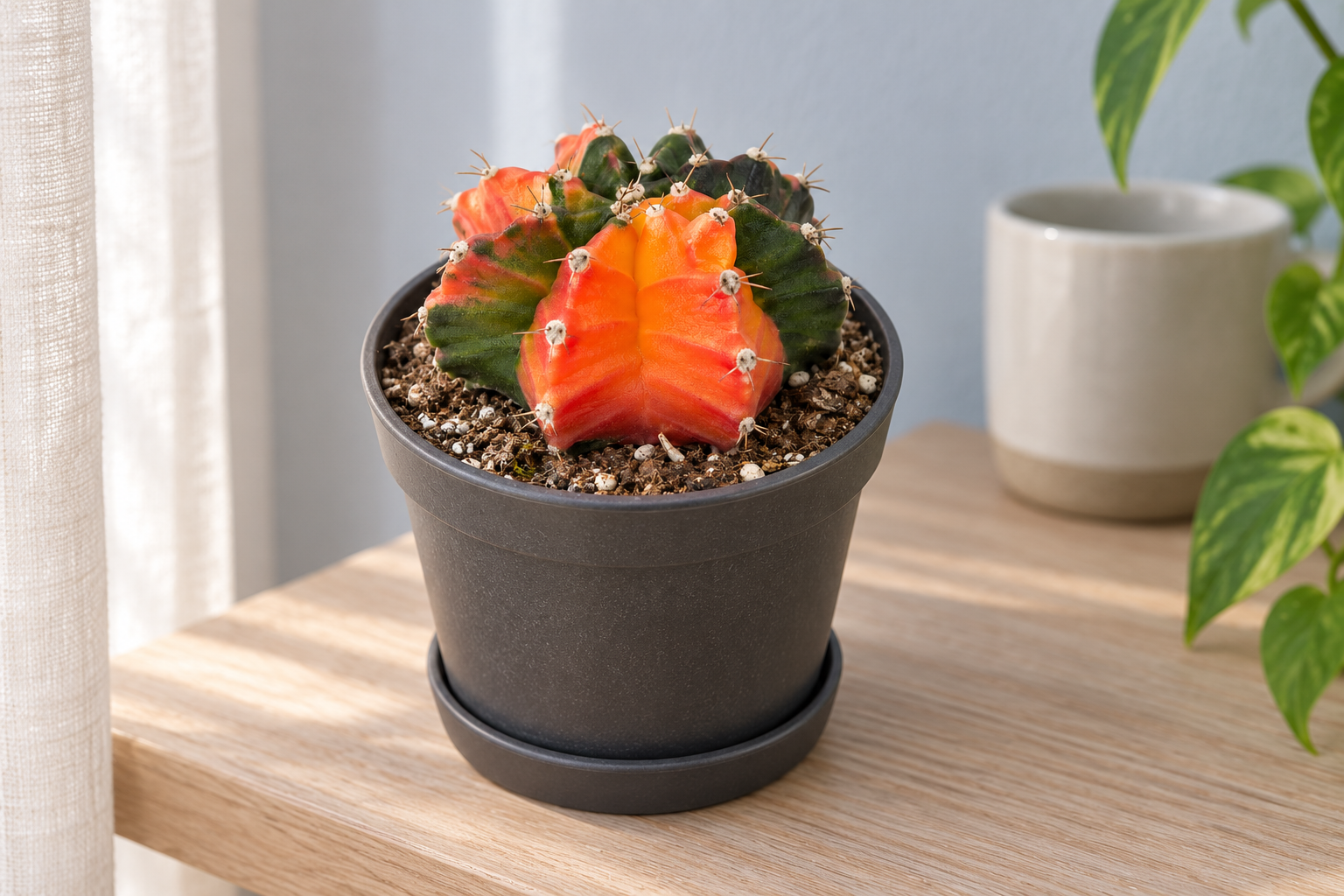
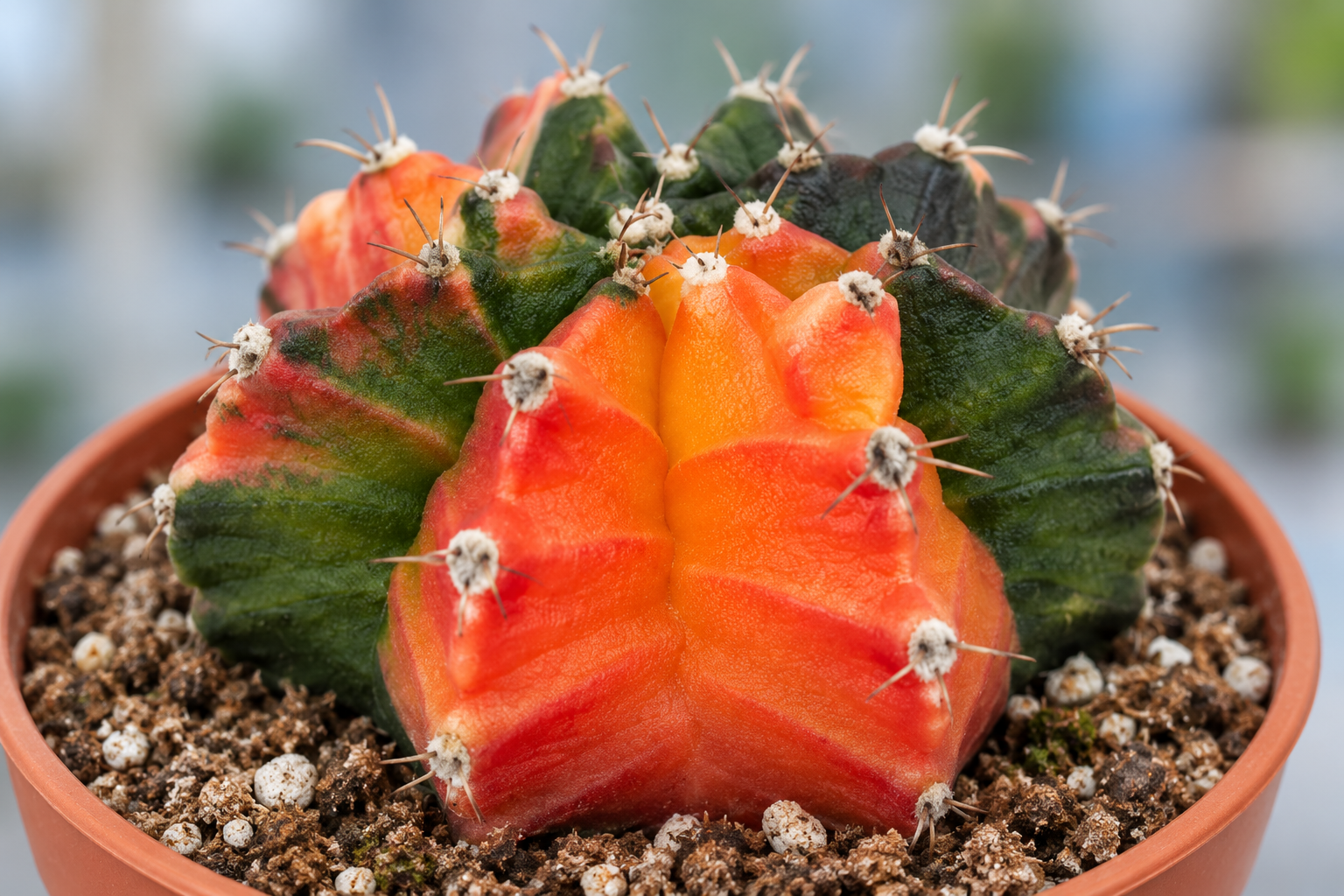
Dark green meets orange and red across the low Koi body. Transitions form no regular pattern; fine spines, small pale areoles and notched ribs add depth. Turning the pot reveals another view. A quiet small bright position gives this structure a background without crowding it with colourful neighbours. Even at a handy size, skin and spines are not handles.
What Koi means
Koi is a trade name for cultivated variegated forms around Gymnocalycium mihanovichii, recalling ornamental carp. Coloured tissue belongs to the body: it is neither flowers nor added decoration. Distribution can vary by plant and year; green areas supply chlorophyll-containing tissue. The offer shows a low body directly above soil without a visible tall grafting stem. A fully coloured head on a separate green rootstock has a different structure. Here the globe and its own rootball are considered together.
Unpacking a small cactus
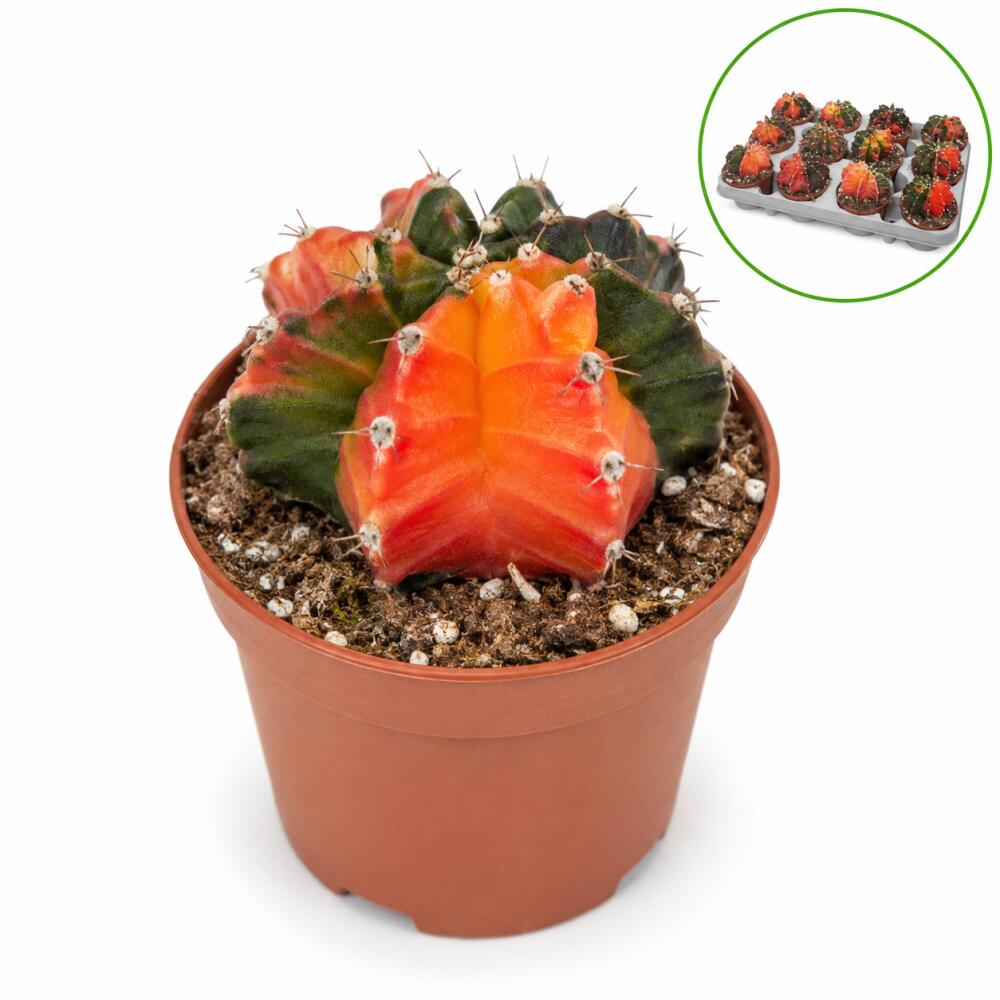
The offer is one plant in an eight-and-a-half-centimetre pot with about twelve centimetres total height including pot, not a large table cactus. Hold the nursery pot during unpacking and keep fingers away from spines. Check drainage holes, moisture and the small rootball in good light. A large immediate repot is usually unnecessary. Keep soil accessible and empty the saucer after watering. Delivery markings need not match the photograph exactly.
Light without an abrupt change
Bright filtered daylight or gentle morning sun is a useful starting point. After transport shield the coloured body from the hottest sun behind glass, then acclimatise gradually. Dark green should not be turned red by maximum sun; variegation is not a contest in intensity. A permanently shady shelf instead gives too little light for healthy compact growth. A sheltered outdoor position is possible in warm months, with renewed light acclimatisation, protection from prolonged rain and a return when nights turn cool.
Watering the rootball at the right time
During visible growth supply the rootball after it has dried well. Lifting the pot and checking below decorative grit is more useful than a fixed week. Water the rootball and let all excess escape. Small daily sips keep the surface moist and obscure root conditions. A short dry spell does not mean forgetting an actively growing plant for months. If the body softens, first check soil, temperature and base: softness does not always mean thirst, and wet roots do not call for more water.
Airy soil rather than an oversized pot
Gritty airy soil and free holes form the foundation. When cramped, gently repot in spring with just a little extra room rather than a large wet unrooted volume. A folded paper strip helps without pressing spines; retain the body's depth. Surface grit cannot replace drainage below. Feed sparingly during growth by label, accounting for pre-fertilised soil. More fertiliser cannot choose brighter colours. No shaping cut is needed: healthy ribs are not removed for symmetry.
A quieter winter
Consumption falls in dimmer months. Offer a bright frost-free, rather cool position around ten degrees or warmer and strongly reduce watering during rest. Warm heating and low light combine poorly. Keep soil mainly dry and watch shrinkage, checking the whole plant before a small supply. Increase water and light gradually in spring. Later flowers are possible on an older plant, but coloured ribs remain appealing without them. Watch areoles and pot rim for cottony pests; new spots, a soft base or rapid change call for checking roots and position.
One plant, several views
Good to know
What size is offered?
One plant in 8.5 cm pot, approx. 12 cm total height including pot.
Is the orange a flower?
No. It is variegation in the cactus body.
Is it built like a grafted strawberry cactus?
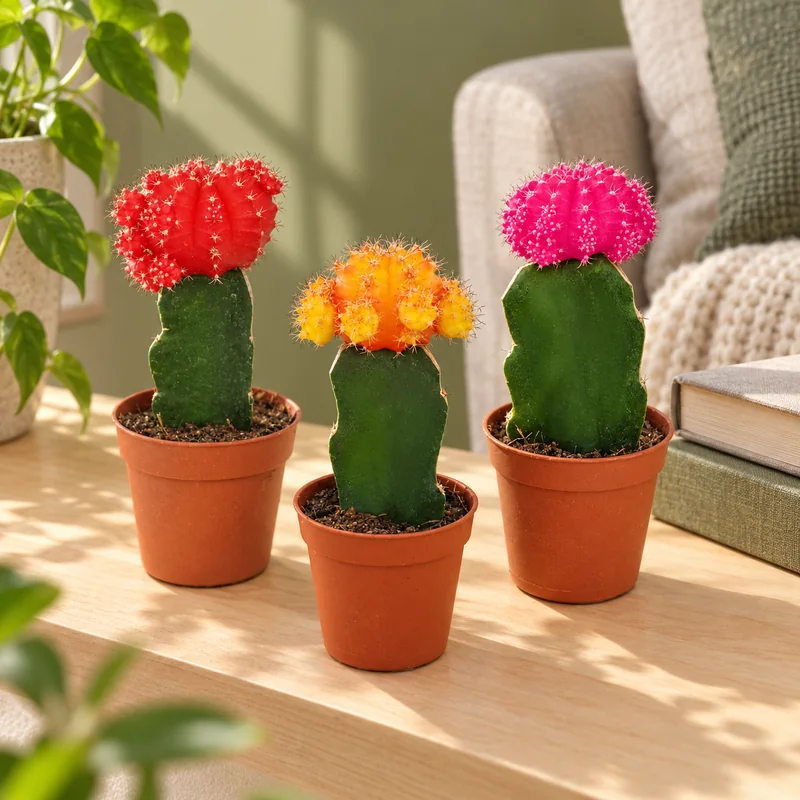
The picture here shows a small green and coloured globe directly above soil; a coloured head on a separate green stem has a different structure.
Does the pattern stay identical?
No. Distribution and shades vary with individual and year.
Should I water monthly?
Examine rootball and pot weight: after drying during growth, far less during rest.
Can it go straight into midday sun?
Start with filtered light after transport and increase gradually; beware hot glass.
How should it overwinter?
Bright frost-free, rather cool, around 10 °C or warmer; soil mainly dry during rest and body observed.
What if the base is soft?
Check moisture, drainage and temperature. A soft base in wet soil does not need extra water.
Sources and editorial note
- Exotenherz: article reference, GTIN, dimensions and availability directly saved03.10.2026
- Kakteen-shop.ch: Koi variegated cultivated form, colour variation and own cultivation,04.10.2026
- Matkcactus nursery: Koi separate from Rubra/strawberry cactus,04.10.2026
- NC State: species features, chlorophyll and grafting,04.10.2026
- RHS: variegation and informal horticultural names,04.10.2026
- RHS: potted cactus rootball, repotting and winter,04.10.2026
Shop article, GTIN, availability and originals directly saved03.10.2026; whole sources04.10.2026. Koi is a horticultural variegated trade form, not guaranteed registered clone or fixed colour distribution. Grafted heads in the existing colourful cactus trio remain separate. Originals1–3 actually viewed; only exact shop montage1 public, manufacturer lettering2 and readable book titles3 excluded. Two actual native generated images accepted after original comparison; no renewed availability claim.