This plant at Exotenherz
Check the shop offer for current availability, price and what is included.
Check the shop for the price, current availability and what is included.
Your care table
| Topic | What to do | Why it helps |
|---|---|---|
| Light | Very bright, with suitable plant lighting if needed. | Too little light weakens new pitcher development. |
| Temperature | Moderately warm, preferably cooler at night. | Highland plants tolerate lasting heat poorly. |
| Water | Rain, reverse-osmosis or distilled water without additives. | Dissolved mineral salts stress low-nutrient cultivation. |
| Moisture | Keep compost moist and let drain well. | Roots need moisture and oxygen. |
| Air | Combine humidity with reliable ventilation. | A hot closed cabinet is risky. |
| Pitchers | Top up empty healthy pitchers with a little pure water as needed. | Trapping functions use liquid inside the pitcher. |
| Nutrients | No ordinary fertiliser or kitchen feeding. | Uncontrolled additions may stress the sensitive system. |
| Repotting | Work rarely and very carefully. | Roots and nectar appendages are easily injured. |
Check the compost and pot weight. The care table explains how far the compost may dry.
Water only when needed. The water should reach the root ball without spilling over the rim.
Remove surplus water from the saucer or cachepot. Then return the plant to a suitable position.
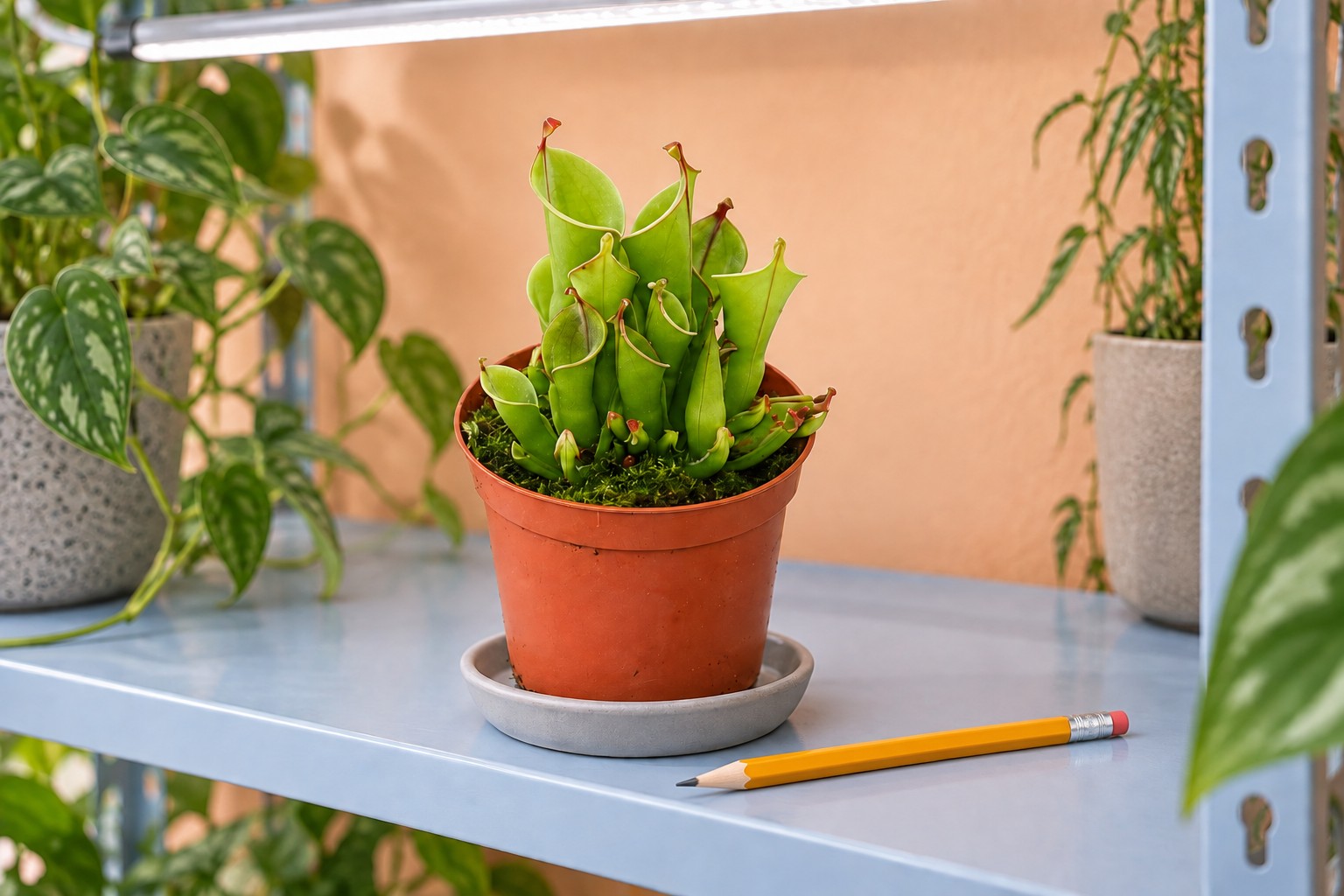
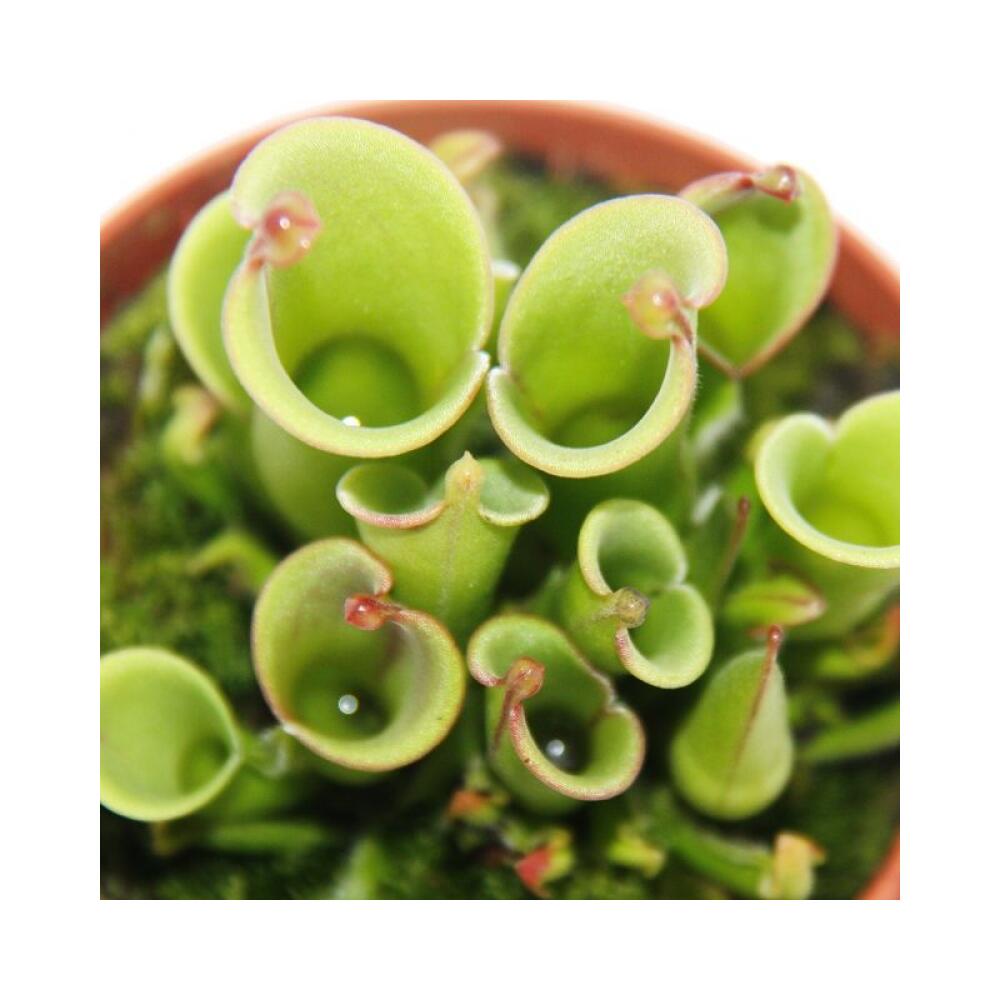
An open pitcher with a small nectar spoon
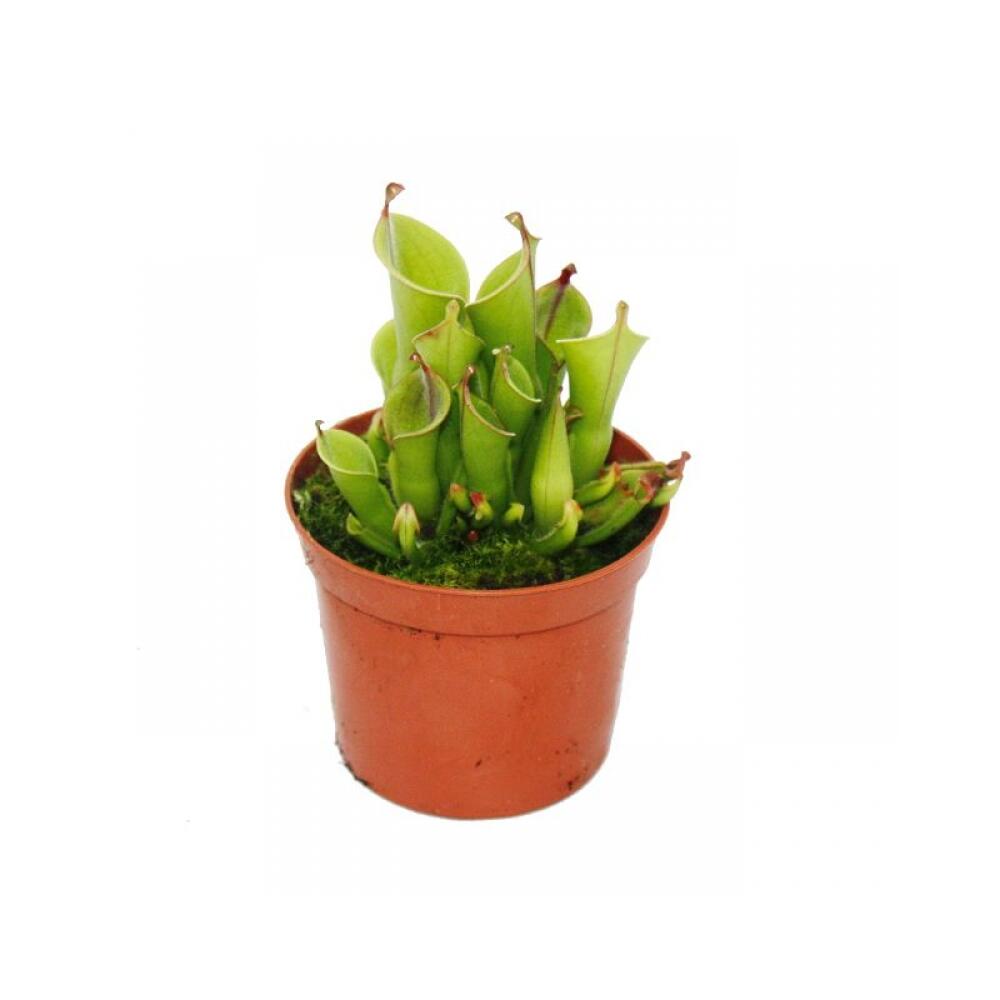
Trapping leaves stand upright and form funnel-like open pitchers. A small spoon-like nectar appendage often sits at the upper edge. It is not a broad lid like in some other pitcher plants. Nectar may attract insects into the liquid. Heliamphora belongs to the Sarraceniaceae. The offer names only the genus, no particular species or cross. No species-specific final dimensions or guaranteed colour of a particular hybrid are therefore asserted here.
Patience belongs with this small plant
A 9 cm pot is delivered; no definitive total height is given. The scene shows a compact young clump in the appropriate pot size. Heliamphora may grow slowly even in good conditions. Young traps sometimes differ from mature pitchers, and a few weeks without much visible increase do not automatically mean a deficiency. A healthy new pitcher is a better measure than unchanging perfection of every old leaf. Choose a place where you can regularly observe conditions.
Strong light must not become a heat trap
Highland origins combine high brightness with often relatively mild temperatures. A very bright position matters, but continually overheated air behind glass is unfavourable. The shop gives approximately 20 to 25 °C by day and 10 to 15 °C at night as guidance. Exact tolerance depends on species or hybrid. Suitable plant lighting can supply light without the strong heat of direct sun. Ensure air exchange in a cabinet. A closed glass dome in sunlight is no suitable solution for higher humidity.
Grow moist and aerate the root zone
Use clean rainwater, suitable reverse-osmosis water or distilled water without additives. Compost remains moist but should be airy and not constantly stand deep in water. Regularly water from above and let drain; exact frequency follows evaporation and temperature. A suitable loose carnivorous-plant mix is better than pre-fertilised potting compost. If functional pitchers are entirely empty after transport, carefully add a little low-mineral water. Do not fill to the brim or force fixed feeding quantities. Old brown pitchers will no longer regenerate.
Low-nutrient cultivation without kitchen experiments
For beginners, use no ordinary fertiliser sticks, pre-fertilised compost or concentrated houseplant feed. Expert growers sometimes use precisely measured supplements; this is no reason to experimentally feed a newly received plant heavily. Meat, cheese and large quantities of insects do not belong in pitchers either. A study published in 2026 detected the plants’ own digestive enzymes in three investigated Heliamphora taxa. The blanket assertion that all Heliamphora use bacteria exclusively and produce no enzymes themselves is therefore not adopted. Microorganisms may nevertheless take part in digestion.
Limit repotting and cutting to essentials
Disturb sensitive roots as little as possible. Repot carefully only with poor compost condition or clear lack of room. Strong multi-shoot clumps may be divided; a small newly acclimatised plant is better kept together. Cleanly remove completely dead pitchers without catching delicate nectar spoons of healthy neighbouring leaves. Soft black areas at the growth point, poor ventilation or lasting heat call for prompt checking. Heliamphora needs no frosty winter rest like some North American pitcher plants. Good cultivation here chiefly means stable suitable conditions and patience.
One plant, several views
Good to know
Which Heliamphora species will I receive?
The offer names only the genus. A specific species or hybrid is not invented here.
Is a very hot south-facing window ideal?
Plenty of light is needed, but lasting heat is unfavourable. Light and temperature must be assessed together.
Should the pot constantly stand deep in water?
No. The root zone stays moist and airy; excess water must drain.
Does Heliamphora digest exclusively with bacteria?
That blanket statement is outdated. Own digestive enzymes were demonstrated in investigated taxa; microorganisms may additionally contribute.
Sources and editorial note
- Product and delivery contents: Exotenherz
- Sarracenia Northwest nursery: cultivation knowledge
- Sarracenia Northwest nursery: cultivation knowledge
- International Carnivorous Plant Society: growing experience
- Research study: digestive enzymes in Heliamphora
Sources checked: 15 September 2026. Product information and delivery contents follow the linked shop offer. Care has been checked against the stated specialist sources and remains subject to plant condition, position and season.