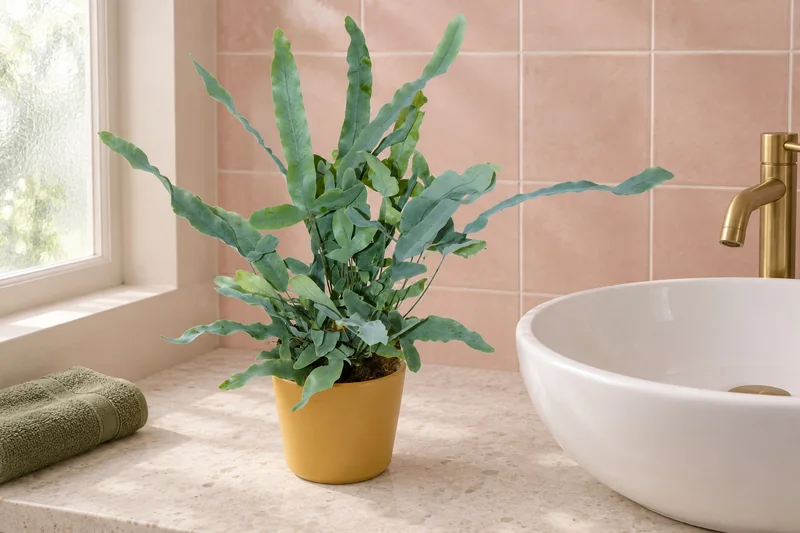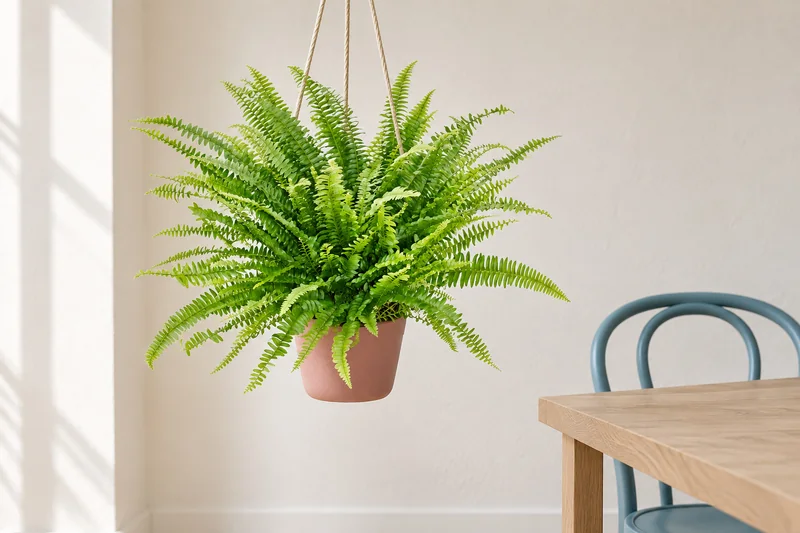
This plant at Exotenherz
Check the shop offer for current availability, price and what is included.
Check the selected shop offer for price, availability and delivery contents.
Your care table
| Topic | What to do | Why it helps |
|---|---|---|
| Light | Choose a bright to partially shaded place with filtered daylight. | The heart fern needs protection from hot direct sun. |
| Water | Water at slight surface drying; do not let the root ball dry completely. | The small fern needs reliable well-ventilated supply. |
| Drainage | Use a draining inner pot and remove excess water. | Wetness at roots may encourage rot despite moisture-loving cultivation. |
| Air humidity | Allow more humid surrounding air with gentle exchange. | A filled decorative pot does not replace a suitable room climate. |
| Soil | Use loose humus-rich well-drained substrate. | Moisture and air should be available together in the root zone. |
| Nutrients | During growth, feed weakly according to the fertiliser label. | The mini root ball needs only moderate nutrient supply. |
| Leaf care | Look at undersides; preserve healthy leaves and spore structures. | Regular brown spore clusters may be natural. |
| Winter | Keep warm, frost-free and sufficiently bright; water according to consumption. | Less light may reduce needs while heating proximity increases evaporation. |
Check the compost and pot weight. The care table explains how far the compost may dry.
Water only when needed. The water should reach the root ball without spilling over the rim.
Remove surplus water from the saucer or cachepot. Then return the plant to a suitable position.
A heart that belongs to a fern
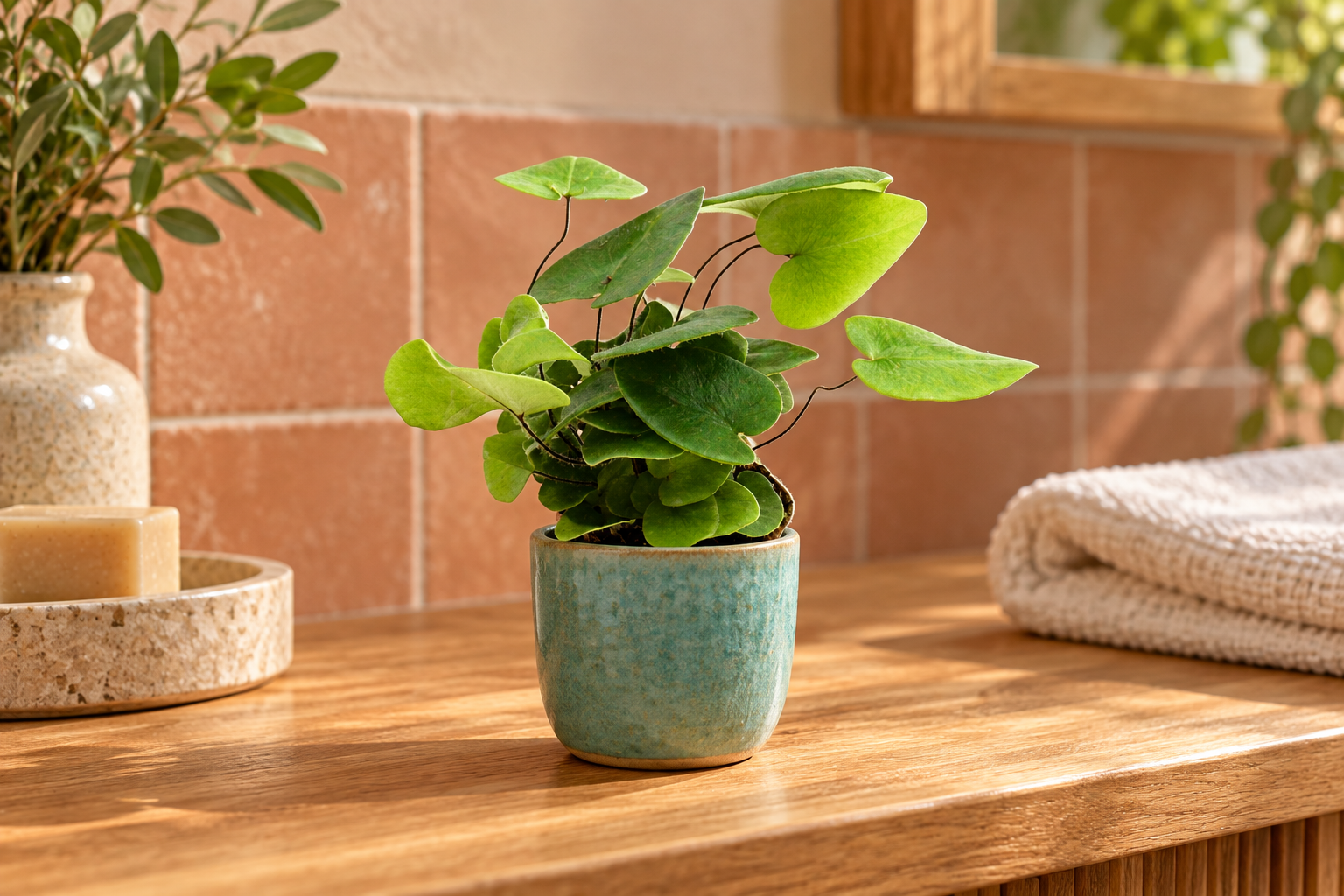
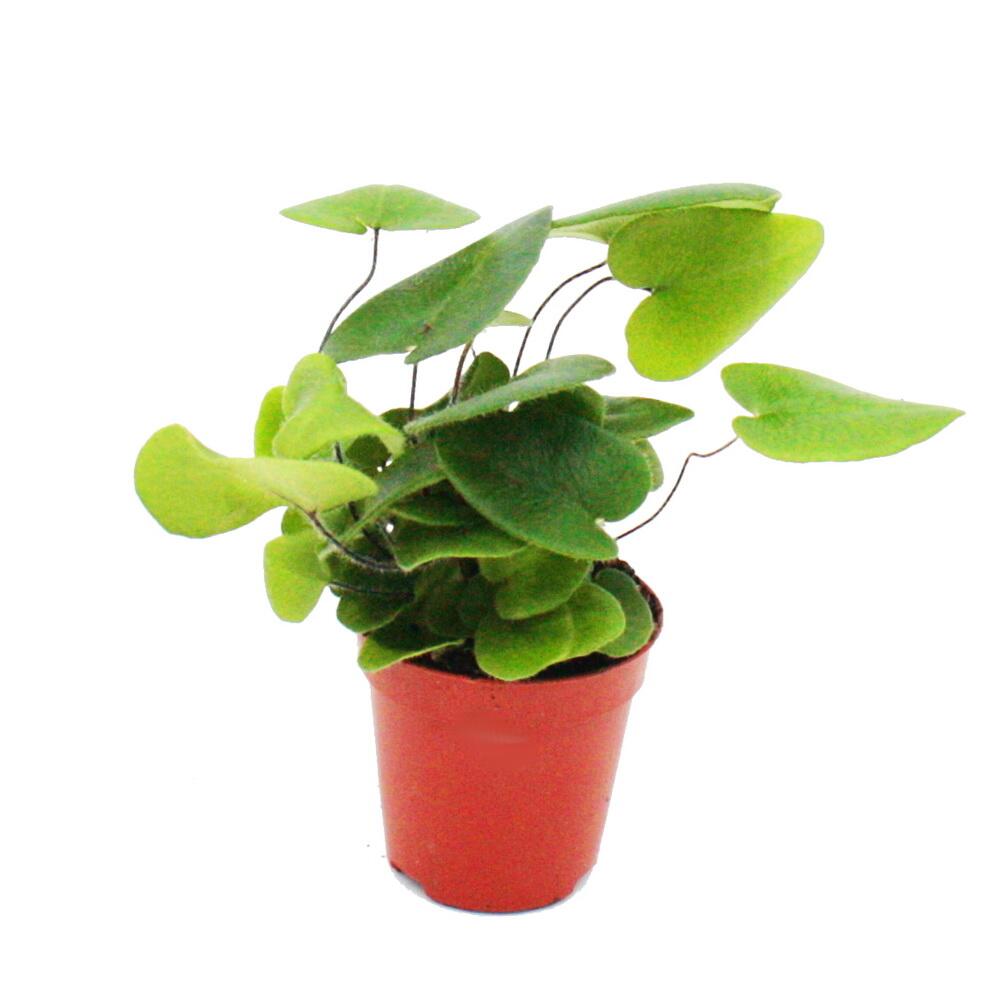
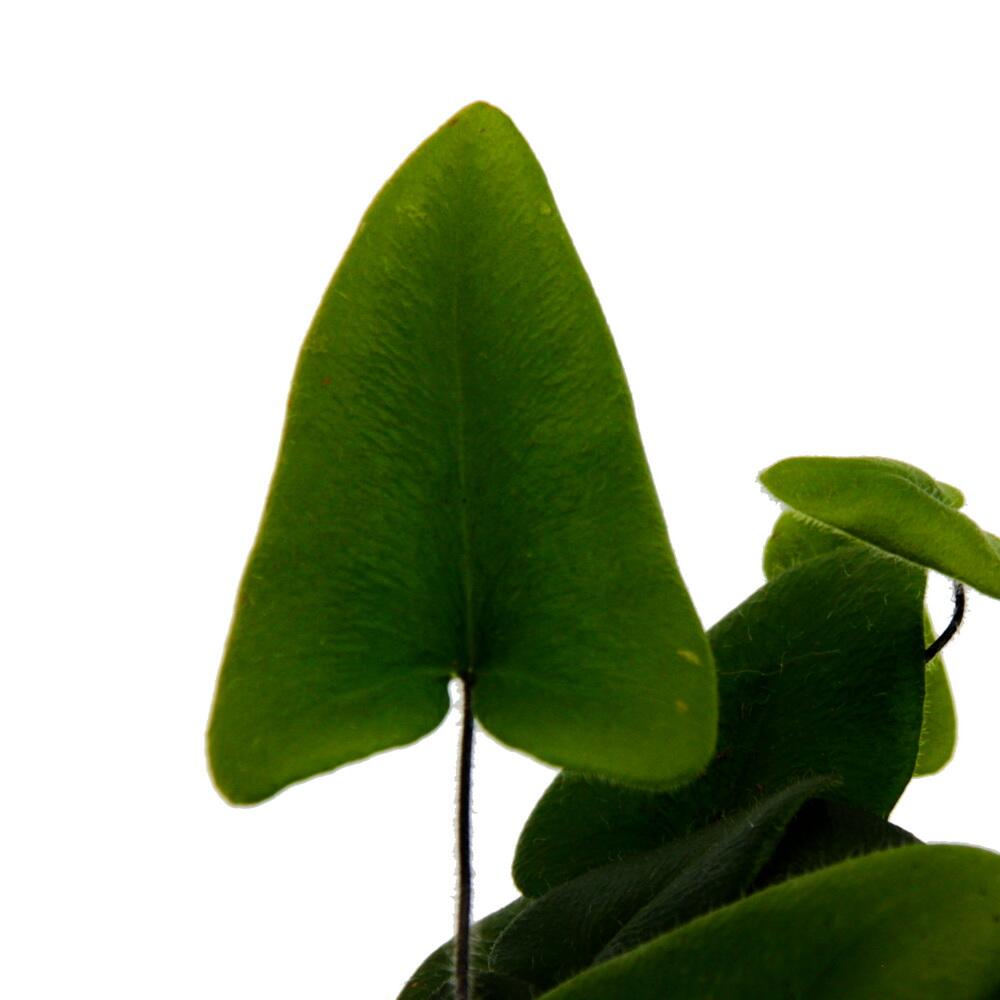
The heart fern surprises with its shape. Green leaves stand on thin dark stems and have an entire heart-shaped surface. Anyone who thinks only of finely divided fern fronds discovers a completely different structure here. We like to put the small plant in a bright care position where it can be viewed close up. Between large pots, its individual hearts quickly disappear. Calm green looks particularly lovely beside natural materials; actual conditions should suit just as well as the styling.
The shop name remains the guide
The offer is named Hemionitis arifolia. Botanically, the species is also listed as Parahemionitis arifolia; you encounter both names when reading about the heart fern. The plant belongs to ferns and forms no flowers. Here it is delivered in a 5.5 cm pot at about 10 to 12 cm overall height. This describes the young plant including pot. Later the small clump may develop further without becoming a large tree fern. The original photograph shows the specific young leaf form, the scene a possible styling position with a decorative pot.
A bright place with soft light
Filtered daylight and a warm position suit indoor cultivation well. Avoid hot direct sun, especially after shipping and behind heated glass. A bright bathroom may be interesting if enough natural light is genuinely present. A windowless room does not instead become a suitable plant position through shower steam alone. On a shelf, check light at lower leaves. Protect from cold airflow when ventilating and leave distance from heating. The little fern gets a quiet spot where you can easily check its moisture.
Water for the root ball, not as a base reserve
Before each watering, feel the surface and compare pot weight. Once upper soil begins to dry slightly, supply the small root ball slowly, then let it drain. Complete drying suits this cultivation poorly, as does permanently collected water. A wet root ball with limp leaves does not automatically get more water. First check whether roots have air and free drainage. After rain, watering or brief immersion, no hidden residue may stay in the decorative pot. Observe how consumption changes in warm summer and low-light weeks.
Consider room air and soil moisture separately
The heart fern likes more humid surrounding air. A suitable plant group or a bright regularly used bathroom may help; dry heating proximity is avoided. This does not mean soil should stay permanently saturated. Those keeping it in a glass arrangement must monitor condensation, temperature and plant condition. The plant centre must not permanently disappear beneath wet decoration. Gentle air exchange still belongs to care. A simple photograph from the same position helps notice changes without altering the entire routine at every slightly drier edge.
Expand the small root zone gently
Loose humus-rich substrate with good drainage supports supply. At later repotting, give only a little more room once the existing root ball is clearly densely rooted. Preserve previous planting depth and do not use little dark stems as handles. During visible growth, feed weakly according to the fertiliser label; pre-fertilised new soil initially brings nutrients itself. Do not respond to stalled growth with ever stronger feeding. Check light, warmth and root conditions first. Fully dead leaves can be removed carefully while healthy hearts stay on the plant.
The underside tells a story too
In older plants, more strongly arrow-shaped fertile fronds may appear alongside heart-shaped ones. Their undersides carry brown-golden spore clusters. Such a regular structure is not automatically rust or a pest and is not scraped away preventively. Irregular soft areas or new pest traces are instead checked together with growing conditions. Continue accompanying winter warm, bright and frost-free, watering as needed. Healthy fresh growth brings particular pleasure: another green heart showing that the little fern has found its position.
One plant, several views
Good to know
Is the heart fern really a fern?
Yes. Despite entire heart-shaped leaf surfaces, it belongs to ferns and forms no flowers.
What does Parahemionitis arifolia mean?
It is a botanical naming of the heart fern offered in the shop as Hemionitis arifolia.
Are brown structures beneath older fronds always diseased?
No. Regular brown-golden spore clusters on fertile fronds may be natural. Check new irregular damage separately.
Is a humid windowless bathroom enough?
No. Humid air does not replace daylight. The position must be sufficiently bright without hot direct sun.
May water remain in the decorative pot?
No. Remove excess after watering. More humid surrounding air and wet roots are different things.
Why do some fronds look more arrow-shaped?
The heart fern may develop different frond shapes. Fertile fronds are often more arrow-shaped and carry spores.
Sources and editorial note
- Exotenherz: offer and original images (02.10.2026)
- NParks: Parahemionitis arifolia (02.10.2026)
- RHS: cultivating houseplants (02.10.2026)
- RHS: humidity for houseplants (02.10.2026)
Shop offer, article number, GTIN, availability and original images checked directly on 02.10.2026. Specialist sources read directly. Parahemionitis synonym and fertile/sterile frond forms documented by NParks. No healing, consumption, harmlessness or fixed winter-hardiness promise.