This plant at Exotenherz
Check the shop offer for current availability, price and what is included.
Product and delivery details are given in the individual offer.
Your care table
| Topic | What to do | Why it helps |
|---|---|---|
| Light | Bright position with filtered daylight. | Consistent brightness supports new growth. |
| Water | Water after the upper rootball has dried somewhat. | Avoid persistent wetness and prolonged complete drying. |
| Drainage | Let the nursery pot drain completely. | The decorative pot must not collect water around the roots. |
| Compost | Keep loose and well drained. | Roots need moisture and air. |
| Climbing support | Guide new shoots loosely without tying tightly. | The stems thicken and need room to move. |
| Fertiliser | Dose moderately during active growth. | More nutrients do not replace suitable cultivation. |
| Flower stalks | Keep healthy old flowering sites. | Flowers may appear there again later. |
| Winter | Keep bright and warm; check actual consumption. | Less light changes the necessary watering intervals. |
Check the compost and pot weight. The care table explains how far the compost may dry.
Water only when needed. The water should reach the root ball without spilling over the rim.
Remove surplus water from the saucer or cachepot. Then return the plant to a suitable position.
A little pyramid full of glossy green
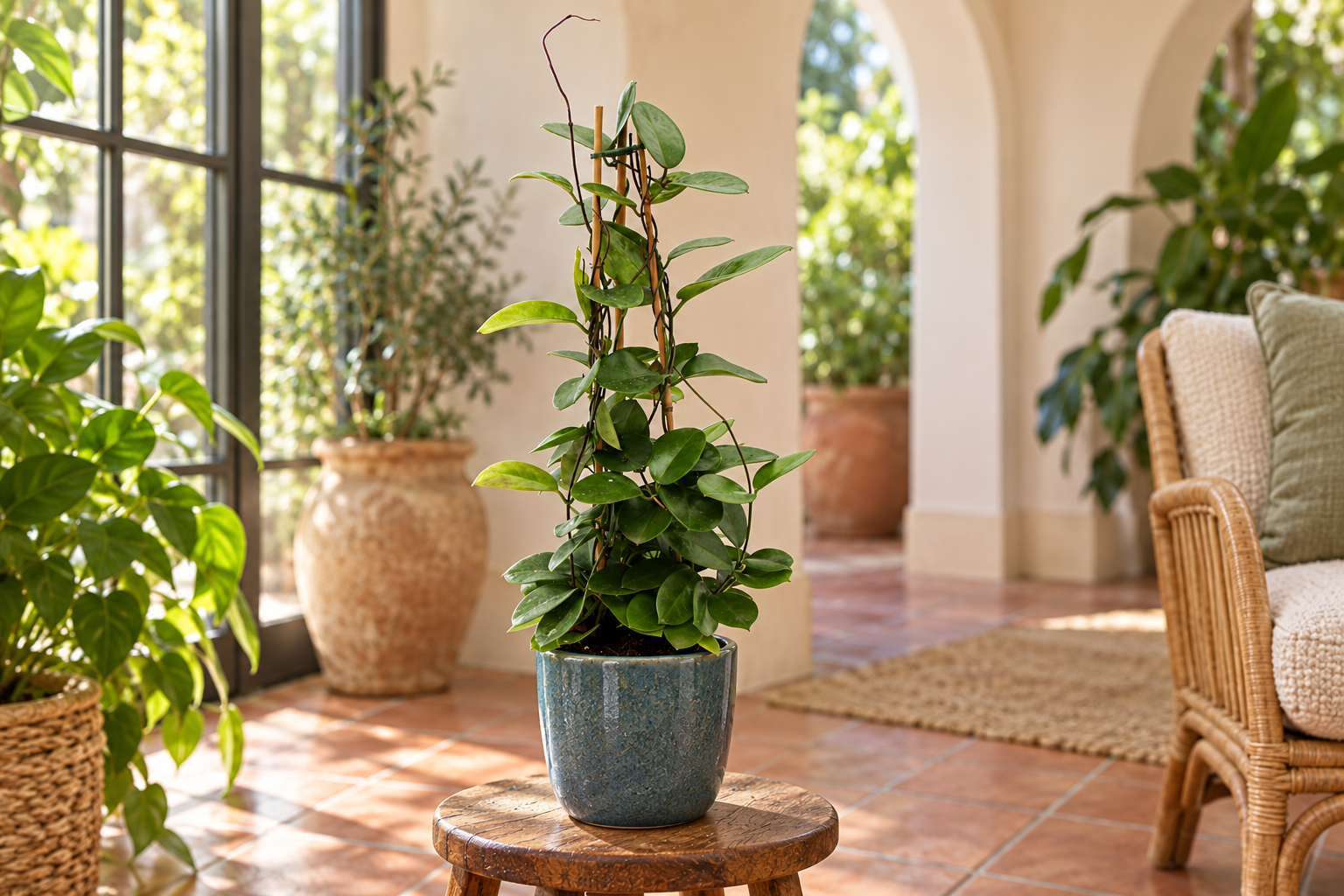
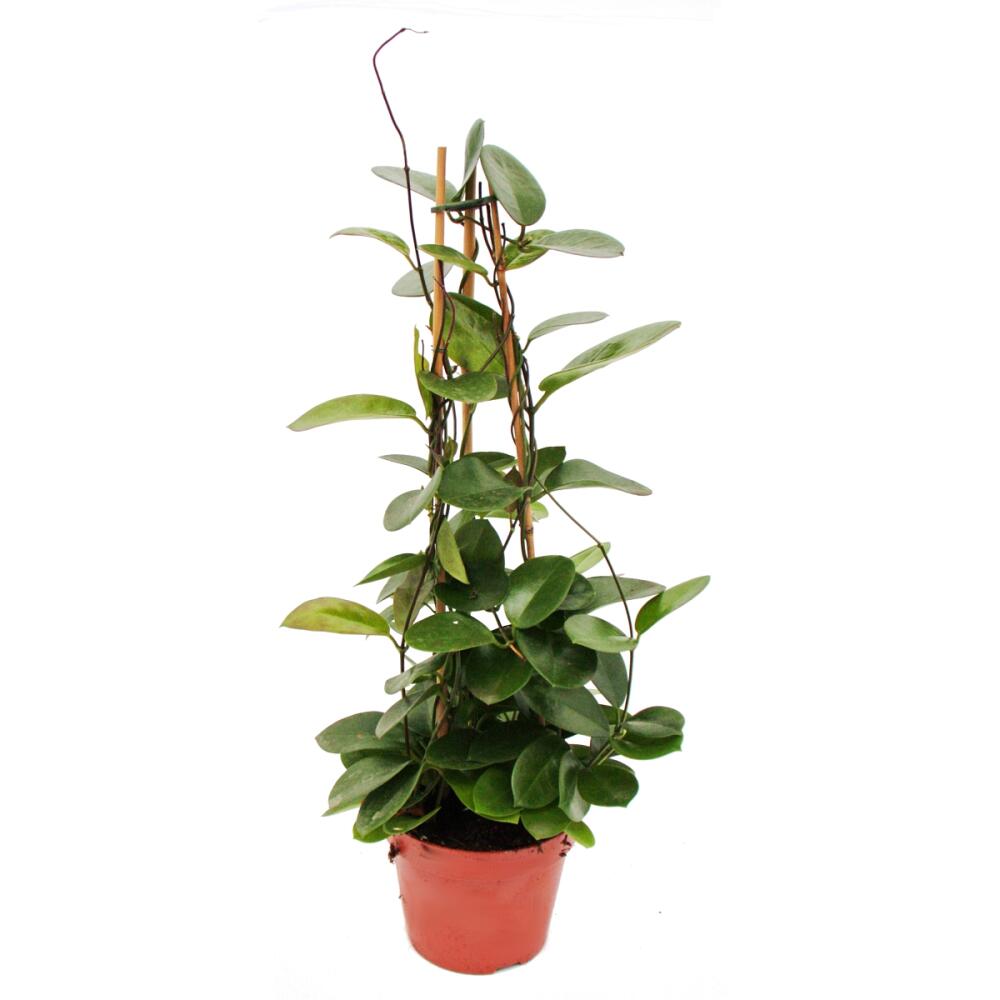
Hoya australis combines strong green foliage with calm climbing growth. Its oval, fleshy leaves look clear and orderly on a simple climbing pyramid. I see it as a beautiful plant for a bright living corner where its form can stand freely. The offer specifies a seventeen-centimetre pot and around fifty to sixty centimetres in height. The climbing support belongs to the arrangement described there. Over the years, the plant can produce considerably longer shoots; the small starting format is therefore not a permanent height limit. The decorative outer pot in the scene is an interior idea, not an additional delivery promise.
Climbing belongs to its development
New hoya shoots may initially look long and relatively sparsely leaved. They seek space and support before the shape becomes denser. I guide them carefully along the existing support without immediately cutting back every tip. A loose attachment must not constrict the shoot. If the small pyramid later becomes too confined, more appropriate support can be chosen. The plant need not be torn out of all its existing growth in the process. Protruding stems are also part of natural development. For a position directly beside a frequently opened cupboard door, I therefore allow some extra distance.
A bright position without sudden heat
The plant needs good daylight. Bright, filtered conditions are easier to assess than a hot spot directly behind south-facing glass. After transport or relocation, it is acclimatised slowly. Leaves at the back of the climbing support should not disappear permanently into deep shade either. I observe new growth and choose a more open place if needed. The glossy foliage is not linked to a promise of special air purification. Its real strength lies in the beautiful green form and how its shoots continue developing with calm care.
Check the rootball before each watering
The top layer of compost may dry somewhat between waterings. Before giving water, I additionally check weight and remaining moisture in the rootball. Fleshy leaves have reserves, but the plant is not left for months without watering care. After watering, excess water drains from the nursery pot. None stays in the outer pot. A bright, warm summer position and a grey winter day call for different intervals. A fixed weekday is therefore no reliable substitute for a brief pot check. After moving it, those intervals are initially observed especially attentively.
Roots receive air and manageable space
A loose, free-draining mixture supports the roots. It should absorb water and then allow air back to the rootball rather than become a permanently wet mass. During repotting, I check whether the existing compost is sufficiently rooted through. Only a little more room is needed if a change is necessary. A larger climbing support does not automatically mean a very large pot is required too. Feeding is moderate during active growth. Existing pre-fertilisation in the compost and the product’s instructions also count. A strong fertiliser solution is not given as a precaution to a dry or visibly damaged rootball.
White flowers as a lovely bonus
Well-developed plants may produce white, fragrant flowers. Indoors, timing depends on cultivation and development; guaranteed flowering in the first year would promise too much. Healthy flower stalks stay after flowering. Hoyas can reuse existing sites. These are therefore inspected more closely before pruning. When buds are visible, the plant is kept as settled as possible in its suitable position. An unobtrusive green phase also belongs to its development. Healthy leaves and new shoots provide good points to observe even when no flowers are currently visible.
Answer changes calmly
Soft or yellow leaves prompt checking compost, drainage and temperature first. A wet, cold pot needs a different response from a completely dry rootball in warm air. Individual old leaves are removed without cutting back the entire plant heavily out of concern. In winter, light and a frost-free position remain important. Cutting is done with clean tools; emerging sap is kept away from eyes and sensitive skin. The original photograph in the gallery shows the offered starting form and makes the difference from the designed living-room scene clear.
One plant, several views
Good to know
Does it stay 60 cm tall?
No. That is the offered starting size; climbing shoots may become longer later.
What should I do with long new shoots?
Guide them carefully along the support rather than automatically removing every initially sparsely leaved shoot.
Must it stay permanently wet?
No. The upper compost may dry somewhat; remaining water is removed.
Can it flower white?
Yes, white, fragrant flowers are possible; timing and quantity are not promised.
Should old flower stalks be removed?
Keep healthy flowering sites.
Does a larger climbing support need a much larger pot?
Not automatically. Repotting depends on rootball development.
Which details should I check in the Hoya australis offer?
Check the linked shop offer for the current price, availability, delivery contents and delivery terms.
Sources and editorial note
- Exotenherz: offer and original photographs (01.10.2026)
- RHS: Hoya australis (01.10.2026)
- RHS: growing hoyas (01.10.2026)
Shop offer, SKU, GTIN and availability checked live on 01.10.2026. Original photograph unchanged. Independently researched gardening texts and an individually reviewed scene.