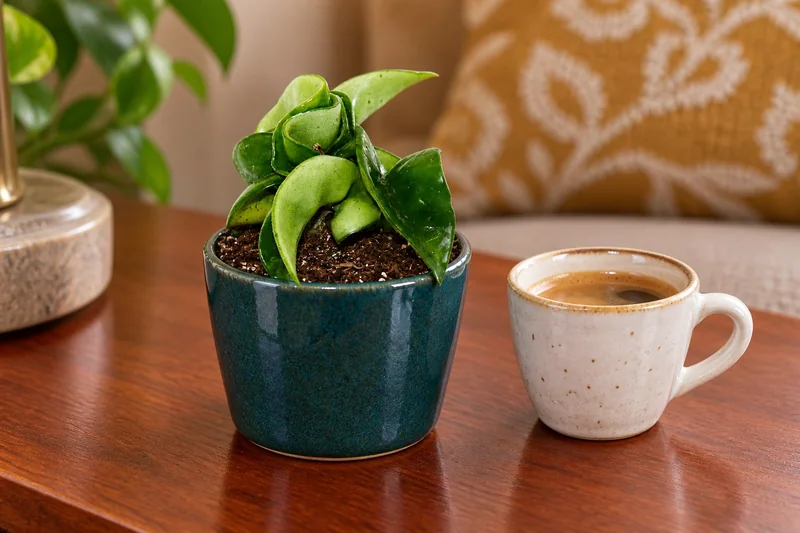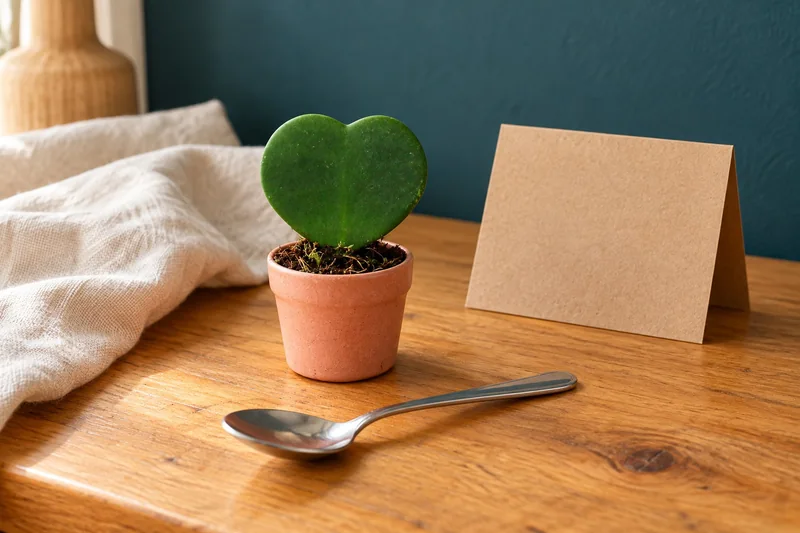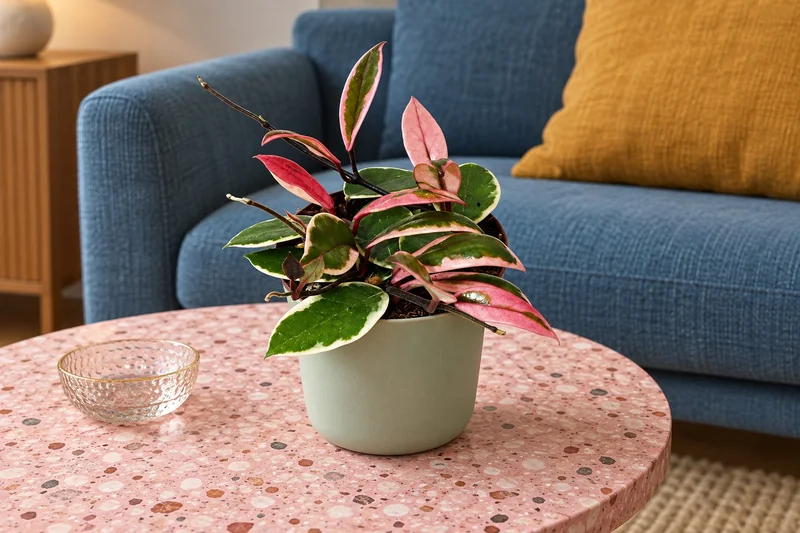
This plant at Exotenherz
Check the shop offer for current availability, price and what is included.
Check the selected shop offer for price, availability and delivery contents.
Your care table
| Topic | What to do | Why it helps |
|---|---|---|
| Light | Position brightly and avoid hot direct summer sun. | Good light supports development of the young foliage plant. |
| Water | Let the surface dry slightly, then water thoroughly. | Firm leaves are no reason for repeated complete drying. |
| Drainage | Let water drain completely and empty the cachepot. | Roots adapted to an epiphytic way of life need air rather than permanently standing water. |
| Substrate | Use an airy, well-drained substrate with stable structural components. | A small permeable root ball can be checked reliably. |
| Container | Provide more room cautiously only once roots densely fill the ball. | An oversized pot stays damp unnecessarily long. |
| Feeding | During visible growth, supply moderate nutrients according to the fertiliser label. | The small root ball cannot tolerate unnecessarily high salt concentrations. |
| Training | Guide later stems loosely or let them grow over the edge. | Young stems should develop without being constricted. |
| Flower care | Keep later flowering points after flowering. | Hoyas may flower again on existing flower stalks. |
Check the compost and pot weight. The care table explains how far the compost may dry.
Water only when needed. The water should reach the root ball without spilling over the rim.
Remove surplus water from the saucer or cachepot. Then return the plant to a suitable position.
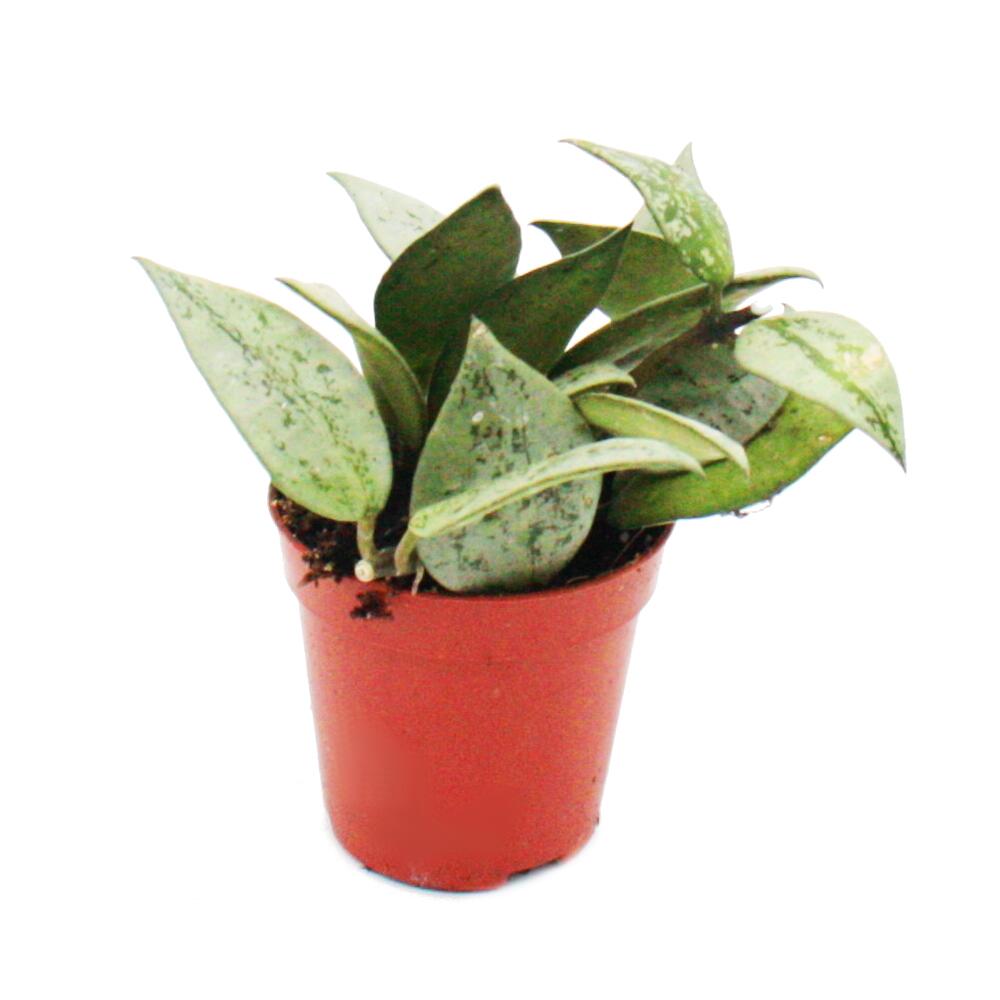
Silver across small leaf surfaces
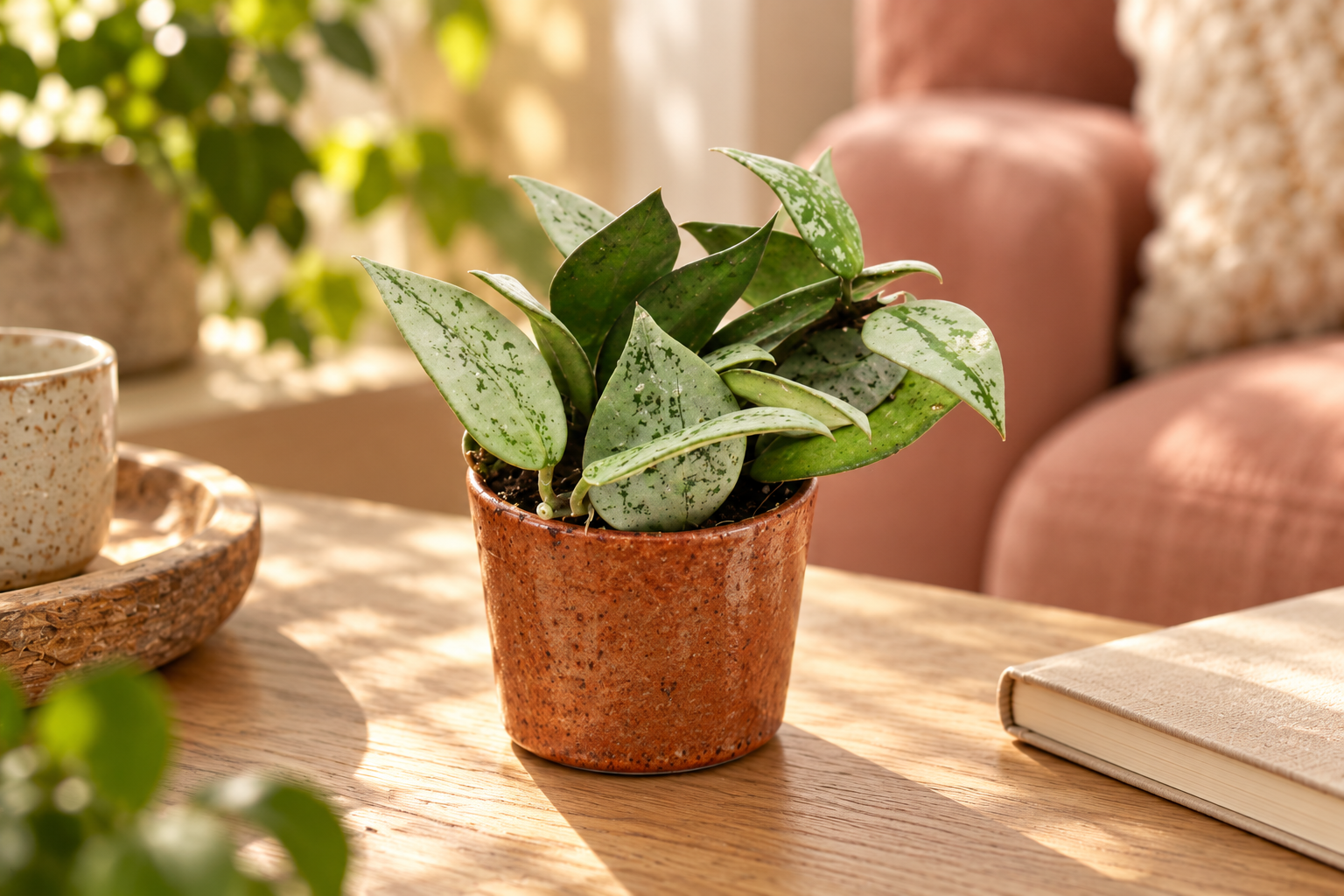
This hoya draws attention through its leaf markings. Silver areas and speckles rest on green, firm surfaces, making each leaf look slightly different. The small pot invites a closer look. We like it on a well-lit sideboard or an open shelf where light reaches the leaves from the side. The quiet foliage display needs no large flower to complete it. Particularly at the start, a healthy, newly unfolded leaf is already a lovely sign that the young plant accepts its position.
The specific small shop form
The offer names Hoya krohniana, and its detailed description adds Eskimo. We retain this shop name and show the corresponding original photograph. This is a young plant supplied in a 5.5 cm pot at an overall height of about 8 to 10 cm. It is therefore not yet a long, densely leafy climber. With further development, longer stems may use a small support or grow over the container edge. We do not derive any guaranteed final length from its delivery height. The silver markings and leaf arrangement are considered on the specific young offer.
A bright position and a quiet beginning
A bright position with filtered daylight supports the hoya. Avoid hot direct summer sun, especially after transport or a longer stay in protected cultivation. A shelf is suitable only if light reaches the plant; a dark compartment remains unfavourable despite its decorative appearance. Keep it away from heating and protect it from cold draughts when airing the room. During the first days, observe rather than immediately pruning, repotting and feeding heavily. The small root ball is easy to check in its original container while the plant adjusts to its new surroundings.
Firm leaves and airy roots
Wax plants have firm leaves adapted to their way of life. Their roots still need a reliable water supply. Let the upper soil layer dry slightly, then water slowly and thoroughly and remove the excess. Repeatedly drying out the entire tiny root ball is not sensible routine care. Nor should water remain hidden in the cachepot. Feel the soil before the next watering and compare pot weight. If the plant becomes limp in wet soil, check drainage and root conditions. An extra sip does not solve moisture already trapped there.
The container can grow with the plant
An airy, well-drained substrate helps combine water supply with root aeration. When repotting later, provide only a little more room once roots clearly fill the existing ball. A large reserve pot would initially be harder to manage for the young plant. Keep the existing planting depth and handle the pot or root ball gently rather than pulling individual leaves. Moderate nutrient applications belong to actual growth and follow the fertiliser label and substrate reserves. If development slows in weeks with little light, more fertiliser cannot replace a better position.
Leave room for later climbing stems
New stems may initially look longer and less leafy while finding their way. A small support can guide them loosely; check ties regularly. If you like trailing growth, leave room at the container edge. Do not cut every new tip at once merely because the supplied plant originally looked very compact. Wear gloves and use clean tools when arranging or pruning. An occasional photograph from the same angle shows how the young form changes. This lets you accompany the hoya without trying to force an adult plant in the first month.
Flowers remain a possible extra
With good development and suitable conditions, hoyas may produce flowers later. The young supplied plant need not have buds yet, and the article promises no fixed flowering date. If flower stalks appear later, keep them after flowering: new flowers may form at existing points. In winter, continue to keep it bright, warm and frost-free, adjusting water to consumption and nutrients to growth. Occasionally check leaf bases and undersides for signs of pests. At the start, we especially enjoy the individual silver character of this small foliage plant.
One plant, several views

Good to know
What does Eskimo mean in this offer?
The shop description uses this name for the silver-marked form of Hoya krohniana. The article refers to the young shop offer shown here.
Is every silver marking a leaf problem?
No. Silver areas are part of the markings offered. Check newly appearing soft, dry or irregularly damaged areas separately.
Is it already a long hanging plant?
A young miniature plant is supplied. Longer climbing or trailing stems develop with further growth.
Should I keep it completely dry like a cactus?
No. Let the surface dry slightly between waterings, but do not regularly dry out the entire small root ball. Avoid standing water.
Does the pot need to become much larger immediately?
Choose the next size cautiously only when roots clearly fill the ball. A very large pot makes moisture control harder.
Do I cut off later spent flowering points?
Keep existing flower stalks because hoyas can produce more flowers there. The young plant need not flower yet.
Sources and editorial note
- Exotenherz: offer and original images (02.10.2026)
- Kew: Hoya krohniana, species and origin (02.10.2026)
- RHS: growing wax plants (02.10.2026)
- Gabriella Plants: silver-marked Hoya krohniana (02.10.2026)
Shop offer, article number, GTIN, availability and original images checked directly on 02.10.2026. Specialist sources read directly. Shop name Eskimo retained, with no renaming or Super Silver promise. Generated leaf arrangement compared with the specific original. No invented flower colour, fixed flowering time or final length.