This plant at Exotenherz
Check the shop offer for current availability, price and what is included.
Product and delivery details are given in the individual offer.
Your care table
| Topic | What to do | Why it helps |
|---|---|---|
| Light | Place in bright light and gently soften hot, direct sunshine. | Pale leaf surfaces deserve protection from sudden heat. |
| Water | Water thoroughly after the upper compost has dried somewhat. | Fleshy leaves do not need permanent wetness. |
| Drainage | Let drain after watering and empty the outer pot. | Hidden leftover water otherwise stays around the roots. |
| Growing medium | Use a loose, free-draining mixture. | Root spaces need air and even moisture. |
| Fertiliser | Feed moderately during growth, following product instructions. | More fertiliser does not produce a promised leaf colour. |
| Shoots | Guide later trailing stems freely or support them loosely. | The compact shop format is not a permanent growth limit. |
| Flowering sites | Keep healthy old flower stalks. | Hoyas can reuse such sites. |
| Winter | Care for it in bright, warm, draught-free conditions. | Consumption follows light and growth. |
Check the compost and pot weight. The care table explains how far the compost may dry.
Water only when needed. The water should reach the root ball without spilling over the rim.
Remove surplus water from the saucer or cachepot. Then return the plant to a suitable position.
A small colour accent for everyday life
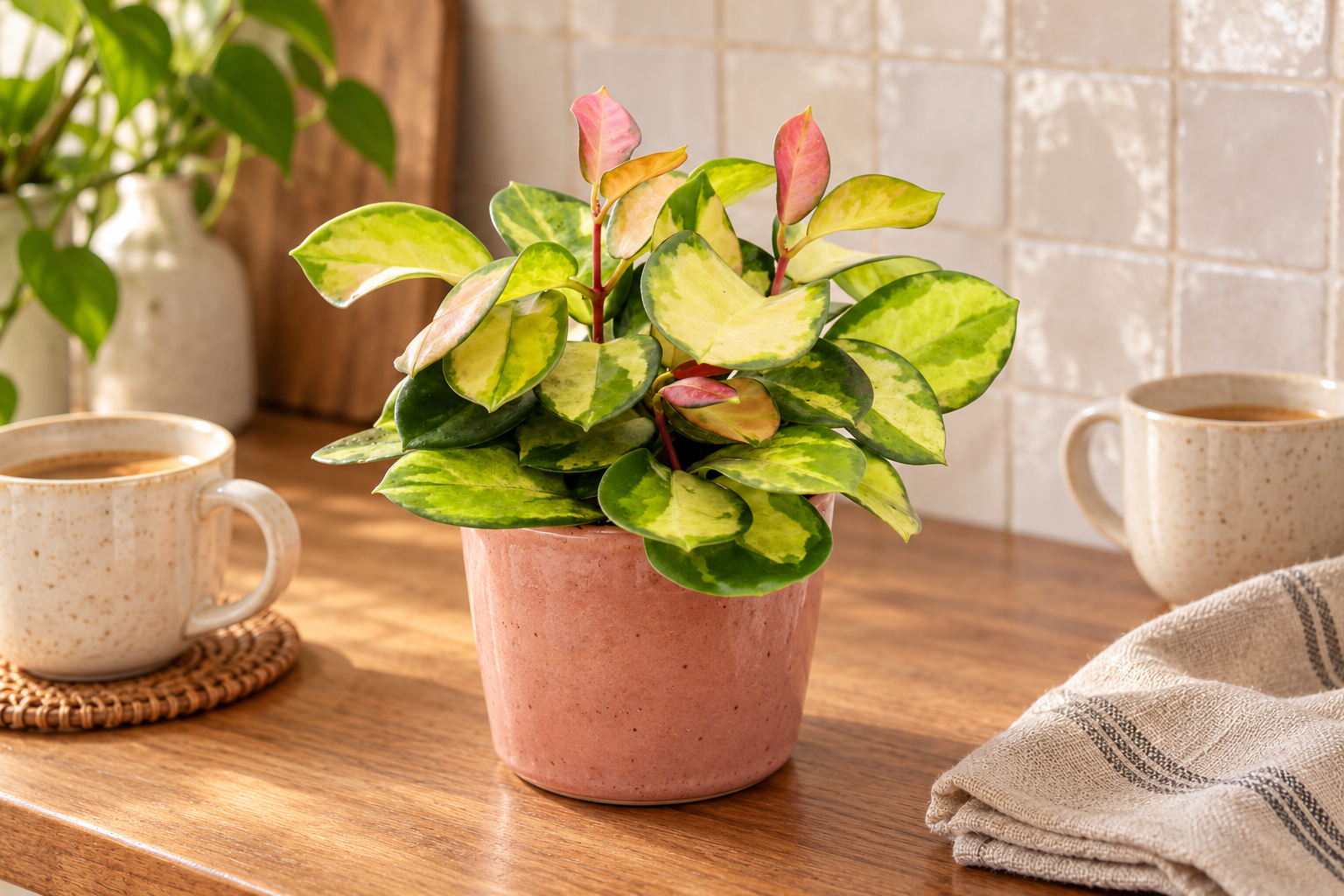
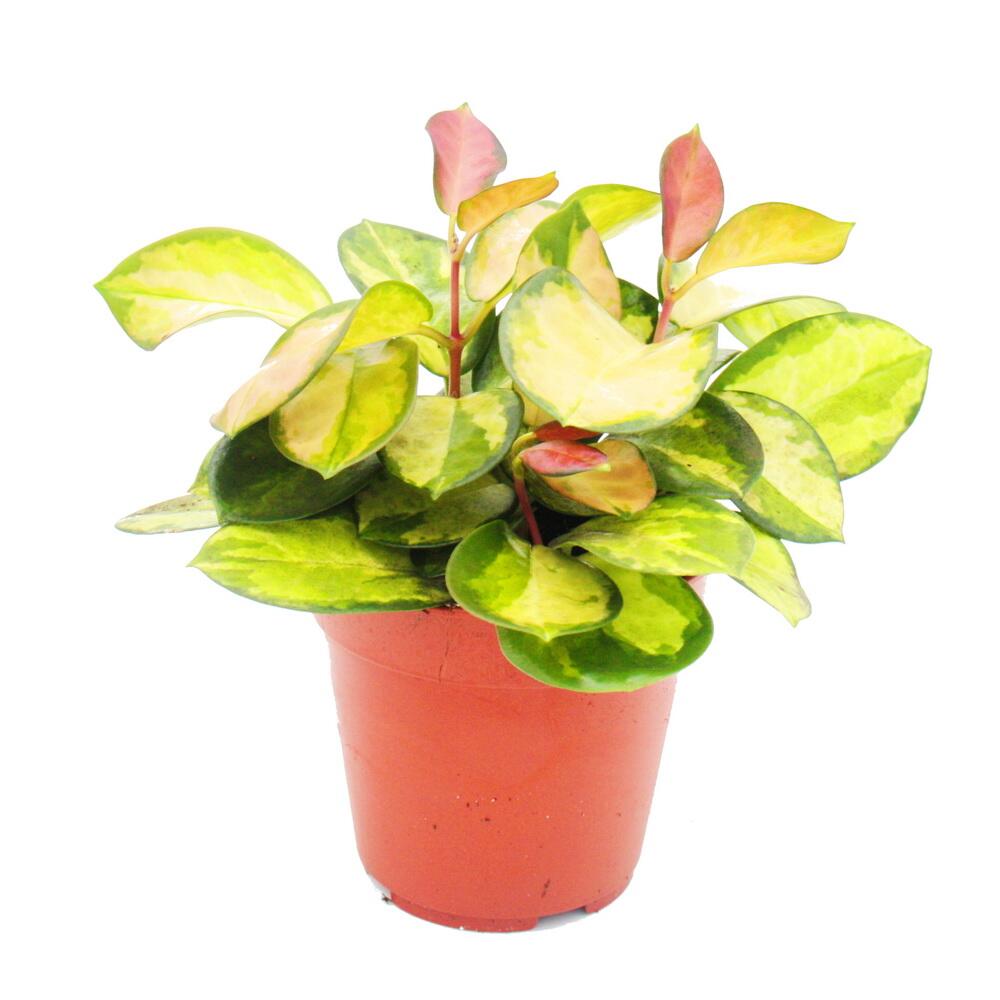
Lisa makes its impression even in young foliage. Broad, oval leaves combine green edges with pale centres; new leaves may also be tinged pink. These colours develop further and are not distributed identically on every leaf. A simple outer pot lets the pattern show well. I like placing the small plant at a bright breakfast spot where new growth can be observed in passing. The offer specifies a twelve-centimetre pot and around fifteen to twenty centimetres in height. The scene follows this manageable starting size and does not promise an already large, flowering climber.
The shop name and botanical classification
The offer says Hoya carnosa Lisa. Botanically, however, the variety Lisa is assigned to Hoya australis subsp. tenuipes. We keep this distinction visible rather than turning the different names into two separate care plants. Alongside the variety name, the actual leaf appearance of the offered plant matters for its assignment. Lisa has pale leaf centres with green edges and often pink young foliage. The unchanged original image therefore remains in the gallery. It helps compare your own plant and prevents a decorative scene becoming the only basis for understanding the offer.
Brightness belongs to the colourful leaf effect
A bright position with filtered daylight suits this wax plant. Pale leaf areas should not suddenly receive hot, direct sunshine behind glass. After transport, the plant is acclimatised gradually. A deep shelf with little daylight is no good long-term solution despite a matching outer-pot colour. I watch for healthy new growth rather than whether every new leaf becomes as pink as a particularly beautiful photograph. Leaf colours change as they mature. Extra fertiliser is no reliable way to force a particular colour distribution; position and natural development remain decisive.
Briefly look at the rootball before watering
Fleshy leaves store some water. Nevertheless, the rootball is checked regularly and not allowed to dry out completely for a long period. The top layer of compost may dry somewhat before it is watered evenly again. I briefly lift the small pot and feel how its weight changes. A heavy, still-moist rootball needs no further precautionary watering. After watering, excess drains away and the decorative pot is checked. A fixed weekday does not reliably account for warm, bright days and grey winter weeks. The plant itself and its compost provide better clues.
A small pot can initially stay small
The young format needs no immediate move into a large container. During repotting, I first check root development and the structure of the existing compost. A loose, free-draining mixture gives roots air while retaining sufficient moisture. If more space is needed, a slightly larger nursery pot with drainage is enough. Feeding is moderate during visible growth, depending on the product and pre-fertilisation. A dense, wet rootball is not improved by heavy additional feeding. Likewise, longer growth alone does not prove that the roots already need a considerably greater quantity of compost.
Later, Lisa may grow longer
Longer trailing shoots can develop over time. They are guided freely over an edge or loosely attached to a suitable support. An initially sparsely leaved searching shoot is not hastily considered a failure. Where the plant stands near crockery, drawers or doors, I allow for its later space. Flowers are a possible additional development, not a promised fixed date. Healthy old flower stalks remain after flowering. Clean tools are used for selective shortening, and sap is kept away from sensitive skin and eyes.
With problems, do not change everything at once
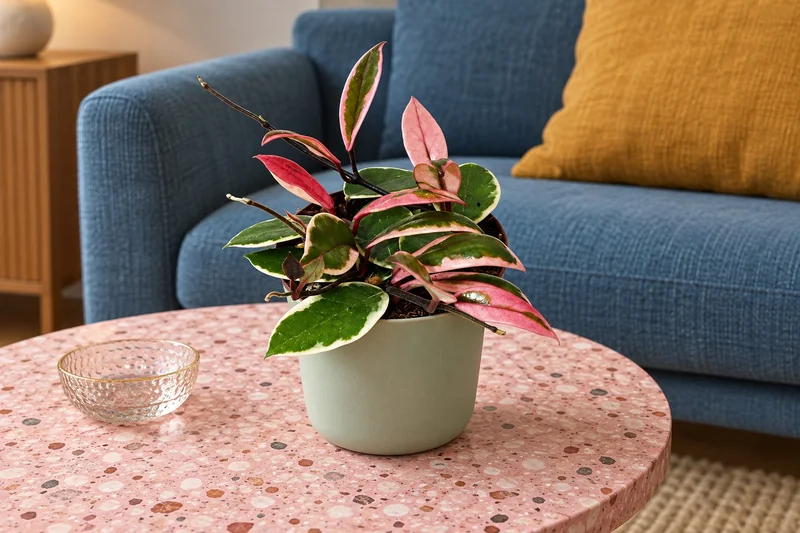
Soft or yellow leaves first call for checking moisture, drainage and temperature. A cold, wet rootball needs a different change from a very dry plant in a warm, bright position. I correct the identifiable cause and observe the next growth rather than simultaneously pruning heavily, feeding strongly and adding water. In winter, a bright place and protection from cold draughts remain important. The pink-and-cream living-room scene shows an arrangement based on the actual offer image. The outer pot, cups and furnishings are decoration, not parts of delivery.
One plant, several views
Good to know
Why does the shop say Hoya carnosa Lisa?
The offer uses this trade name. Botanically, Lisa is assigned to Hoya australis subsp. tenuipes.
Do young leaves stay pink?
Colour may change as they mature; not every leaf shows the same distribution.
Is it already a large climbing plant?
A small format around 15–20 cm is offered; longer shoots may develop later.
Does it need full sun?
A bright, filtered position is useful; assess hot, direct sun slowly and carefully.
Must it be repotted immediately?
No. First check the rootball and existing compost.
Can it flower later?
Flowering is possible, but no fixed indoor date is promised.
Is the pink decorative pot included?
It belongs to the arrangement. The delivery contents specified in the shop are binding.
Sources and editorial note
- Exotenherz: offer and original photographs (01.10.2026)
- HoyaCultivars: Lisa registration (01.10.2026)
- RHS: growing hoyas (01.10.2026)
Shop offer, SKU, GTIN and availability checked live on 01.10.2026. Original photograph unchanged. Independently researched gardening texts and an individually reviewed scene. The shop name carnosa Lisa is retained, and the botanical variety assignment to australis subsp. tenuipes Lisa is explicitly explained.