This plant at Exotenherz
Check the shop offer for current availability, price and what is included.
Check the shop for the current price, availability and offer contents.
Your care table
| Topic | What to do | Why it helps |
|---|---|---|
| Position | Bright and warm with filtered light. | Marked leaves need light, without sudden hot direct sun after moving. |
| Water | When the surface has dried somewhat, check the ball then water to need. | Fleshy leaves buffer moisture, but the small pot is neither a swamp nor permanently dry. |
| Drainage | Water slowly and thoroughly, drain and empty the cover. | An airy root environment cannot tolerate standing water. |
| Mix | Structured airy Hoya mix. | Drainage and accessible remaining moisture suit epiphytic growth. |
| Vines | Guide new shoots loosely and check tight clips. | Thin shoots keep growing; pulling or strangling injures them. |
| Feeding | Sparse suitable label-based feeding during active growth. | New leaves need nutrients, but absent flowers do not justify a strong extra dose. |
| Repotting | Next suitable size only for a full ball or degraded structure. | Oversized pots often dry slowly; avoid needless root disturbance. |
| Winter | Keep bright and warm, adjust to reduced consumption. | No fixed cool flowering rest is inferred from other Hoya species. |
| Checks | Inspect undersides, nodes and ties regularly. | Early observation distinguishes natural markings and new patches; pests may show at bases. |
Check the compost and pot weight. The care table explains how far the compost may dry.
Water only when needed. The water should reach the root ball without spilling over the rim.
Remove surplus water from the saucer or cachepot. Then return the plant to a suitable position.
Silver islands on narrow foliage
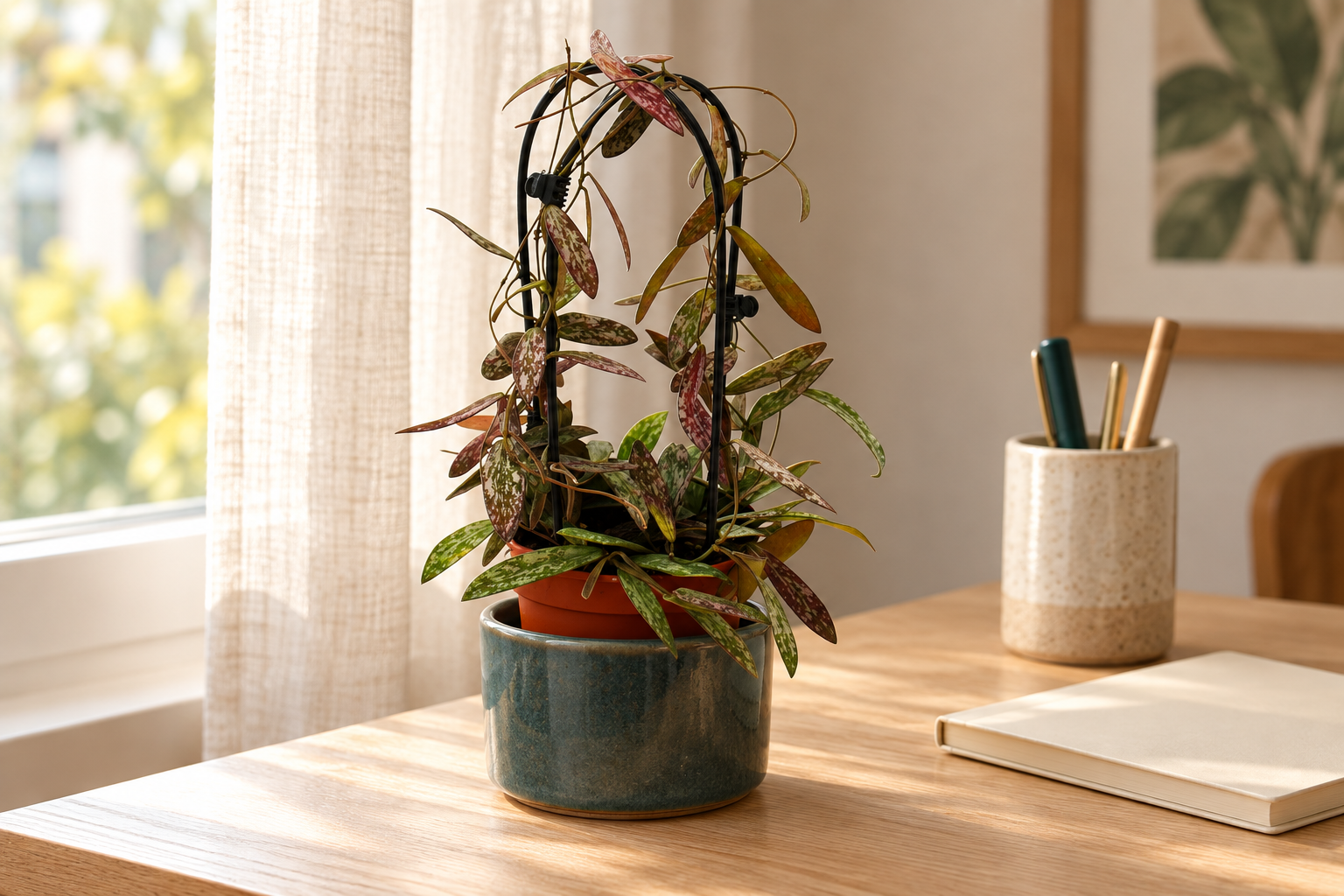
Irregular silvery-white markings catch the eye. Many small spots lie on narrow thickish leaves, with olive green and sometimes reddish-purple areas between. Pointed leaves sit on thin climbing stems. In own detail some spots are elongated, others little islands, not an evenly painted band. Look at several leaves rather than treating one as a fixed colour standard. The young plant already has character despite being offered without buds or flowers. The double hoop provides a side view; a quiet pale background reveals differences. Enlarged detail shows texture, while the whole original joins pot, support and actual young scale.
Sigillatis and the offer spelling
The shop calls it Hoya sigitalis; the professionally described name is Hoya sigillatis. Similar spelling and matching foliage make the association plausible: the species description gives fleshy narrow pointed leaves with silvery-white markings. We explain both without claiming a confirmed supplier correction. No extra private cultivar name is assigned. The 12 cm pot and about 25–30 cm overall height including pot describe the young shaped offer, neither later vine length nor final climber height.
Gently support the double hoop
The support organises young shoots as a starting point, not a promise of a permanent outline. After unpacking check clips and move the pot carefully so loose tips do not snag. A thin new shoot may have no leaves yet. Guide loosely rather than pulling tight around the hoop. Leave side room so tips do not rub a narrow shelf edge. The inner pot should remain removable for watering; a decorative cover does not replace controlled drainage.
Light for both leaves and ball
A warm bright filtered position suits this Hoya. Cold window draughts and abruptly hot sun are poor changes. Initially watch leaf response after transport. Extra redness alone does not warrant harsher sun, nor does feeding compensate for darkness. Keep undersides and bases accessible. The hoop may mislead positioning: a small root ball below can differ in conditions from warm air around upper foliage. Check temperature at the pot too.
Combine drying with moisture checks
Epiphytic growth favours an airy drained mix. Let the surface dry somewhat and check below before adding water. Occasionally lift to learn weight. Then water slowly and thoroughly, drain surplus and empty the outside. A fixed weekly routine ignores warmth and fresh growth. Thickish leaves do not mean the ball may stay dry indefinitely. Soft or wrinkled foliage calls first for checking actual moisture and structure. An already wet heavy pot does not automatically get more water just because a few leaves look tired.
Grow without forcing flowers
Feed sparingly by a suitable label during active growth, counting pre-fed mix. If roots later fill the ball or structure declines, move gently to the next suitable size. Much permanently moist soil around a small ball helps little. Vines need not undergo regular strong pruning either. The species may flower later, depending on culture; this offer expressly has no buds or flowers. Heavy extra feeding or a deliberately cold winter position is not a reliable quick-flowering method.
Observe winter consumption again
Less light can slow growth. Keep bright and warm, matching watering to use rather than continuing a rigid summer programme. No precise cool flowering treatment is adopted from general advice for other species. Check undersides and nodes for unusual deposits or sap-feeding animals. Distinguish natural silver from new damage. Document the same leaf where possible and improve an identifiable poor condition first. Care then supports real young-climber development rather than judging every flowerless week as failure.
One plant, several views
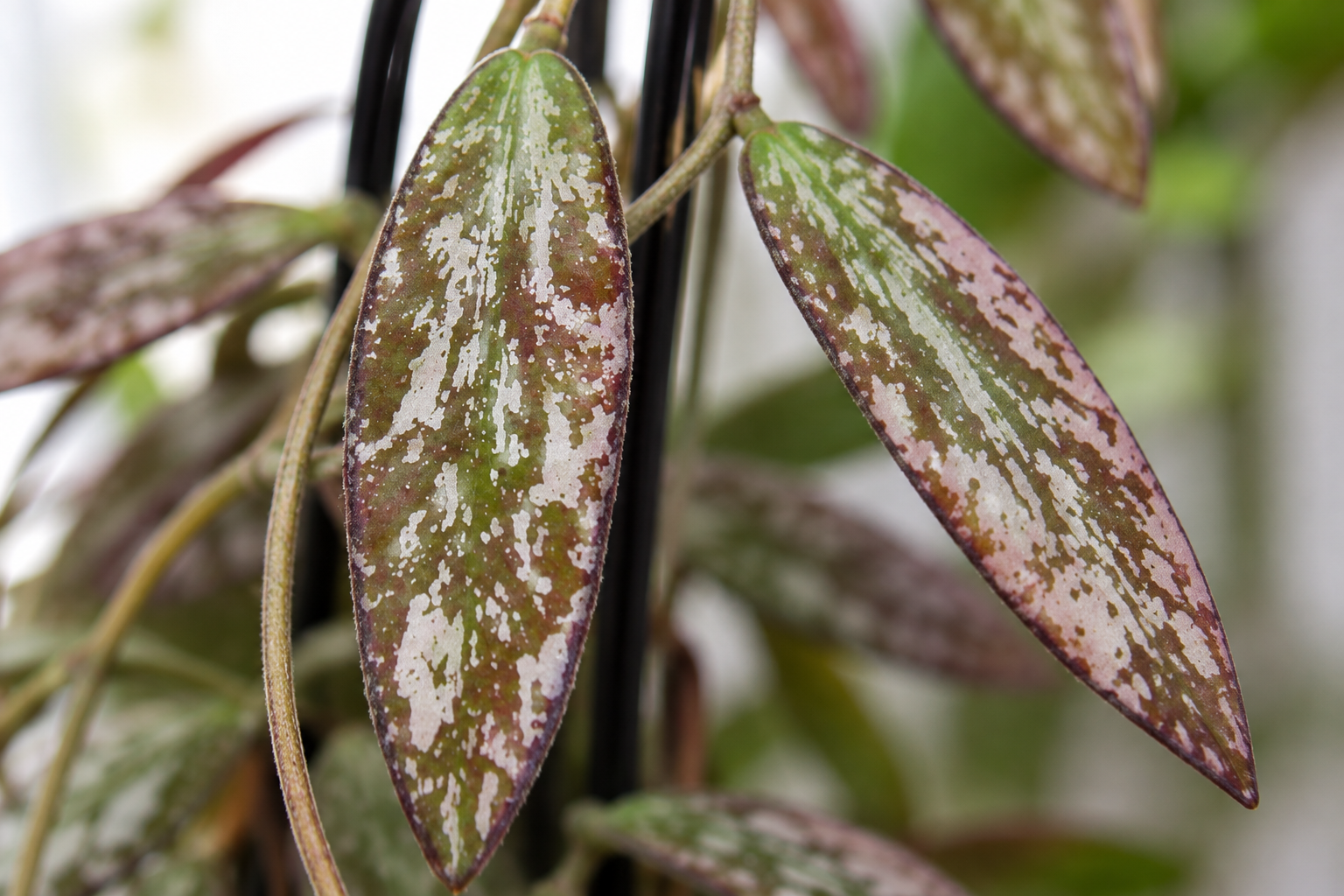
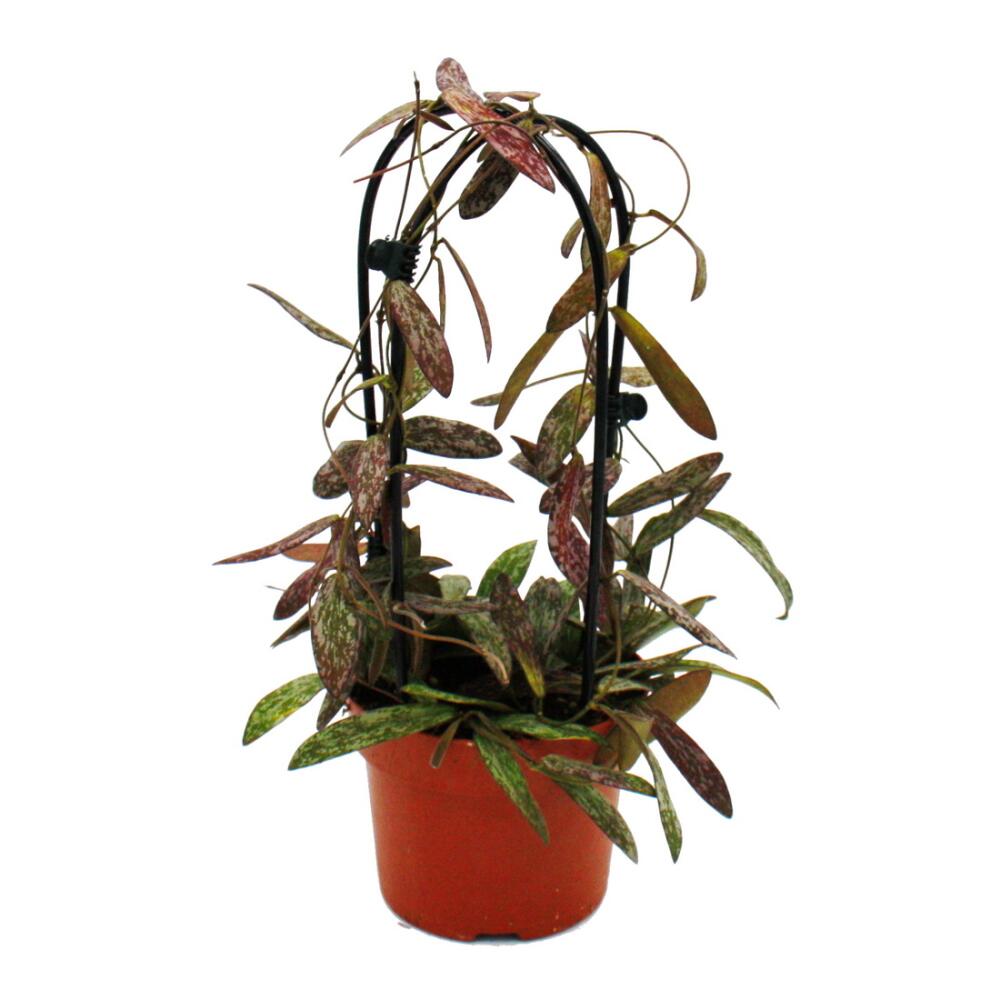
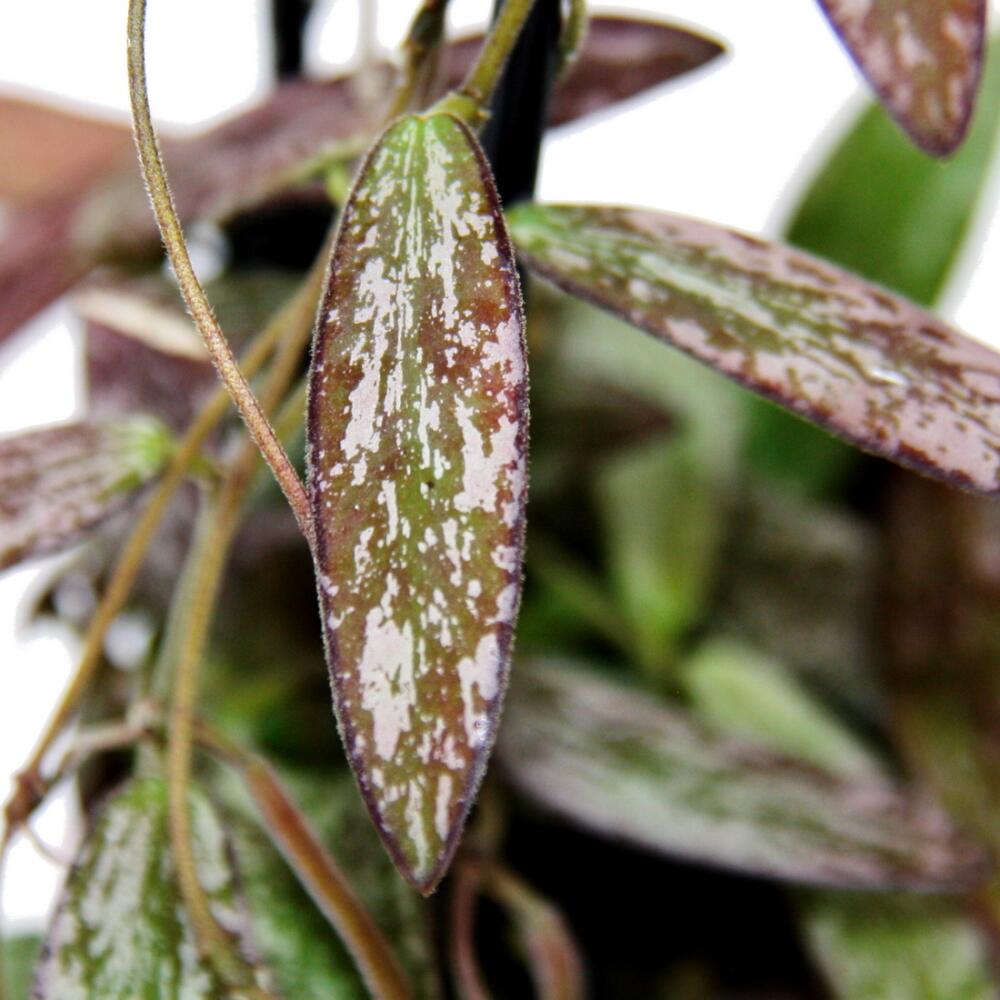
Good to know
Why does the shop say sigitalis?
That is the specific offer spelling. Its association with Hoya sigillatis is plausible from spelling and matching narrow silver-marked leaves, without a claimed confirmed supplier correction.
Are the silver spots damage?
They belong to the described foliage. New changes, deposits or animals still need separate checks.
Is it delivered flowering?
No: own text explicitly says without buds or flowers. Later blooms depend on growth and culture.
Will the hoop stay 25–30 cm high?
That measures the young plant including pot. New vines may grow beyond the shape and need space.
How dry can the mix become?
The surface may dry somewhat. Check the ball below and pot weight; avoid lasting wetness and prolonged complete drying.
Should long bare shoots be cut?
Not automatically. Thin new vines may initially have few leaves. Guide healthy stems loosely and assess whether pruning is needed.
Does it need cold flowering rest?
No fixed cool rest is evidenced here. Grow bright and warm, adapting water and nutrients to slower use.
Sources and editorial note
- Exotenherz: own offer and originals (04.10.2026)
- Kew Plants of the World Online: Hoya sigillatis (04.10.2026)
- Royal Horticultural Society: Hoya culture (04.10.2026)
- NParks Flora & Fauna Web: Hoya sigillatis (04.10.2026)
Shop offer, originals and specialist sources checked on 04.10.2026. Current availability in the shop.