This plant at Exotenherz
Check the shop offer for current availability, price and what is included.
Check the shop for the current price, availability and offer contents.
Your care table
| Topic | What to do | Why it helps |
|---|---|---|
| Light | Choose filtered daylight and protect from hot direct sun. | Gentle light reveals the fine pattern; overheated glass stresses the young plant. |
| Watering | Keep the mixture lightly moist and check before every top-up. | The small pot has little reserve; permanent wetness and complete drying are not a suitable alternation. |
| Drainage | Water slowly, allow drainage and empty the outer pot. | No unnoticed water level should remain beneath the nursery pot inside decorative glass. |
| Mix | Use a fine airy terrestrial-orchid mixture, for example bark and loose sphagnum. | Moisture should remain accessible without pressing delicate shoots into compact wet material. |
| Air humidity | Use an easily accessible terrarium and avoid constantly wet leaves. | More humid surroundings buffer dry room air; air exchange and controlled soil remain necessary. |
| Warmth | Maintain even warmth without cold draughts or hot heating nearby. | Temperature jumps change water use and stress the delicate young plant. |
| Nutrition | Feed sparingly during visible growth following a suitable fertiliser label. | Small root space needs no heavy reserve feeding; account for nutrients already in the mix. |
| Repotting | Move gently only for an established space need or poor substrate structure. | A shallow draining vessel suits sideways development; avoid unnecessary root disturbance. |
| Checks | Regularly examine leaf sheaths, surfaces and shoot bases. | Early changes are easier to interpret when moisture, light and the latest move are known. |
Check the compost and pot weight. The care table explains how far the compost may dry.
Water only when needed. The water should reach the root ball without spilling over the rim.
Remove surplus water from the saucer or cachepot. Then return the plant to a suitable position.
A stripe like a narrow beam of light
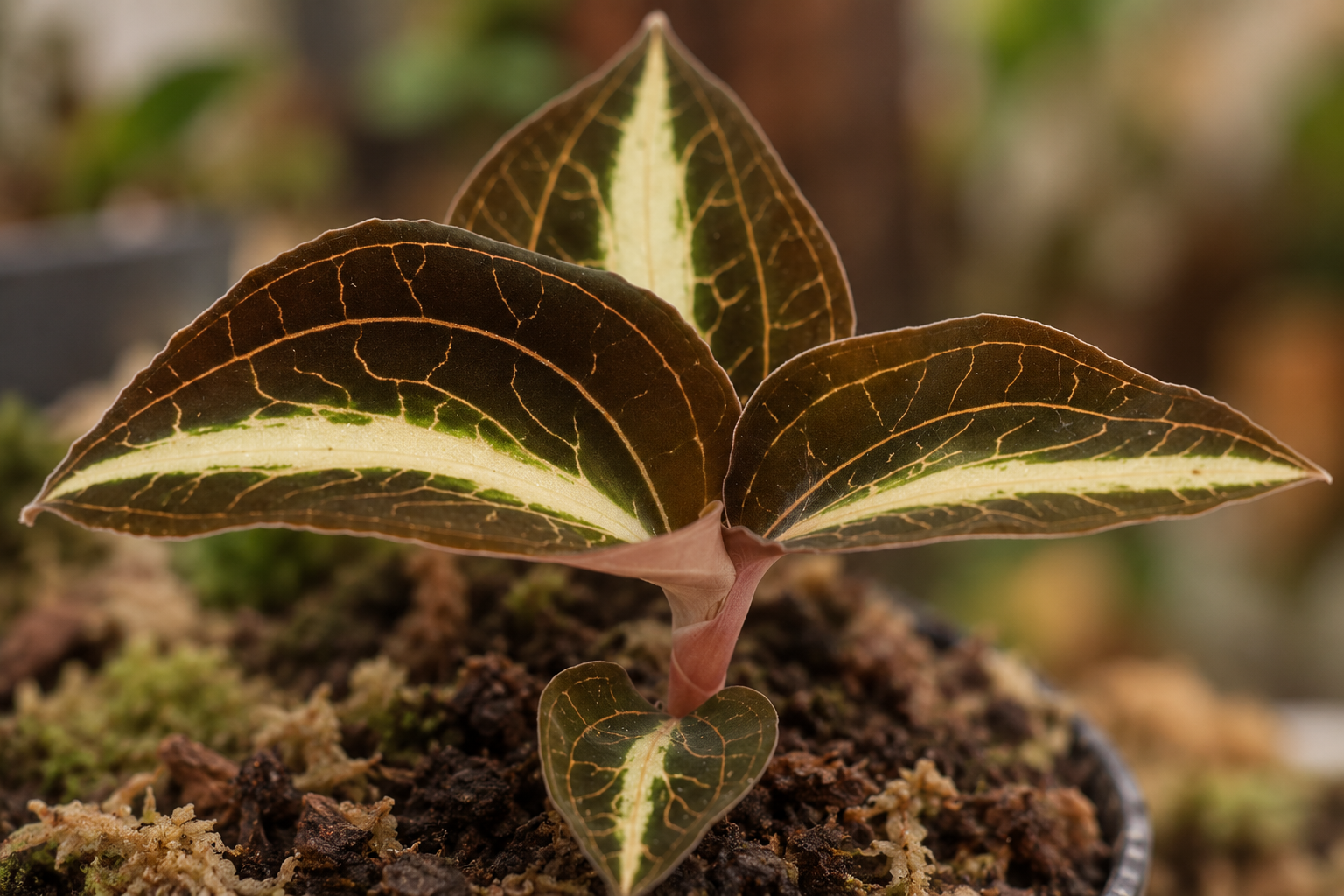
Look closely at one Amber leaf. An irregular cream-yellow stripe runs to the tip between bronze-brown areas. Fine golden side veins branch beside it without a uniform lattice across the whole surface. Greenish patches and pink sheaths complete the warm picture. Elongated pointed oval leaves sit on a still short young plant. A quiet background reveals the pattern; a few intact leaves show its character without large size or flowers. Move it by the pot so fragile surfaces are not trapped between fingers and glass. Enlarged detail explains structure; the whole original shows actual small scale. The stripe differs in width between leaves, so compare several before treating a natural irregularity as new damage.
Amber as a named jewel-orchid selection
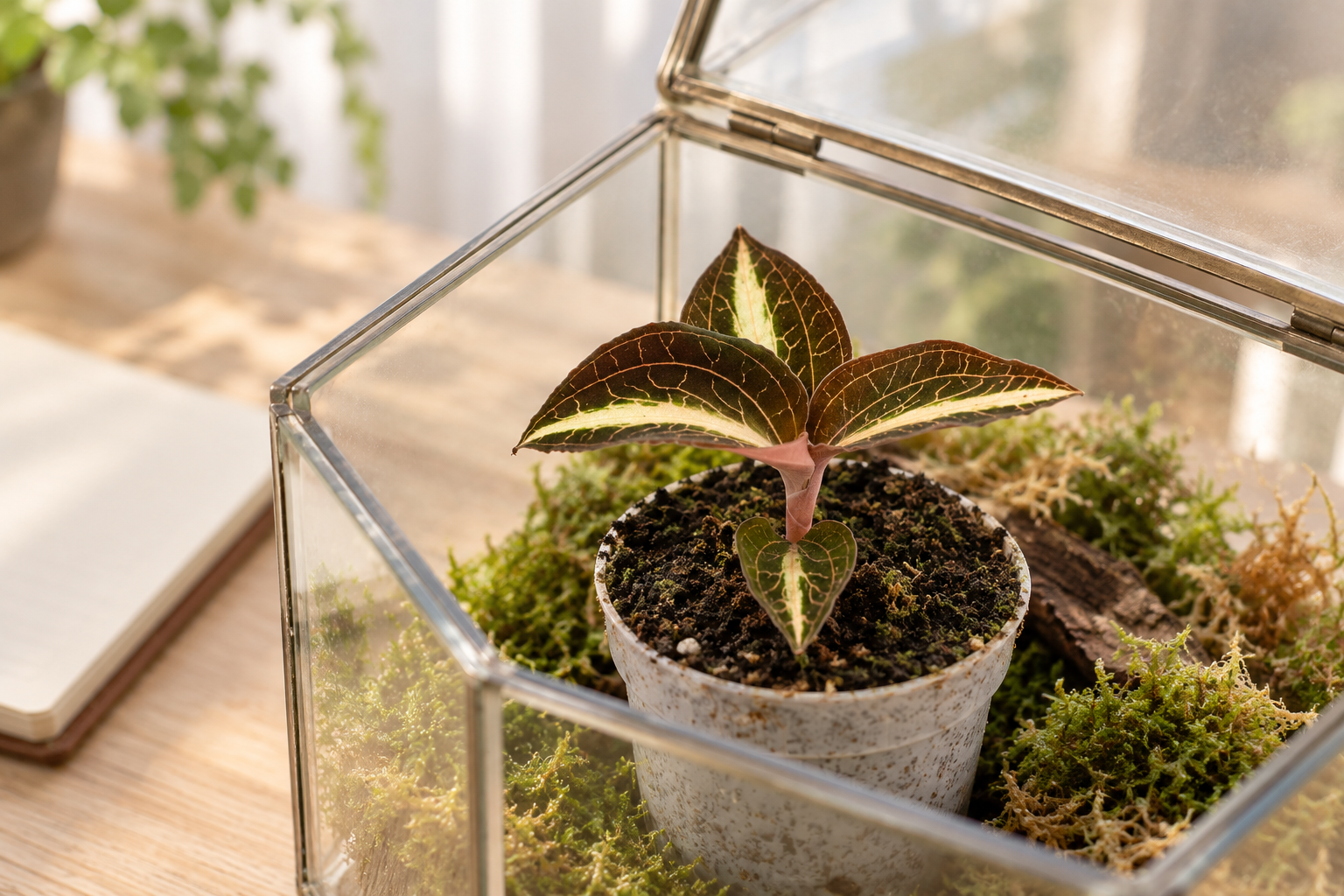
The offer names Amber in a 6 cm pot at about 7–9 cm overall height including pot. These describe the young plant. Trade also uses Macodes anoectochilus. We present a named Anoectochilus trade selection, not a clearly determined wild species. Jewel orchids are grown for leaves in terrestrial orchid medium, unlike Phalaenopsis in coarse bark. Keep the existing ball together when unpacking and check moisture first. Immediate transfer to a large pot does not automatically improve a small plant’s supply.
A bright place with gentle light
Filtered daylight suits the warm foliage. A table near a window or suitably lit terrarium can work without hot direct sunlight on leaves. Observe all day: glass initially shaded may catch afternoon sun, and its walls do not replace shading. Gentle light is not a dark cupboard, where new growth is harder to support. Choose easy viewing and pot-removal access; an obstructed bottle garden makes small necessary checks needlessly difficult.
Judge moisture in the small ball
Observation is more useful than a weekly plan with this 6 cm pot. Lift gently and check the mix at the edge without hurting leaf bases. It should stay lightly moist; already wet and heavy means no precautionary watering. If only the surface has lightened, check underneath. Water slowly to moisten the mix, let it drain and empty the outer vessel. A humid terrarium may use less than an open window position, so the same quantity does not fit everywhere. Note initial observations rather than diagnosing thirst from one older leaf’s colour.
A terrarium remains an attended place
Amber can be observed well in more humid glass surroundings. A removable nursery pot keeps roots and water levels accessible. Fine bark and loose sphagnum can be mix components; tightly packed wet moss is no shortcut. Fleshy shoots of this group can spread sideways, so later containers should allow that instead of merely being deep. Keep leaves away from glass. Condensation indicates surroundings, not a reliable measurement of ball moisture. Air exchange and inspection remain necessary in attractive glass displays.
Let new leaves progress calmly
Own Amber images show no flower spike. Focus on healthy leaves and a stable stem base, not forcing growth with heavy feeding. During active growth, sparse suitable label-based feeding may help, accounting for the existing mix. When low winter light slows progress, recheck use and maintain steady warmth. No cold dry rest is imposed. Later flowering is possible for the group without promising colour, timing or regular repeat flowering.
When pattern and care get out of balance
A dry edge, soft tissue or older yellow leaf is initially an observation. Check soil moisture, drainage and warmth together. Rubbing velvety surfaces does not improve the pattern. Gently remove dead matter, keep tools clean and inspect bases for unusual deposits or animals. Long-wet soil is not treated with more fertiliser, nor should more watering hide a light problem. First change the identifiable poor condition and watch the next shoot. Individual fresh leaves let you follow this small plant’s progress attentively.
One plant, several views
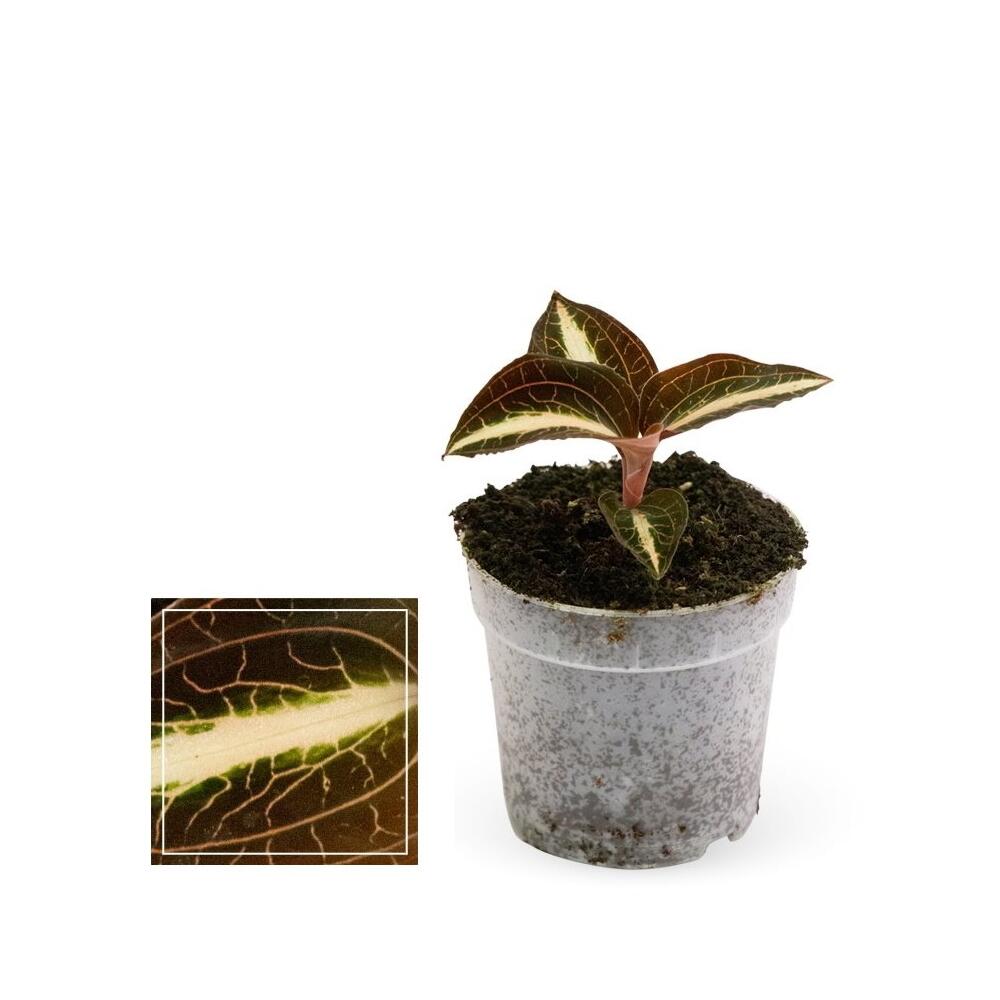
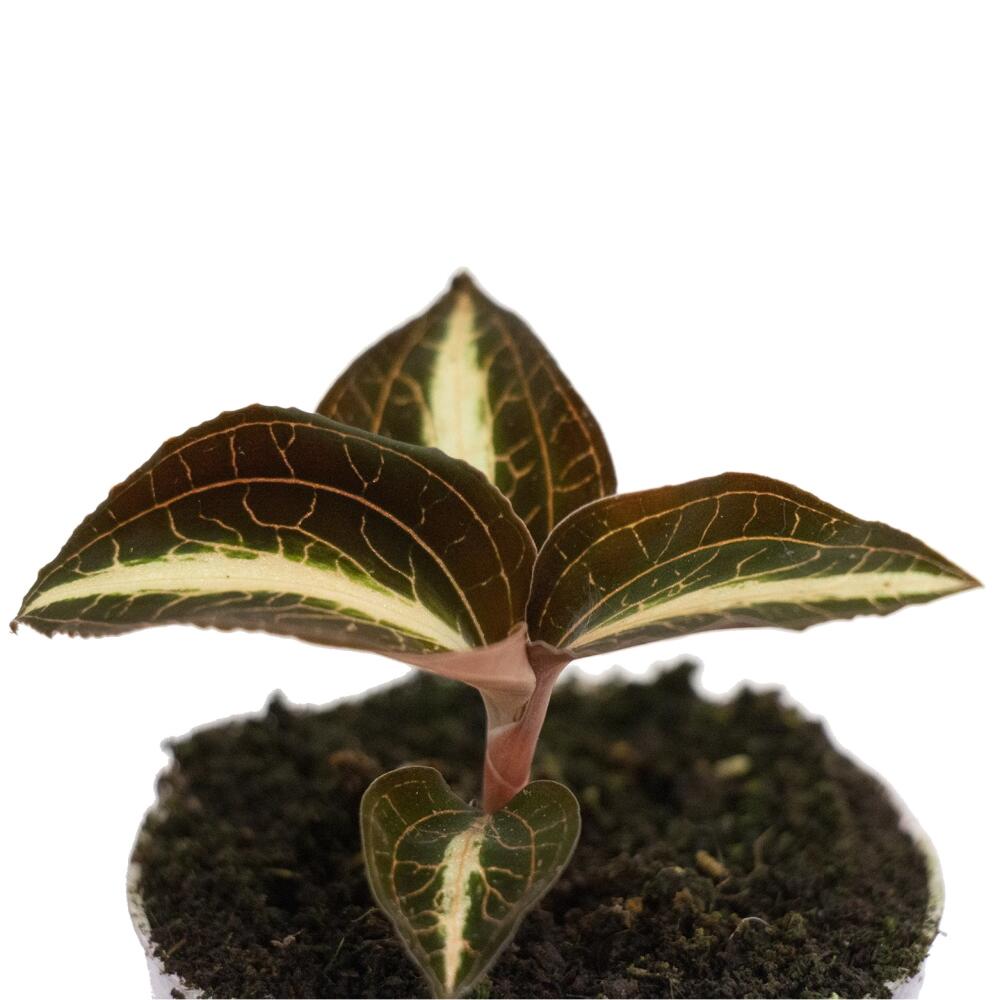
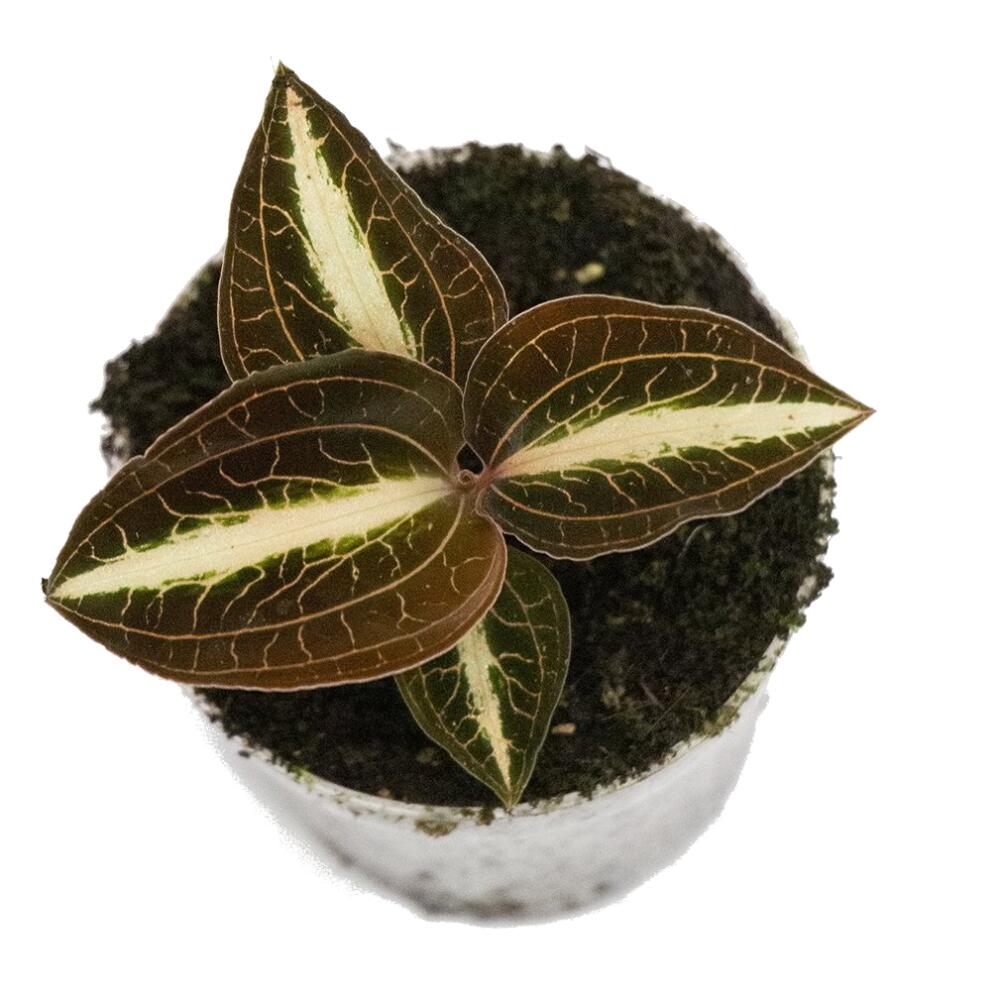
Good to know
Is Amber a securely determined Macodes species?
No: a named Anoectochilus trade selection. The combined shop name Macodes anoectochilus is not a clear wild-species determination.
Is the pale stripe a flower?
No, it is the bronze foliage pattern with cream-yellow centre and fine golden side veins.
Can its 6 cm pot stay in glass?
Yes if accessible, drained and out of hot sun. A removable pot is easier to check.
Must I water daily?
No fixed interval fits everywhere. Check weight and moisture, keep lightly moist and avoid water below the pot.
Does it need dry winter rest?
No cold dry rest is intended; match water to actual use when growth slows.
Can I polish leaves?
Do not rub sensitive leaves or use leaf shine; handle the pot instead.
How large will it become?
7–9 cm is offered overall height including pot. Later shoots may spread and rise; no fixed eventual height is evidenced.
Sources and editorial note
- Exotenherz: own offer and originals (04.10.2026)
- Karma Plants: named Jewels selections (04.10.2026)
- Karma Plants: jewel-orchid range (04.10.2026)
- American Orchid Society: Anoectochilus and culture (04.10.2026)
- American Orchid Society: Macodes and terrestrial culture (04.10.2026)
Shop offer, originals and specialist sources checked on 04.10.2026. Current availability in the shop.