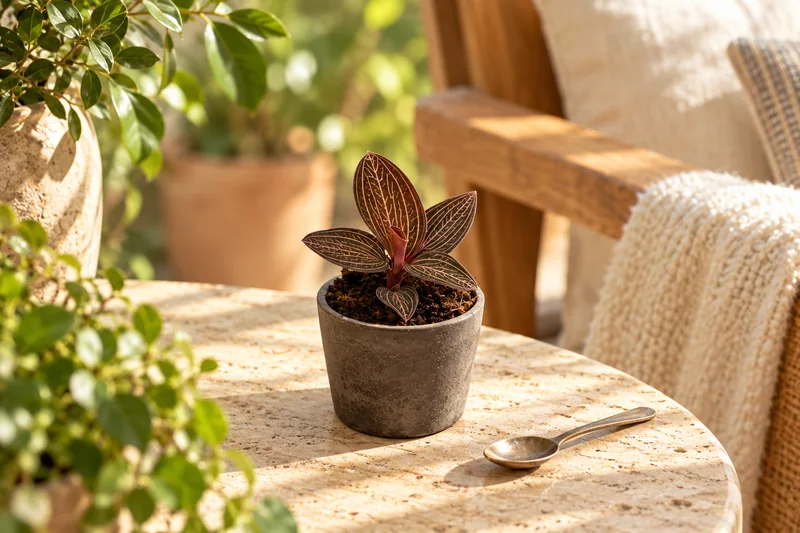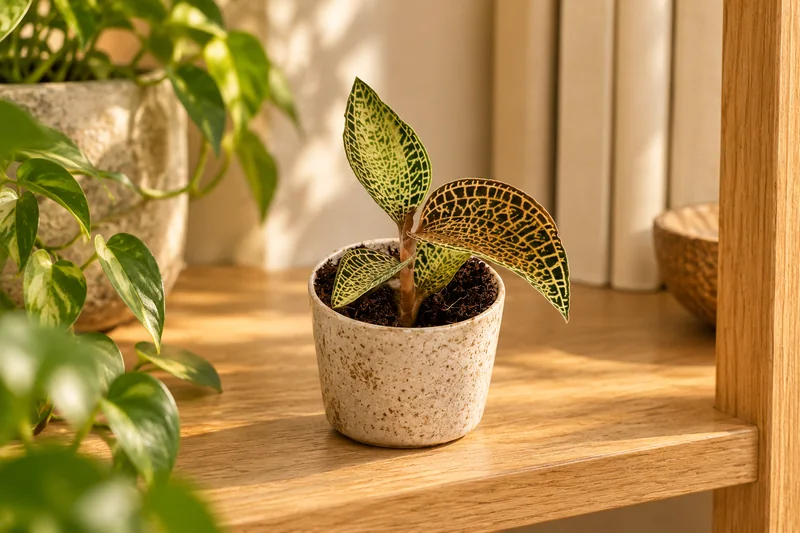
This plant at Exotenherz
Check the shop offer for current availability, price and what is included.
Check the shop for the current price, availability and offer contents.
Your care table
| Topic | What to do | Why it helps |
|---|---|---|
| Light | Choose gentle bright light and shield hot direct sunshine. | Dark velvety-looking foliage needs light without overheating behind glass. |
| Watering | Before each watering, check the small root ball at its edge and by weight. | Water often remains longer under glass than in dry room air; actual consumption decides. |
| Drainage | Water slowly and let all surplus drain fully. | A moist mixture still needs air; a closed outer pot must not become a water reservoir. |
| Mix | Choose fine airy terrestrial-orchid medium rather than coarse mounting culture alone. | This foliage orchid is grown terrestrially; structure and accessible moisture belong together. |
| Glass climate | Use an accessible terrarium, avoid leaf contact with glass and ventilate in a controlled way. | More humid air can suit it, but replaces neither light nor root checks and air exchange. |
| Temperature | Keep warm and as steady as possible, avoiding cold window draughts. | Warm leaf growth and a cooling wet root ball are a poor combination. |
| Feeding | Feed sparingly by a suitable label only during visible development. | The small young plant needs no strong dose to unfold a leaf quickly. |
| Repotting | For dense rooting or exhausted mix, move gently into a suitable shallow vessel. | Side shoots need room; an oversized wet pot offers no advantage. |
| Leaf care | Leave new folded leaves alone and gently remove dead remains. | Pulling and rubbing can injure delicate tissue; regular observation detects changes early. |
Check the compost and pot weight. The care table explains how far the compost may dry.
Water only when needed. The water should reach the root ball without spilling over the rim.
Remove surplus water from the saucer or cachepot. Then return the plant to a suitable position.
A dark leaf with few pale lines
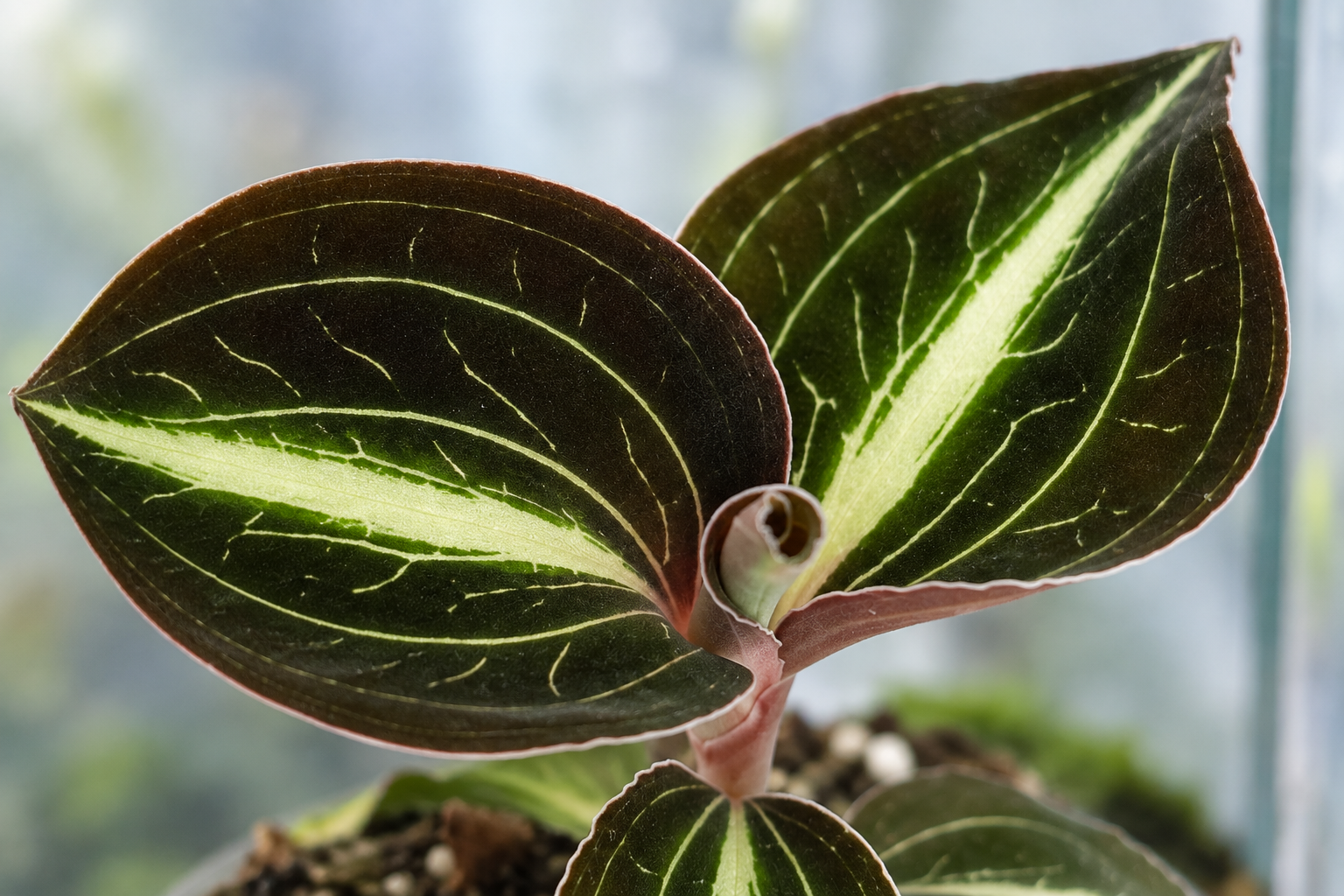
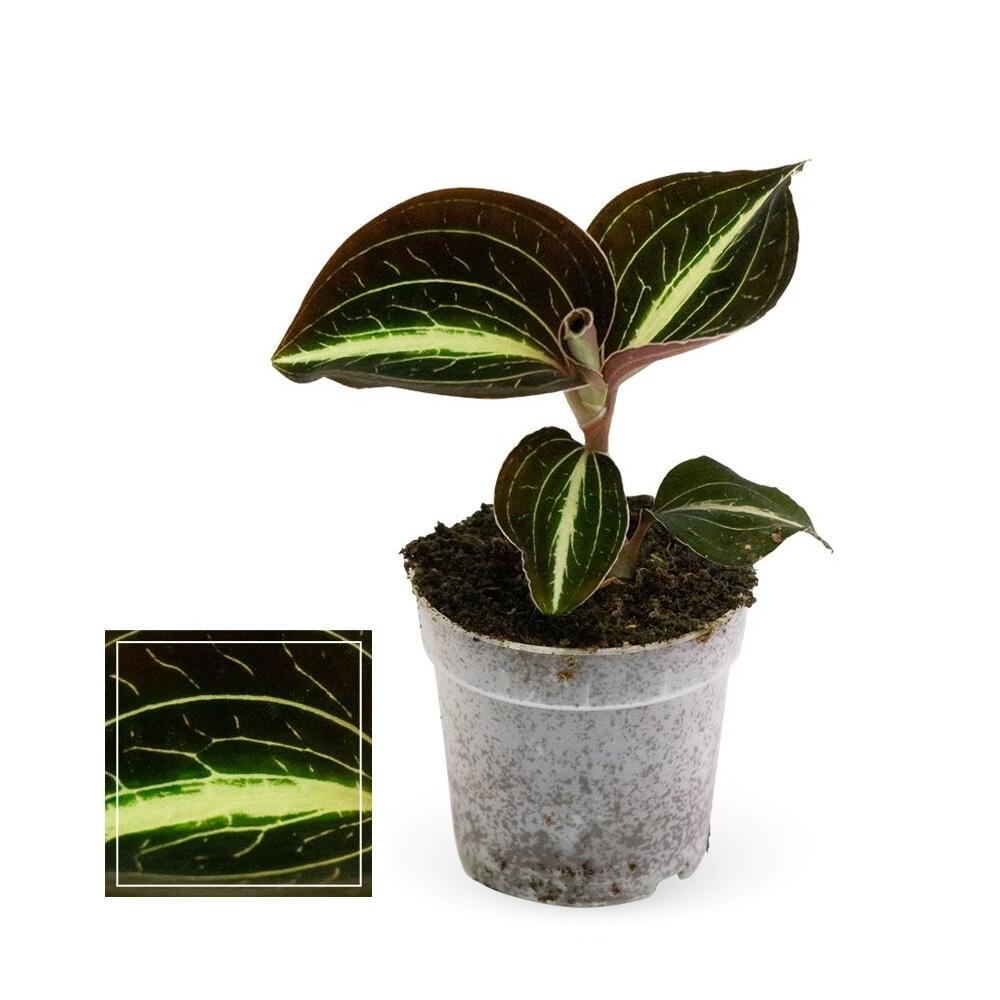
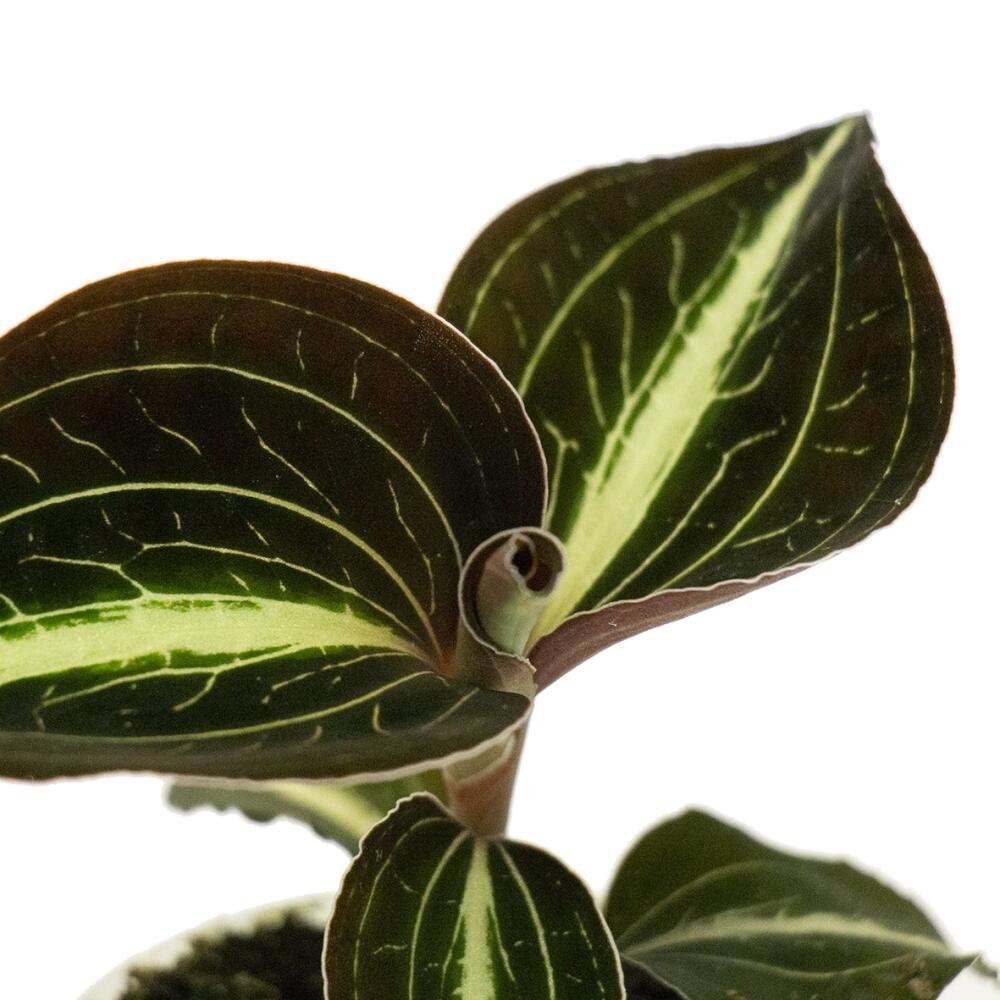
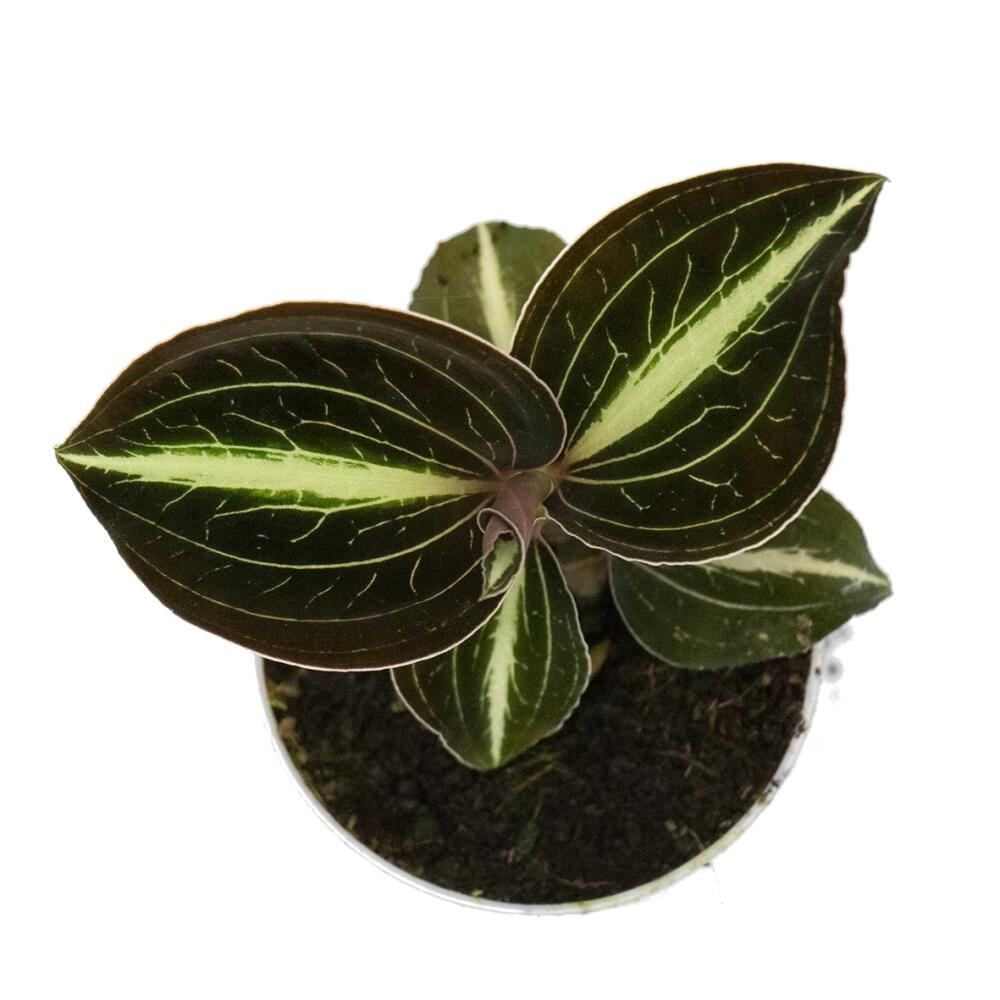
Up close, pointed oval leaves look dark green to brownish and velvety. An irregular pale central band leads towards the tip, with a few longer curved veins and short interrupted cross-lines. Greenish transitions border cream patches. Own detail remains readable without a completely closed net across the surface. A folded young leaf and pink-to-greenish sheaths complete the small plant. Choose viewing from above and slightly sideways: perspective matters on a low plant. The macro enlarges veins and texture, not delivery size. Plan using the whole pot; detail helps recognise the pattern.
What name and young pot describe
Moonstone is a named jewel-orchid trade selection presented in relation to Anoectochilus. The combined shop name Macodes anoectochilus does not identify an accepted wild species here. The 6 cm pot holds a young plant about 7–9 cm including pot. Its few current leaves are not a final leaf count. Later broader or sideways growth gradually needs other space. Initially preserve the ball and check gently when unpacking. An accessible place is usually more useful than an immediate large landscape with hard-to-reach ground.
Display Moonstone visibly in glass
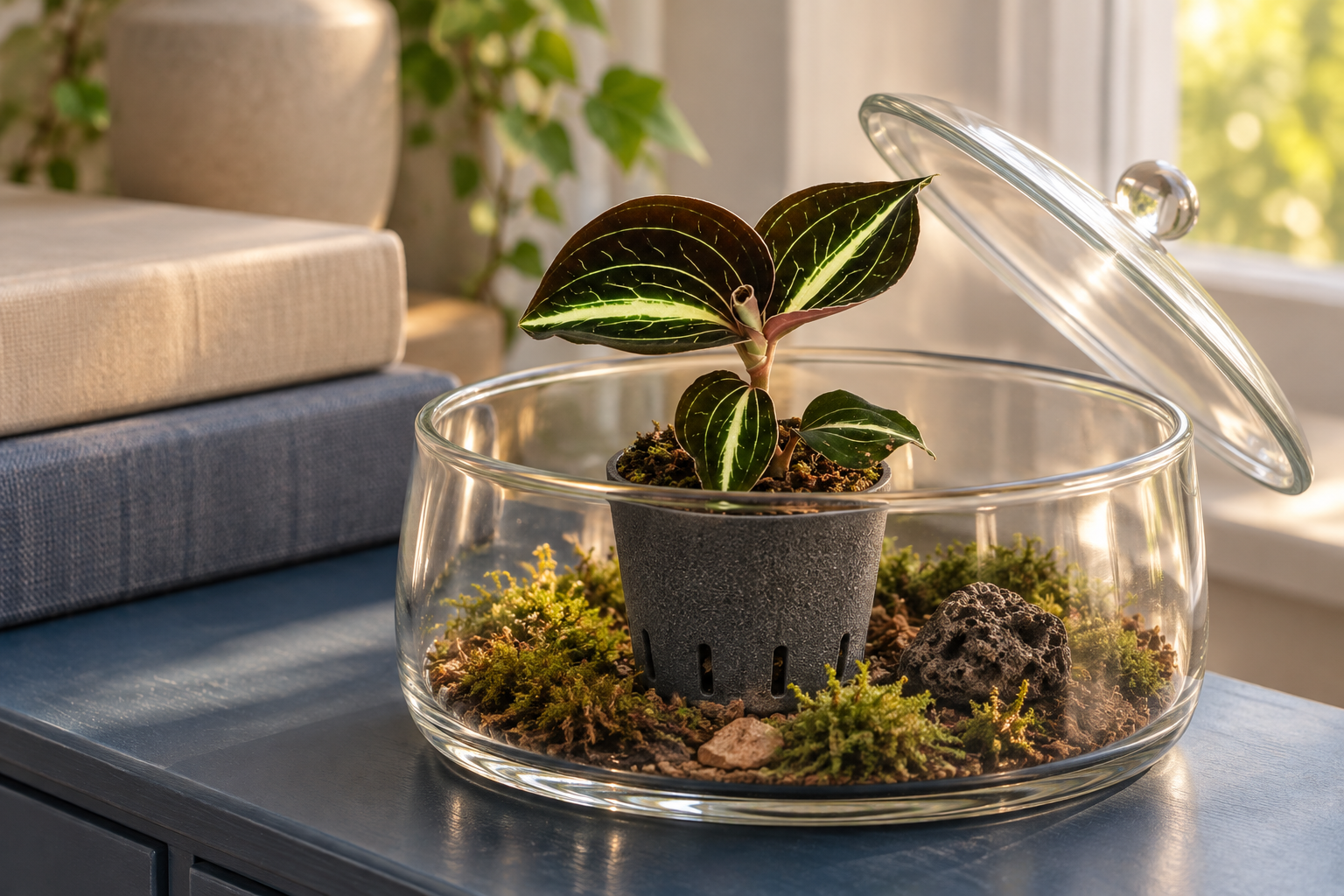
A low terrarium can show dark leaves against a pale base. The opening should let you remove the pot without touching tips. Do not trap foliage at the edge or leave it against constantly misted glass. Moss, stones and decorations must not hide ball checks. More humid surroundings interest jewel orchids but do not create an unattended closed bottle. Check air exchange and moisture together. Initially leaving the small pot intact lets you learn conditions before planting directly into glass.
Gentle light and steady warmth
The pattern needs no sunny heat test. Filtered daylight suits this terrestrial foliage orchid. Even a small terrarium may heat strongly behind hot window glass, so observe the full day. A bright position outside harsh sun differs from a permanently dark shelf. Steady warmth and protection from cold draughts help interpret changes. In winter a sill can be colder than room air suggests: check the pot, not only air above glass. Avoid frequent moves between very different light and climates.
Water by the ball, not glass
Misted glass says little about sufficient root-medium water. Feel at the accessible edge and lift the inner pot. Retain light moisture; heavy wet mix gets no safety top-up. Water soil slowly, drain surplus and check the outer vessel. Moonstone may use less in humid glass than on an open shelf, so re-observe watering after moving. A limp leaf calls first for checking ball and drainage. Dry and long-waterlogged material can both look poor but need different responses.
No need to hurry young growth
A rolled new leaf unfolds itself. Pulling its tip or smoothing the surface can hurt tender tissue. Structured moisture-retentive terrestrial orchid mix supports development while allowing air and control in the small container. Later repot gently into appropriate rather than excessive root space. Feed sparingly during visible growth by a suitable label, accounting for existing nutrients. Own pictures show no flower spike, so no bloom date, colour or regularity follows.
Observe through the year rather than react radically
Slower winter growth in reduced light does not automatically need more fertiliser. Check use, keep warm and lightly moist; no cold dry rest is intended. Gently remove dead remains and inspect bases more closely for suspicious deposits. Fine veins and central band are normal; compare new irregular damage with unchanged originals and your last observation. Check light, soil moisture and temperature before changing several care steps at once. Each unfurled leaf is a small advance, with the pot always accessible.
One plant, several views
Good to know
What is Moonstone?
A named Anoectochilus trade selection among jewel orchids. Macodes anoectochilus is not adopted as a clearly determined wild species.
What makes the leaves distinctive?
Own images show dark pointed ovals, pale centre, few curved veins and short interrupted cross-lines.
Is 7–9 cm the final height?
No: young plant including 6 cm pot. Later spreading or ascending shoots may need more space.
Is condensation enough to judge watering?
No. Check medium and pot weight; glass indicates climate, not reliably ball moisture.
Should I open the folded leaf?
No. Let it unfold naturally; pulling and rubbing damage sensitive tissue.
Can it grow on an open sill?
Possible in warmth, filtered light and suitable air humidity. Check the small ball more often than in humid glass culture.
Less water in winter?
Slower growth may reduce use; keep lightly moist without imposing a fixed cold dry rest.
Sources and editorial note
- Exotenherz: own offer and originals (04.10.2026)
- Karma Plants: named Jewels selections (04.10.2026)
- Karma Plants: jewel-orchid range (04.10.2026)
- American Orchid Society: Anoectochilus and culture (04.10.2026)
- American Orchid Society: Macodes and terrestrial culture (04.10.2026)
Shop offer, originals and specialist sources checked on 04.10.2026. Current availability in the shop.