This plant at Exotenherz
Check the shop offer for current availability, price and what is included.
Check the selected shop offer for price, availability and delivery contents.
Your care table
| Topic | What to do | Why it helps |
|---|---|---|
| Light | Very bright; introduce stronger sun slowly after purchase. | Small plant needs light for firm compact growth without abrupt overheating. |
| Watering | During growth supply moderately after marked partial drying; water soil rather than constantly leaves. | Fleshy leaves store water; wet bases and continual moisture do not help roots. |
| Soil | Draining gritty succulent compost. | Moisture should leave the small rootball again. |
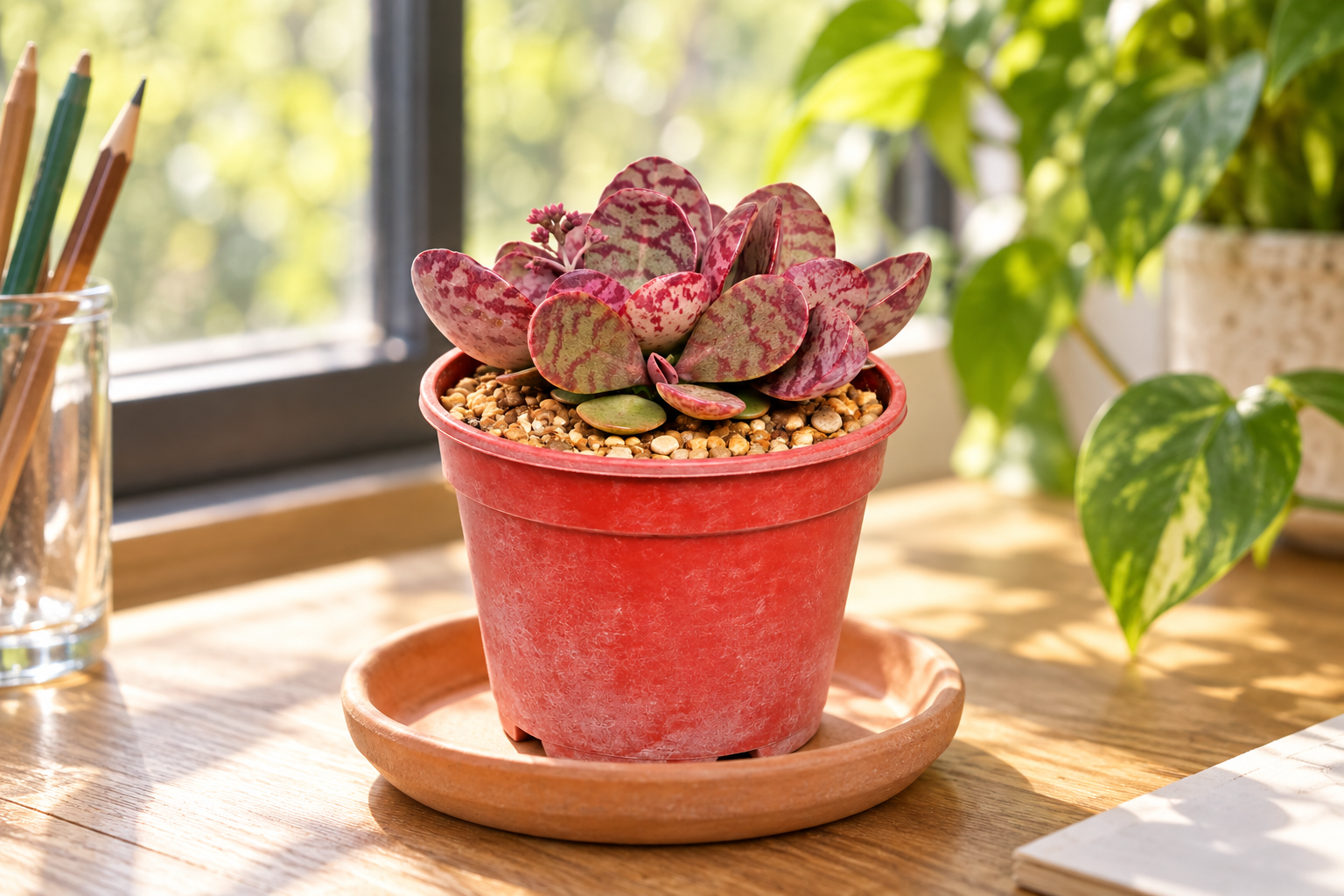
| Container | Keep drainage hole free; remove excess from saucer or decorative pot. | Red nursery pot needs same free outlet as decorative container. |
| Winter | Very bright, mild frost-free; water by lower activity. | Less light lowers consumption while leafy plant remains observable. |
| Feed | Sparingly by label during bright growth; pause in quieter phases. | Heavy supply does not compensate missing light. |
| Shaping | Keep healthy leaves; remove entirely dry or damaged parts precisely. | Each leaf carries pattern lost through unnecessary interventions. |
| Checks | Inspect leaf bases and small flower start for mealybugs or aphids. | Short tight shoots easily hide pests. |
Check the compost and pot weight. The care table explains how far the compost may dry.
Water only when needed. The water should reach the root ball without spilling over the rim.
Remove surplus water from the saucer or cachepot. Then return the plant to a suitable position.
Markings without a uniform pattern
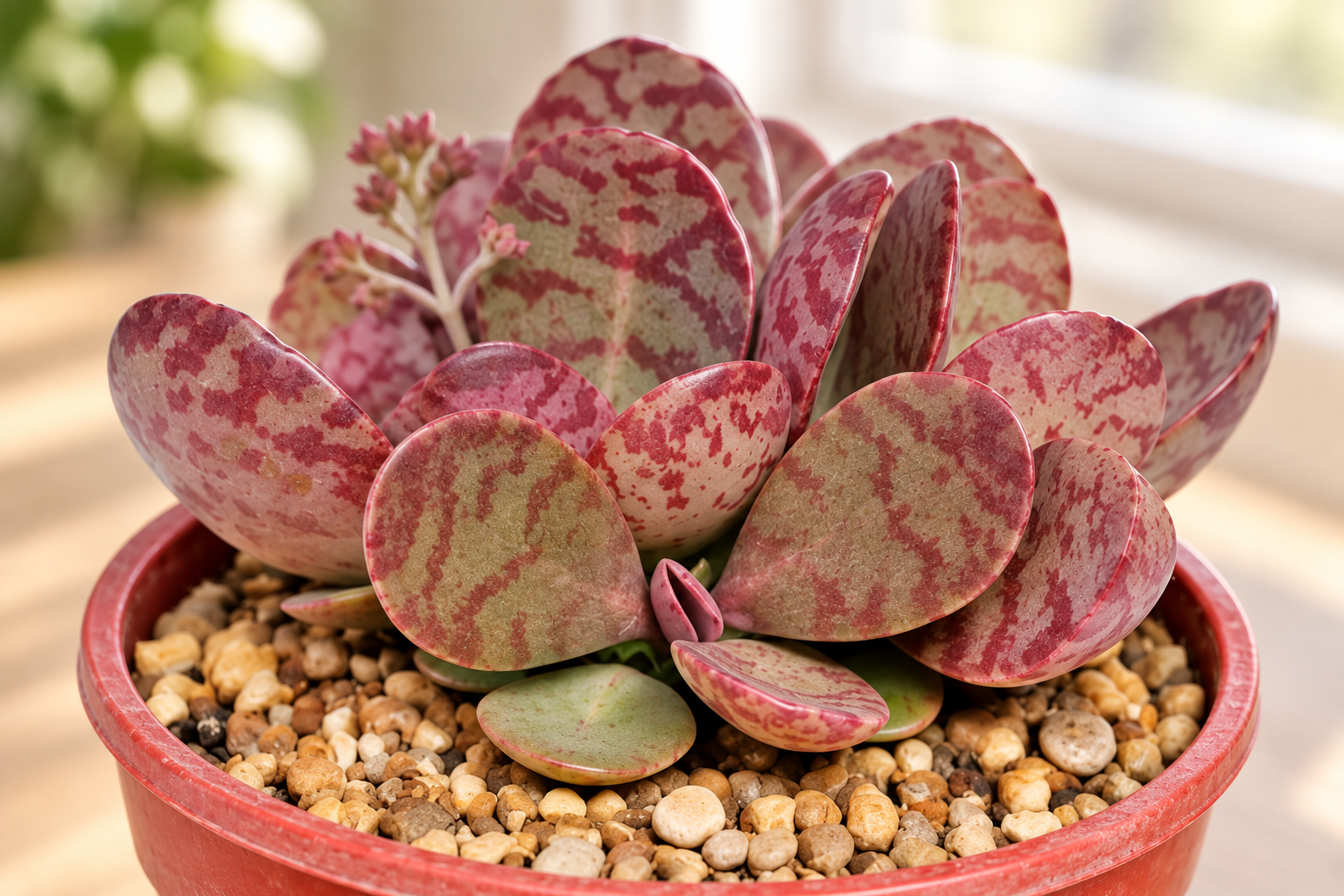
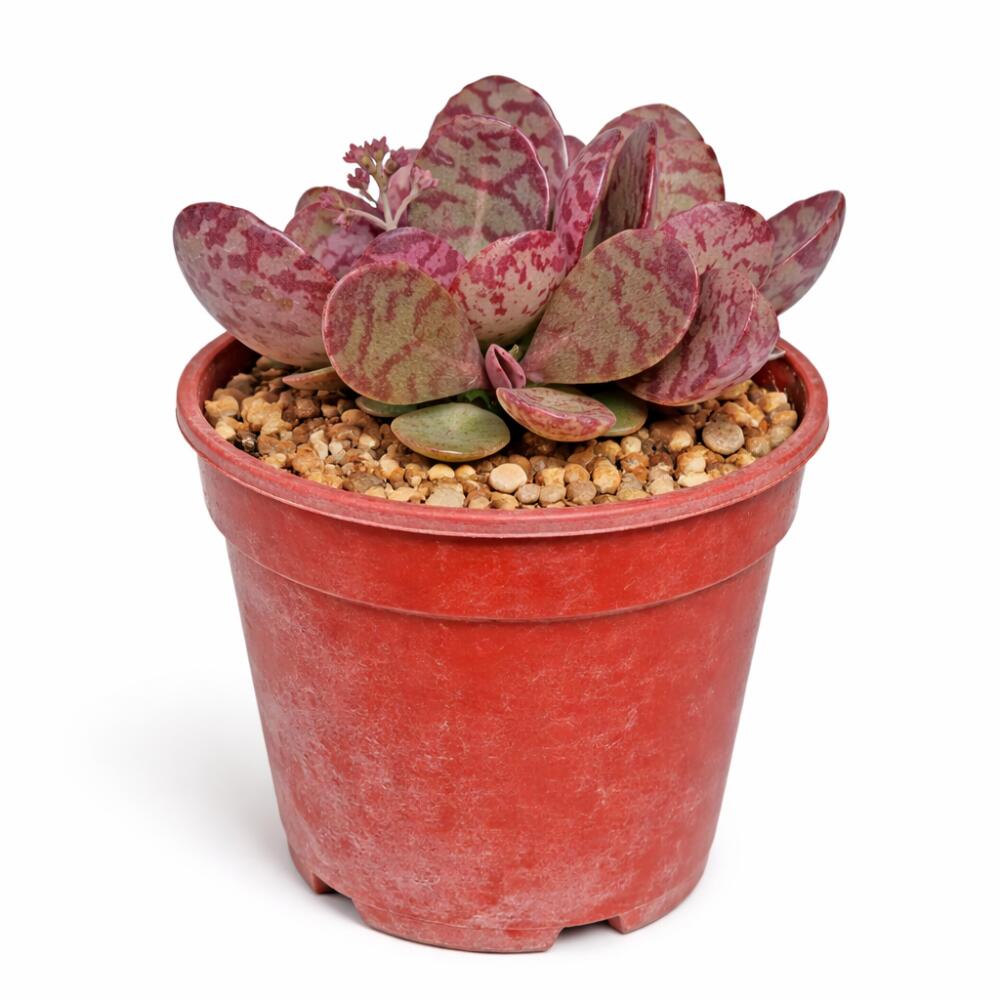
Wine-red cross bands and irregular spots lie across round to oval leaves. Olive-grey shows between; not every leaf is equally patterned. Leaves are fleshy and tightly arranged in low young structure, making little pot lively even close up. Hold container during unpacking and protect leaf layers from pressure. Broken surface will not become complete again although plant grows on. Position clearly so young centre and outer bases stay visible. Pattern needs no added colourful decoration to stand out as plant feature.
Zebra describes the trade offer
Shop sells plant as Kalanchoe Zebra. Patterned leaf type is assigned to Kalanchoe humilis; Zebra is trade name here. More specifically named selections also occur commercially. It does not follow that every Zebra-labelled plant has the same confirmed cultivar. Portrait therefore stays with species and visible specific offer. Humilis occurs from southern Tanzania to northern Mozambique in seasonally dry tropical habitats. No precise final height is given for this selection. Shop's fifteen centimetres means total including six-and-a-half-centimetre pot.
Learn the bright position after shipping
Well-lit window or little desk immediately near glass is suitable start. Dark shelf will not keep plant compact simply through strong leaf colour. Introduce direct sun gradually after transport. Light shading initially helps behind hot south-facing glass; air movement matters too. Wine-red pattern need not be pushed to strongest possible colour. Young and old leaves may show different tones. Pale dry damage after abrupt move is no attractive new colour phase. Consider new growth, firmness and light together before inferring care from a single colour change.
Let roots dry somewhat between supplies
Six-and-a-half-centimetre pot has little soil and responds quickly to place. Surface can look dry while deeper soil remains moist. Check weight and soil beneath visible grit. During growth water moderately after clear partial drying; excess escapes freely and closed pot is emptied. Aim at soil rather than regularly wetting dense leaves. Fleshy surfaces store water, but permanently wet bases are no useful reserve. With unusually soft or spotted damage, inspect moisture and roots first. More water can worsen an already wet problem.
Do not place small rosette in much wet soil
Immediate repot is rarely first necessary care after purchase. While root room and outlet work, Kalanchoe may stay in container. Later spring suits slightly larger pot with draining compost. Hold rootball without pressing rounded leaves. Bases are not buried deeper merely for even surface. Gritty ingredients structure soil; surface gravel replaces no drainage hole. A few sparing feeds accompany bright growth. Pause during quiet phase rather than encouraging long weak shoots.
A flower start is no delivery date
Original shows a small reddish flower start at rear left. It complements markings without defining portrait. Actual shipping may show another stage; neither blooming delivery nor a fixed new flowering month is announced. Leave healthy leaves, carefully remove wholly dry or damaged parts. Fully dry stem can be removed after flowering. Check small starts and young flowers for aphids, between leaves for mealybugs. Clarify unusual deposits before treating an entire collection from vague observation.
Bright and mild through darker season
Winter position stays mild frost-free and as bright as possible. Reduced light and growth lower water needs; supply cautiously only after checking roots. Warm dark place with permanently moist soil is poor for firm foliage. Cold window ventilation must not directly hit small plant. Watch centre and firm bases; exact wine-red of sales image is no daily target. Adjust supply gradually when clear new growth returns in spring. Small varied views reveal pattern while you learn this Kalanchoe's own rhythm.
One plant, several views
Good to know
Is Zebra a new species?
No. Here it is trade name for patterned Kalanchoe humilis offer without additional confirmed cultivar.
What size is offered?
6.5 cm diameter and about 15 cm total including pot; no precise final height promised.
Are red spots damage?
Wine-red cross pattern belongs to visible foliage. New soft, dry or unusual damage is checked separately.
Should leaves be sprayed?
Water soil for this cultivation; tight leaf bases should not regularly stay wet.
Is flowering promised?
No. Small original flower start promises neither current shipping bloom nor new date.
How should winter care work?
Bright, mild frost-free; water less during low activity while checking rootball.
Sources and editorial note
- Exotenherz: currently orderable individual offer (03.10.2026)
- Greenex: original supplier catalogue, humilis-Zebra leaf type; no exact cultivar promise (03.10.2026)
- Kew: accepted species, origin and family (03.10.2026)
- RHS: culture comparison within humilis, Desert Surprise profile (03.10.2026)
- Smith2020: directly read abstract distinguishing humilis/prasina (03.10.2026)
Individual offer and whole sources read03.10.2026; botanical identity/SKU checked against Canon642 and parallel portraits. Humilis supported by actual viewed original Greenex catalogue figure, Kew and RHS morphology. No exact Magic Zebra/Desert Surprise cultivar assigned. Phytotaxa abstract distinguishes figueiredoi=prasina; false alias removed, no cultivation facts inferred. Small original flower stem retained rather than invented bloom.