This plant at Exotenherz
Check the shop offer for current availability, price and what is included.
Check the selected shop offer for price, availability and delivery contents.
Your care table
| Topic | What to do | Why it helps |
|---|---|---|
| Light | Bright, protected from strong midday sun. | This epiphytic cactus needs different conditions from desert cacti. |
| Watering | Allow the topsoil to dry slightly, then supply the rootball. | The narrow shoots have limited water reserves. |
| Drainage | Check the basket and remove excess water. | Moisture is wanted, permanent waterlogging is not. |
| Soil | Loose and free-draining, with structural bark and mineral components. | Epiphytic roots need air. |
| Feeding | Restrained feeding during active growth, according to product instructions. | The long shoots need a moderate supply. |
| Winter | Bright and frost-free; water less often without forcing a harsh dry rest. | Heating warmth and dry air may put additional strain on the shoots. |
| Pruning | Trim damaged shoots cleanly and let healthy ones hang freely. | The natural curtain is this plant’s special feature. |
| Checking | Assess the pot top, shoot firmness and room air together. | Thin tips respond more quickly to growing problems. |
Check the compost and pot weight. The care table explains how far the compost may dry.
Water only when needed. The water should reach the root ball without spilling over the rim.
Remove surplus water from the saucer or cachepot. Then return the plant to a suitable position.
Green ribbons in quiet motion
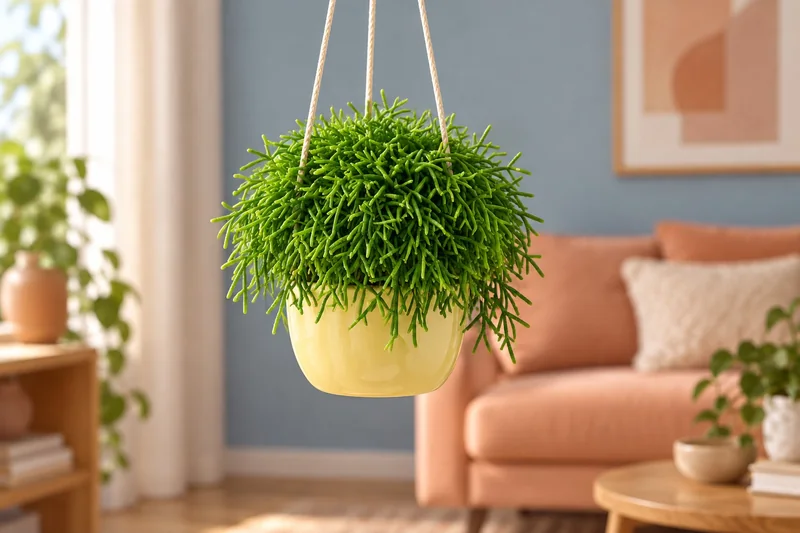
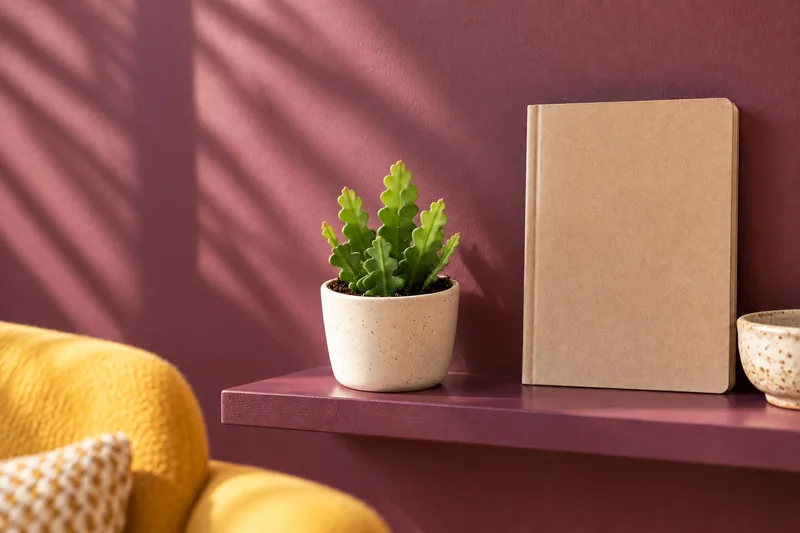
Lepismium bolivianum brings a different cactus character indoors. Its narrow, flat shoots hang like green ribbons over the pot rim and move even in a gentle breeze. Botanically, the plant is now listed as Pfeiffera boliviana; its familiar shop name is kept for recognition. The offer comes in a 15 cm hanging pot, without a precise delivery height. For care, what matters initially is that this is an epiphytic cactus. Treating it like a desert cactus in a dry resting phase overlooks exactly what its fine, long shoots need.
A hanging spot with filtered light
Give the plant a bright position but protect it from strong midday sunshine and overheated glass. A light veranda or a bright area beside a window often suits it better than the hottest south-facing sill. The pot should not disappear directly beneath a dark ceiling. Upper shoot bases should receive light too. Choose a height where the long ribbons fall freely without constantly being dragged over a table edge. A secure hook carries the damp pot, while the basket stays reachable for watering and checks.
Its origins explain the different care
Epiphytic cacti grow naturally on other plants or in similarly airy root spaces. They do not automatically live on their hosts’ sap; the important points for cultivation are airy support and a different moisture supply. Translate that into a loose, well-draining potting mix. Coarse structural components can help as long as the rootball still takes up moisture. Heavy ordinary compost alone often stays too compact. An entirely stony desert substrate, however, may dry too quickly for the fine shoots. Assess the mix by how it behaves in your room.
Supply moisture without making a swamp
Let the top layer dry slightly, then water enough to supply the rootball. Water must subsequently drain. Empty a closed hanging container rather than letting it quietly form a reservoir. Thin, flat shoots have different reserves from a thick ball cactus. Prolonged complete dryness therefore cannot simply count as good cactus care. Check pot weight and moisture if tips shrivel. If the rootball is wet, inspect roots and drainage. More water does not answer every appearance, even in a more moisture-loving epiphytic cactus.
Winter care according to actual use
In winter, growth may slow and the pot use less water. Reduce amounts accordingly without forcing months of total dry rest. Especially in a warm room, dry heating air can strain the narrow shoot ends. A bright, frost-free place with some distance from a radiator is better. Air can move without cold draughts passing directly over the plant. Keep checking moisture rather than looking only at the calendar. Warm-grown and cool-positioned plants do not need the same rhythm even when they share the same botanical name.
Let it grow and feed moderately
During noticeable growth, small nutrient supplies according to the product instructions help. The long shoots should grow back strongly, not be accelerated through excessive fertiliser. If the pot becomes cramped, gently increase its size during the growing season. Lay the ribbons loosely down and do not pull their network. Trim damaged parts with clean tools; healthy shoots can hang freely. This species can flower, but flowering depends on the plant and its growing conditions. Even without flowers, a close look is worthwhile: fresh tips are usually lighter and show that the plant has accepted its position.
When individual shoot ends look different
One damaged end does not immediately require changing the whole growing routine. First ask whether it was bent during transport, rubs against a shelf or hangs near a heat source. If many shoots become soft or wrinkled, however, examine the rootball more thoroughly. Afterwards watch new growth, because old damage remains visible. The plant does not have to look like a rigid curtain; its lively, slightly irregular movement belongs to its character. Bright filtered light, airy soil and sensible moisture management keep it an attractive contrast to the firm forms of other cacti.
One plant, several views

Good to know
Why does the portrait say Pfeiffera boliviana?
That is the botanical placement of the plant offered as Lepismium bolivianum.
Is it a desert cactus?
No. This epiphytic cactus needs filtered light and less dry cultivation.
Should I stop watering completely in winter?
No. Reduce according to consumption, but do not rigidly keep the rootball completely dry for months.
Are the shoots round?
The characteristic shoots are narrow and flat, forming a long hanging network of ribbons.
Why do the tips dry?
Check rootball moisture, roots, heating air and mechanical damage; not every dry tip has the same cause.
Can it grow in ordinary cactus compost?
An airy, moisture-retaining mix for epiphytic cacti is better than a very dry desert mix.
How large is the delivered plant?
The pot diameter is given as 15 cm. No precise total height is specified in the checked offer.
Sources and editorial note
- Exotenherz: offer and original photographs (01.10.2026)
- Cactus and Succulent Review: Pfeiffera boliviana (01.10.2026)
- RHS: epiphytic and other cacti (01.10.2026)
Shop offer, SKU, GTIN and availability checked live on 01.10.2026. Original photograph unchanged. Independently researched horticultural texts and an individually reviewed scene.