This plant at Exotenherz
Check the shop offer for current availability, price and what is included.
Check the selected shop offer for price, availability and delivery contents.
Your care table
| Topic | What to do | Why it helps |
|---|---|---|
| Light | Very bright; introduce direct sun gradually. | Persistent lack of light changes the compact structure. |
| Watering | Thoroughly during growth, then let it dry well. | The thickened root cannot tolerate permanent waterlogging. |
| Substrate | Free-draining cactus compost with a substantial mineral content. | Water should leave the root area quickly. |
| Pot | Drainage holes and enough depth for the root. | A shallow bowl may restrict the root. |
| Nutrients | Restrained feeding during growth, following the cactus-fertiliser label. | Slow growth does not need a heavy supply. |
| Winter | Frost-free, bright and cool; reduce water strongly. | During little growth, wet soil remains a burden for a long time. |
| Handling | Hold the pot; do not use tubercles or spines as handles. | The long parts are easily damaged. |
| Repotting | Carefully during favourable growing conditions. | Injured roots should not stand in wet soil. |
Check the compost and pot weight. The care table explains how far the compost may dry.
Water only when needed. The water should reach the root ball without spilling over the rim.
Remove surplus water from the saucer or cachepot. Then return the plant to a suitable position.
A cactus that looks different
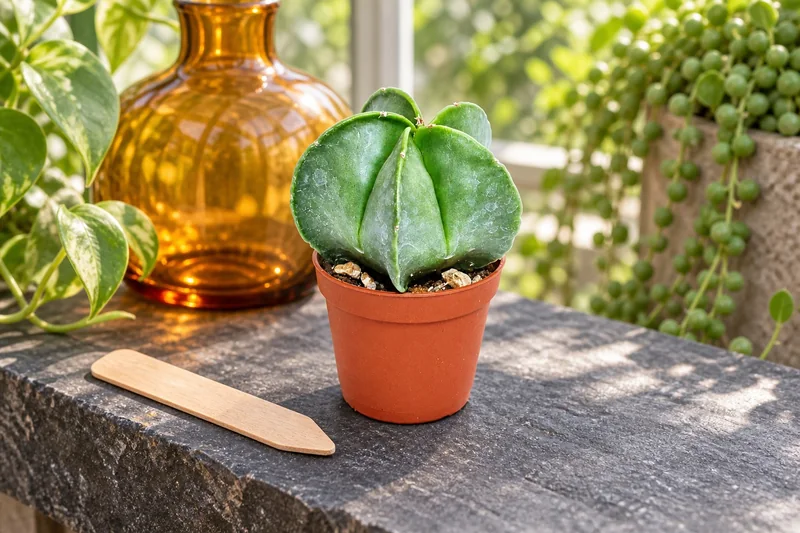
Leuchtenbergia principis first makes us think of a small agave. Long, angular projections stand loosely around its centre, with papery-looking spines at their tips. These are not agave leaves, however, but greatly elongated cactus tubercles. That difference is precisely what makes the plant so intriguing. The offer in a 9 cm pot is approximately 12 cm in total height and is a young plant. A quiet, bright spot gives its unusual structure room. Getting to know it reveals not only the tips, but an important feature underground as well.
The root belongs in the portrait
The agave cactus forms a thickened root. We therefore judge a suitable pot by more than its width. When repotting later, there must be enough room downwards without placing the plant in an unnecessarily huge volume of soil. A very shallow decorative bowl is not automatically a good choice. First check how the existing roots sit and gently loosen the rootball. Keep the plant at roughly its previous height. A decorative cachepot can hold the nursery pot as long as it drains reliably and can be removed to check moisture.
A bright spot for firm shapes
Leuchtenbergia needs plenty of light. Even the finest mineral substrate cannot compensate for a dark area inside a room. A very bright spot under glass or by a window is sensible; introduce strong sunshine gradually after transport. On a summer balcony, also provide protection from rain and stable temperatures. Wind should not keep pressing the long tubercles against nearby objects. Heat can build up inside a closed glass display case. Give the plant light and air together. Its open growth should remain recognisable without becoming unhealthily stretched through persistent lack of light.
Water thoroughly, dry thoroughly
During active growth, moisten the rootball and let excess water drain. Water again only after substantial drying. The thickened root is a reason to take this pause seriously, not an invitation to keep the plant completely without water all year. Damp soil and a heavy pot show that another watering is not yet needed. Drying takes longer on cool days. Small daily amounts make monitoring harder and may keep the upper root area permanently wet. Water should reach the soil, not the spaces between closely positioned tips.
Mineral structure rather than heavy soil
Free-draining cactus compost with enough mineral components supports the alternation between taking up water and a dry phase. Keep drainage holes clear; a gravel layer does not replace a suitable mix. Watch for damaged roots when repotting and be correspondingly cautious with the first watering. Small nutrient supplies according to the product used are enough during growth. More fertiliser does not turn this slow-growing agave cactus into a rapidly developing specimen. Long-term attractive form comes from suitable light and a healthy root system. Restrained feeding alone cannot compensate for heavy soil that stays moist for a long time.
Keep winter genuinely quieter
When light and growth decline, reduce watering strongly. Bright, cool, frost-free overwintering makes the resting phase easier. The dry cultivation of some adult cacti is still no frost guarantee for this young potted plant. A warm winter position needs especially plentiful light; extra moisture does not remedy missing light. Assess the plant’s condition and the rootball together. Slight changes in older tubercles differ from soft tissue at the base. Unusual softness calls for inspection of the root zone rather than immediately giving a supposedly thirsty cactus a heavy watering.
Be careful with the fine tips
The papery spines look lighter than robust cactus spines but are not toys. Hold the pot when moving the plant and keep the long tubercles clear. Damaged parts do not simply grow back in the same shape. Older plants can develop yellow flowers; early flowering of the young delivered plant is not promised. We already enjoy Leuchtenbergia without that addition, as every new tubercle builds its distinctive framework further. Regular observation helps more than frequent turning and touching. Appropriate root depth and quiet care remain the basis of its slow progress.
One plant, several views

Good to know
Is Leuchtenbergia an agave?
No. The long projections are elongated cactus tubercles, not agave leaves.
Why does it need a deeper pot?
The species forms a thickened root; its actual length must be considered when repotting.
Can it grow in ordinary potting compost?
A heavy mix that stays wet for a long time is unsuitable. Use free-draining cactus substrate.
Can it remain outdoors in winter?
For the young potted plant, we recommend bright, frost-free overwintering.
How often should I water?
During growth after substantial drying; much less often in a cool winter.
Will the young plant have yellow flowers?
The species can flower, but the young plant’s timing and ability to flower are not guaranteed.
Can I cut off the tubercles?
Not for shaping. They are living parts of the cactus and should be treated gently.
Sources and editorial note
- Exotenherz: offer and original photographs (01.10.2026)
- LLIFLE: Leuchtenbergia principis (01.10.2026)
- RHS: cacti in cultivation (01.10.2026)
Shop offer, SKU, GTIN and availability checked live on 01.10.2026. Original photograph unchanged. Independently researched horticultural texts and an individually reviewed scene.