This plant at Exotenherz
Check the shop offer for current availability, price and what is included.
Check the shop for the price, current availability and what is included.
Your care table
| Topic | What to do | Why it helps |
|---|---|---|
| Light | Sun to partial shade, with some protection in great heat. | A small root ball quickly loses water in wind and sunshine. |
| Water | Check regularly and supply evenly. | Repeated severe wilting weakens new growth. |
| Soil | Loose nutrient-containing soil with free drainage. | Roots need moisture and air. |
| Harvest | Cut healthy shoot tips above leaf pairs. | This keeps growth well branched. |
| Fertiliser | Moderately during growth and harvesting according to the label. | Fresh leaves need suitable feeding. |
| Propagation | Prefer healthy rooted divisions. | This better preserves the desired aroma form. |
| Winter | Position small containers sheltered and do not let them dry out. | Hardiness is of limited use in an exposed miniature root ball. |
| Checks | Watch for rust pustules, spots and dense old foliage. | Preserve healthy harvest material and air within growth. |
Check the compost and pot weight. The care table explains how far the compost may dry.
Water only when needed. The water should reach the root ball without spilling over the rim.
Remove surplus water from the saucer or cachepot. Then return the plant to a suitable position.
The mandarin aroma is in the mint leaf
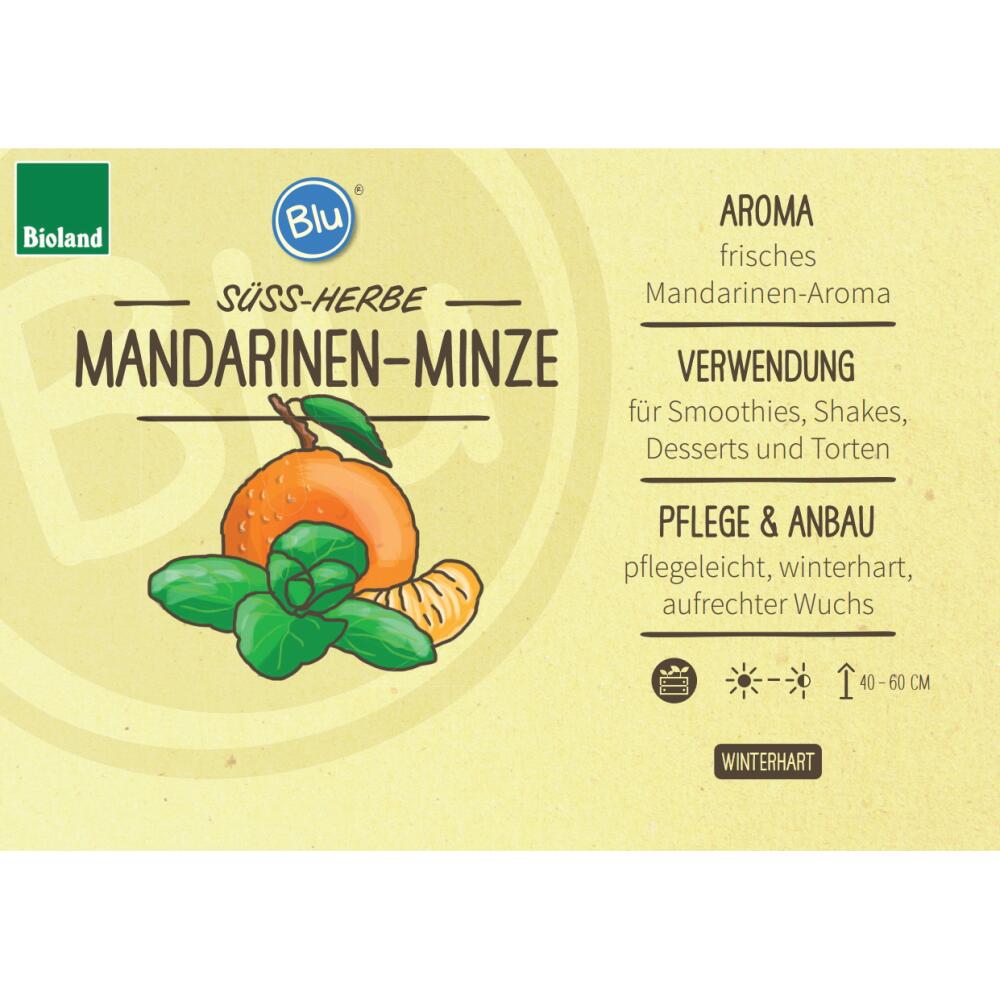
Crushing a leaf reveals the fruity sweet-tart scent note. How strongly it recalls mandarin peel depends on individual perception and plant condition. Mandarin mint is not a cross with a citrus tree and bears no mandarins. The producer lists it as an aroma form of Mentha × piperita. A differing short shop text names pineapple mint; the title, plant label and description of this offer, however, refer to mandarin mint. The two herb subjects therefore remain separate.
A young herb pot with room for growth
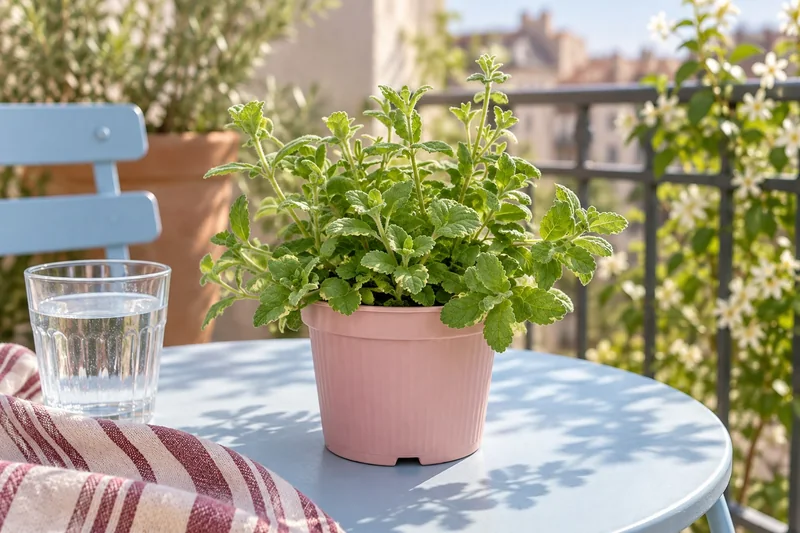
A 12 cm pot is offered without a fixed delivery height. The stated 40 to 60 cm describes later growth, not a guaranteed height of the young plant. The scene keeps growth compact accordingly. A separate larger container is practical for this mint: it keeps spread manageable and can be placed near a frequently used seating area. Harvesting is then within easy reach. Several mint varieties should be clearly labelled and preferably kept separate so shoots do not mix unnoticed.
A good position combines light and water
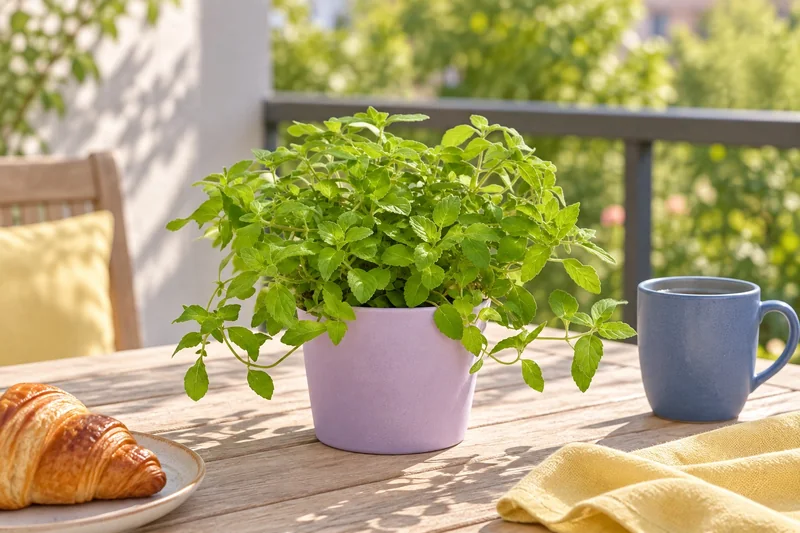
Sunny to partly shaded positions are suitable. On very hot windy balconies, gentler afternoon shade can slow drying. Choose loose nutrient-containing soil that stores water and lets excess drain. Check a small pot frequently in summer warmth; rigid weekly watering may then be insufficient. Mint should not constantly collapse limply. With already moist soil and a hot position, check heat and roots first instead of continually soaking the root ball further.
Harvest fresh and begin with small amounts
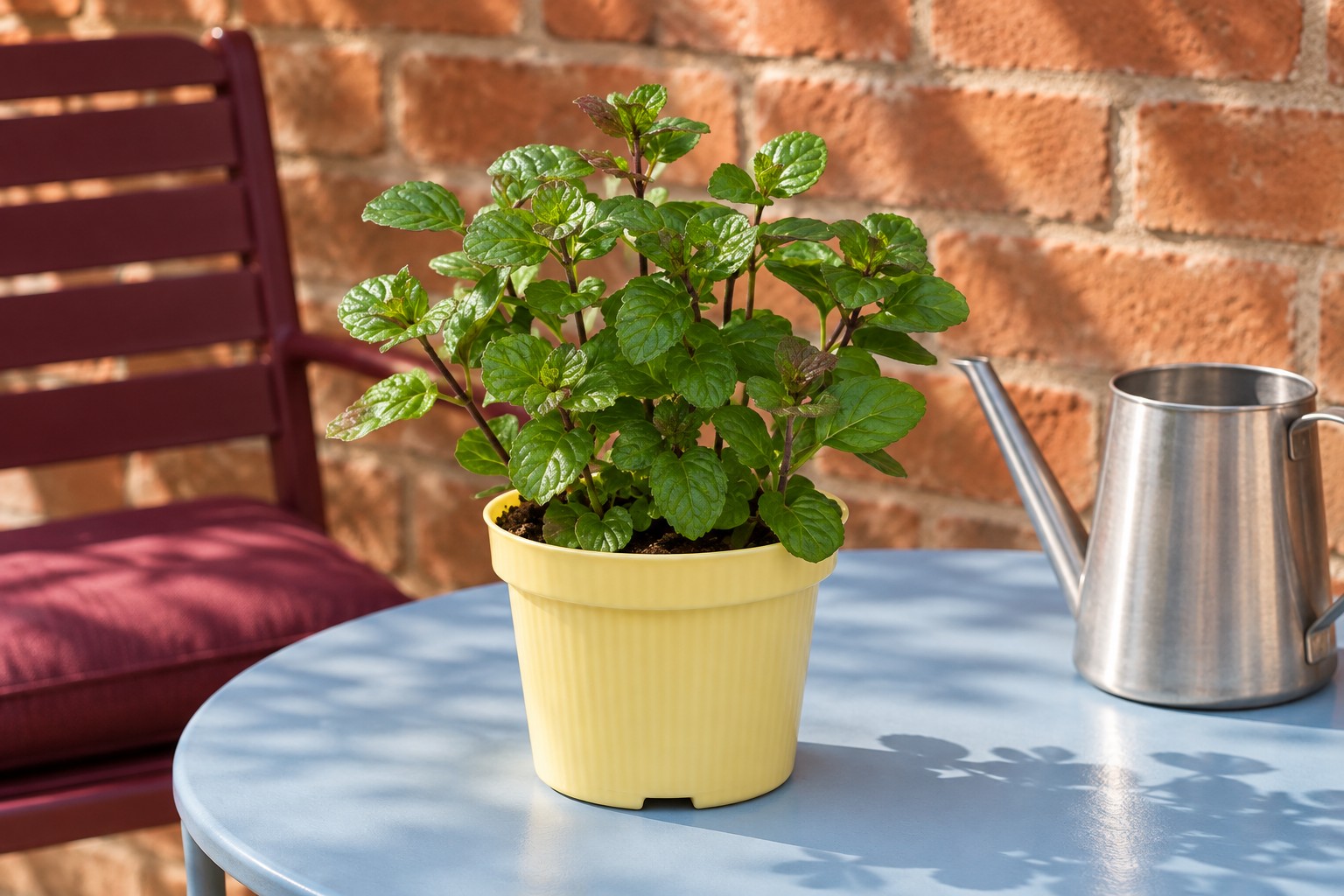
Cut young healthy tips above a leaf pair. This promotes branching and maintains even growth. Leave sufficient foliage for the plant to keep gathering energy. Clean fresh leaves can flavour drinks or desserts after a brief rinse. Start with a few leaves, as desired intensity is a matter of taste. Freshly harvested foliage gives a different impression from material dried for longer. This portrait describes a kitchen ingredient and promises neither therapeutic effects nor particular medical suitability.
Strong new growth needs root ball care
With regular harvesting and strong growth, feed moderately according to the fertiliser label. Take newly bought pre-fertilised soil into account. A densely rooted pot can be divided and rebuilt with fresh soil in the next growing phase. Healthy rooted divisions are a reliable way of continuing a known aroma form. Seeds, however, need not reliably produce plants with the same scent; the blanket description true from seed is not adopted here as a guarantee for this peppermint hybrid. Check runners regularly.
Consider winter in the container
Mandarin mint is offered as perennial and winter-hardy. In a small pot, the root ball is more exposed to frost and drying than in garden soil. Position the container sheltered and insulate its sides if needed without blocking drainage. Check the root ball on frost-free days. Brown old shoots can belong to winter rest and are removed before fresh spring growth. During the season, inspect spotted or rusty-dotted foliage more closely and do not harvest it without checking. Airy growth makes inspection easier.
One plant, several views

Good to know
Is mandarin mint a citrus plant?
No. It is a mint whose leaf scent may resemble mandarin peel.
Is it the same plant as pineapple mint?
No. The offer shows and describes mandarin mint; the differing short-text statement is not adopted.
Does the aroma reliably remain the same from seed?
That is not guaranteed here. Rooted divisions of a known plant are the more reliable choice for preserving the aroma form.
How much mint belongs in a drink?
Begin with a few clean leaves and adjust the amount to your taste. Aroma intensity can vary.
Sources and editorial note
- Product and delivery contents: Exotenherz
- Blu nursery: range and growing information
- Royal Horticultural Society: plant and care information
Sources checked: 15 September 2026. Product information and the contents of delivery follow the linked shop offer. Care advice was checked against the cited specialist sources and should still be adapted to the plant’s condition, position and season.