This plant at Exotenherz
Check the shop offer for current availability, price and what is included.
Product details, availability and delivery information in the shop.
Your care table
| Topic | What to do | Why it helps |
|---|---|---|
| Light | Bright with indirect daylight. | Overly dark positions weaken the structure. |
| Warmth | As even as possible, around 18–25 °C. | Cold draughts can trigger leaf drop. |
| Water | Water evenly after the upper layer starts to dry. | The root ball should neither become waterlogged nor dry completely. |
| Drainage | Empty the outer pot after watering. | Roots need oxygen. |
| Air humidity | Avoid heating air; aim for moderate to higher humidity. | The fine foliage is sensitive to extreme dryness. |
| Fertiliser | Moderately during growth; reduce when growth is limited. | Supply follows actual need. |
| Repotting | Carefully when needed, into a moderately larger pot. | Fine roots should be preserved. |
| Inspection | Look at shoots and leaf undersides regularly. | Notice mites, scale insects and mealybugs early. |
Check the compost and pot weight. The care table explains how far the compost may dry.
Water only when needed. The water should reach the root ball without spilling over the rim.
Remove surplus water from the saucer or cachepot. Then return the plant to a suitable position.
Many slender trunks carry fine foliage
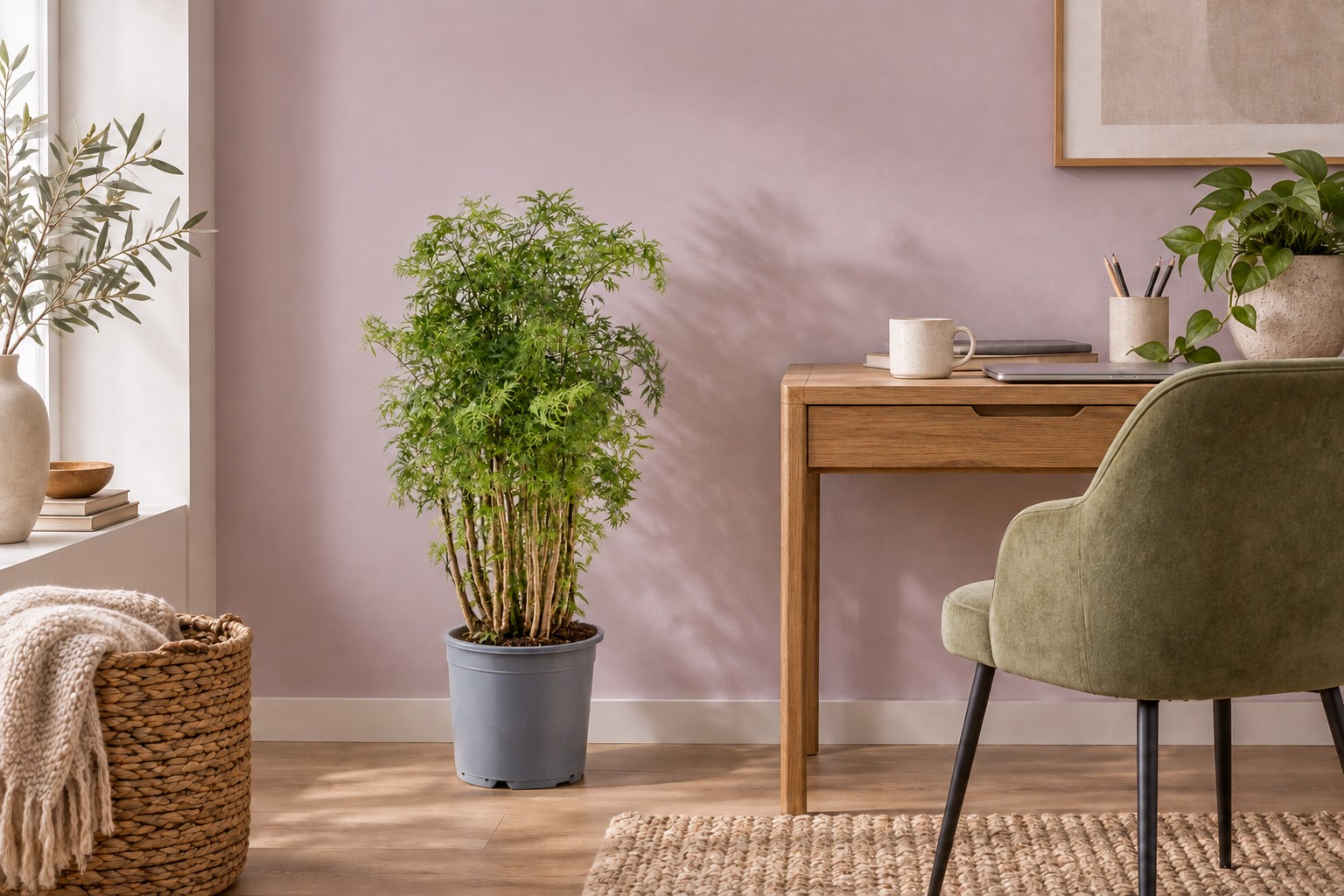
The plant shows a group of upright woody trunks with finely divided green foliage. Space remains between the branches, making the crown lighter than that of large-leaved houseplants. The shop lists a 24 cm pot and approximately 100 cm total height. It is therefore already suitable as a striking floor plant beside an armchair or desk, provided sufficient daylight reaches it. Density, trunk count and leaf arrangement can vary among living specimens.
Classifying Ming aralia botanically
Ming aralia is botanically classified as Polyscias fruticosa and belongs to the Araliaceae family. In the shop, it appears as Polyscias hawaiiana Ming. The trade name Hawaii aralia does not prove a natural origin in Hawaii. Kew describes a cultivation-influenced background from central Malesia to the south-western Pacific. The German name Petersilienbaum is another descriptive image for the delicate foliage. The specific offer remains an ornamental plant and is not presented as a kitchen herb. The finely divided leaves are true leaves, not fern fronds.
A bright settled position is valuable
Choose plenty of indirect daylight and avoid sudden hot midday sun. A bright living or working area fits well as long as the plant does not stand far back in a dark corner. Even warmth around 18–25 °C is a practical foundation. Cold draughts when ventilating, winter-cold glass or immediate proximity to heating stress the fine crown. Frequent moving makes acclimatisation harder. After arrival, settle on a suitable position and observe changes attentively.
Neither dry out nor stand in water
Let the upper compost layer start to dry, then water evenly. The entire root ball should not repeatedly dry out completely. Remove excess water after it drains through. In a 24 cm pot, the interior may stay moist considerably longer than the surface; pot weight and careful moisture checking help. A fixed weekly schedule does not suit every season. In winter, lower light reduces water use even while the plant is warm. Do not automatically respond to yellow leaves with extra water.
Air, compost and gentle crown care
An airy, humus-rich houseplant mix with good drainage supports the roots. Repot during growth when needed and give only moderately more space. Do not unnecessarily tear fine roots apart. Moderate to higher air humidity is favourable; in dry heating air, improve the position instead of keeping the crown constantly dripping wet. Remove dust gently. Individual long shoots on a healthy acclimatised plant may be shortened. Radical pruning directly after purchase is unnecessary. Feed moderately according to the label during growth.
Read leaf drop as a clue
Some leaves may be lost after a change of position. Heavy, persistent leaf drop requires checking light, temperature and root-ball moisture together. Dryness, cold draughts and waterlogged roots cause different problems. Fine webs or noticeable spots may indicate spider mites, especially in dry indoor air. Also check shoots for scale insects and mealybugs. Healthy firm trunks and new growth are good signs. Flowers and fruit are not the expected goal indoors; the finely divided crown takes centre stage.
One plant, several views
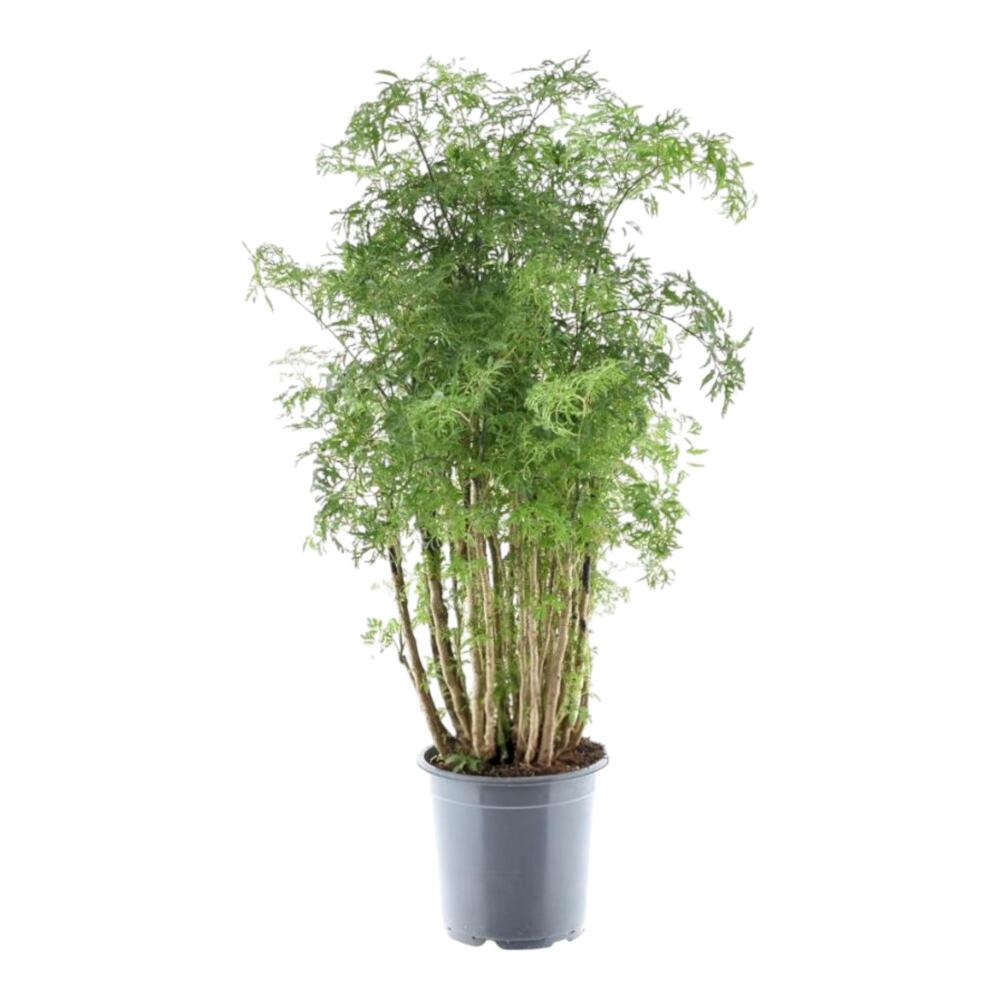
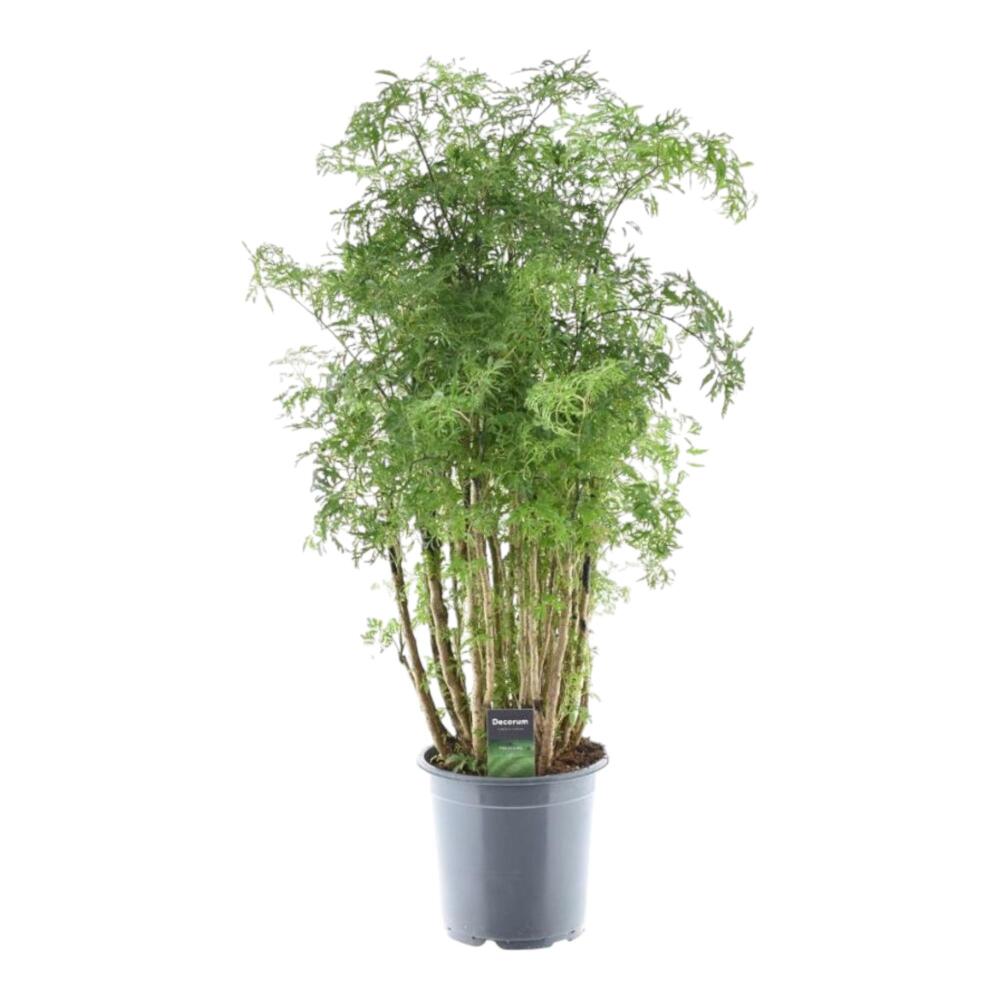
Good to know
Can I use this plant, called Petersilienbaum, as a herb?
This offer is an ornamental plant, not a substitute for kitchen parsley.
Why does it lose leaves after moving?
Light, temperature and moisture have changed. Choose a suitable settled position and check the root ball particularly carefully.
Is Ming aralia a palm?
No. It is a woody shrub in the Araliaceae family.
Should the compost always remain wet?
No. Let the top begin to dry, keep the interior moist under controlled conditions and remove residual water.
Sources and editorial note
- Product and delivery contents: Exotenherz
- NC State Extension: plant profile
- Kwantlen Polytechnic University: plant profile
- Royal Botanic Gardens, Kew: botanical classification
Sources checked: 16 September 2026. Product information and the contents of delivery follow the linked shop offer. Care advice was checked against the cited specialist sources and should still be adapted to the plant’s condition, position and season.