This plant at Exotenherz
Check the shop offer for current availability, price and what is included.
Product and delivery details are given in the individual offer.
Your care table
| Topic | What to do | Why it helps |
|---|---|---|
| Light | Choose bright filtered daylight without hot direct sun. | Small fronds need light and protection from overheating. |
| Water | Check each little root ball individually and supply before complete drying. | 5.5 cm pots lose moisture quickly. |
| Drainage | Use drainage holes and remove excess water. | Moisture-loving ferns still need air at their roots. |
| Room climate | Keep warm, draught-protected and with more humid surrounding air. | Radiator proximity quickly dries tender foliage and small root balls. |
| Soil | Use loose humus-rich, freely draining soil. | The mix should retain moisture without compacting wetly. |
| Feeding | Feed lightly during growth according to the label. | A small root ball needs no high fertiliser concentration. |
| Glass cultivation | Keep moisture, warmth and air exchange controllable. | A permanently closed wet container can cause harm. |
| Frond care | Gently remove only dead parts; retain new tips. | Different forms are not sheared like a shared hedge. |
Check the compost and pot weight. The care table explains how far the compost may dry.
Water only when needed. The water should reach the root ball without spilling over the rim.
Remove surplus water from the saucer or cachepot. Then return the plant to a suitable position.
Three little ferns, three individual outlines
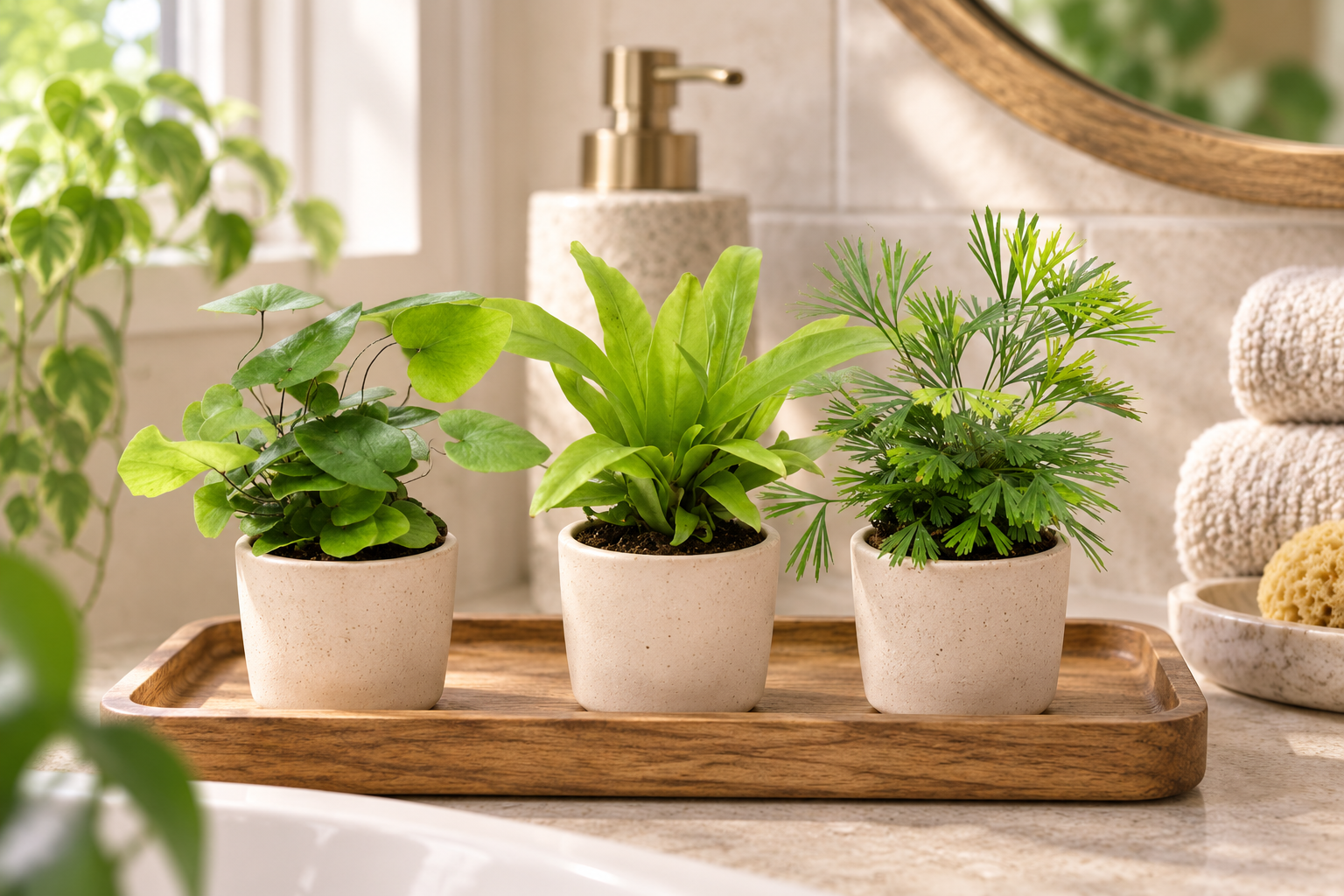
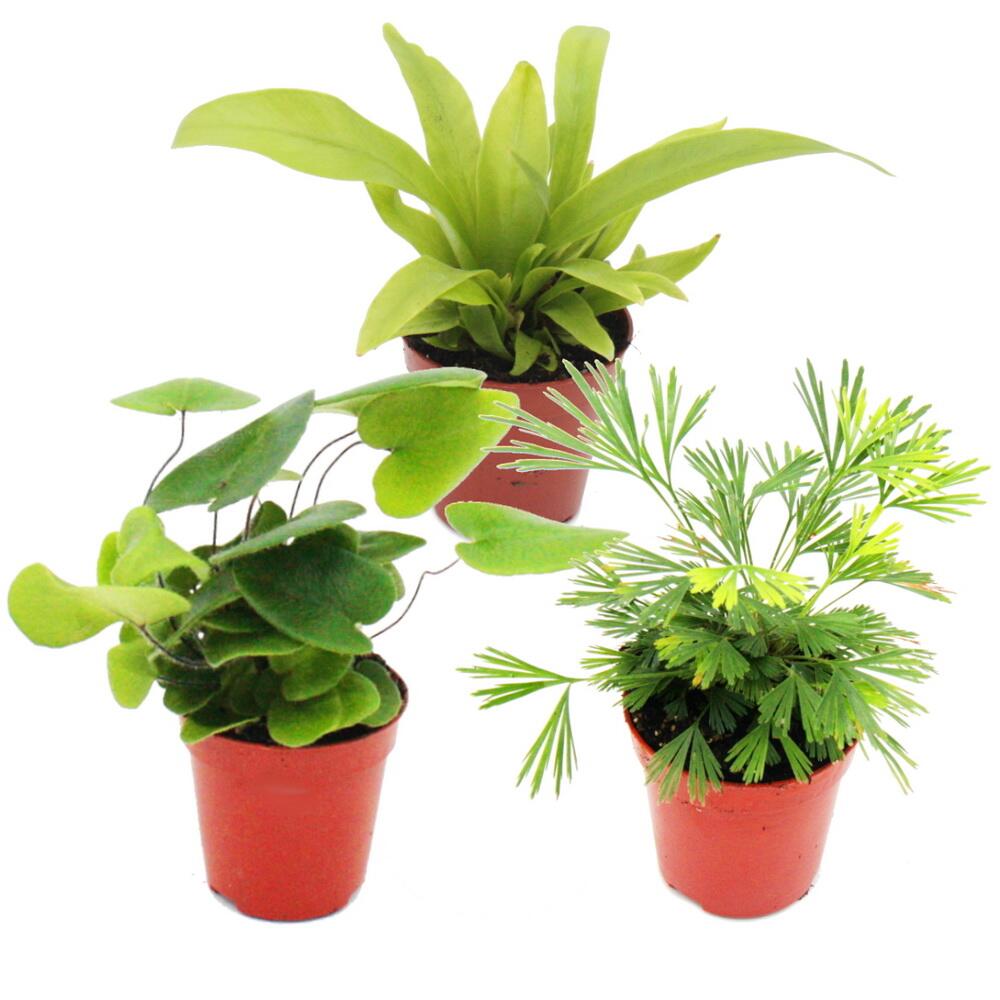
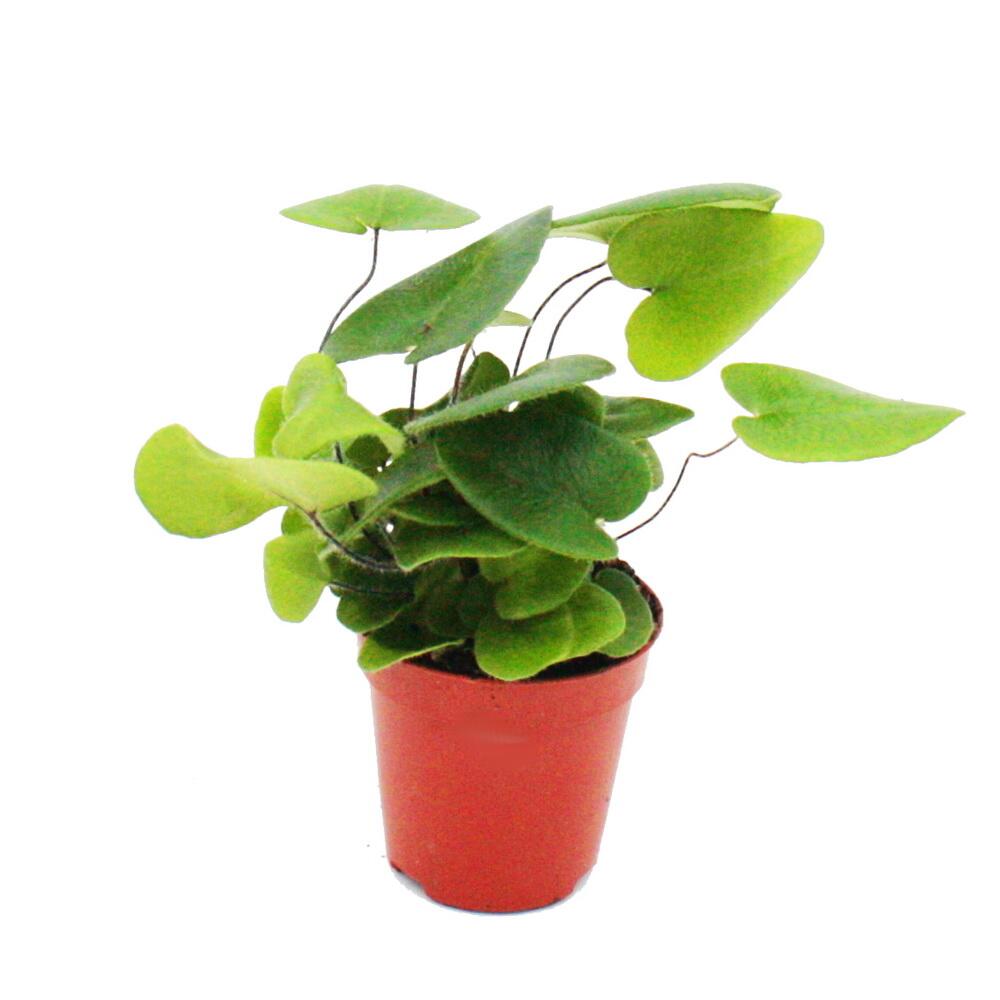
The mini-fern trio brings clearly different forms together. The nest fern carries long green fronds opening from a centre. Little fans give Actiniopteris its distinctive silhouette. Hemionitis shows heart-shaped surfaces on slender stalks. Side by side, this diversity is visible in just a few young fronds. We like them on a bright little shelf where every pot gets some space of its own. The plants need not intertwine densely to look like a group. A quiet background particularly shows that fern foliage can be more than the familiar feathered frond.
Mini describes the young supplied plants
Three separate plants are offered, each in a 5.5 cm pot at approximately eight to ten centimetres total height. The little pots are included in that height. The set comprises nest fern, fan fern and heart fern; the scene shows their young forms in decorative outer containers. These are not included. Mini does not mean each plant permanently stays that size. A new frond may gradually take more room. Retain the individual plants’ identification rather than later treating every pot as the same little fern. Differences also help care observation.
A bright place with sheltered air
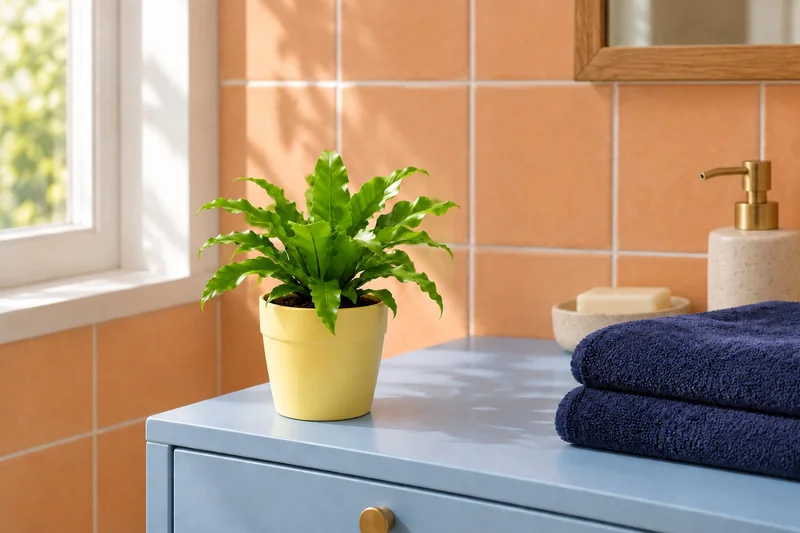
Filtered daylight without hot direct sun is a good starting point. A bright bathroom may suit them if real daylight is present and plants are not in cold draughts. High humidity does not make a windowless room a good fern position. On a home shelf, keep away from the radiator. Young fronds are sensitive to mechanical pressure and strong drying. Position them for easy daily inspection. A shared group can look attractive but still needs air between foliage and must not be pressed into permanently damp cramped corners.
Do not underestimate the small root space
A tiny pot dries much faster than a large fern container. Feel every root ball individually and lift pots to compare. Supply slowly before they dry completely and let excess drain. Small regular checks help more than one large shared weekly portion. The heart fern may show different moisture from its neighbour at the same position. Standing water in a cachepot is no solution when daytime time is short. It removes air from the root ball. A suitable permeable mix and accessible position make reliable supply considerably easier.
Bowl and glass stay controllable planting places
Young ferns can be used in a bowl or glass cultivation. The container must match the care. Without drainage holes, watch the water level particularly carefully and do not create a wet bottom unnoticed. Moisture in the air and water in the root ball are different things. A closed glass can also trap heat. Allow air exchange and avoid direct sun on glass. Separate inner pots are often clearer initially: each plant can be lifted out and checked. The shared arrangement stays intact without one container problem affecting all three root balls equally.
New fronds need calm and moderate food
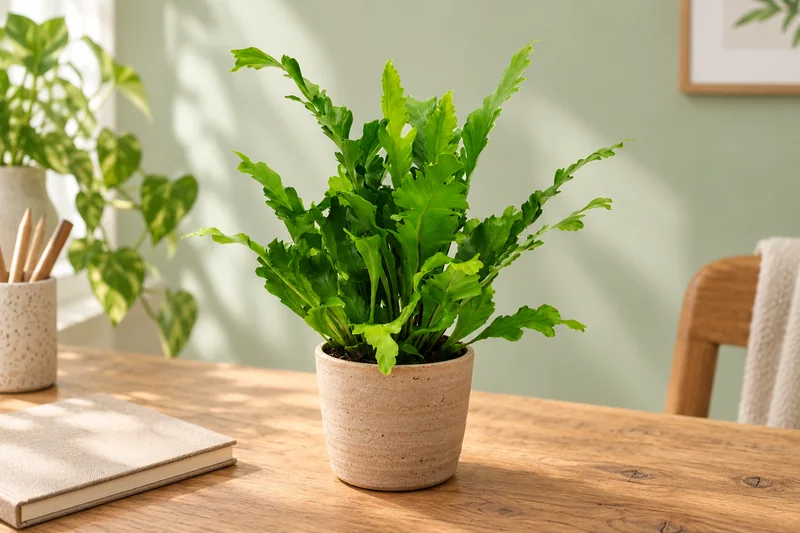
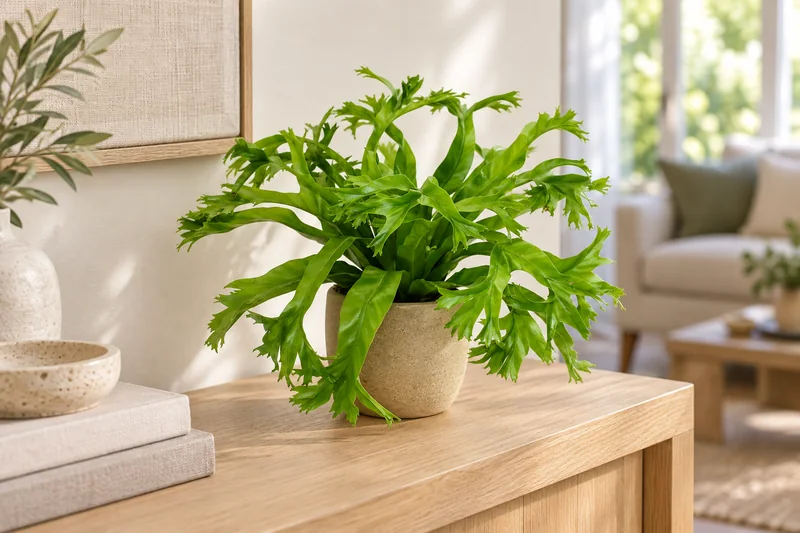
If plants grow well, feed lightly according to the fertiliser label. Small root space calls for no high concentration. When roots become dense, later carefully move to a suitable size and use loose humus-rich soil. Do not bend new rolled fronds or the nest fern’s centre or cover them with soil. Gently remove dead parts and retain healthy surfaces. Ferns do not flower but form spores. Regular spore structures on frond undersides are therefore not automatically pests. Looking closely first spares tender plants unnecessary rubbing, spraying or cutting.
Look at every fern individually even in winter
The trio remains warm and frost-free. Less light can slow growth while heating air simultaneously dries little pots faster. Check actual needs instead of simply cancelling all waterings. Consider brown tips with moisture, heat and air dryness. Within the same arrangement, one plant may react faster than another. Note small changes or carefully move one pot to a more suitable spot. This closeness makes mini-ferns appealing: we learn three individual green forms and accompany fresh growth without turning the little group into one uniform plant.
One plant, several views
Good to know
What is in the set?
One nest fern, fan fern and heart fern in separate 5.5 cm pots.
Do the ferns stay this small?
No. The 8–10 cm specification describes young delivery size. Plants continue growing.
Why must I check pots frequently?
Their small root space can dry quickly. Check every root ball individually.
Does a bathroom suit them?
If bright, warm and draught-protected. Humidity does not replace daylight.
Can the glass stay permanently closed?
Moisture, heat and air exchange must stay controllable. Avoid trapped wetness and heat.
Are brown dots under fronds always pests?
No. Regular spore structures can be natural. Look carefully before treating.
Sources and editorial note
- Exotenherz: offer and original images (02/10/2026)
- NC State Extension: nest fern (02/10/2026)
- Dötterer nursery: Actiniopteris (02/10/2026)
- NParks: heart fern (02/10/2026)
Shop offer, article number, GTIN, availability and original images checked directly on 02/10/2026. Specialist sources read directly. No permanent miniature size promised. Set Asplenium species not determined beyond genus; separate moisture checking explained.