This plant at Exotenherz
Check the shop offer for current availability, price and what is included.
Check the shop for the current price, availability and offer contents.
Your care table
| Topic | What to do | Why it helps |
|---|---|---|
| Light | Choose bright filtered daylight to light shade. | Patterned leaves need light without overheating behind glass. |
| Water | Let the top layer dry somewhat and keep the ball moderately moist. | Neither prolonged complete dryness nor constantly wet soil suits it. |
| Hanging pot | Take down to water, drain fully and empty the outer cover. | Hidden water is easily overlooked above eye level. |
| Soil | Use a humus-rich loose well-drained peat-free mix. | Leafy vines need moisture and roots also need air. |
| Room climate | Grow warm without cold draughts, preferably with pleasantly higher air humidity. | Dry heating air stresses tender leaves and tips. |
| Training | Let stems trail freely or guide loosely on a suitable support. | Tendrils can grip without tight ties crushing them. |
| Branching | Selectively pinch healthy young tips if needed. | Limited pruning can support branching. |
| Winter | Maintain light, recheck moisture and match feeding to growth. | Less light changes water use and fertiliser needs. |
Check the compost and pot weight. The care table explains how far the compost may dry.
Water only when needed. The water should reach the root ball without spilling over the rim.
Remove surplus water from the saucer or cachepot. Then return the plant to a suitable position.
One leaf, two different faces
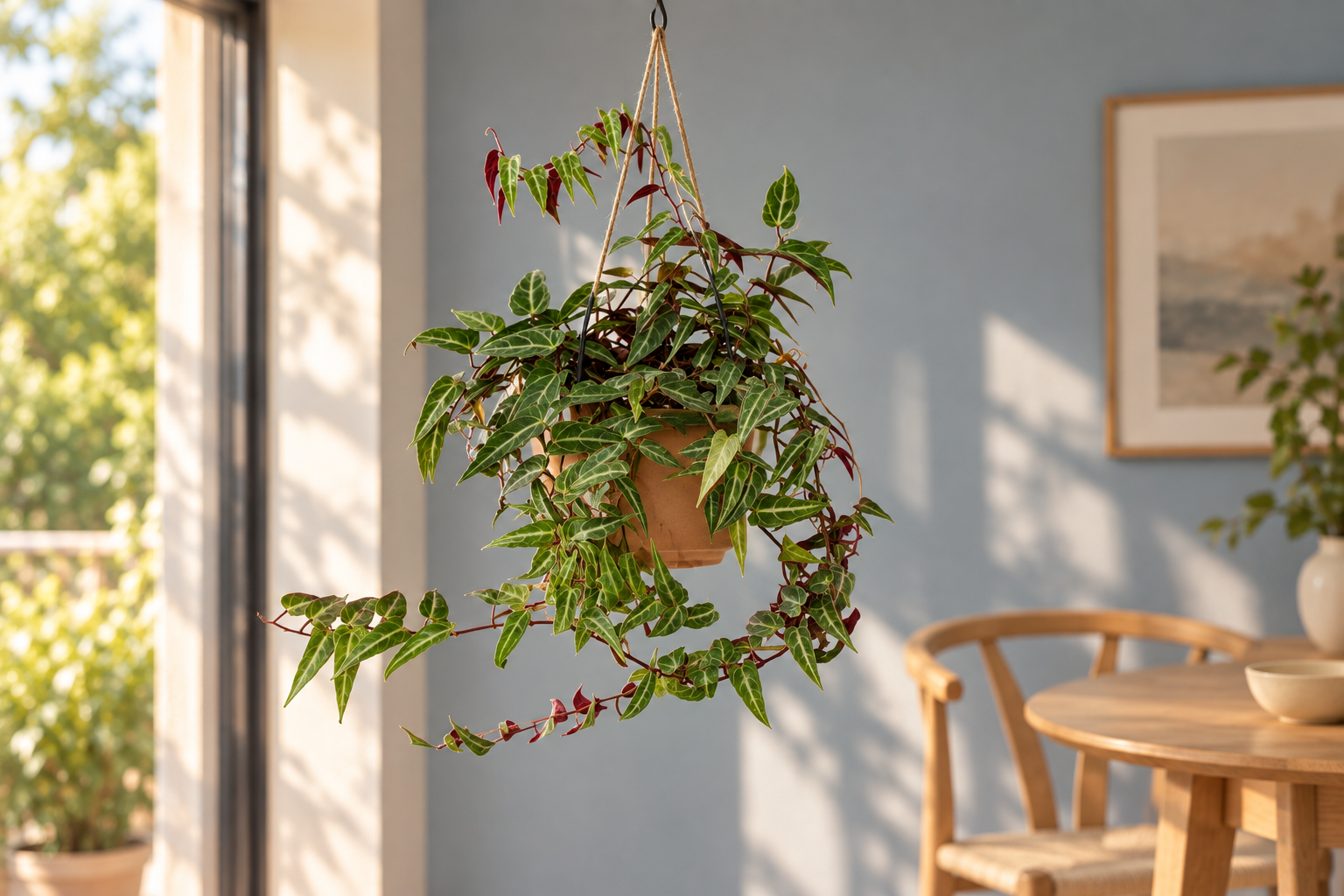
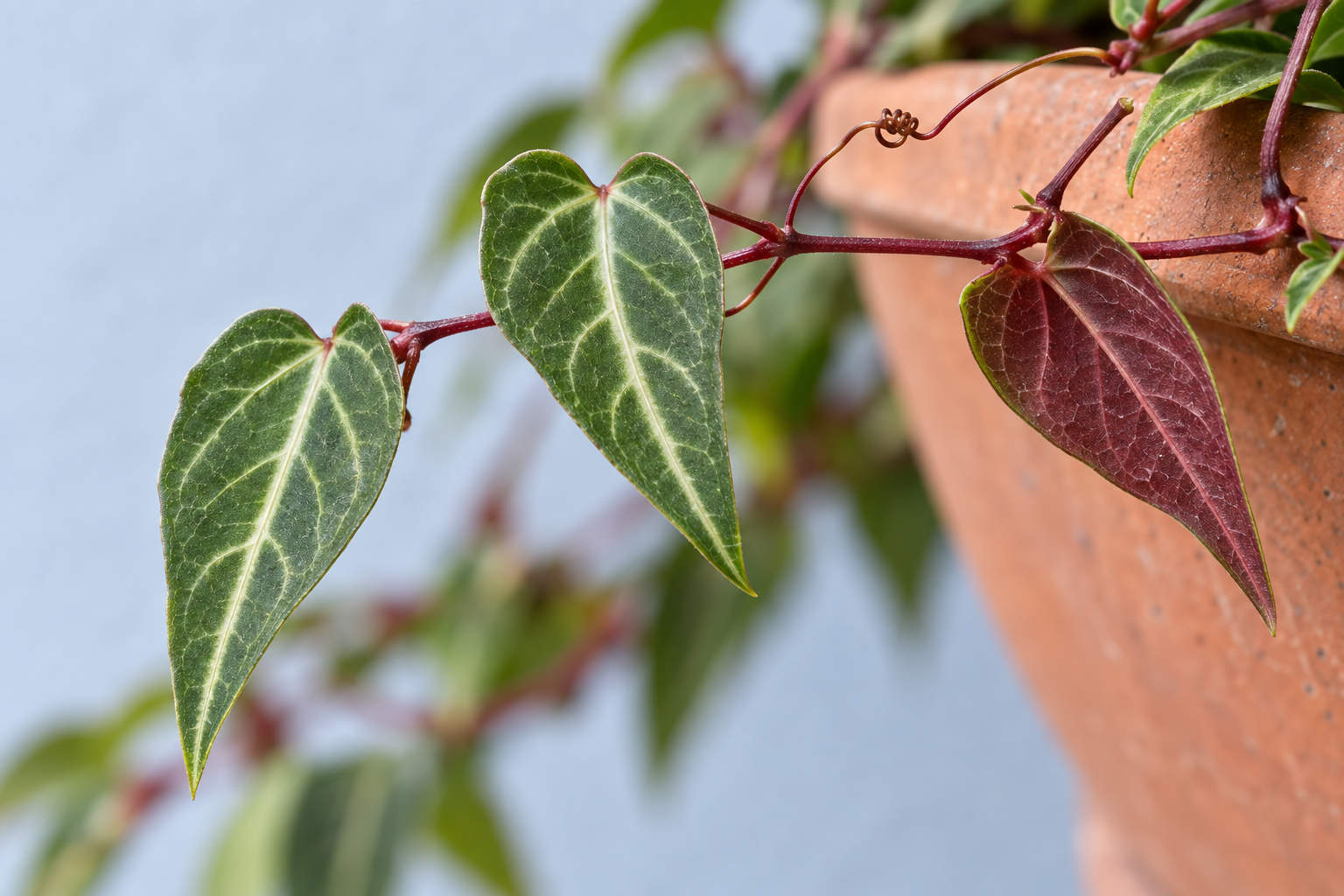
This vine rewards a second look. Pale veins cross dark, slightly silvery green upper surfaces. When a leaf turns on its fine stalk, the burgundy underside appears. Leaves are narrow hearts, pointed and unlobed, quite unlike the lobed leaves of many other cissus. Thin reddish stems create a light, mobile framework. The shop calls it Parthenocissus amazonica. The Royal Horticultural Society treats the same horticultural plant as Cissus amazonica and explicitly gives Parthenocissus amazonica as another name. Its care therefore concerns this particular tropical jungle vine, not hardy Virginia creeper for a house wall. Start with its small hearts and trailing young habit rather than inferring a different plant from the word vine.
The hanger does not count towards vine length
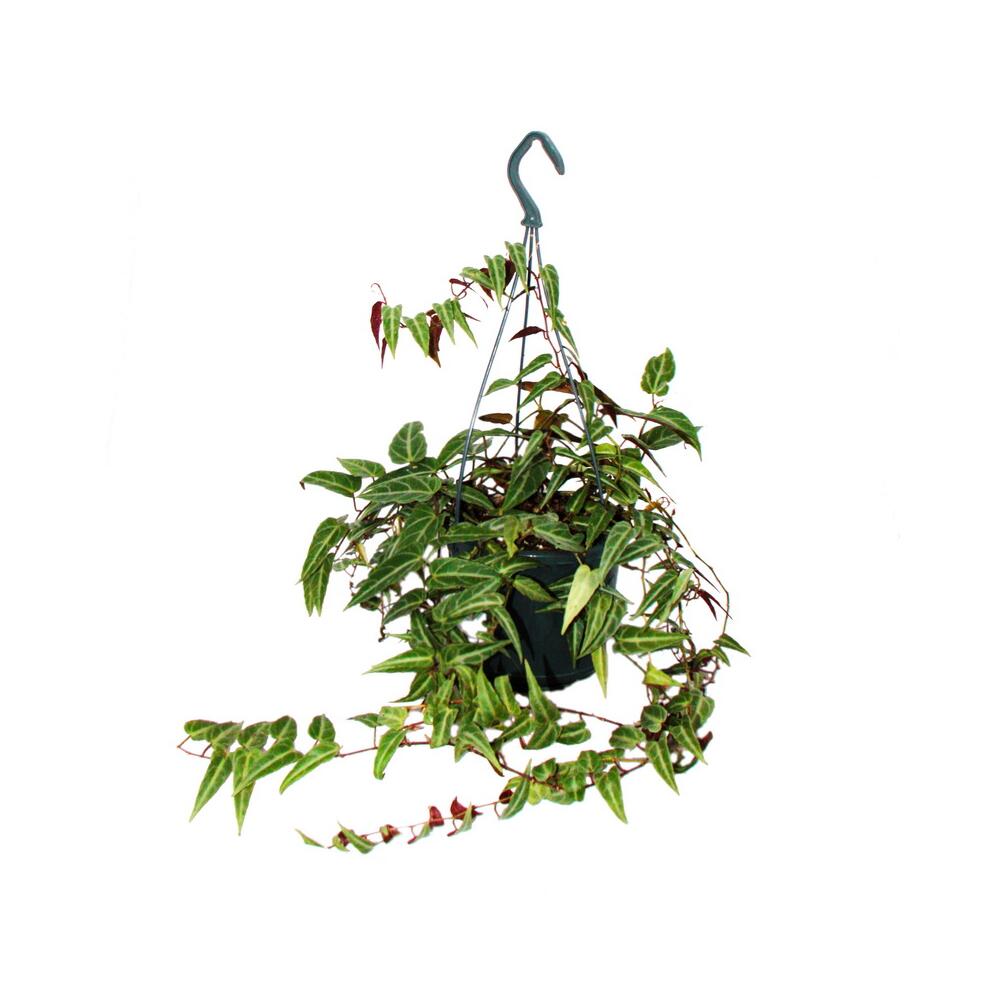
The offer describes a fourteen-centimetre hanging pot and roughly thirty to forty centimetres overall length excluding the hanger. The hook adds nothing to that plant measurement. Nor does it limit later growth: in good culture this tropical climber can continue growing and make longer stems on a support. Leave some space below and ensure the fixing holds the weight of wet soil too. When unpacking, hold the container and gently free tangled stems; an accessible vine is not a carrying handle. A hanging position remains practical only if the plant can be taken down for watering and inspection. Over a doorway or walkway, fine tips would keep catching on obstacles.
Light above the pot as well
Filtered daylight to light shade suits the vine. A nearby bright window can reveal the markings, but avoid a hot sun patch directly on the pot. Check the upper starting point too: under a deep shelf or close to the ceiling it may be much darker than the trailing tips. The whole plant needs usable light. New long, sparsely leafy lengths warrant checking that distribution before feeding more. Allow adjustment time after moving. Warm steady indoor conditions and protection from cold ventilation draughts help. Pleasantly higher air humidity suits it better than constant heating airflow; repeated misting alone does not create a lasting different room climate.
Moderately moist does not mean dry for weeks
Leafy vines lose water while roots need an airy ball. Let the upper layer dry somewhat and check the moisture below. Water slowly and thoroughly enough to reach the ball. Afterwards drain completely, checking and emptying any closed outer cover. Avoid repeated complete drying and constantly wet soil alike. Light, heat, mix and growth matter more than a fixed weekday. If several leaves wilt, first take the pot down. A very light dry pot calls for a different response from a heavy wet ball. Extra water without checking can worsen an existing root problem rather than lift the leaves.
Guide vines without tying the curtain tight
Trailing freely shows the red undersides well, but it can also climb a suitable support. Fine tendrils can find contact; loosely support young sections rather than pulling them tight against wire, and check ties again later. To branch the upper framework, selectively pinch healthy young tips with clean tools. Consider which stems make a pleasing arc and which grow awkwardly. A uniform hard round trim is unnecessary. Summer semi-ripe stem cuttings can be used for propagation with their own suitable rooting conditions. Leave recently transported or weak plants alone initially: not every new tip needs to become a cutting at once.
Match soil and nutrition to the living ball
A humus-rich peat-free mix with stable structure supports the plant without collapsing after a few waterings. Drainage matters more than a huge reserve of soil. When roots clearly fill the ball, move to a slightly larger pot during active growth. A long vine alone does not prove a need for an enormous container. Check the hanger and free the stems when repotting. Feed moderately according to the label during vigorous growth, accounting for any existing fertiliser. Reduce or pause when winter growth is weak. Young leaves may initially differ in colour from older ones: watch their development before responding to one pale patch with more nutrition. Check light, water and root space first.
Look underneath leaves in winter
Keep the vine bright and warm in winter, when the ball often dries more slowly. Match water to its actual state and avoid cold window air. Occasionally take it down to inspect underneath. Fine webs, pinpoint paling or cottony patches at nodes may indicate sap-feeding pests. Examine a suspicious plant carefully and initially keep it apart from others. Brown damaged areas do not turn green again; healthy new stems show progress better. Do not trap leaves or stalks between cover and nursery pot when moving it. The designed room scene illustrates a possible hanger, not extra equipment supplied. The unchanged original records the actual young vine and its loose growth.
One plant, several views
Good to know
Why Parthenocissus in the shop and Cissus here?
The RHS treats this vine as Cissus amazonica and lists Parthenocissus amazonica as another name: the same specific horticultural profile.
Can it overwinter outside like Virginia creeper?
No. This portrait concerns a tropical indoor and greenhouse plant grown warm and frost-free.
Do thirty to forty centimetres include the hook?
No: the supplier describes overall length excluding hanger.
May the ball dry completely?
Avoid repeated complete drying. The upper layer may dry somewhat; check below it.
Must it trail?
It can climb a suitable support. Guide gently and do not tighten ties.
How can it branch more?
Selectively pinch healthy young tips if needed; a hard round trim is unnecessary.
Sources and editorial note
- Exotenherz: complete own offer and unchanged original gallery
- RHS: Cissus amazonica, synonym Parthenocissus amazonica and complete cultivation care
- Kew: Cissus amazonica, documented unplaced name status
Sources checked on 4 October 2026. Complete own offer and clean original gallery read and viewed. Offer measurements describe the young plant, not its eventual size.