This plant at Exotenherz
Check the shop offer for current availability, price and what is included.
Product and delivery details are given in the individual offer.
Your care table
| Topic | What to do | Why it helps |
|---|---|---|
| Position | Provide bright filtered window light; soften strong summer rays. | The small plant needs daylight without overheated leaf surfaces. |
| Warmth | Place warmly without cold draughts and direct heating airflow. | Calm conditions support leaves, roots and existing buds. |
| Space | Keep flower branches clear of curtains and sofa backs; carry by the container. | Delicate flowers are not rubbed or strained when moved. |
| Water check | Check pot weight, bark moisture and firm roots together. | The small pot dries differently according to light and season. |
| Watering | When the mixture is largely dry, supply room-temperature water and let drain. | Moisture reaches roots without permanently displacing their air space. |
| Drainage and leaf centre | Empty the outer pot and remove water collected at leaf bases. | Roots do not stand in water; the common leaf base does not stay wet. |
| Compost and repotting | Maintain airy orchid bark; renew broken-down mixture suitably. | Root space and support improve without unnecessarily cutting firm aerial roots. |
| Nutrition and monitoring | Feed sparingly according to the label during growth; check bases for mealybugs. | Moderate nutrition and early checks make further care easier. |
| After flowering | Assess living green stems, remove dry ones and watch new growth. | Further flowers are possible; pruning guarantees no fixed date. |
Check the compost and pot weight. The care table explains how far the compost may dry.
Water only when needed. The water should reach the root ball without spilling over the rim.
Remove surplus water from the saucer or cachepot. Then return the plant to a suitable position.
Delicate pink above a green leaf base
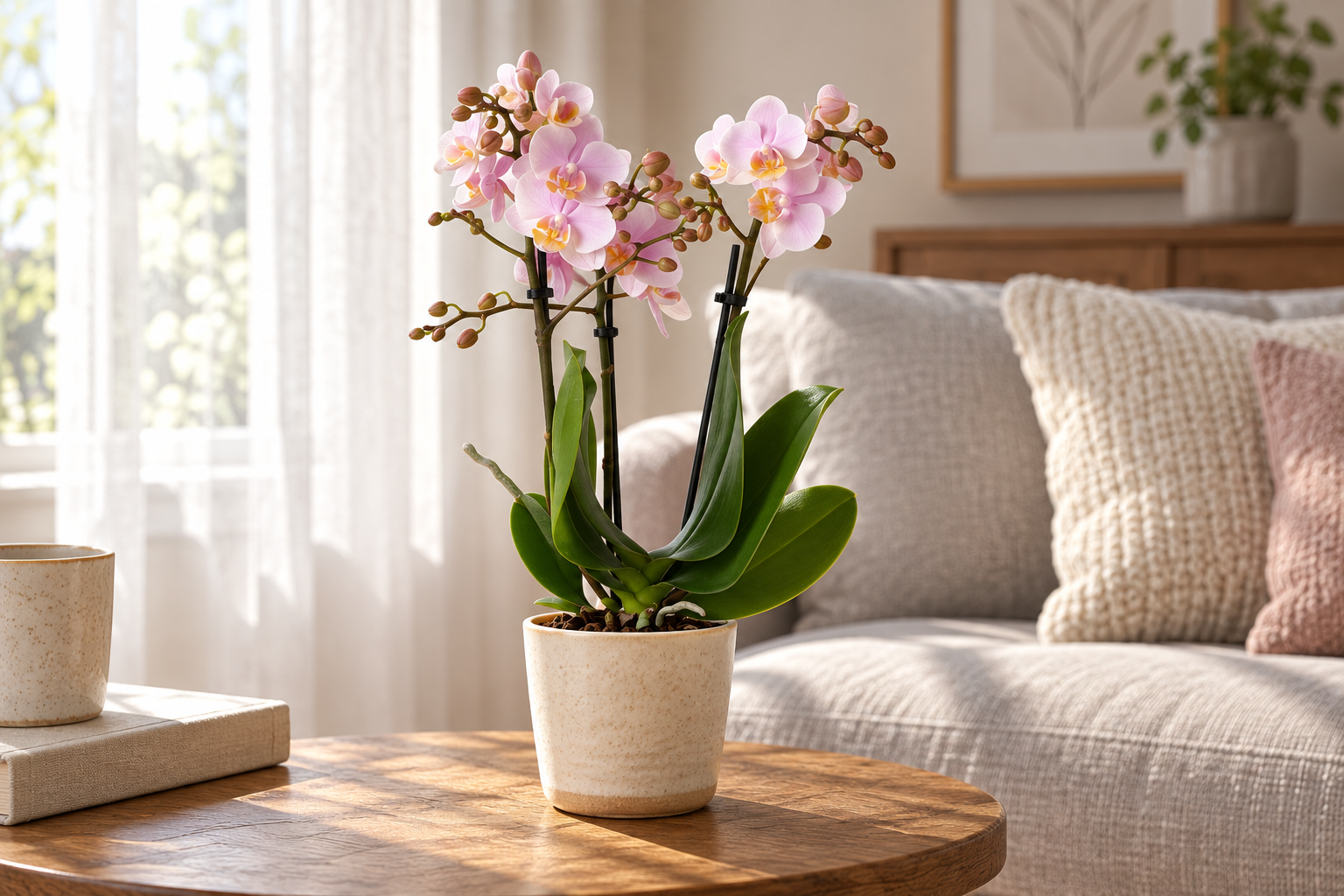
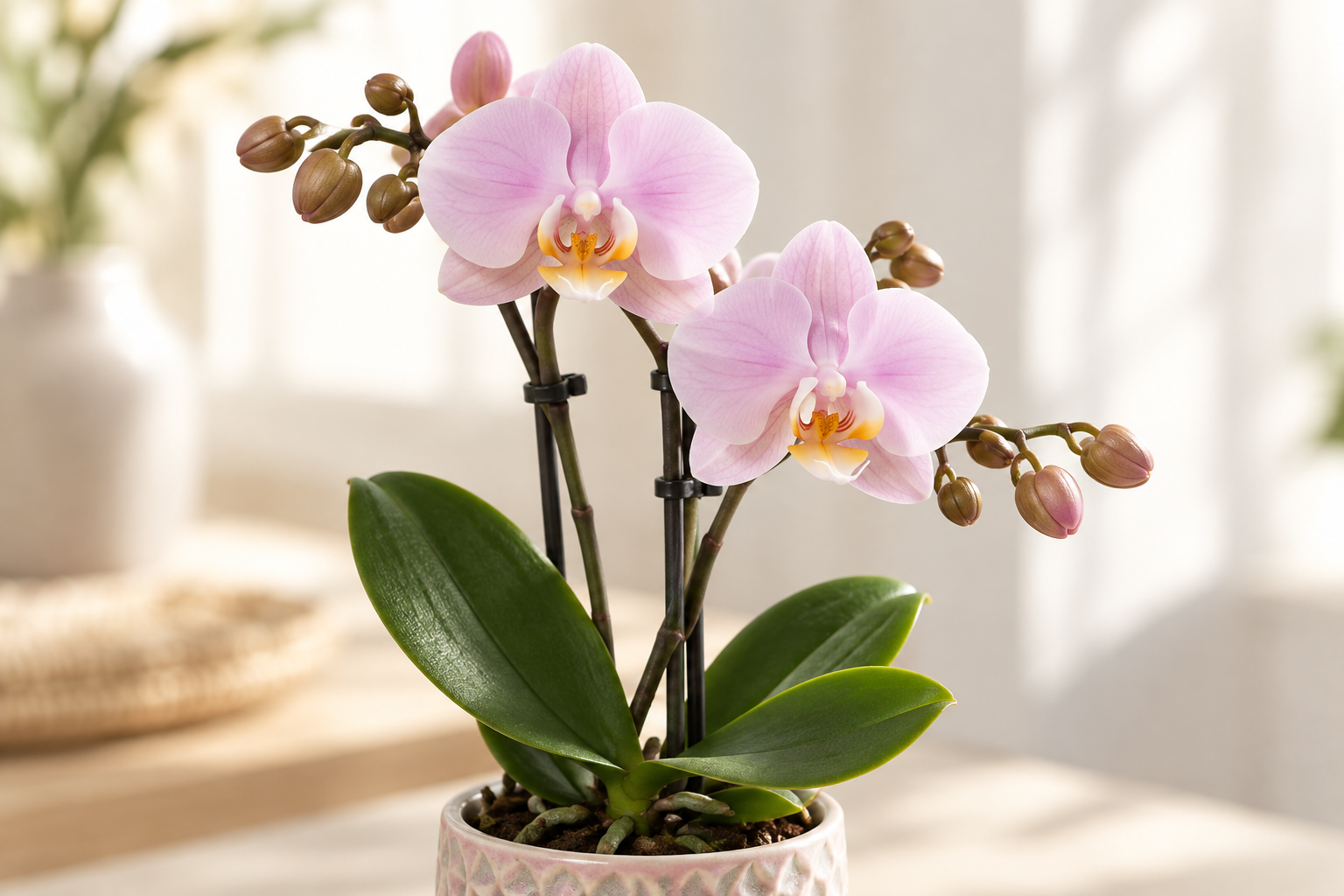
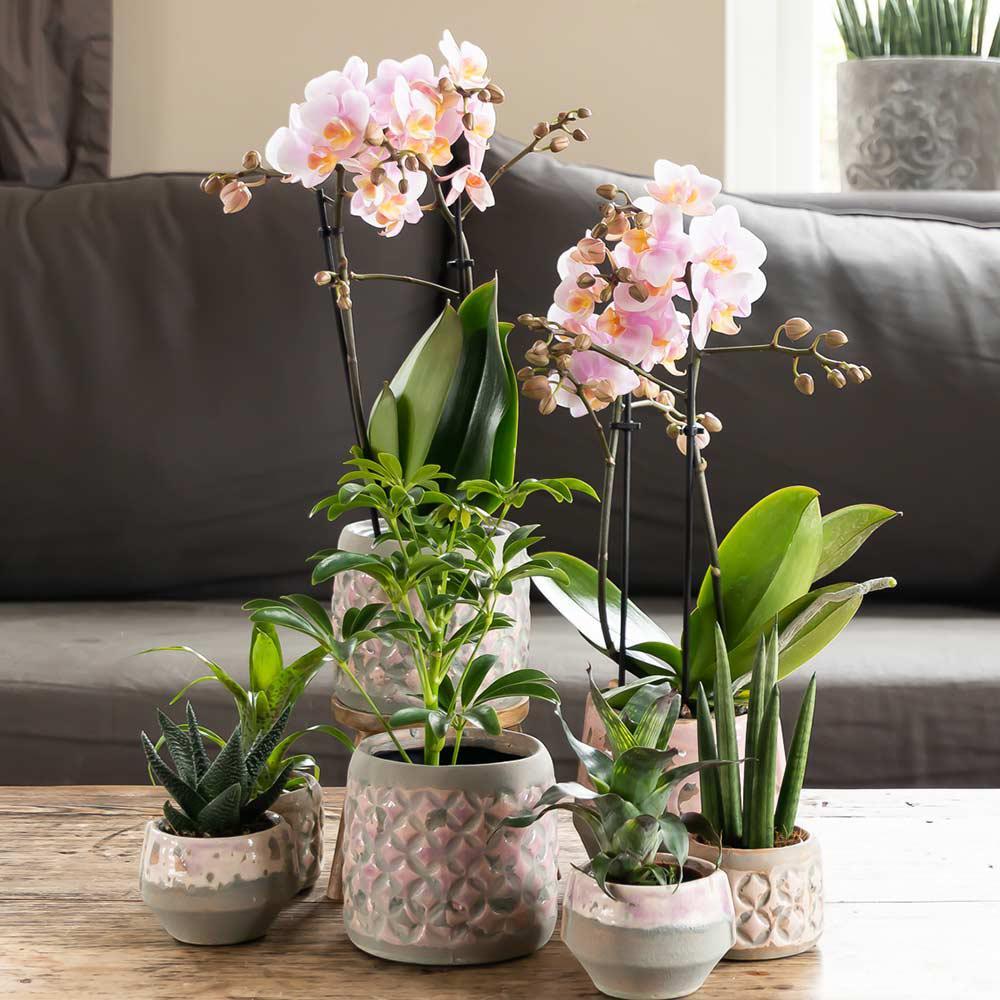
Andorra shows a soft pale colour that is easy to see on a calm window side. The broad flower surfaces look pink to slightly lilac; pale whitish portions and a small yellowish lip appear towards the centre. Fine veins structure the surfaces without breaking pink into a dense dark dot pattern. Still-closed buds sit at the sides of slender branches. Beneath them, firm green leaves form a short common base. Flowers stand clearly above this foliage. A small table beside the sofa can be enlivened this way if enough daylight arrives and nobody brushes the sensitive branches while passing.
A small named Kolibri selection
The offer calls the plant Phalaenopsis Andorra; it belongs to Kolibri’s named orchid selection. It is a bred moth orchid with a compact green leaf base and branched flower stems. The typical flower has three sepals and three petals, one transformed into a structured lip. This lip lies below the pale column in the centre. Leaves grow in two rows from a short base, while thick roots explore the airy root space. Firm aerial roots outside the pot are therefore a normal part of the plant. Flower colour, bud stage and branch position can change slightly within this living selection.
Single plant and decorative arrangement
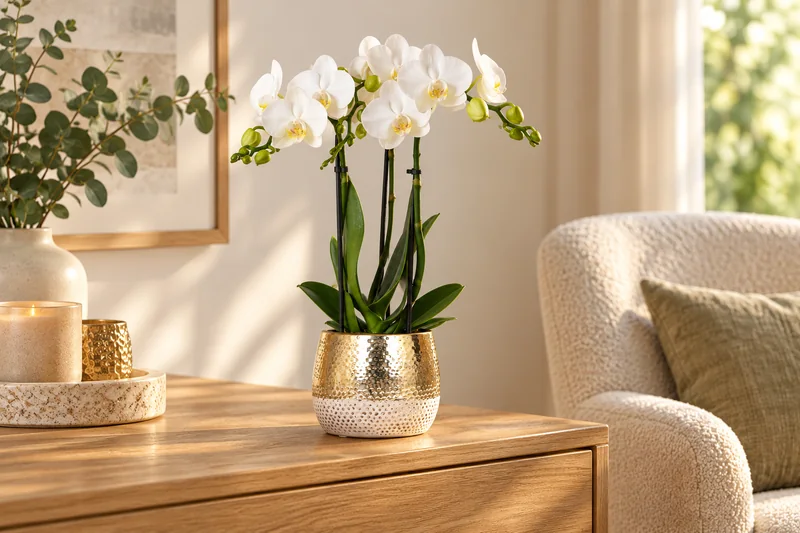
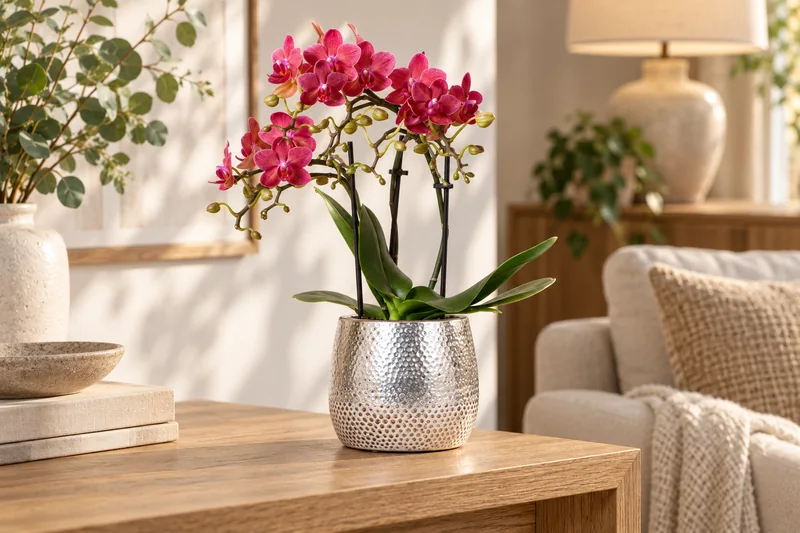
The specific offer comprises one orchid in a nine-centimetre nursery pot. The shop states approximately 30–35 centimetres total height and two to three flower branches. The unchanged own living-room photograph, by contrast, shows two pink orchids together with other plants in decorative containers. This picture presents a furnishing idea; it promises neither two Andorra plants nor the other species or outer pots. Choose an easily accessible position for the individual orchid. Carry it by the container, not branches. A removable inner pot later makes checking bark mixture and roots easier. Measure the small pot before buying an outer pot: a well-fitting container holds the plant steady but lets it come out without pulling leaves or stems. Leave some space between flowers, curtains and sofa back so nothing constantly rubs delicate surfaces.
Window light that does not overheat leaves
A bright position with filtered daylight suits this Phalaenopsis. Gentle morning light at an east window is often favourable. Strong summer rays at south- or west-facing windows are softened by a light-permeable curtain. The plant stays close enough to light; a pale outer pot does not make a distant dark corner more suitable. Warmth without cold draughts supports culture. When ventilating in winter, remove the orchid from direct airflow. Also keep clear of radiators, which may rapidly dry leaves and roots. A calm position helps existing buds, while frequent moves between very different conditions impose unnecessary stress.
Water according to the actual pot condition
Before each watering, briefly take out and lift the nursery pot. Consider the colour of firm visible roots, bark moisture and pot weight together. Silver roots often suggest drying, green ones moisture; the colour of one aerial root alone is not enough. When the mixture is largely dry, water thoroughly with room-temperature, preferably soft water. Afterwards drain completely and empty the outer pot. The small pot may dry faster in warm bright surroundings than in darker winter conditions. Checking therefore replaces an unchanging weekday. The plant should receive air at its roots without becoming completely parched for a long time.
Airy bark and a dry leaf centre
Maintain a loose orchid mixture with suitable bark pieces in the pot. Dense ordinary potting soil is unfavourable. Broken-down bark or soft damaged roots can justify careful repotting. A phase of new root growth is favourable; the new pot need not be much larger. Retain firm living roots and do not bury the leaf base deeply. Avoid collecting water in the leaf centre while watering. Carefully dry accidentally wetted bases; morning leaves more time than late evening. During active growth, feed sparingly with suitable orchid fertiliser according to its label. Also occasionally check leaf undersides and bases for mealybugs rather than looking only at flowers.
Keep caring for the plant after the pink flowers
When the final flowers fall, Andorra remains with its leaves and roots. A green stem may have living nodes and develop a side branch later. On a strong plant, careful shortening above a suitable node is possible; entirely brown dry stems are removed. New flowering follows no promised calendar date. Fresh root tips and a new leaf also show development. If leaves become limp, check root condition first: too little water and overly wet soft roots can look similar. Clarify the cause first and then adapt care. The small orchid thus remains a living part of the home position after its first flowering.
One plant, several views
Good to know
Which Andorra is described here?
The named pink Kolibri selection in a 9-cm nursery pot. Its broad delicate pink flowers have a small white-yellow centre; green leaves sit at a short common base.
How large is the own offer?
The shop states 9 cm pot size, approximately 30–35 cm total height and two to three flower branches. It is one orchid without a decorative outer pot.
Are all plants in the original photograph included?
No. The clean living-room photograph shows two orchids and other plants in an arrangement. The own single-plant offer is decisive; containers and furnishings are decoration.
Can it stand far back in the living room?
Only if enough daylight reaches it. A bright filtered window position is more suitable than a dark corner; soften strong summer rays.
Does it need water every week?
Not by a fixed calendar. Check bark moisture, pot weight and roots together; water when the mixture is largely dry and let drain completely.
Are roots outside the pot a problem?
Firm living aerial roots belong to Phalaenopsis. Retain them; soft dead parts can be removed when necessary repotting occurs.
What do I do after the last flowers?
Continue caring for leaves and roots. Green stems may form side branches; completely dry ones are removed. Repeat flowering has no promised date.
Sources and editorial note
- Exotenherz: own Andorra offer and originals (04.10.2026)
- OK Plant/Kolibri: named orchid selection (04.10.2026)
- RHS: complete Phalaenopsis cultivation (04.10.2026)
- NC State Extension: Phalaenopsis, roots and cultivation (04.10.2026)
- American Orchid Society: Phalaenopsis Culture Sheet (04.10.2026)
Shop offer, original images and specialist sources checked on 04.10.2026. Current availability in the shop.