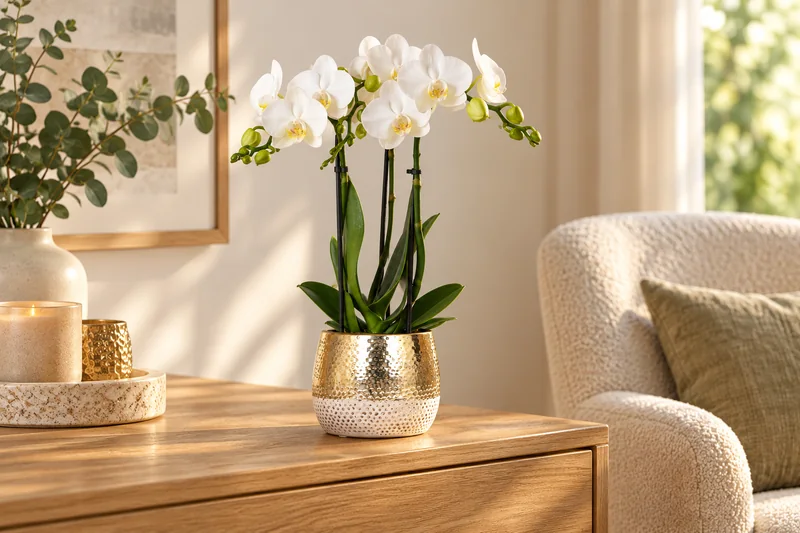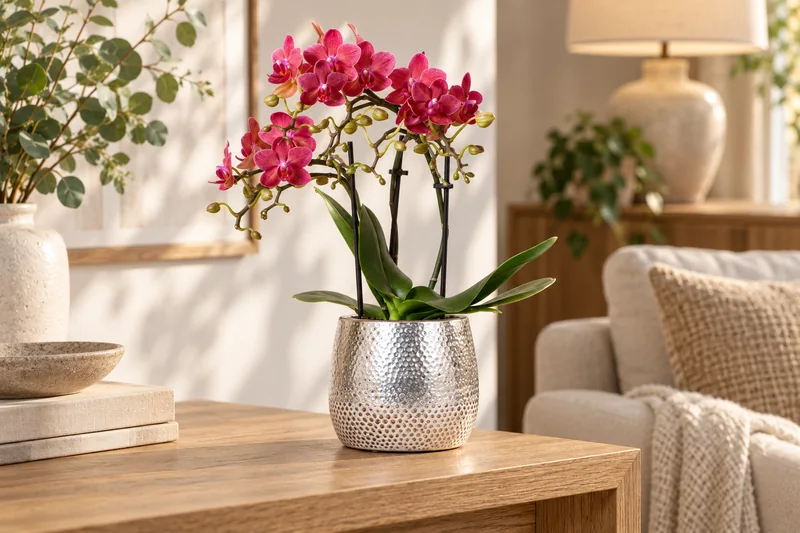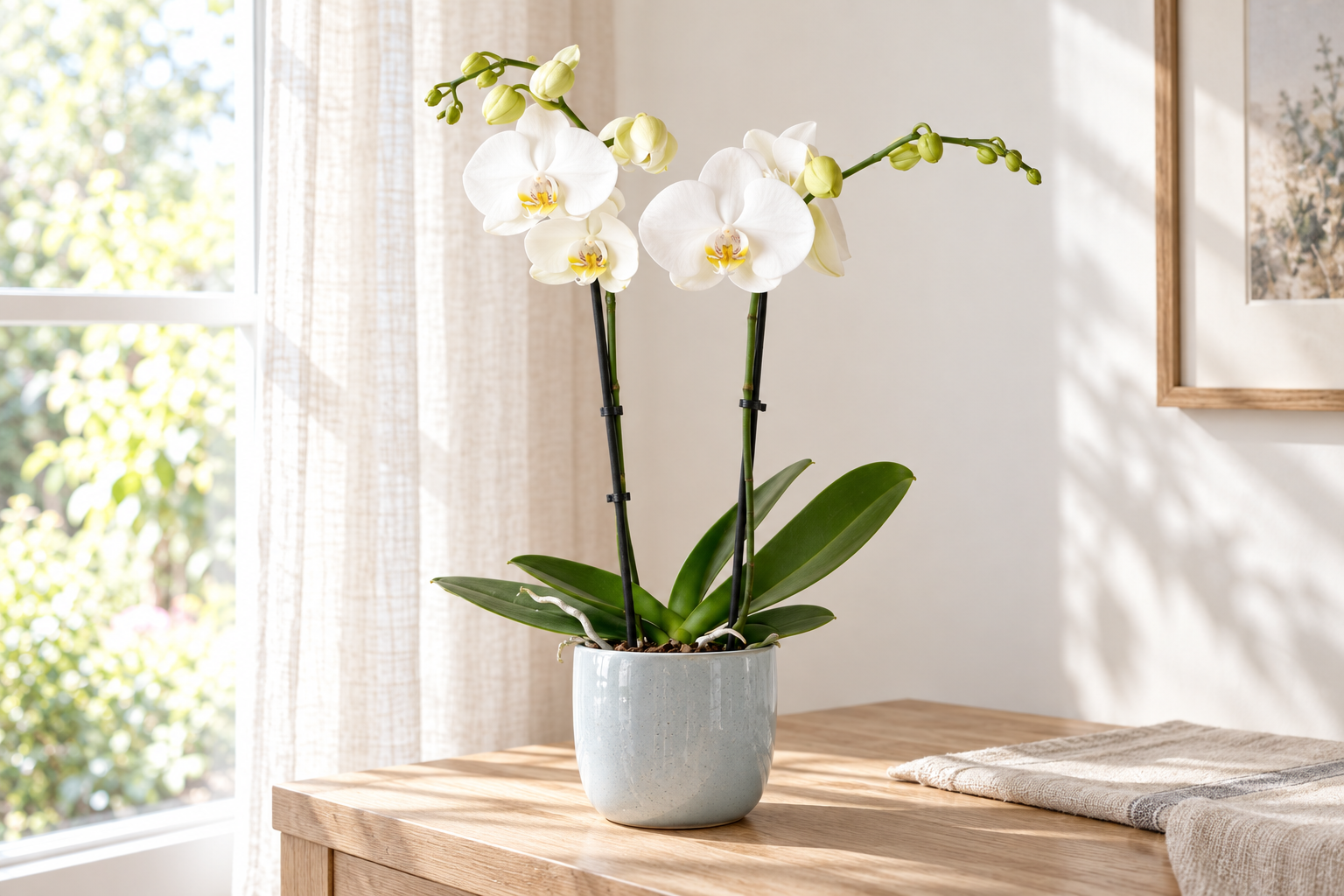
This plant at Exotenherz
Check the shop offer for current availability, price and what is included.
Product and delivery details are given in the individual offer.
Your care table
| Topic | What to do | Why it helps |
|---|---|---|
| Position | Bright filtered window light; soften strong summer rays. | Leaves need light without intense heating behind glass. |
| Warmth | Position warmly without cold draughts or direct heating airflow. | Steady conditions protect leaves and existing buds. |
| Space | Keep flower branches clear of curtains and walls; carry the plant by its container. | The large delicate flowers are not rubbed or strained when moved. |
| Water check | Assess bark moisture, pot weight and root colour together. | A fixed weekday does not suit changing consumption. |
| Watering | When the mixture is largely dry, supply room-temperature water and let drain completely. | Roots receive moisture and then enough air again. |
| Leaf centre and outer pot | Remove collected water from leaf bases and outer pot. | The crown does not stay constantly wet; the inner pot does not stand in a water bath. |
| Compost and repotting | Use loose orchid bark; repot suitably when it breaks down, protecting firm roots. | Root space and support improve without planting the leaf base deeply. |
| Nutrition and leaf care | Feed weakly according to the label during growth; check dust and pests. | Moderate nutrition and clear leaf surfaces help further development. |
| After flowering | Assess green stems, remove completely dry ones and watch new growth. | Further flowering is possible but not guaranteed by a calendar or pruning. |
Check the compost and pot weight. The care table explains how far the compost may dry.
Water only when needed. The water should reach the root ball without spilling over the rim.
Remove surplus water from the saucer or cachepot. Then return the plant to a suitable position.
White with a small coloured centre
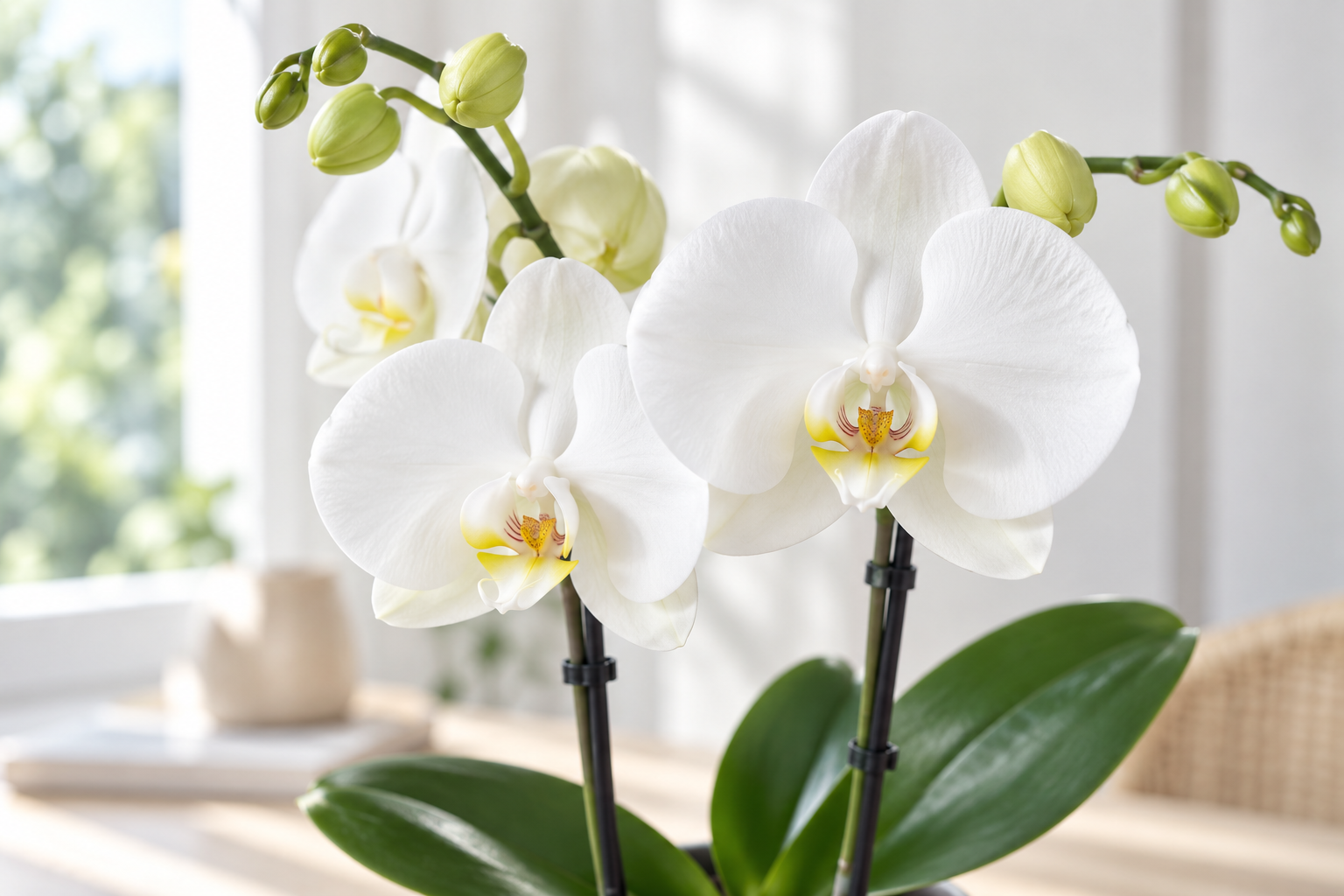
From a distance Dame Blanche looks clear and calm. Its large white flowers have broad slightly overlapping surfaces. Closer inspection reveals a small yellowish centre with fine darker lines and dots. A very delicate greenish to yellowish hint may appear on lateral sepals. White nevertheless remains the dominant impression. Slender flower branches stand above firm dark green leaves, their ends pointing slightly outwards. Green buds add another restrained colour. A bright console shows this structure well when a calm wall lies behind the flowers and branches are not pressed against curtains or windows.
A large-flowered named selection
Dame Blanche is a documented bred Phalaenopsis selection. Its described appearance includes white flowers, a lip patterned white-yellowish and somewhat purple, supportive flower stems and relatively short dark green leaves. The plant belongs to moth orchids: its flowers consist of three sepals and three petals, one of which forms the distinctive lip. This is the more structured part below the pale column in the flower centre. Leaves sit at a short common base. Thick roots may partly grow outside the pot. They help with observing the plant rather than being treated merely as untidy extensions. Flower position and colour nuances may change slightly with culture and developmental stage.
The own offer and the window photograph
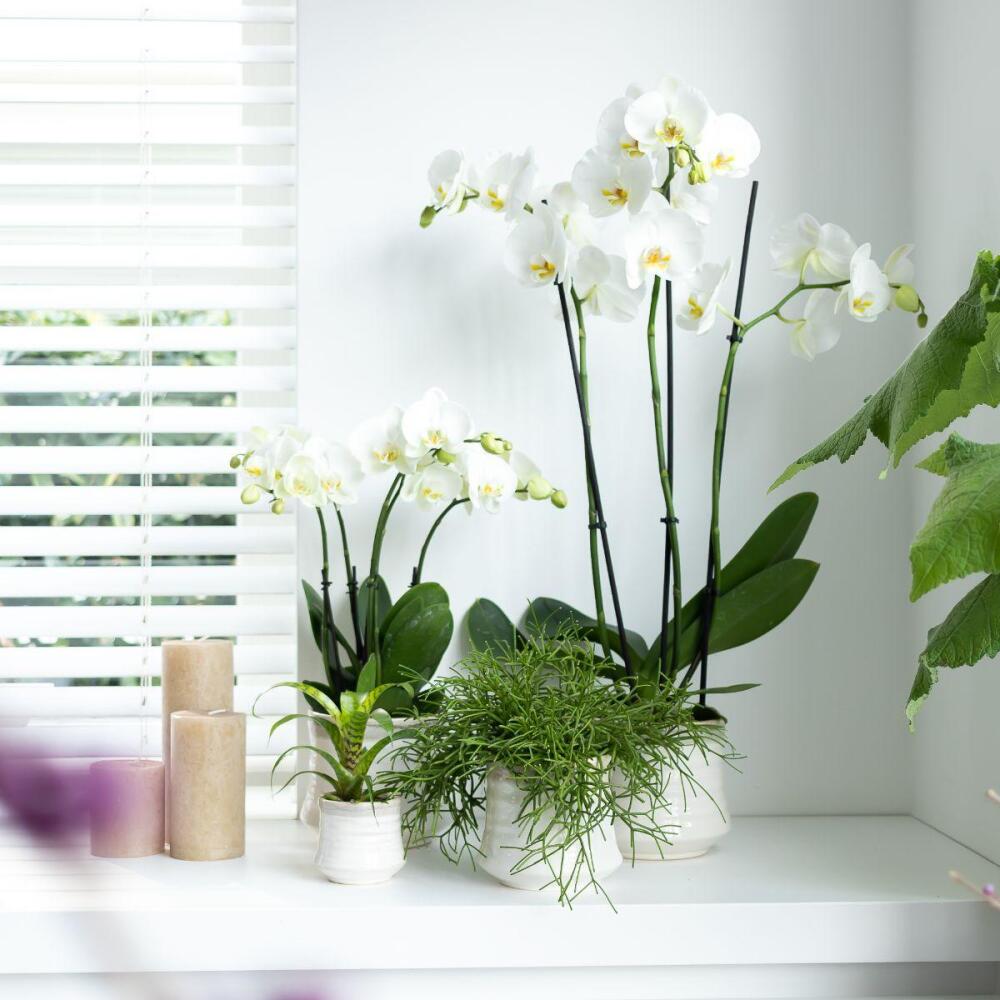
The specific shop offer states a twelve-centimetre nursery pot and two to three flower branches. No fixed total height is given. Space requirements therefore depend on the actual plant with its sideward arches. In the unchanged clean window photograph, Dame Blanche stands on the right as the larger white orchid. Beside it are a smaller white orchid and other plants. This arrangement shows a furnishing idea, not delivery of all pictured plants. Outer pots and candles do not determine its own delivery contents either. When taking it out of packaging, watch branches and carry by the container. A suitable outer pot remains easy to access so the nursery pot can be lifted out for root checks.
Brightness without hot leaf surfaces
A bright home position with filtered daylight is favourable. Morning light at an east window often suits it; strong summer midday and afternoon sunshine is softened. The plant genuinely needs window light, not merely a room painted a pale colour. Behind hot glass, even strong leaves can be damaged. Ordinary warm room temperatures and a reliable position support culture. Protect from cold draughts when ventilating and keep clear of direct heating warmth. Especially with buds present, abrupt changes between a cool window and warm dry air are unfavourable. Flowers should also not rub against a frequently moved curtain. Air may circulate around leaves and pot without a cold stream striking the plant directly.
Check root condition and drying together
Inspect and lift the inner pot before watering. Firm silvery roots are often dried, green ones more moist. Assess colour together with pot weight and the condition of the bark mixture. When this is largely dry, water thoroughly with room-temperature, preferably soft water. Then drain completely and empty the outer pot. Phalaenopsis should receive air at its roots between waterings but not become entirely parched for a long time. Consumption changes in the darker season, so an unchanging weekly appointment is not a reliable rule. Morning watering helps accidentally wetted bases dry. Carefully remove water collected in the leaf centre rather than leaving the crown constantly wet.
Maintain bark structure and feed sparingly
Roots need loose orchid compost with suitable bark pieces and drainage openings in the pot. Dense potting soil retains too little air in the root space. If bark breaks down or the plant develops root problems, repot carefully. A phase of new root growth after flowering is favourable. Protect firm living roots; remove only soft dead parts. Choose a suitably small pot and do not bury the leaf base deeply. During active growth, use suitable orchid fertiliser weakly according to the label. More food does not automatically make white flowers bigger. Carefully wipe dust from leaves and check bases for mealybugs. Avoid touching flower surfaces where possible so their delicate surfaces remain undamaged.
Further growth follows white flowers
When the final flowers fall, the orchid remains with leaves and roots. A still-green flower stem can have living nodes and form a side branch later. On a strong plant, careful shortening above a suitable node is possible. An entirely brown dry stem is removed. Further flowering develops according to the plant’s conditions without a promised month. A new leaf or fresh root tips also show progress. If leaves become limp, check root space before supplying extra water. Both water shortage and soft overly wet roots can impair supply. A quick inspection when lifting the pot out helps distinguish these situations and adapt care appropriately.
One plant, several views
Good to know
What defines Dame Blanche?
The named selection has large white flowers, a small yellowish darker-patterned lip and firm dark green leaves. Colour and position can vary slightly in living plants.
How large is the specific offer?
12-cm nursery pot with two to three flower branches. The own shop text gives no fixed total height.
Will I get the entire window arrangement?
The clean original photograph shows Dame Blanche on the right beside other plants. This arrangement does not promise a multi-plant delivery; the specific own offer remains decisive.
Can it stand in sunshine behind glass?
Bright filtered window light suits it. Soften strong summer sunshine so leaves and flowers do not heat intensely.
How do I decide when water is needed?
Check root colour, bark moisture and pot weight together. Water when the mixture is largely dry and let drain completely; no permanent water in the outer pot.
Should I cut firm aerial roots?
No, not solely because of their appearance. Firm living aerial roots belong to a Phalaenopsis structure. When repotting remove only genuinely dead soft parts.
What remains after flowering?
Leaves and roots can continue growing. Green stems can form side branches; completely dry ones are removed. There is no fixed date for the next flowering.
Sources and editorial note
- Exotenherz: own Dame Blanche offer and originals (04.10.2026)
- Original breeder description: Phalaenopsis Dame Blanche, US20120272419P1 (04.10.2026)
- RHS: complete Phalaenopsis cultivation (04.10.2026)
- NC State Extension: Phalaenopsis, roots and cultivation (04.10.2026)
- American Orchid Society: Phalaenopsis Culture Sheet (04.10.2026)
Shop offer, original images and specialist sources checked on 04.10.2026. Current availability in the shop.