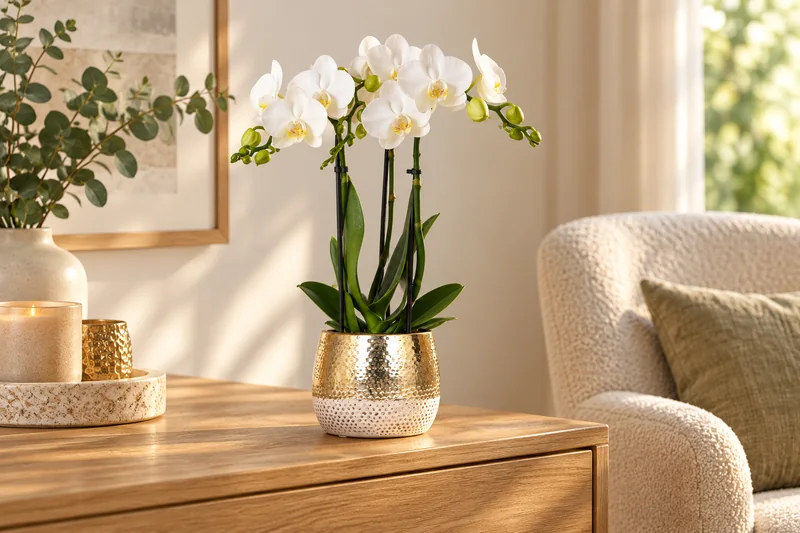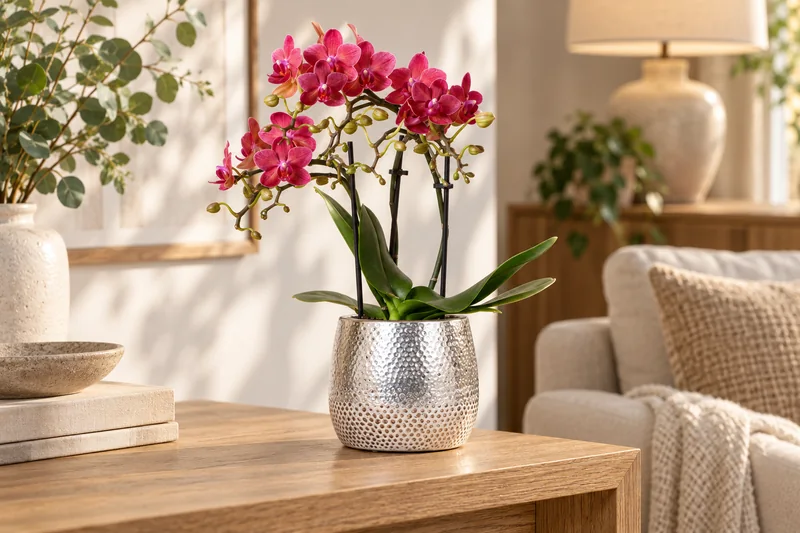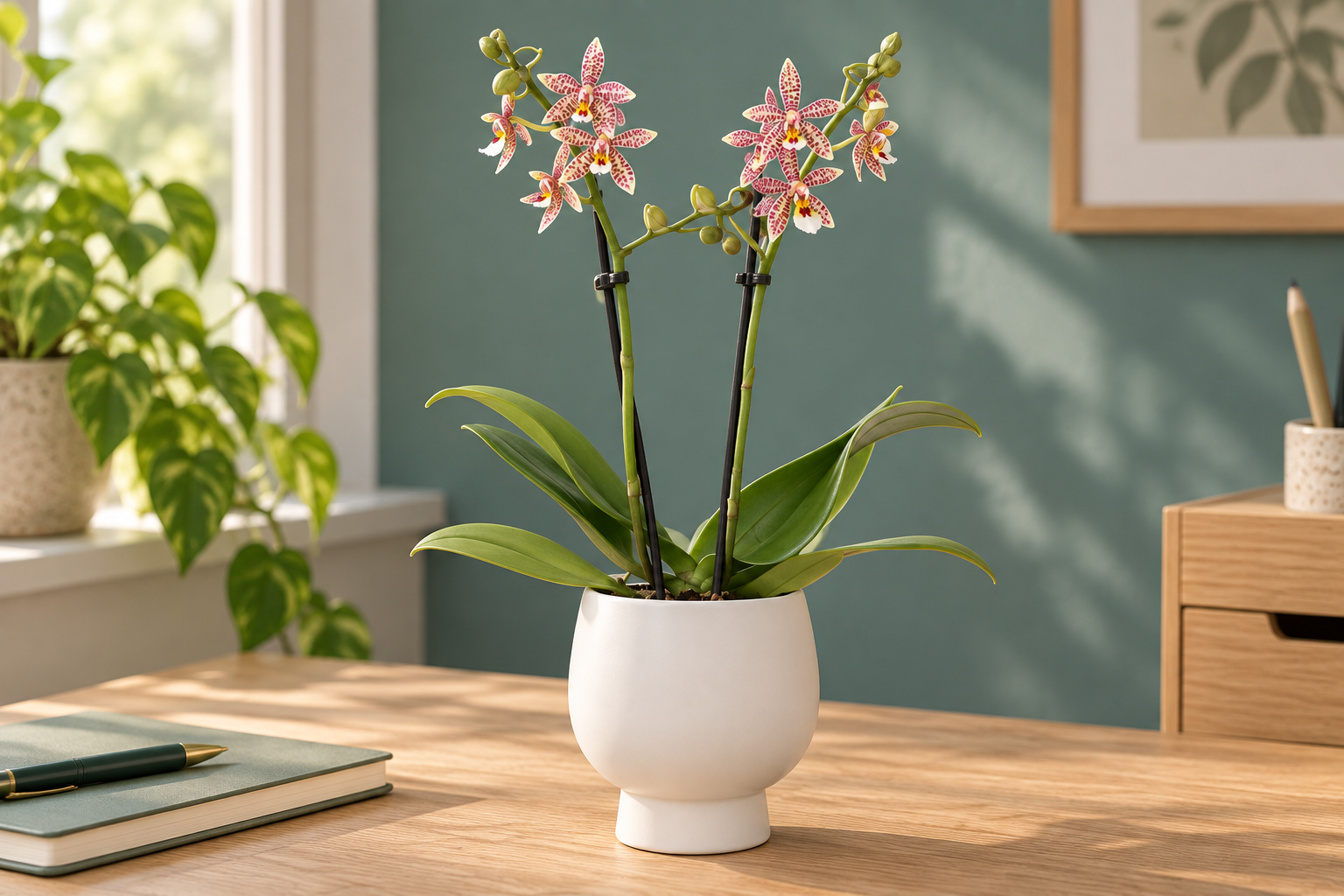
This plant at Exotenherz
Check the shop offer for current availability, price and what is included.
Check the selected shop offer for price, availability and delivery contents.
Your care table
| Topic | What to do | Why it helps |
|---|---|---|
| Light | Bright filtered daylight; soften hot summer sun. | Basal leaves need light without overheating. |
| Warmth | Warm and sheltered from cold draughts and hot heater airflow. | Abrupt changes stress buds and foliage. |
| Water check | Assess weight, bark and firm visible roots together. | One colour sign cannot describe the whole pot. |
| Watering | Water a largely dried mix thoroughly at room temperature. | Avoid long complete dryness and constant wet. |
| Drainage | Drain the inner pot fully and empty the outer pot. | Hidden residual water keeps roots unnecessarily wet. |
| Leaf centre | Carefully remove water from tight leaf bases. | Standing moisture encourages damage to the plant centre. |
| Substrate | Replace decomposed bark and choose a suitable small pot. | Air spaces facilitate controlled growing. |
| Feeding | Sparingly during active growth according to orchid feed label. | Nutrition accompanies roots and leaves without forcing a flowering date. |
| Pruning and checking | Remove dry stems, retain healthy aerial roots and inspect bases. | Living organs remain and pests are noticed early. |
Check the compost and pot weight. The care table explains how far the compost may dry.
Water only when needed. The water should reach the root ball without spilling over the rim.
Remove surplus water from the saucer or cachepot. Then return the plant to a suitable position.
Small points rather than broad flower surfaces
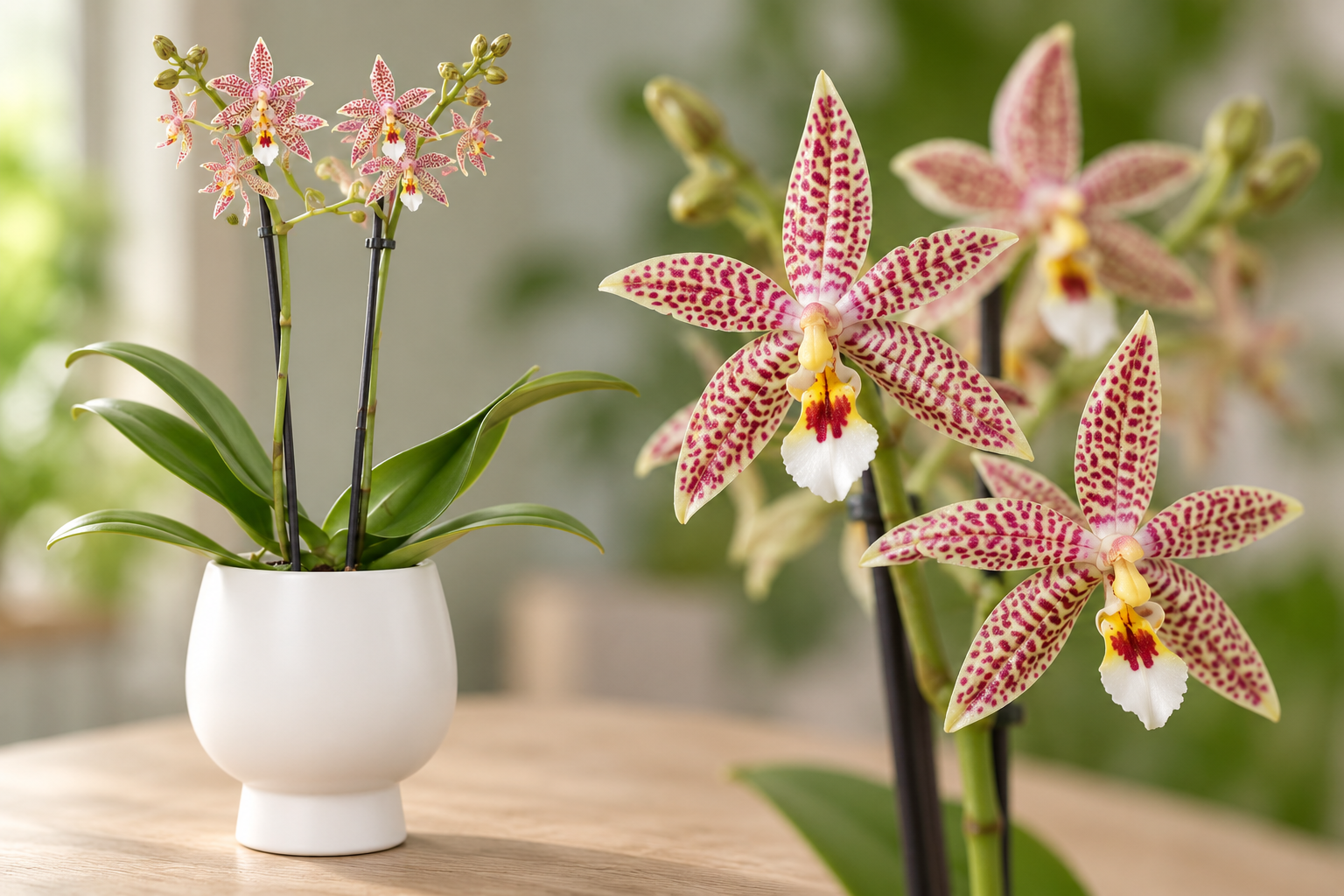
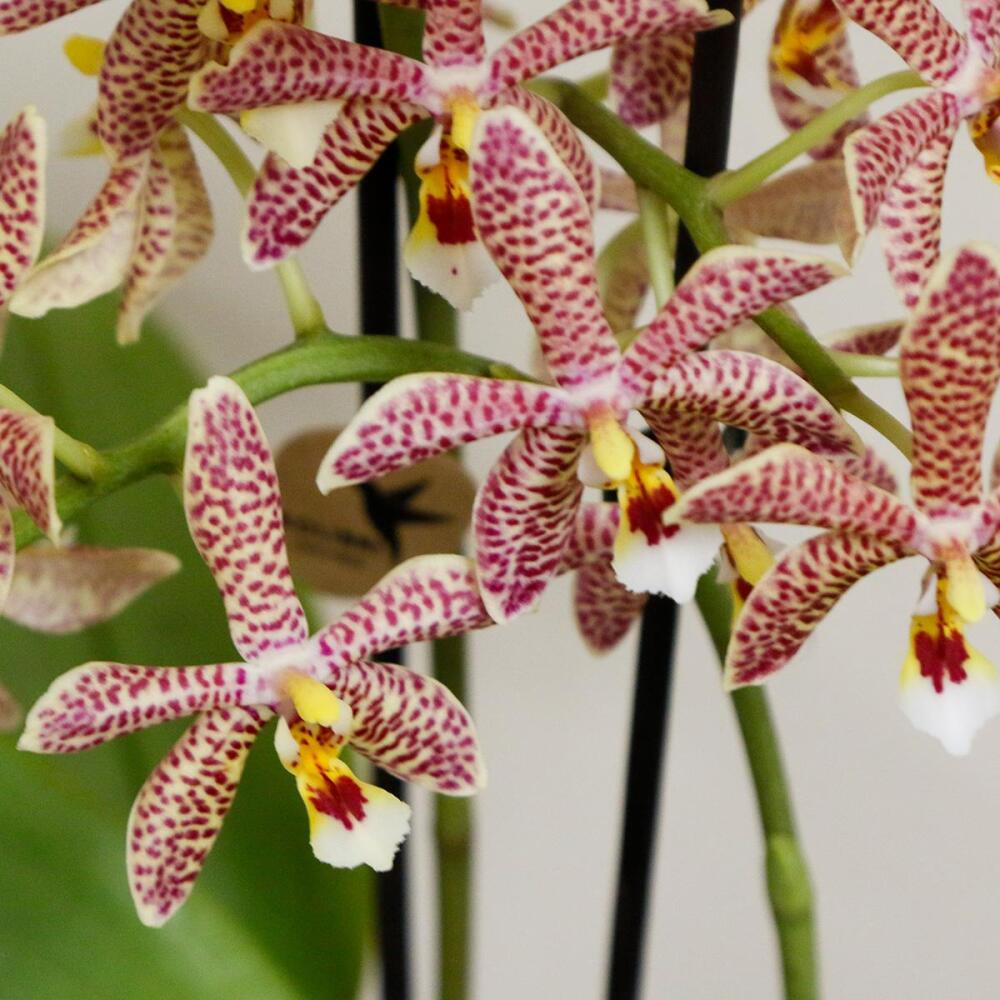
Spider stands out still more at a second look. Cream-green flower parts taper narrow and pointed, carrying many small berry-coloured dots and short strokes. Pale areas remain between them. A small folded white lip hangs below the yellow-and-red-marked centre. The flower has an open star-like outline without losing its typical orchid centre. A bright desk invites close viewing. Place the plant away from the writing area so hands, books and cables do not knock delicate spikes. Its small pot needs secure support and flowers some free room around them.
A named selection in a particular decorative container
Kolibri lists Spider as its own Phalaenopsis selection. The name describes this hybrid character with narrow patterned flowers here. Our offer combines a nine-centimetre growing pot with two or three spikes and a white Scandic outer pot. No fixed overall height is specified. Spike count is therefore not combined with an arbitrary height from another orchid series. Buds and open flowers change with development too. The clean original enlarges flowers; detail is not a scale for the entire plant. Desk, book and other furnishings in the AI scene add nothing to delivery contents. The linked shop describes the particular version.
Let light reach the green leaves
Delicate flowers need no dark background to look attractive. Choose a warm place with plenty of filtered daylight where firm green basal leaves receive light too. Direct hot summer sun through glass can heat foliage. A light curtain softens it without pushing the orchid deep into the room. Avoid ventilation draughts and immediate heater proximity. After unpacking, Spider initially remains in a consistent suitable place. Lift by the pot rather than a flower stem. Do not pull existing supports out while slender axes need them. Small buds deserve particularly generous space during moves.
Read the roots rather than count weeks
A decorative white outer pot may hide bark condition. Remove the growing pot carefully for checks, comparing weight, substrate moisture and visible firm roots. Moist roots often look greener, dried roots more silvery, but colour alone does not decide. Once the airy mix has largely dried and the pot is noticeably lighter, water thoroughly at room temperature. During brief soaking, keep the leaf centre above the water line. Afterwards drain the inner pot completely and empty the decorative container. Roots should neither stay wholly dry for long nor stand permanently in water. A fixed weekday accounts poorly for warmth, light and this pot’s small reserve.
Preserve airy bark and firm roots
Phalaenopsis grows in open bark-based orchid substrate. Fine ordinary potting soil changes this root zone unfavourably. If the mix is heavily decomposed and remains wet for long, renewal is useful with active roots. Release old bark carefully, distinguish living firm roots from soft or hollow dead parts, and use clean tools. Do not cut healthy aerial roots simply because of appearance. Choose only suitably more space; a large damp substrate margin offers the small plant no advantage. New root tips and a fresh leaf show continued development. During active growth feed sparingly by the orchid feed label, without forcing a desired number of patterned flowers through extra food.
Continue care after the star-shaped display
When individual flowers wilt, Spider remains a perennial indoor orchid. A completely dry stem can be removed at the base; a healthy green stem may later produce a side growth. Judge plant strength before cutting rather than immediately shortening every axis identically. A new display may be distributed differently from the original. Leaf and root growth are interesting without open flowers too. Keep bright and warm through darker months. Lower evaporation may mean longer watering intervals, but always check the actual roots. Flowering has no fixed schedule, and extra watering does not reliably extend ageing flowers.
Inspect small bases attentively
Changes can be overlooked beneath striking markings. Occasionally inspect leaf undersides, spike bases and pot rim. Cotton-like nests or new sticky areas warrant closer pest checks. Keep the leaf centre free of water, carefully absorbing accidental accumulations. With limp foliage inspect bark and roots first, because damaged wet roots may react like dry ones. A slowly ageing lower leaf differs from all foliage rapidly softening. These short checks suit the small desk position. They accompany the living plant longer than a single bloom and help adjust suitable care in time.
One plant, several views
Good to know
Is Spider a wild spider orchid?
Spider here is Kolibri’s named selection of a Phalaenopsis hybrid. Its flower outline does not establish another orchid genus.
Which size belongs to the offer?
Nine-centimetre growing pot, two or three spikes and white Scandic outer pot. No fixed overall height is added.
Are narrow flowers damaged?
Narrow pointed cream-green berry-marked tepals belong to the visible flower character.
Should I water weekly?
Check bark, pot weight and firm visible roots first. Then water thoroughly and drain completely.
Which soil suits it?
A loose bark-based orchid mix; ordinary dense potting soil does not suit this root zone.
Do equal numbers of flowers stay open?
No. Buds and flowers change, and later spikes develop their own structure.
What remains to do after flowering?
Continue bright warm cultivation, root checks and measured supply. Remove dry stems and assess green ones according to plant condition.
Sources and editorial note
- Exotenherz: own offer and originals (4 October 2026)
- Kolibri: exact named Phalaenopsis Spider (4 October 2026)
- RHS: complete Phalaenopsis growing guide (4 October 2026)
Shop offer, originals and specialist sources checked on 4 October 2026. Check current shop availability.