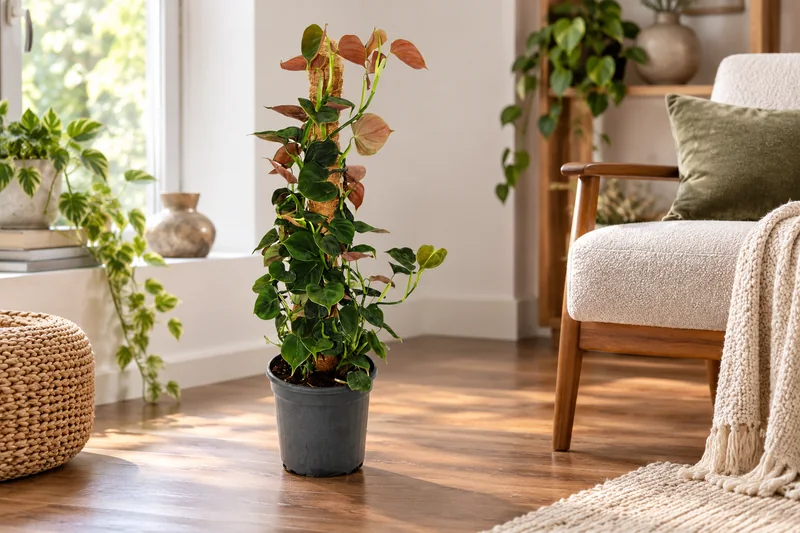
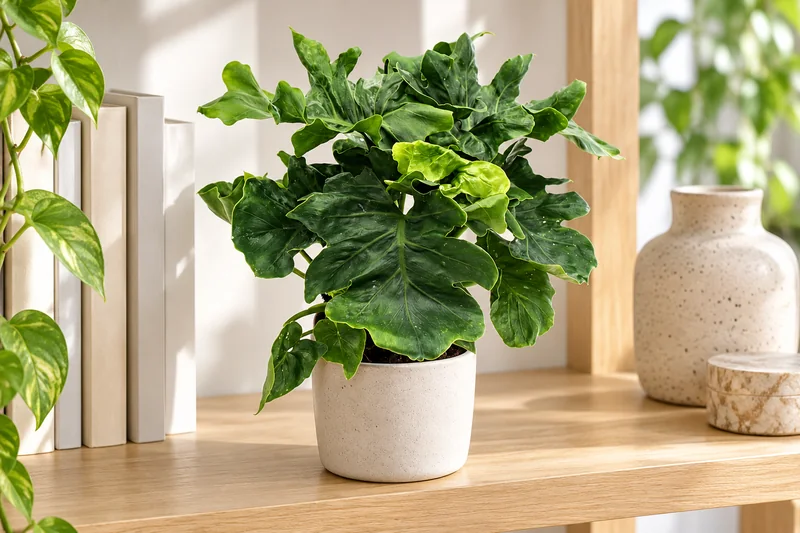
This plant at Exotenherz
Check the shop offer for current availability, price and what is included.
Product and delivery details are given in the individual offer.
Your care table
| Topic | What to do | Why it helps |
|---|---|---|
| Light | Choose bright filtered daylight. | Insufficient light may produce smaller, less lobed new leaves. |
| Water | Let the top soil slightly dry and check the root ball. | The large pot may still be moist inside. |
| Outer pot | Completely remove residual water after watering. | Persistent wetness limits air supply to roots. |
| Compost | Use loose structurally stable houseplant compost. | Moisture and air pores must remain side by side. |
| Warmth | Keep protected and warm without cold draughts. | The tropical foliage plant needs no cold winter rest. |
| Nutrition | Feed moderately during active growth according to the label. | Salt build-up in the root zone is unfavourable. |
| Crown | Leave space at the sides and let new leaves unfold undisturbed. | Bumping and forced opening can damage leaf surfaces. |
| Household | Place beyond reach of nibbling children and pets. | Irritating calcium oxalate crystals make the plant unsuitable to eat. |
Check the compost and pot weight. The care table explains how far the compost may dry.
Water only when needed. The water should reach the root ball without spilling over the rim.
Remove surplus water from the saucer or cachepot. Then return the plant to a suitable position.
Cut leaf surfaces need room at the sides
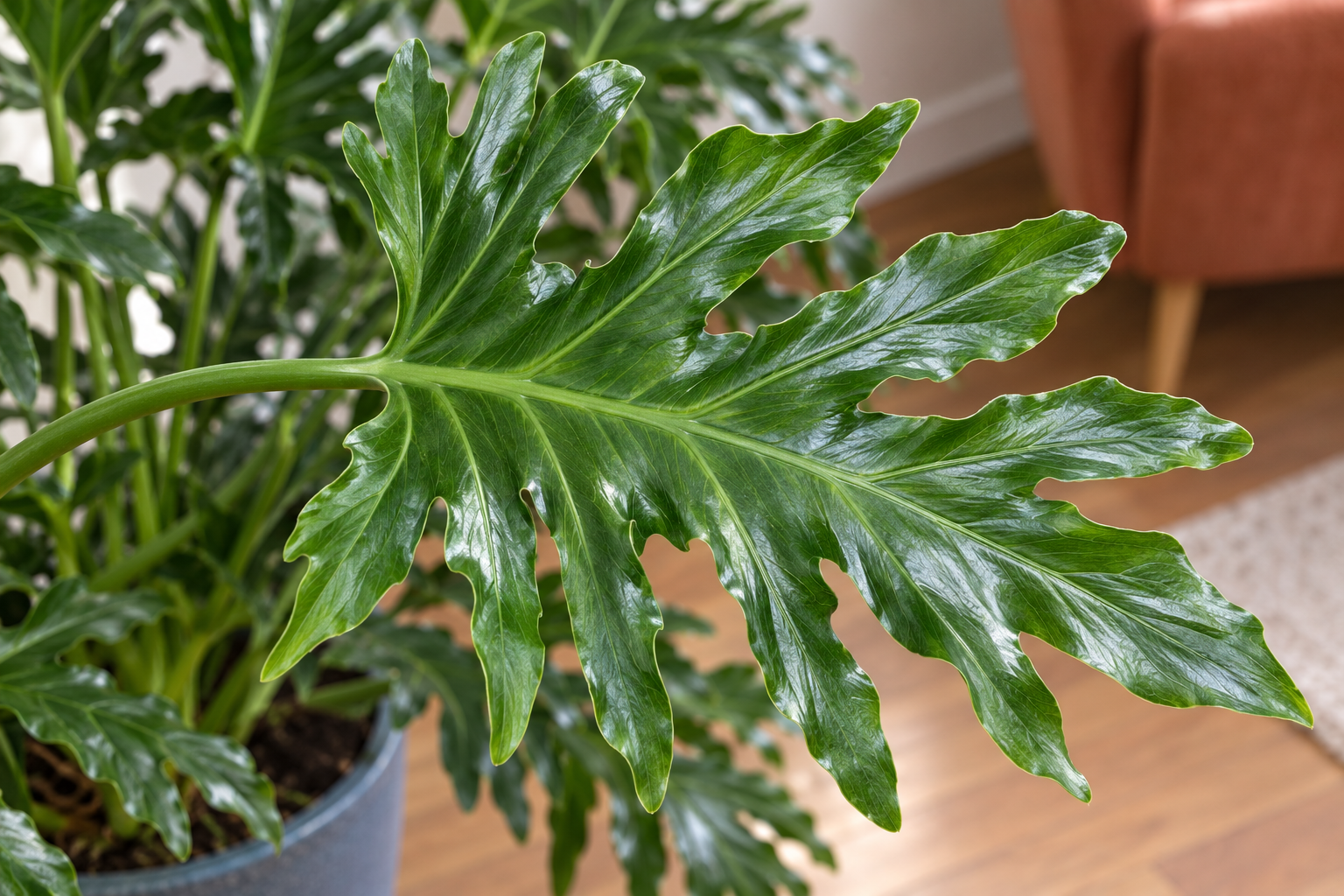
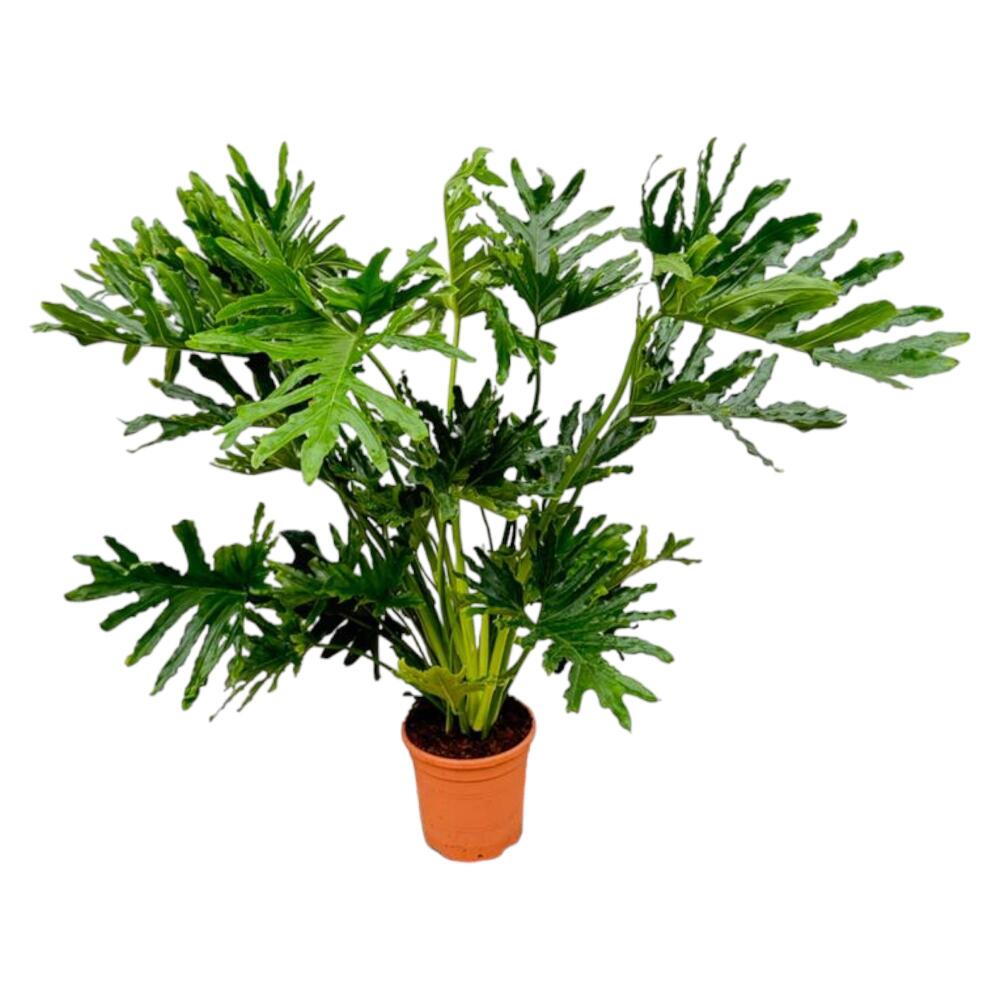
Selloum stands out through leaf shape before size. Green blades sit on strong smooth stalks and are deeply cut into long wavy lobes. Some lobes have further indentations; nevertheless each leaf remains one continuous surface. On a young plant many stalks sit close together. In age a clearer trunk structure with leaf scars and aerial roots may develop. The specific offer gives a 24 cm pot and approximately 100 cm total height. This is not a mature endpoint. Under good conditions the species grows into a much larger and especially wider plant.
Selloum describes the same botanical background here
Botanically the plant is listed as Philodendron bipinnatifidum. Philodendron selloum and Thaumatophyllum bipinnatifidum are names under which the same species is also known. The green crown belongs to the arum family and has a natural South American background. Indoors it is mainly a lasting foliage plant; an inflorescence is rare there rather than a dependable annual event. The offer shows an already well-developed potted plant with numerous deeply lobed leaves. While unpacking support crown and stalks without pulling individual leaves. Then position it so side leaves do not constantly bump the wall or seating.
A filtered-light window position strengthens new growth
A well-lit living-room position suits it better than a remote corner lit only by a lamp in the evening. Daylight illuminates leaf surfaces; the plant needs to receive enough of it. Strong direct sun may instead damage unprepared leaves. A light curtain softens summer midday sunshine without darkening the entire room. In low light new leaves may remain smaller with less pronounced lobes. Assess such changes together with position rather than immediately treating them as missing fertiliser. The crown needs room to unfold new leaves and a stable position that will not tip.
Moisture beneath the surface matters in a large root ball
The 24 cm pot may remain moist inside while dry soil is already visible above. Check top soil and inner-pot weight together. If the surface has slightly dried and the ball has become correspondingly lighter, water evenly. Afterwards drain completely and remove residual water. Roots need air between moist compost components; an invisible outer-pot reserve remains unfavourable. Prolonged complete dryness does not suit this foliage plant either. With less winter light consumption falls. Drooping leaves alone do not decide the next watering: first check drainage and root condition in an already wet ball.
Structured root space remains accessible
Good houseplant compost with loose stable structure is the foundation. Bark pieces and mineral additions may maintain air pores if they suit the existing compost and personal watering pattern. A pot with drainage holes is essential. When the ball is densely rooted choose only actually needed additional space on repotting and retain planting depth. An extremely large new pot dries more slowly. Feed moderately during visible growth according to the label, reducing supply with little new growth. The species poorly tolerates salt build-up in roots. Feeding therefore replaces neither light nor free drainage nor compost checks.
Accompany the crown rather than constantly shaping it
New leaves unfold from the centre and gradually change the silhouette. Do not pull rolled leaf surfaces apart with fingers. Remove dust from older foliage with a soft damp cloth while supporting the leaf. Fully dead foliage can be removed; healthy large leaves remain valuable for further development. Aerial roots appearing later are part of the habit. A single leaf without a suitable shoot section cannot be grown into a complete plant. Propagation using suitable stem pieces requires a living growth point and appropriate conditions. Regular shaping cuts are unnecessary for ordinary indoor care.
Overwinter warmly and keep leaf undersides in view
A warm protected indoor position without cold draughts suits it all year. A summer stay outdoors needs gradual acclimatisation and strong-sun protection; bring it back inside in time for cool nights. In winter dry heating air and low light make observation more important. Look beneath lobed leaves and around stalk bases: mealybugs, scale insects, spider mites or thrips may begin there. The plant contains irritating calcium oxalate crystals and is not for eating. Keep beyond reach of nibbling children and pets; avoid sap contact when cutting. This gives the spreading crown a suitable household position.
One plant, several views
Good to know
What do Selloum and Thaumatophyllum mean?
They are other botanical names for the same species described here as Philodendron bipinnatifidum.
Are leaves made of separate leaflets?
No. Despite deep indentations each blade remains one continuous lobed leaf surface.
Does it stay approximately a metre high?
The selected offer gives approx. 100 cm total height in a 24 cm pot. Height and width can increase considerably afterwards.
Must I water as soon as the surface looks dry?
Also assess pot weight and ball moisture first. Sufficient water may remain below the surface.
Is annual flowering expected?
The species rarely flowers indoors. Leaf development is the focus here.
Can it stay cold and dry in winter?
No. The potted plant stays warm and protected; with reduced light water more sparingly according to actual need.
Sources and editorial note
- Exotenherz: directly checked offer and delivery measurements (accessed 03.10.2026)
- Kew POWO: current accepted species and complete synonyms (accessed 03.10.2026)
- NC State Extension: fully read species profile and container culture (accessed 03.10.2026)
- NParks: habit, leaf development and household guidance (accessed 03.10.2026)
Product and specialist sources directly read on 03.10.2026. Current own shop HTML evidence with identifiers, availability and cart retained; older search copies may differ. Source expertise, original and AI images checked separately. Website and publication acceptance handled centrally.