This plant at Exotenherz
Check the shop offer for current availability, price and what is included.
Check the selected shop offer for price, availability and delivery contents.
Your care table
| Topic | What to do | Why it helps |
|---|---|---|
| Light | Place bright and indirect. | Do not hide lower leaves behind furniture. |
| Water | Let upper earth dry slightly, then supply roots. | Moss-pole moisture does not replace root-ball checks. |
| Drainage | Let the pot drain and empty cover. | Roots should not stand in a puddle. |
| Support | Check stability and loose ties. | Growing shoots need support without pressure points. |
| Soil | Choose an airy permeable aroid mixture. | Moisture and air must work together. |
| Nutrients | Fertilise by label during active growth. | Supplies follow development. |
| Pruning | Use clean tools and gloves. | Sap may irritate. |
| Winter | Keep warm and reassess moisture. | Less light often reduces consumption. |
Check the compost and pot weight. The care table explains how far the compost may dry.
Water only when needed. The water should reach the root ball without spilling over the rim.
Remove surplus water from the saucer or cachepot. Then return the plant to a suitable position.
A climber shows two leaf sides
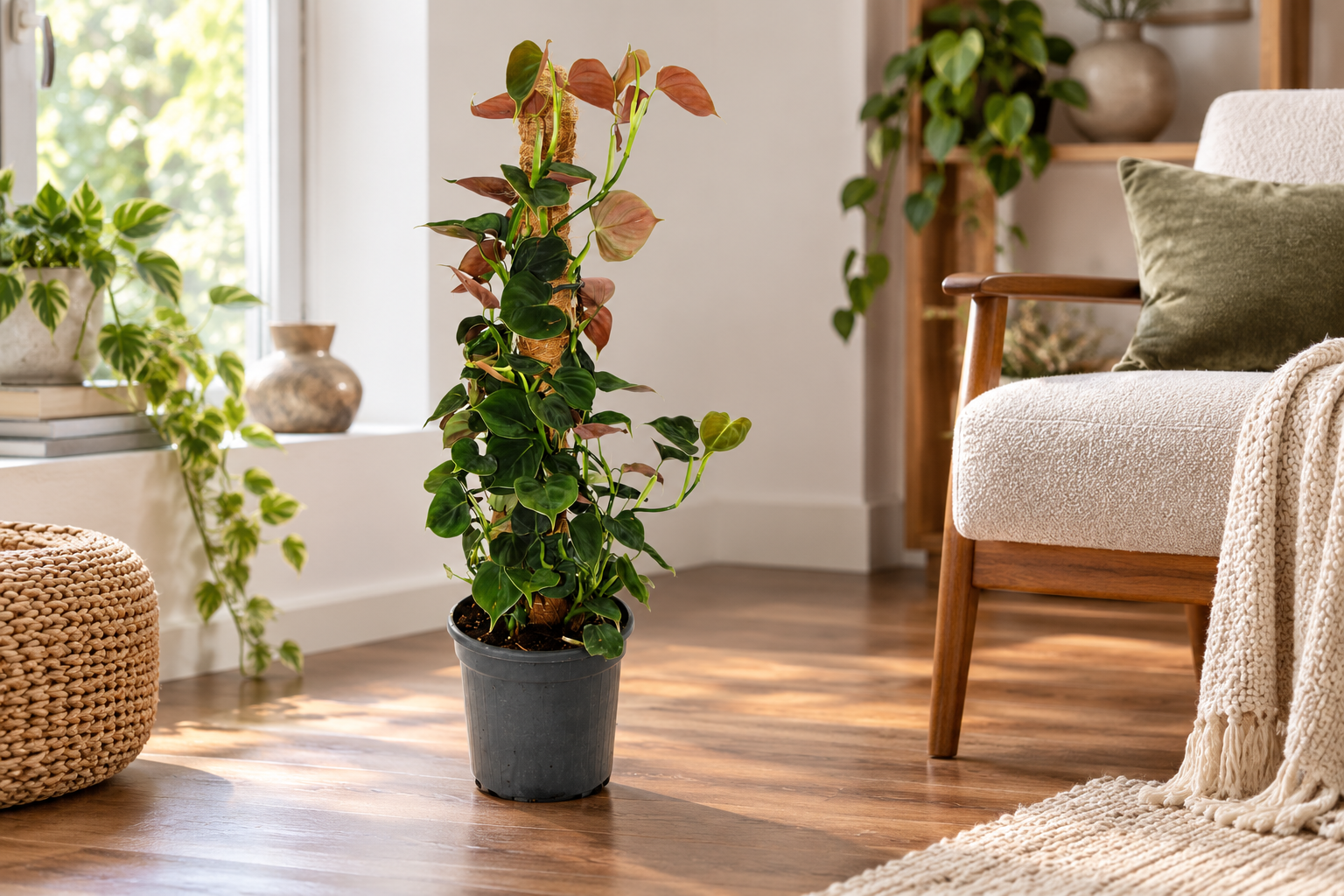
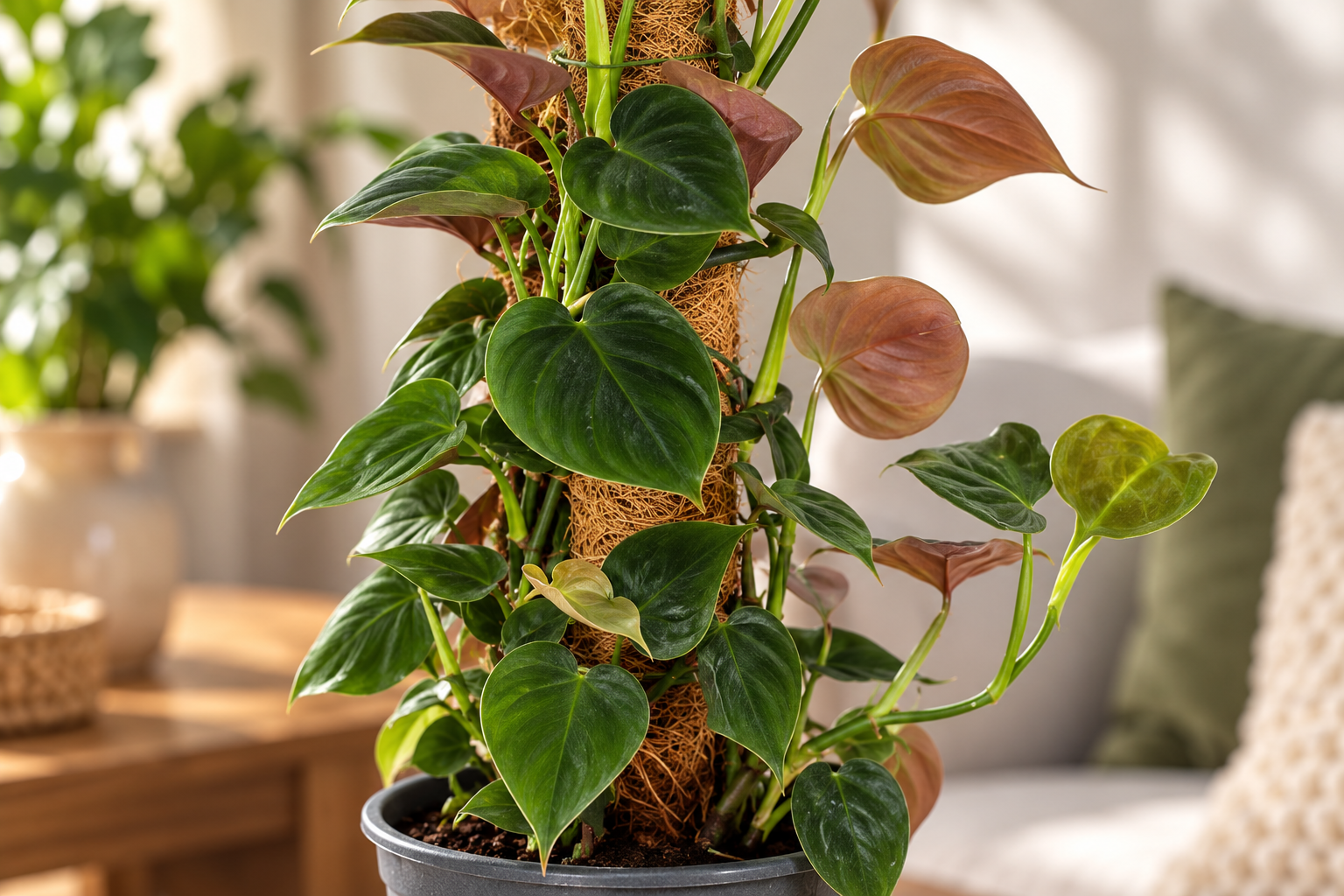
On this young plant, little heart-shaped leaves form a loose green line along the moss pole. Their surface looks gently domed and veined; tilted leaves reveal a bronze-brown reverse. This change makes Lupinum appealing up close. Beside a reading chair the slender plant has room above without immediately forming a large crown. The species comes from Acre in Brazil and climbs. Small juvenile leaves are therefore a development phase, not a permanently promised leaf size.
Eighty centimetres includes the support
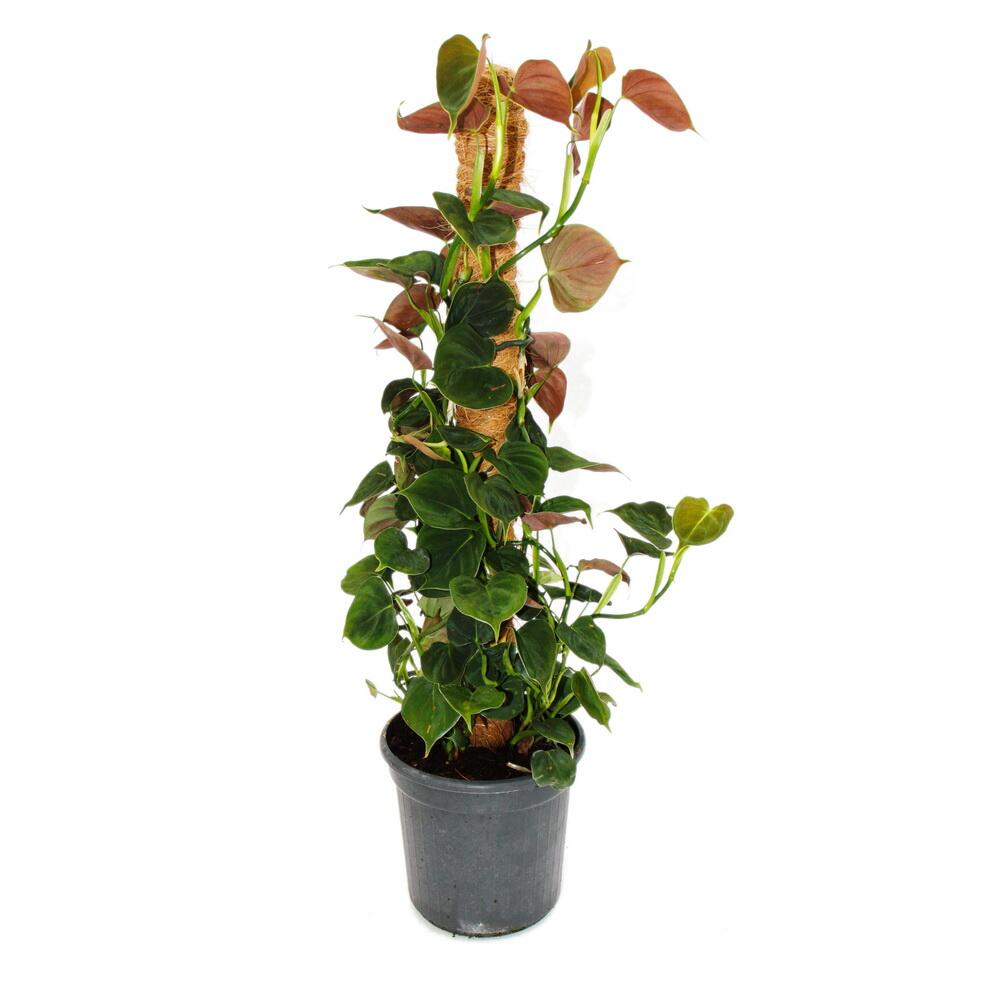
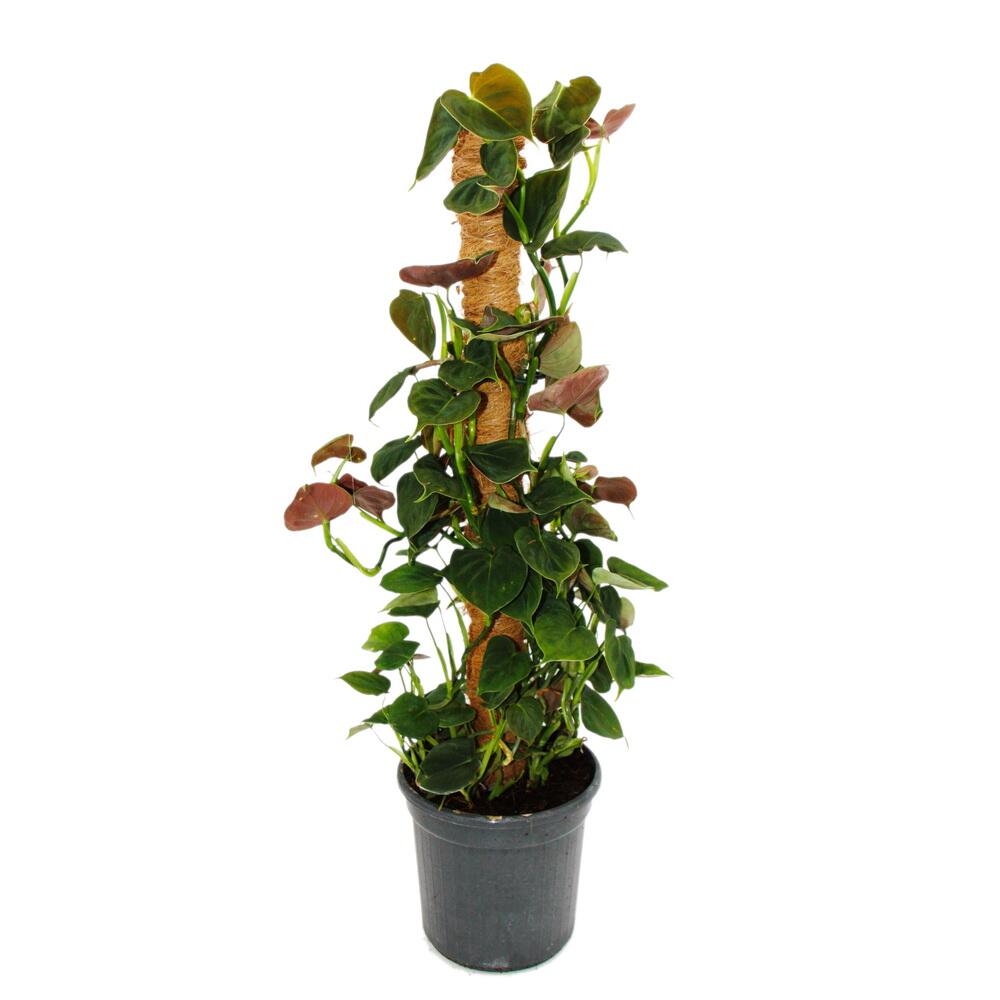
The range offer sits in a 16 cm pot and is described at about 80 cm total height including moss pole. That does not mean an individual leaf is eighty centimetres long. Hold the pot when unpacking and free curled shoots gently. Check whether the support is secure too. An overall photo records its starting point. Later comparison reveals whether new leaves stand closer or shoots outgrow the previous support.
Judge brightness at leaves, not just in the room
A warm bright indoor place with indirect daylight suits cultivation. Avoid hot direct sun after transport. Even beside a window a tall chair may shade lower leaves, so look at the actual light pattern. New long gaps between leaves prompt a position check. Cold ventilation draughts and dry heat immediately beside a heater matter too. A plant position should work in everyday life, not only in a photograph.
Moss pole and roots are two different moisture zones
Check upper soil and pot weight before watering. Supply roots slowly after some drying and let excess drain freely. A moss-pole surface does not reveal wetness of soil beneath. A suitable moist support can help adhering roots; the nursery pot still must not stand in water. Loosely guided shoots keep movement room. Check ties during growth so a former fastening does not cut into the stem later.
Accompany root space and new shoots together
An airy permeable aroid mixture supports roots and moisture. Move to a slightly bigger container only with real space needs. Supply moderately by label during active growth. One brown older leaf sheath is not automatically a care fault; it belongs to shoot structures. Necessary cuts use clean tools and gloves. Philodendrons are not for eating and sap may irritate. Position out of reach of children and pets.
Winter changes consumption
Lupinum stays warm and frost-free indoors through winter. A previously sensible watering interval may become too frequent under less daylight. Recheck roots each time and do not fertilise unchanged when hardly any growth occurs. During gentle dusting inspect undersides and shoot nodes too. Cotton-like deposits or fine webs deserve closer examination. An overall view and a fresh-leaf photo in the plant book show development better than expecting every blade always to look alike.
One plant, several views
Good to know
Is 80 cm leaf size?
No. It is total young-plant height including moss pole.
Do leaves always stay small and heart-shaped?
Juvenile and later leaves may differ through development.
Does a dry pole mean dry soil?
No. Moisture inside the pot is checked separately.
May a tie be tight?
It should support without constricting the growing shoot.
Is the plant edible?
No. Philodendrons may harm if eaten and sap may irritate.
Sources and editorial note
- Exotenherz – offer and original pictures, 03.10.2026
- Kew POWO – Philodendron lupinum origin and climbing habit, 03.10.2026
- RHS – indoor philodendrons, 03.10.2026
Shop offer, article number, GTIN, availability and original pictures checked directly on 02.10.2026; specialist acceptance on 03.10.2026. Specialist sources read directly. SKU, delivery measurements, orderability and originals checked directly in the associated shop article on 03.10.2026; specialist sources read. Trade names stay recognisable. Currently not orderable: knowledge portrait without purchase link or social dispatch approval. No Wawi, server or tool-data changes. Currently not orderable: portrait without purchase link; social drafts not approved for dispatch.