This plant at Exotenherz
Check the shop offer for current availability, price and what is included.
Check the shop for the price, current availability and what is included.
Your care table
| Topic | What to do | Why it helps |
|---|---|---|
| Light | Bright to light partial shade, without hot midday sun. | Dense shade weakens new leaves. |
| Water | Let the upper compost dry somewhat, then water evenly. | Roots need alternating water and air. |
| Outer pot | Remove excess water after every watering. | Permanent wetness can encourage root rot. |
| Temperature | Preferably around 18–27 °C, without cold draughts. | Tropical growth poorly tolerates cold wetness. |
| Compost | Loose and structurally stable with free drainage. | The root ball should dry evenly. |
| Feed | Moderately by the label during growth, less in winter. | Heavy salt supply cannot replace a good position. |
| Leaf care | Gently wipe dust, do not pull young leaves open. | Large leaf surfaces remain undamaged. |
| Repotting | When well rooted, move to a slightly larger pot. | Too much unrooted wet compost is unfavourable. |
Check the compost and pot weight. The care table explains how far the compost may dry.
Water only when needed. The water should reach the root ball without spilling over the rim.
Remove surplus water from the saucer or cachepot. Then return the plant to a suitable position.
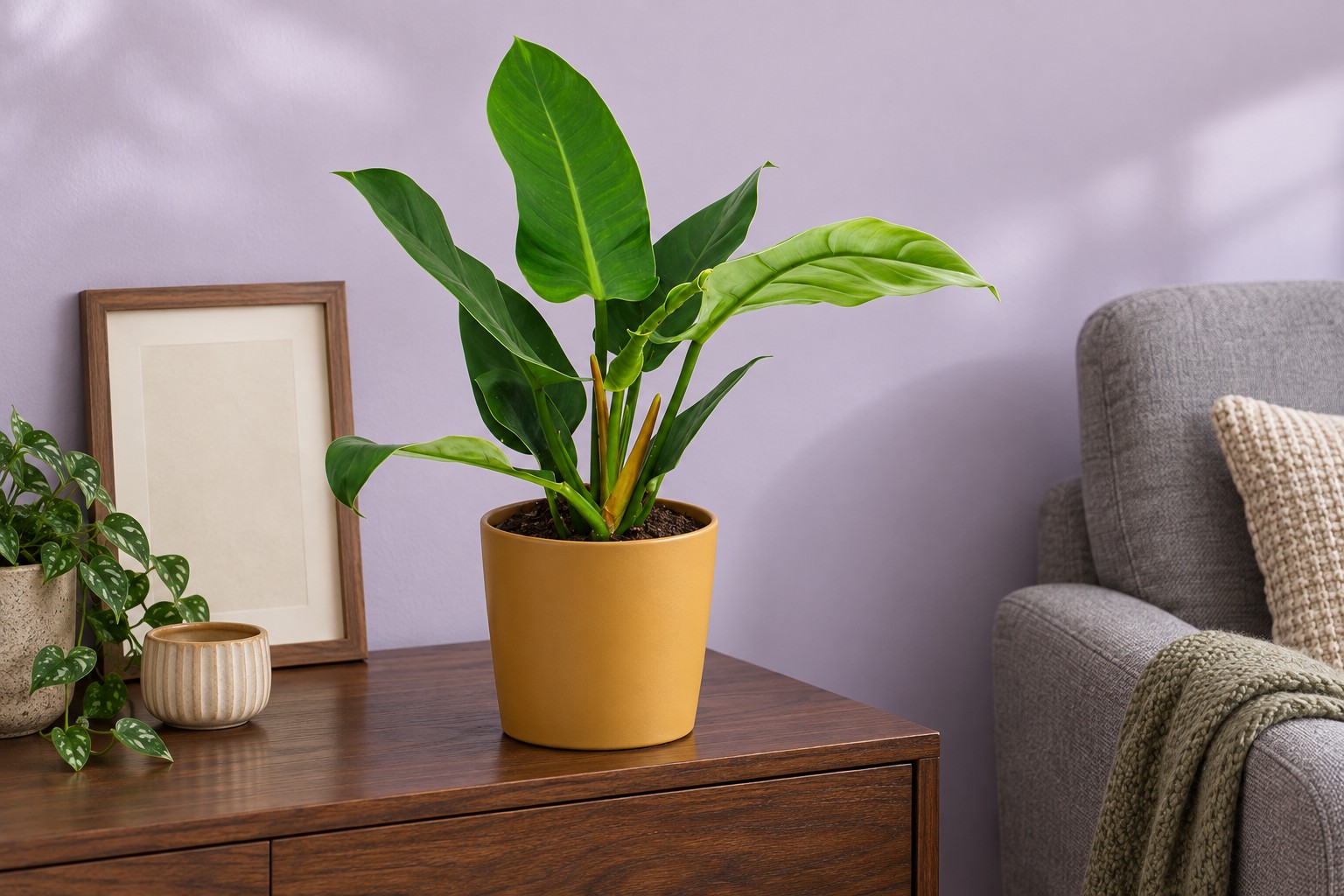
An upright philodendron with generous leaves
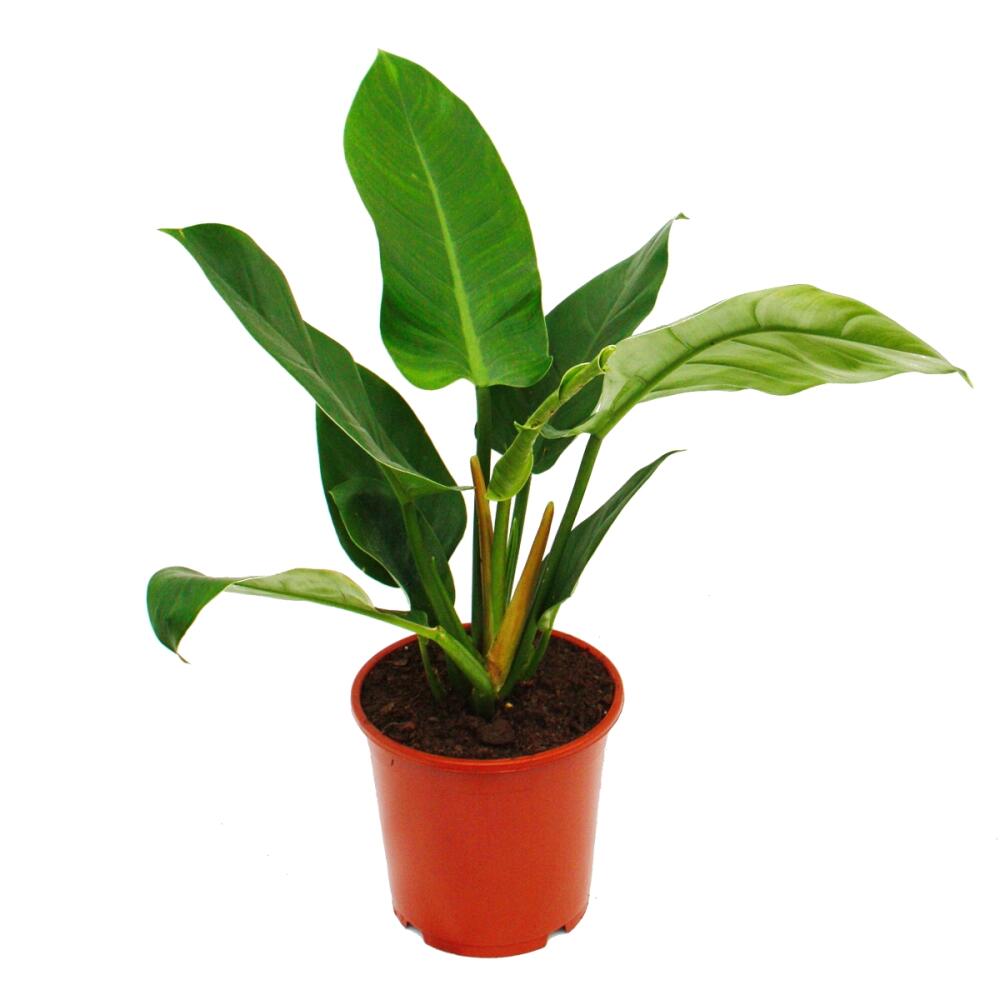
Imperial Green forms broad elongated leaves from a relatively short plant centre. Unlike a climbing heart-leaf philodendron, this cultivated form needs no climbing framework to show its typical compact structure. Older leaves are strong green; newly unfurled ones may initially appear lighter. This natural development is not colourful variegation. The offer contains a plant in a 19 cm pot with approximately 50 to 60 cm overall height. It is thus a clearly visible but still young houseplant. The scene follows these proportions.
Green growth needs a genuinely bright position
A bright position without hot midday sun highlights the broad leaves. Light partial shade is possible; a dark room corner without sufficient daylight is not equivalent. When new leaves are noticeably smaller and long petioles stretch towards the light, first check the position. Occasionally rotate the pot slightly so the crown can develop evenly. Leaves should not be pressed against cold window glass or close to a radiator. On a console, allow free space beside the plant for its leaf blades.
Moist roots also need air
The top compost layer may dry slightly between waterings. Also check pot weight rather than watering only by calendar. Then evenly supply the root ball and let excess drain. Remove standing water from the outer pot. Always moist does not mean a permanently saturated root ball in everyday practice. A still heavy wet pot receives no further watering merely because a leaf droops. Less winter light reduces consumption. Watering intervals then usually lengthen, while warm dry air deserves a separate check.
Repot with room for water and roots
A loose mixture of good houseplant compost and structure-building ingredients is a suitable starting point. Bark pieces and mineral additions can improve aeration if they suit the remaining mix and your watering habits. A drainage hole remains essential. Repot only when roots fill the root ball well; do not choose a huge pot as a precaution. Spring is especially useful for supporting development. Do not bury the plant base deeper than before. Preserve healthy roots; distinguish soft dead parts from firm pale roots.
Clean leaves and let new growth unfurl peacefully
Gently remove dust with a soft damp cloth while supporting the leaf underneath. Leaf shine is unnecessary. Do not force rolled new leaves apart even if unfurling seems slow. Warm conditions around 18 to 27 °C and balanced room air support development. During growth feed moderately according to the label, reducing when winter growth is weak. A large leaf need not be made larger by frequent feeding. Propagating this upright form is also less straightforward than cutting off a long vine.
Recognise care problems by their cause
Yellow leaves can have different causes: ageing foliage, wetness, root problems or a marked position change. Inspect the whole plant. Brown dry edges can also come from dry air, salt stress or irregular watering. Regularly check leaf undersides for pests. Laboratory observations are not turned into air-purification promises for living rooms. Imperial Green is valued for beautiful leaves and suitable cultivation. The plant contains irritating calcium oxalate crystals, is not food and should not be chewed by children or pets.
One plant, several views
Good to know
Does Imperial Green need a moss pole?
Its typical self-heading upright growth needs no climbing structure. Support may at most help an individually unstable specimen.
Are fresh pale-green leaves normal?
Yes. New leaves can be lighter and later turn stronger green. This does not promise variegation.
Is Imperial Green the same as Imperial Red?
No. These are differently named cultivated forms. This offer shows green leaves.
Can a single leaf be propagated?
A leaf without a suitable stem section and growth point normally produces no complete new plant. Compact growth requires a suitable propagation method.
Sources and editorial note
- Product and delivery contents: Exotenherz
- Royal Horticultural Society: plant and care knowledge
- Royal Horticultural Society: plant and care knowledge
- NC State Extension: plant profile
Sources checked: 15 September 2026. Product information and delivery contents follow the linked offer. Care has been checked against the stated specialist sources and remains subject to plant condition, position and season.