This plant at Exotenherz
Check the shop offer for current availability, price and what is included.
Check the shop for the price, current availability and what is included.
Your care table
| Topic | What to do | Why it helps |
|---|---|---|
| Light | Bright filtered light to a position slightly away from direct sun. | The yellow-green form needs sufficient light for strong growth. |
| Water | Keep slightly moist and let the surface dry a little. | Avoid constant wetness and repeated severe wilting. |
| Drainage | Allow water to drain completely after watering. | The outer pot must not be a permanent water store. |
| Substrate | Loose, humus-rich and structurally stable. | Air in the root ball supports healthy roots. |
| Climbing support | Guide shoots loosely, leaving leaf stalks free. | Tight ties can injure growing tissue. |
| Pruning | Carefully shorten healthy long shoots if needed. | Moderate pruning can accompany branching. |
| Fertiliser | Moderately during active growth according to product instructions. | The desired yellow-green colour is not automatically a nutrient deficiency. |
| Winter | Warm and bright; expect lower water demand. | Less light often means slower growth. |
Check the compost and pot weight. The care table explains how far the compost may dry.
Water only when needed. The water should reach the root ball without spilling over the rim.
Remove surplus water from the saucer or cachepot. Then return the plant to a suitable position.
Yellow-green foliage is a desired feature here
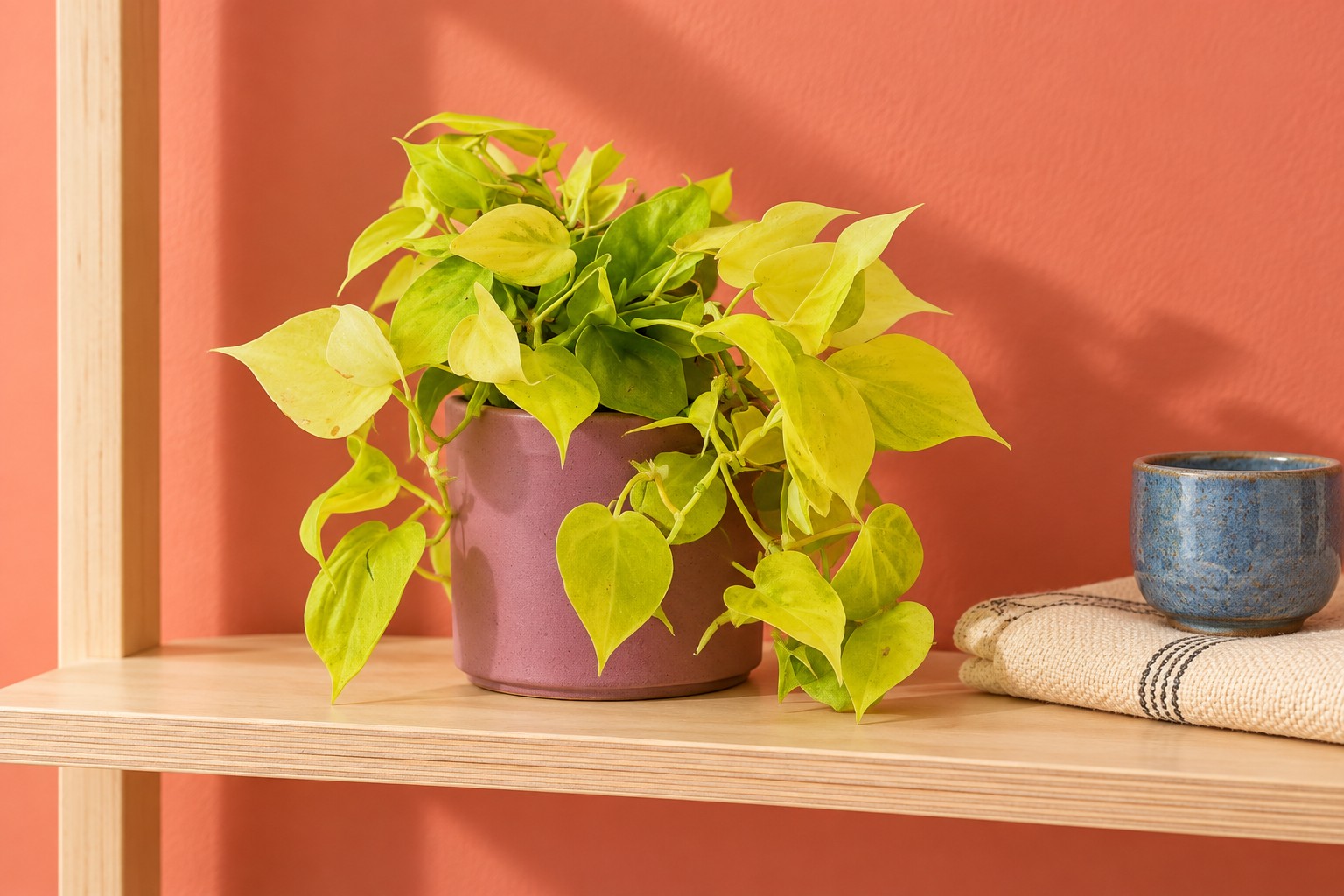
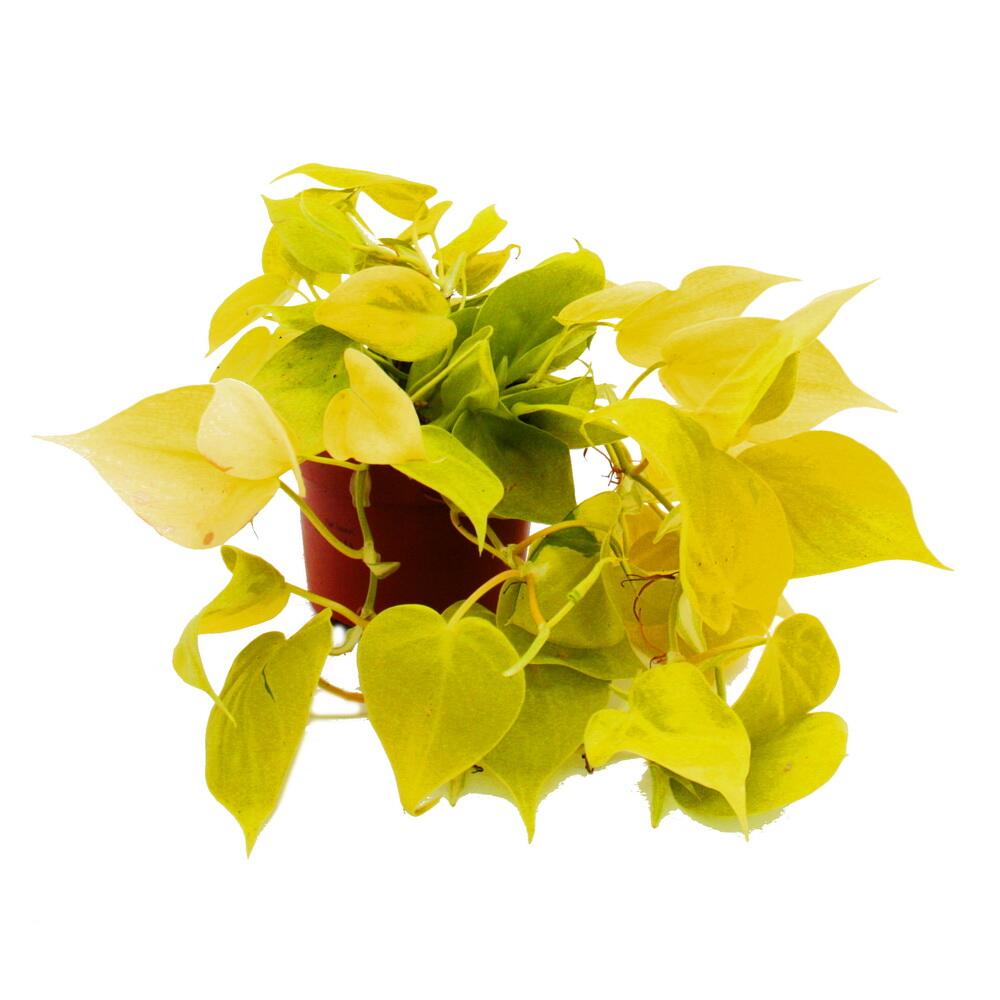
The heart-shaped leaves of this trade form show light yellow-green to lime green. This is not initially a sign of nutrient deficiency. Young and older leaves may look different in intensity. The shop name Philodendron scandens is now assigned to heartleaf philodendron, Philodendron hederaceum. Lime refers here to the yellow-green trade form. Despite a similar colour, it must not be equated with a yellow-green Epipremnum pothos. Leaf stalk and shoot shape and development belong to a Philodendron. A specific registered clone identity is not inferred from the shortened shop name.
From a small pot to a freely guided vine
The shop specifies a 12 cm pot and approximately 15 to 25 cm overall height. The young plant has short trailing shoots or shoots resting on a surface. Later it can trail from a bright surface or grow along a suitable support. The scene shows the young delivery condition rather than ready-made metre-long vines. Give shoots space so they are not pinched when passing by or closing a cupboard door. Leaves should unfold freely. Outer pot and furnishings are included only if the current offer explicitly says so.
Bright filtered light maintains its lively appearance
The green species tolerates relatively low light, but the bright trade form should not be seen as a plant for completely dark corners. A bright protected position supports strong growth and its colour effect. Increase hot direct sunshine slowly after shipping, or soften it in summer. Even indoor warmth and protection from cold draughts are favourable. A slightly greener older leaf is not automatically a problem. New very long thin shoots with large gaps between leaves are more reason to check light and overall cultivation.
Moderate moisture throughout the root ball
Keep soil slightly and evenly moist, but let the upper layer dry a little before watering again. Then supply the root ball and let excess drain. Constantly filled outer pots can cause root damage even in an uncomplicated climber. In winter, usually water less frequently with reduced light. A wet root ball and yellow limp leaves first call for root inspection, not another sip of water. The original yellow-green leaf colour must be distinguished from newly appearing soft or brown areas.
Branching and support without unnecessary force
A loose humus-rich mix and a draining pot help roots. Provide a little more root space during growth if needed. Fertilise moderately during active growth according to product instructions. Healthy shoots that have become too long can be carefully shortened with clean tools; this may accompany further branching. Attach loosely to a climbing support and prevent constrictions. Aerial roots belong to the climbing habit and need not constantly be removed. Gently remove dust from strong leaves, without rubbing or pulling young leaves that are still soft.
Healthy nodes and an attentive everyday routine
A stem cutting with a healthy node can form new roots and growth. A cut-off heart-shaped leaf without a suitable node, however, is not a reliable new plant. Consider the irritating sap when cutting. Calcium oxalate crystals can irritate mucous membranes and sensitive skin; secure the vines from nibbling children and pets. Check regularly for aphids, spider mites, scale insects and mealybugs. The philodendron enriches the home as a living plant. No particular measurable cleaning of indoor air is promised.
One plant, several views
Good to know
Are the yellow leaves diseased?
Yellow-green belongs to the trade form Lime. Newly appearing soft brown spots or strong wilting need separate checking.
Is this a yellow pothos?
No. Lime is listed here as Philodendron hederaceum and is botanically distinct from Epipremnum.
Can it trail, or must it climb?
Both are possible. Adequate light and guidance that does not injure young shoots are decisive.
Is a single heart-shaped leaf enough for propagation?
A healthy stem section with a node is a more reliable basis. A leaf alone does not automatically possess a new growing point.
Sources and editorial note
- Product and delivery contents: Exotenherz
- NC State Extension: plant profile
- NC State Extension: plant profile
Sources checked: 15 September 2026. Product information and the contents of delivery follow the linked shop offer. Care advice was checked against the cited specialist sources and should still be adapted to the plant’s condition, position and season.