This plant at Exotenherz
Check the shop offer for current availability, price and what is included.
Product and delivery details are given in the individual offer.
Your care table
| Topic | What to do | Why it helps |
|---|---|---|
| Light | Bright filtered daylight; avoid hot direct sun. | Leaf markings need light without pale areas overheating. |
| Water | Let the upper soil dry out partly, then water the root ball thoroughly. | Dark firm leaves also need well-functioning roots. |
| Drainage | Let the inner pot drain and remove remaining water from the outer pot. | Standing water deprives roots of air. |
| Soil | Choose loose, humus-rich potting soil with coarse structural components. | Root space should retain moisture while remaining permeable. |
| Nutrients | Feed moderately during new growth according to the label. | More fertiliser does not automatically produce more pink leaf area. |
| Repotting | Move to a slightly larger container when roots are dense. | A large unrooted soil space stays wet unnecessarily long. |
| Training | Support the growing main shoot loosely if needed. | Leaf stalks and rolled new leaves remain free. |
| Winter | Continue bright and warm, giving less when growth is limited. | Actual root-ball moisture decides during the dark season too. |
Check the compost and pot weight. The care table explains how far the compost may dry.
Water only when needed. The water should reach the root ball without spilling over the rim.
Remove surplus water from the saucer or cachepot. Then return the plant to a suitable position.
Pink among dark leaf surfaces
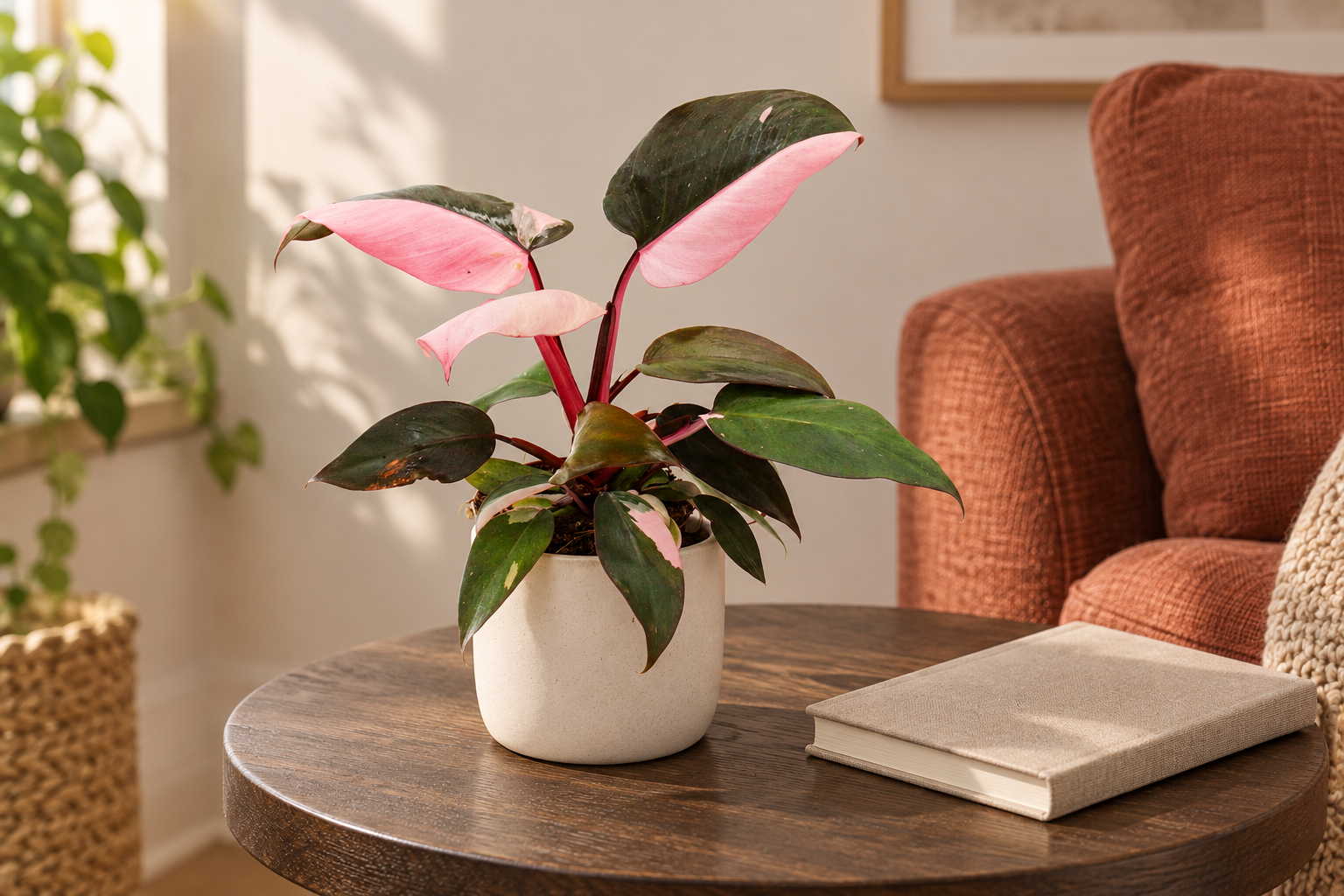
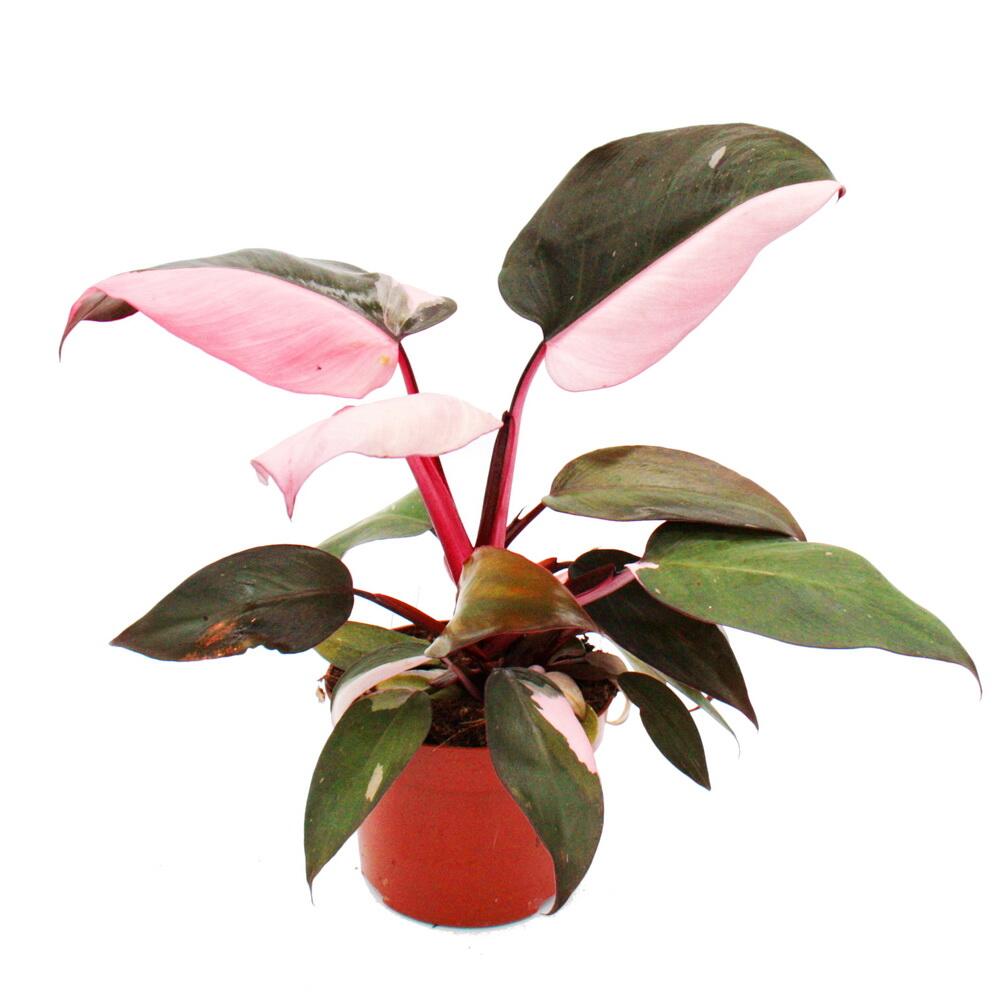
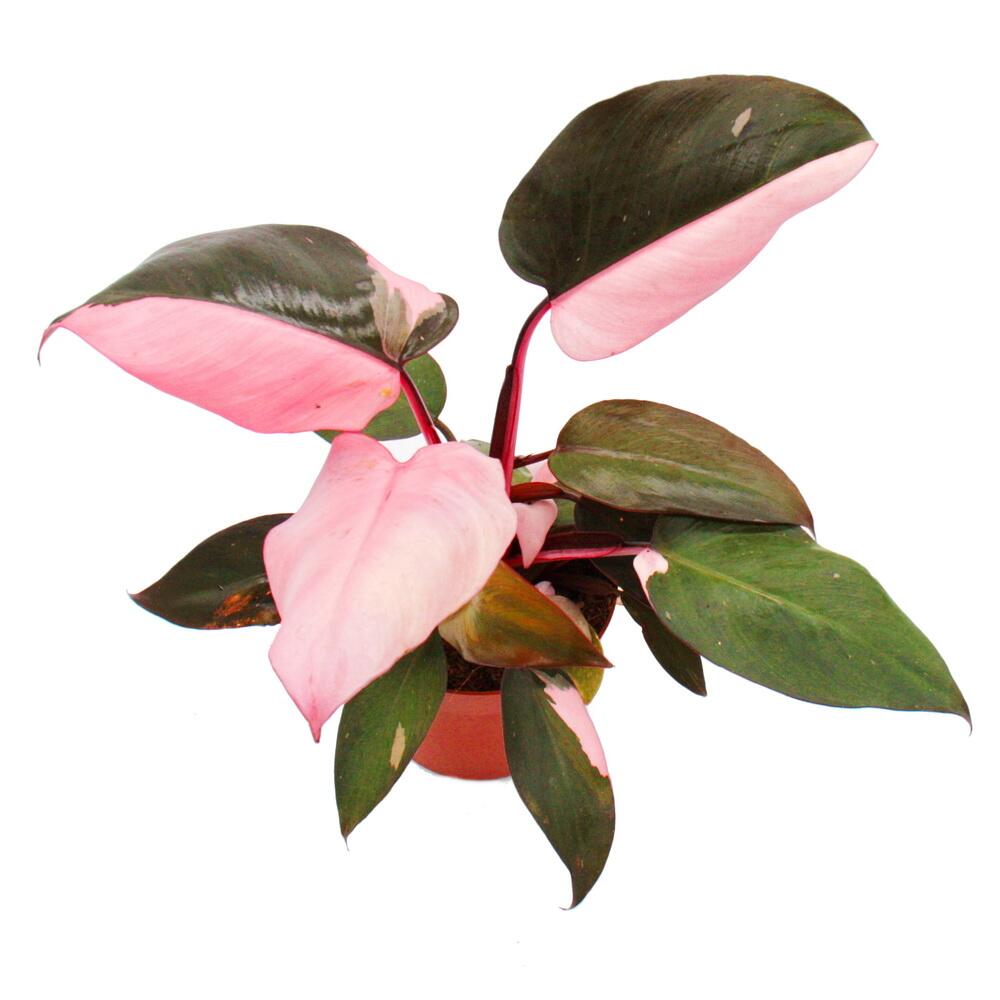
Pink Princess does not come with evenly painted successive leaves. One may stay almost dark green; the next carries a soft pink sector, with reddish stems connecting the surfaces into a calm small structure. This variation makes the philodendron interesting. The real shop photo shows several broad, pointed leaves close above the pot. The young plant therefore looks lovely on a low, bright side table where foliage can be enjoyed close up. Do not crowd it among many other large leaves: some open space reveals colour changes and protects leaf tips from constant knocks.
A young Princess with room above
The offer states a 12 cm pot and about 25 to 30 cm total height including the pot. These measurements describe the young delivered plant. Pink Princess later develops a longer climbing structure; the RHS gives about one to one and a half metres in favourable cultivation. Such development needs time, light and appropriate training. Plan space above the plant’s position. Initially the compact pot shape is enough; later a suitable support can guide the main shoot. Attach it loosely without binding individual leaf stalks. A large mature climbing plant is not guaranteed by the small shop size.
View the markings in suitable light
A bright spot with filtered daylight is a good starting point. Intense midday sun against hot glass can especially stress pale leaf areas. Do not increase light suddenly after shipping. On an open shelf, what matters is how much daylight actually reaches leaves, not only closeness to a window. If new leaves stay small and widely spaced, check light conditions. Pink areas still change from leaf to leaf. Strong sun, frequent moving or more fertiliser are not a reliable way to produce a particular colour distribution.
Think of the small root space when watering
Before watering, check the upper soil and occasionally the weight of the inner pot. Once the surface has dried out partly, water slowly and thoroughly so more than a narrow section of the root ball becomes moist. Then let it drain completely. The decorative outer pot is not a permanent water reserve. If leaves hang while soil is already wet, check drainage and roots before watering again. A warm spot in front of a heater may also stress foliage while soil is still damp. Regularly looking at both helps more than a fixed weekly watering date.
Airy soil and moderate nutrition
Humus-rich soil with suitable coarse components retains moisture without becoming a dense wet block. Choose a slightly larger pot when repotting a clearly rooted root ball. Hold the root ball and support the young plant carefully; leaf stalks are not carrying handles. Feed moderately according to the label while new leaves visibly form. Fresh pre-fertilised soil already supplies nutrients. A strong extra dose may stress roots and does not automatically improve pink markings. Reduce supplies during slow winter growth but keep the philodendron bright and warm.
New leaves need patience
A new leaf first unfolds rolled up and may look different in colour from hardened foliage. Do not pull it open with your fingers. Young tissue tears easily and the injury remains visible later. If development stalls, assess warmth, water supply and dry heating air together. Remove dust from adult leaves carefully with a soft, lightly damp cloth, supporting the leaf underneath. Leaf-shine products are unnecessary. Individual old or clearly damaged leaves can be removed with clean tools; healthy leaf surfaces remain.
Observe calmly and position safely
Dry edges, yellow leaves and weak new growth may have different causes. Check root-ball moisture, light and warmth, then leaf undersides and shoot bases for unusual deposits or fine webbing. Observing a newly arrived plant slightly separately makes this easier. Do not prune heavily, repot and feed all at once just because one leaf shows less pink. Healthy new growth matters. Keep philodendrons out of reach of nibbling pets and small children; plant parts can harm when eaten and sap may irritate skin. Wear gloves when cutting and clean the tool afterwards.
One plant, several views

Good to know
Is every leaf half pink?
No. Pink areas are irregular and vary between individual leaves. No fixed colour distribution is guaranteed.
Does Pink Princess remain 30 cm tall?
The roughly 25–30 cm is delivery height including the pot. It later grows further and can be trained to climb.
Does more fertiliser help produce more pink?
Heavy feeding does not force particular markings. Suitable light, healthy roots and moderate nutrition come first.
Can it stand on a bookcase?
On a bright, open shelf with space for leaves. A deep, dark shelf usually offers too little daylight.
Should I pull a new leaf apart?
No. It should unfold itself; first check warmth, moisture and heating air if there are problems.
Is it suitable for nibbling pets?
No. Position philodendrons safely; plant parts are not for eating and may cause harm.
Sources and editorial note
- Exotenherz: offer and original images (02/10/2026)
- RHS: Philodendron Pink Princess (02/10/2026)
- RHS: growing philodendrons (02/10/2026)
- NC State Extension: Philodendron (02/10/2026)
Shop offer, article number, GTIN, availability and original images checked directly on 02/10/2026. Specialist sources read directly. No additional species placement invented. Pink markings variable; later RHS size distinguished from delivery height. Sources and real original views checked directly.