This plant at Exotenherz
Check the shop offer for current availability, price and what is included.
Product and delivery details are given in the individual offer.
Your care table
| Topic | What to do | Why it helps |
|---|---|---|
| Light | Choose an open spot in a bright room. | A crowded shelf or dark corner limits new growth. |
| Water | Water thoroughly after the surface has dried slightly. | Some moisture may remain inside, but not a permanently wet swamp. |
| Growing medium | Use loose houseplant compost with structural ingredients. | The strong roots need air. |
| Pot | Provide drainage holes and later space for the creeping stem. | Its growth differs from that of a conventional climber. |
| Feeding | Feed moderately during active growth, following the manufacturer’s instructions. | Slow winter growth needs no additional doses. |
| Leaves | Clean carefully with a soft, damp cloth. | Leaf surfaces stay free of dust without leaf-shine spray. |
| Repotting | Repot when the rootball is densely rooted, preferably in spring. | An unnecessarily large pot retains moisture too long. |
| Checks | Inspect leaf undersides and petiole bases. | This helps detect pests and root problems early. |
Check the compost and pot weight. The care table explains how far the compost may dry.
Water only when needed. The water should reach the root ball without spilling over the rim.
Remove surplus water from the saucer or cachepot. Then return the plant to a suitable position.
Silver between green leaf veins
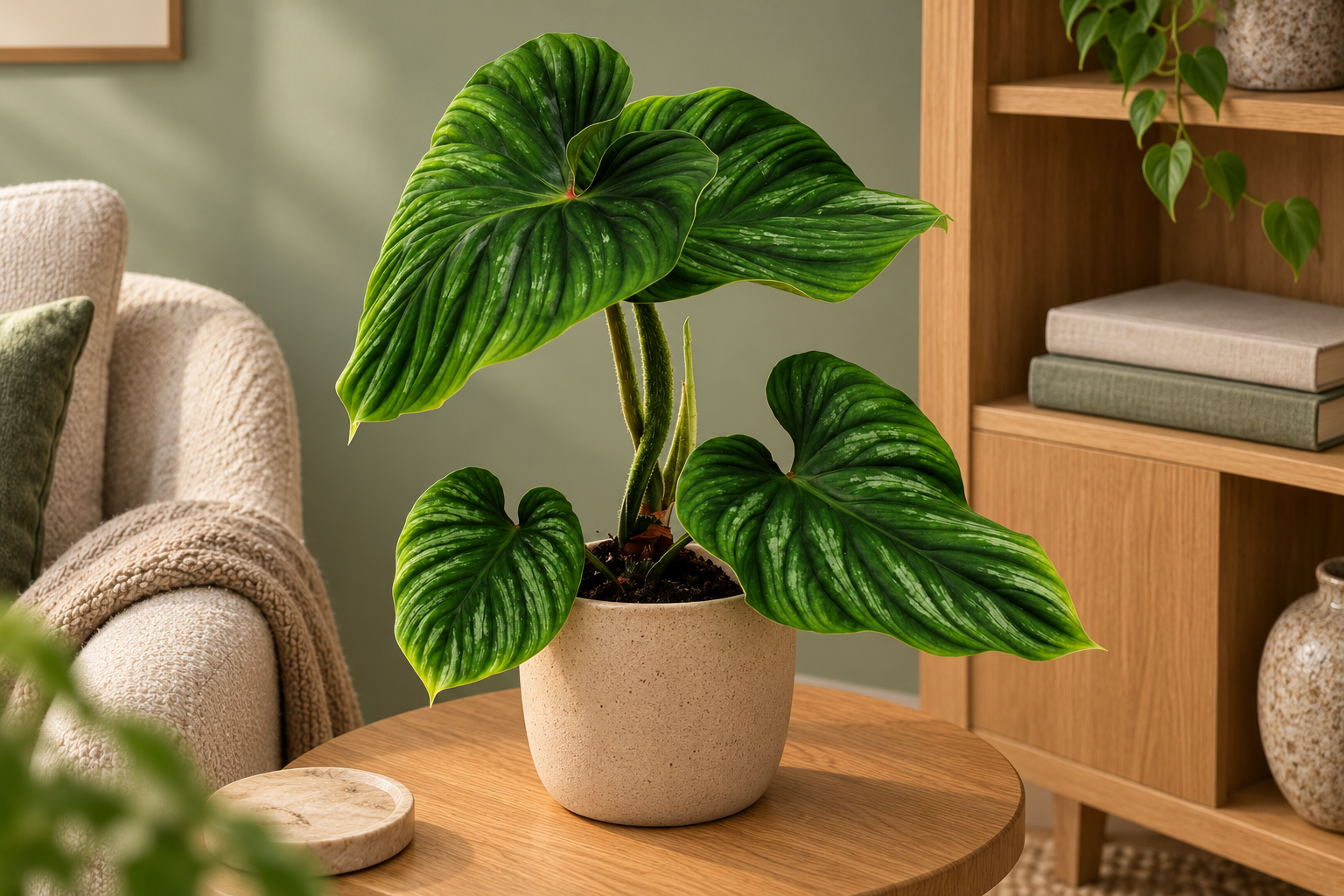
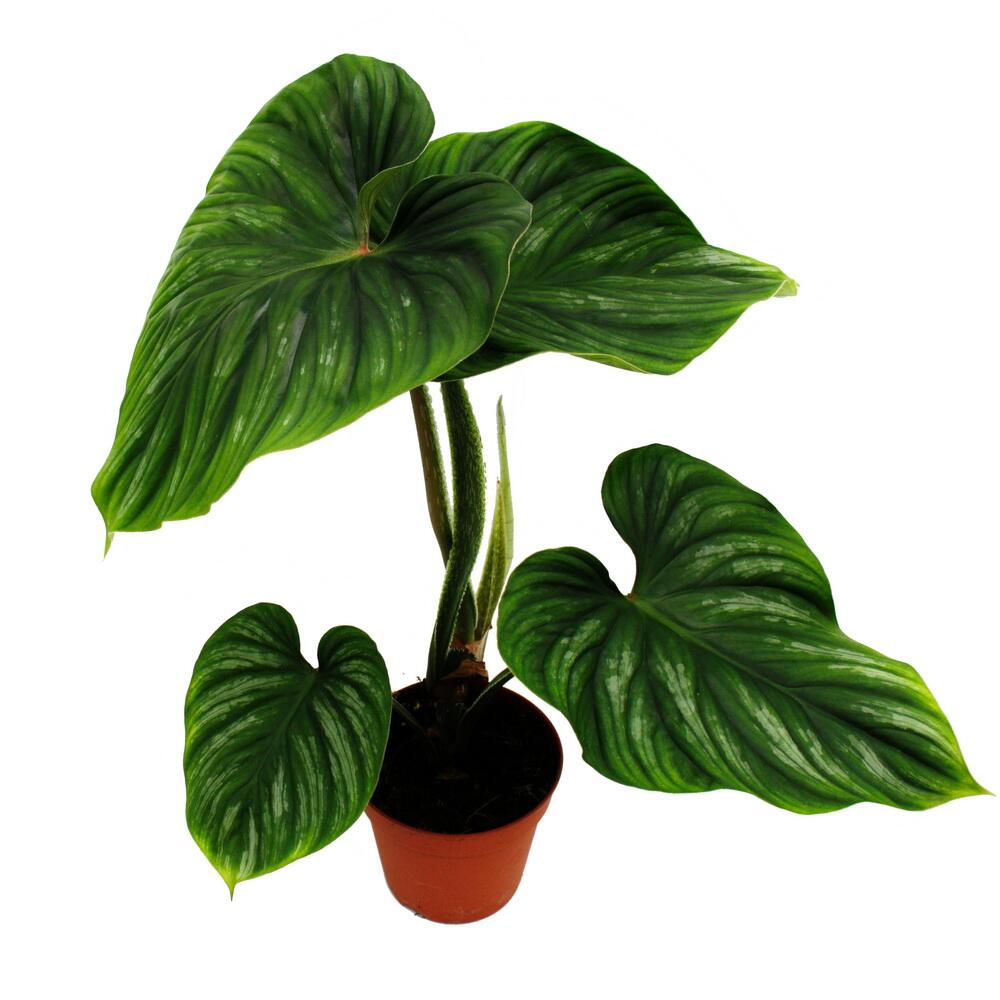
The leaves of Philodendron plowmanii are worth viewing close up. Their broad heart shapes resemble lightly folded fabric, with silvery-green patterns between the veins. Light from the side shows this surface particularly beautifully. The plant needs neither a shiny decorative pot nor many companions for this. On a quiet side table, a single well-developed leaf can already shape the entire spot. The young plant offered is in a fifteen-centimetre pot and around forty to fifty-five centimetres tall. This specification describes delivery, not a fixed final size for the coming years.
Leave space for the creeping stem
This philodendron develops a stem that can move along the ground. Its petioles carry the foliage above; it is therefore not automatically a candidate for the same tall moss pole as every climbing philodendron. I prefer to plan a position with clear space at the side. During later repotting, a wider container may become useful once the stem reaches the edge. It is not buried deeply simply to fit all the leaves into a small round pot. A large leaf surface beside a narrow passage also invites accidental knocks. Some distance from doors, chair backs and walkways protects fresh growth.
Light without hot leaf surfaces
Bright, filtered daylight suits this tropical foliage plant. A sheer curtain can soften light at a sunny spot. Further back in the room, however, I check whether enough daylight really arrives. A bright impression to our eyes does not always tell us much about this. Harsh midday sun can damage unprotected leaves, while a permanently dark place slows new growth. The chosen position stays warm and draught-free. Directly above a radiator or beside a freezing winter window, conditions arise that even more frequent watering cannot compensate for.
A rootball with water and air
Before watering, I feel the top layer of compost and also check the pot’s weight. Once the surface has dried slightly, the compost is watered thoroughly and then allowed to drain. The outer pot may be decorative, but must not form a hidden water reservoir beneath the nursery pot. The roots benefit from a loose mixture whose structure remains intact at the next watering. Bark or suitable mineral ingredients can loosen houseplant compost. A particular recipe ratio does not replace observing your own rootball. Very dense growing medium dries differently from an airy mixture in a warm, bright room.
Support fresh growth gently
New leaves initially appear rolled up and gradually unfold. I do not pull on a still-closed leaf tip to make it look beautiful sooner. Stable conditions give growth a better chance than daily relocation. Slightly higher humidity may help in very dry rooms; permanently wet leaves and stagnant damp air are not care goals, however. During cleaning, the leaf surface is supported from underneath and wiped gently. Leaf-shine products are unnecessary for its natural pattern. Small differences between two leaves are also part of the development of a living plant and do not need immediate correction.
Growth determines feeding and repotting
While strong new growth is visible, moderate feeding with a suitable houseplant fertiliser is possible. I follow the product’s dosage and start cautiously. Fresh compost that is already fertilised does not immediately need extra nutrients. In low-light winter conditions, watering is less frequent and fertiliser is not used to try to force summer growth. Repotting becomes relevant when roots densely fill the container or the creeping stem reaches its boundary. The new pot must offer sufficient room, but need not be enormous as a precaution. After moving it, fresh roots initially receive calm, steady care.
Consider leaf signals together
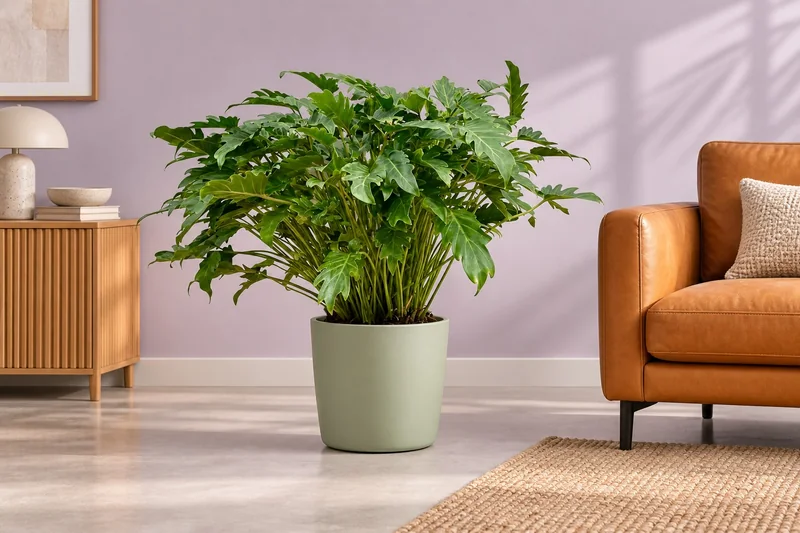
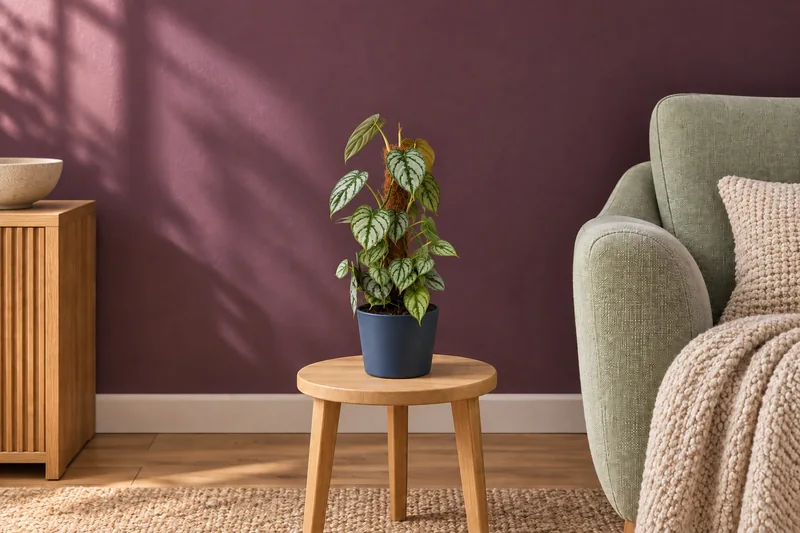
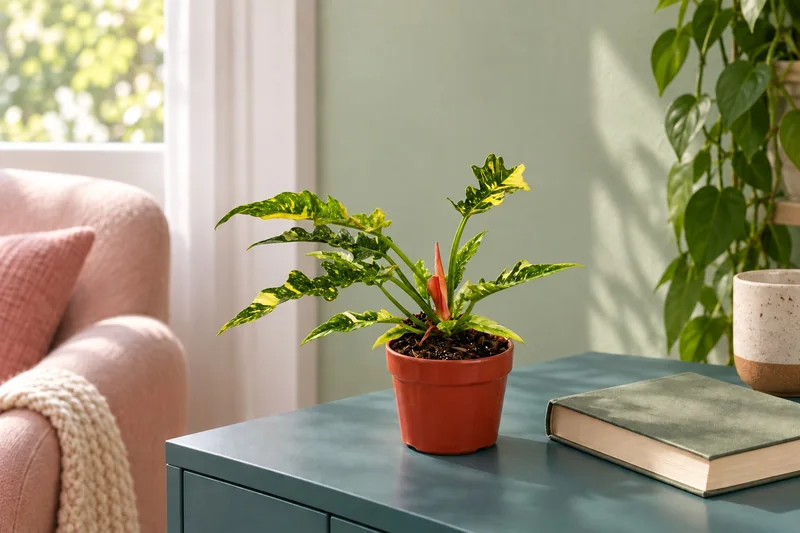
One yellow leaf does not reveal the cause by itself. I check moisture, temperature, light and possible pests before changing several things at once. Long-wet compost and a heavy pot direct attention differently from a light, dry rootball. Individual older leaves may also naturally decline over time. Clearly damaged plant parts are removed with clean tools; gloves are useful when handling the sap. Children and animals should not nibble the foliage. The gallery shows the unchanged starting plant, while the living-room scene adds a possible arrangement with a decorative pot and furnishings.
One plant, several views
Good to know
Does plowmanii climb like every philodendron?
Its typical stem can creep along the ground. Space across the width is therefore important.
Do the leaves stay small?
No. Under suitable conditions, new leaves become markedly larger as the plant develops.
Are the silvery markings damage?
The silvery-green markings of young leaves are part of their appearance.
Must I mist daily?
No. Stable humidity and a suitable position matter more than constantly wet leaves.
When should it be watered?
When the surface has dried slightly; also check the whole rootball and drainage.
Is it suitable for pets to nibble?
No. Philodendron should be kept out of reach of animals that nibble plants.
Where can I find current offer information for Philodendron plowmanii?
Check the linked shop offer for the current price, availability and delivery terms.
Sources and editorial note
- Exotenherz: offer and original photographs (01.10.2026)
- RHS: Philodendron plowmanii, growth and cultivation (01.10.2026)
- RHS: caring for philodendrons (01.10.2026)
Shop offer, SKU, GTIN and availability checked live on 01.10.2026. Original photograph unchanged. Independently researched gardening texts and an individually reviewed scene.