This plant at Exotenherz
Check the shop offer for current availability, price and what is included.
Product and delivery details are given in the individual offer.
Your care table
| Topic | What to do | Why it helps |
|---|---|---|
| Position | Keep bright in filtered daylight, warm and sheltered from draughts. | White leaf areas should not lie against hot window glass. |
| Water | Let the upper soil dry out partly before watering thoroughly again. | A small pot needs regular checks, not a rigid watering sequence. |
| Drainage | Let excess drain away and empty the outer pot. | Wet roots may weaken foliage despite water being present. |
| Substrate | Choose humus-rich, loose potting soil with stable structure. | Air pores remain important between waterings. |
| Feeding | Feed moderately according to the label during new growth. | Pre-fertilised substrate already supplies nutrients. |
| Repotting | Use a slightly larger pot when roots are dense. | New soil space should develop appropriately with root growth. |
| Leaves | Let new leaves unfold freely; dust older ones gently. | Pale areas are not rubbed or treated with leaf-shine products. |
| Winter | Keep the bright, warm position and reassess consumption. | Less light and fresh growth usually mean less water need. |
Check the compost and pot weight. The care table explains how far the compost may dry.
Water only when needed. The water should reach the root ball without spilling over the rim.
Remove surplus water from the saucer or cachepot. Then return the plant to a suitable position.
Pale areas with their own signature
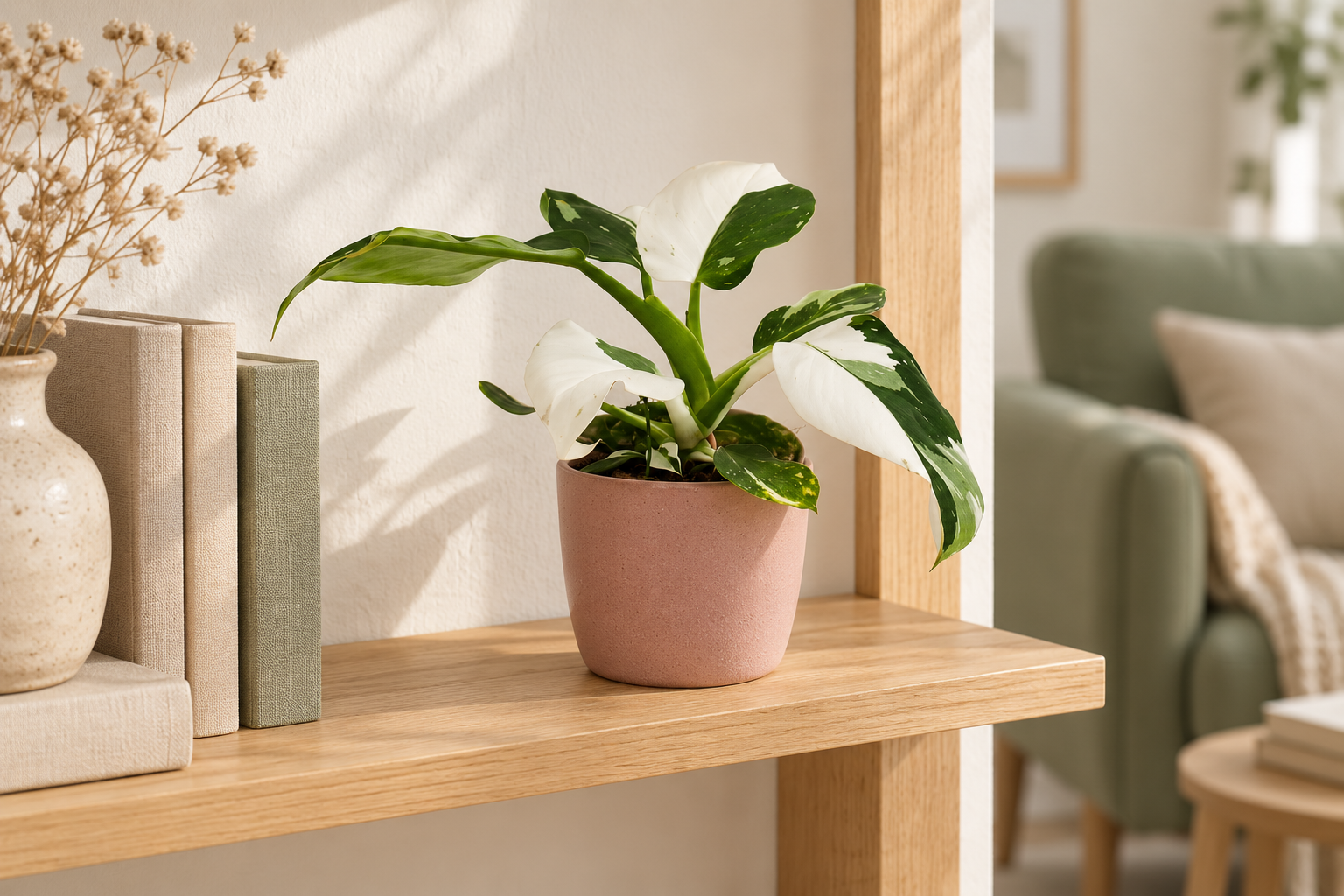
White Princess lives through the contrast between green and white. Some leaves carry only small pale fields, others larger white sectors. Pointed oval leaves and the short young form are clear in the original images. A bright, open bookcase with enough distance beneath the shelf above can accommodate this small philodendron beautifully. It needs real daylight there, though; a white wall and lovely books alone do not replace it. Keep leaf surfaces free so markings remain visible and young growth is not pressed against a shelf edge.
The delivered plant is only the beginning
The offer states a 12 cm pot and about 20 to 25 cm total height. This means the young plant including its pot, not a fixed final size. New leaves change its structure, and later it may need more standing space or a suitable support. When arranging it, consider free space above and beside it, not just today’s small container. Hold the inner pot or root ball when lifting. Leaf stalks should serve neither as handles nor attachment points. The shop name Philodendron White Princess lets you find this exact white-green offer.
White foliage needs a sheltered bright spot
Bright filtered daylight supports a well-leafed structure. White leaf areas have little or no green pigment, so an entirely white new leaf is not a lasting ideal to force with especially much sun. Hot direct sun can damage pale areas. Settle it in under protection after transport and observe new growth. A deep shelf without light from the side is no suitable permanent solution. At a window, also watch cold glass and winter draughts. Actual conditions at the pot matter more than a general description of the room.
Bring water evenly through the root ball
Let the upper soil dry a little, then water slowly so the whole root ball receives water. Let the inner pot drain afterwards. Water left standing in the outer pot quickly turns an otherwise even supply into a root problem. Check more frequently on warm, bright days without automatically watering daily. A small pot dries differently from a larger plant later. With hanging leaves, check soil first: if wet, look at drainage, warmth and roots. If clearly dry, water carefully and remove the excess.
A loose root space for new leaves
Use humus-rich potting soil that retains structure after watering. Suitable coarse components improve drainage and allow air to roots. When the root ball is densely rooted, move to a slightly larger container during active growth. A large amount of unrooted soil often retains moisture longer than the young plant uses it. Feed according to the label and actual growth, accounting for reserves in fresh soil. More nutrients are not a reliable route to more white. Healthy green leaf areas and new roots support further development.
Distinguish markings from damage
White sectors belong to the markings. They are not wiped away like a deposit. New brown dry areas, however, require checking sun, air, moisture and supply. Do not act only on the colour of one leaf. Clean mature foliage gently with a soft, lightly damp cloth while supporting it. Rolled new leaves unfold themselves; forcefully pulling them open can injure the tip or entire surface. Look beneath leaves and around shoot bases too. Fine webbing, unusual speckles or sticky deposits should be examined closely early.
Observe the whole plant in winter
White Princess remains a frost-sensitive houseplant in winter. A warm, bright position without direct radiator proximity makes cultivation easier. With little new growth, reassess water and nutrient needs rather than continuing summer supplies unchanged. Cold ventilation draughts may briefly make an otherwise warm room unsuitable. A small change to the appropriate factor is usually more useful than repotting, cutting and feeding heavily all at once. Keep philodendrons out of reach of pets and small children. The plant is not for eating; wear gloves when cutting because the sap may irritate.
One plant, several views
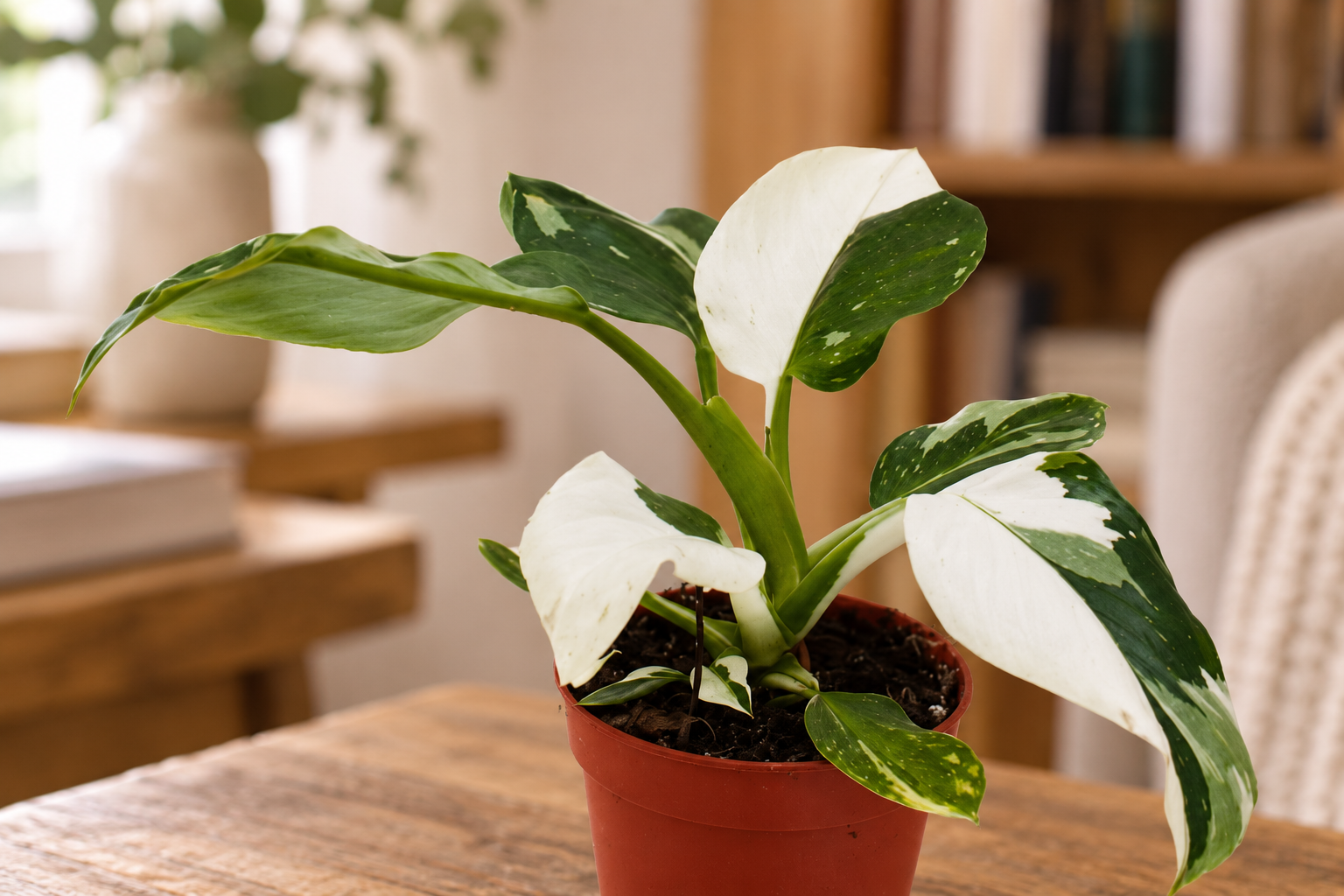
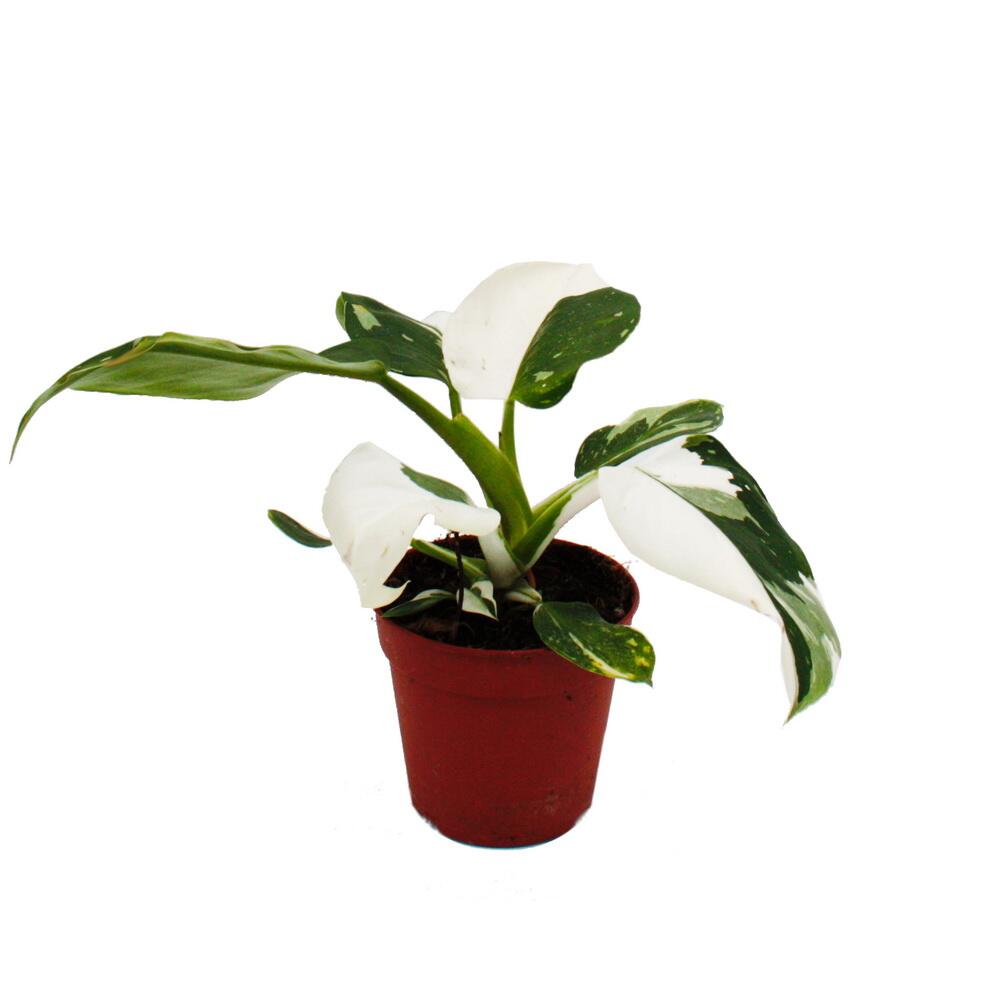
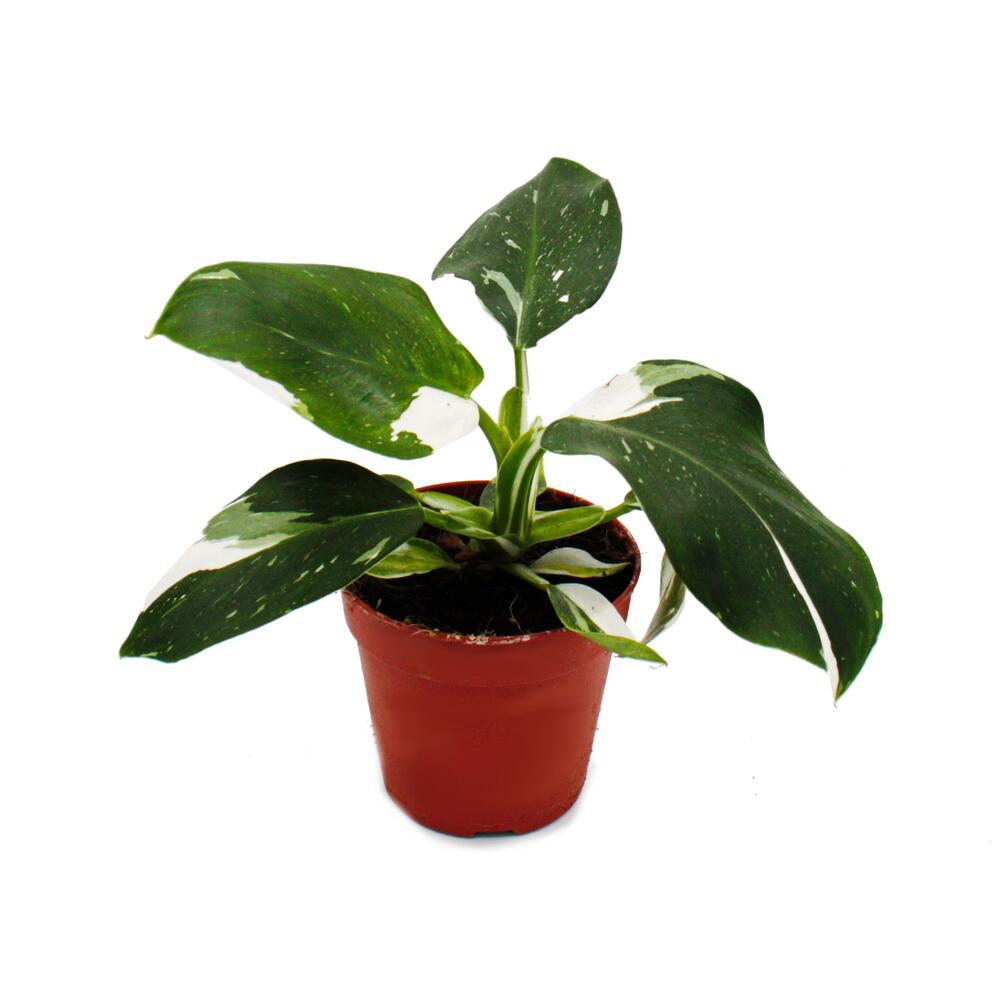
Good to know
Are the white areas a deposit?
No, they belong to the leaf markings. Check new discolouration, sticky patches and webbing separately.
Is every leaf equally white?
No. Pale and green areas differ between leaves; no fixed distribution is guaranteed.
Can it stay permanently on a dark shelf?
A bright, open shelf can suit it. A dark recess usually lacks the necessary daylight.
Should I feed larger white areas more heavily?
No. More fertiliser does not reliably change markings and may stress the small root space.
When does it need a larger pot?
When the root ball is densely rooted. Give only a little more pot space during active growth.
What does 20–25 cm total height mean?
The approximate height of the young delivered plant including the pot. Later development is separate.
Sources and editorial note
- Exotenherz: offer and original images (02/10/2026)
- RHS: Philodendron White Princess (02/10/2026)
- RHS: growing philodendrons (02/10/2026)
- NC State Extension: Philodendron (02/10/2026)
Shop offer, article number, GTIN, availability and original images checked directly on 02/10/2026. Specialist sources read directly. Shop cultivar name retained; no uncertain species placement or fixed later height added. Original images 1 and 2 checked; variable white leaf markings explained.