This plant at Exotenherz
Check the shop offer for current availability, price and what is included.
Check the selected shop offer for price, availability and delivery contents.
Your care table
| Topic | What to do | Why it helps |
|---|---|---|
| Position | Provide bright indirect light and protection from hot window sun. | Textured foliage should be well lit without overheating behind glass. |
| Temperature | Keep warm and avoid temperatures below about 15 °C. | Moon Valley is a warmth-loving houseplant. |
| Watering | Water evenly once upper soil begins drying. | The little roots like moisture but neither complete dryness nor constant wetness. |
| Drainage | Ensure clear pot holes and pour away leftover water. | Moist soil still needs air; standing water keeps the rootball too wet. |
| Humidity | Avoid very dry heated air; allow ventilation in a bright cabinet too. | This pilea appreciates higher humidity, but an enclosed wet space creates new problems. |
| Feeding | During growth feed moderately according to a suitable fertiliser label. | A small pot reacts sensitively to unnecessarily high salt concentrations. |
| Shoot care | Gently shorten individual tips if needed. | This encourages branching and keeps longer shoots more compact. |
| Repotting | Only when distinctly well rooted move to a little more space during growth. | Loose humus-rich substrate should retain moisture while draining well. |
Check the compost and pot weight. The care table explains how far the compost may dry.
Water only when needed. The water should reach the root ball without spilling over the rim.
Remove surplus water from the saucer or cachepot. Then return the plant to a suitable position.
Leaves like a tiny hilly landscape
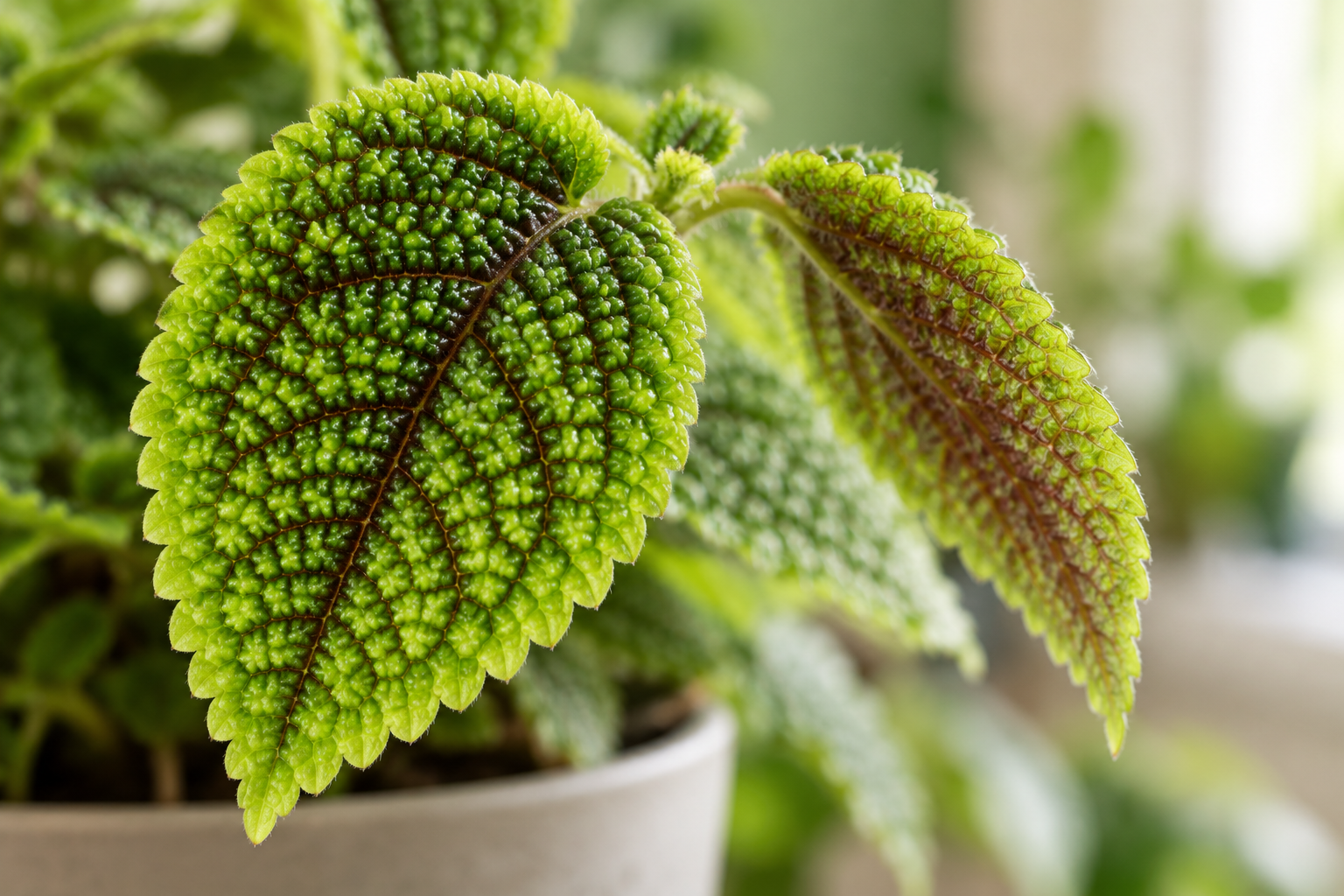
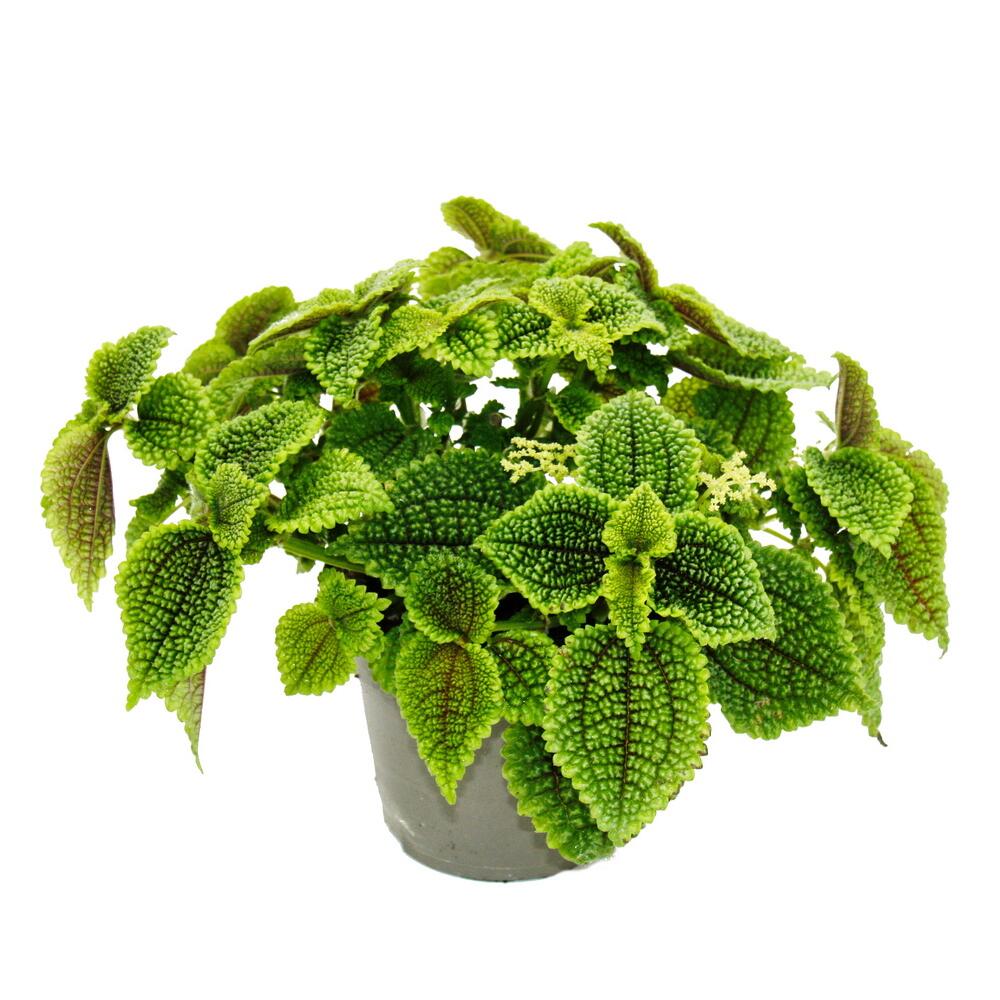
Moon Valley shows its distinctive feature even in a little pot. Surfaces rise markedly between sunken veins; pale green areas meet dark bronze to purple patches. Edges are toothed and young leaves unfold with their own little folds. One leaf thus almost resembles a landscape of hills and valleys. The pattern changes its impression with light without needing a flower. Position the plant so you can look down at it too. On a bright window console or in a well-lit plant cabinet the fine texture is particularly attractive.
A cultivar name with several species assignments
RHS lists Moon Valley as Pilea involucrata Moon Valley. Trade also uses Pilea mollis Moon Valley, whose RHS entry is listed as unresolved. The named selection Moon Valley is retained for this portrait; changing species assignment does not justify an additional identity. Pilea belongs to Urticaceae, the nettle family, and here is a tropical herbaceous houseplant. The species Pilea involucrata comes from Central and South America. The name friendship plant recalls the straightforward sharing of cuttings in suitable conditions. It does not mean the plant tolerates any room environment without care. Its warm moist growing conditions remain important.
Young foliage cushion rather than fixed final size
The current offer describes a 12 cm pot and approximately 15 to 20 cm total height. The clean original image shows the characteristic textured foliage; leaf number and branching can vary in living plants. RHS describes a later height around 30 cm as a guide. Older shoots may become longer and barer at the base, so form also depends on light and occasional shortening. Delivery height is therefore no permanent upper limit. When unpacking do not pull soft shoots by a leaf. Hold the pot, loosen the wrapper carefully and first check the rootball. An immediate move into a very large pot offers no advantage to a young pilea.
Brightness and warmth for delicate foliage
Moon Valley needs a bright position with indirect daylight. Hot midday sun behind glass may stress leaf surfaces; a slightly set-back position or light shading helps in summer. Deep in the room the brightness needed for compact branching is often missing. Keep the plant warm and avoid falling below about 15 °C. Cold air during ventilation and cold glass directly behind a pot deserve particular attention. A bright bathroom may suit if sufficient daylight is present. More humid air alone does not replace lighting. In a cabinet light must reach the plant without strongly heating the small space.
Keep moist but still let drain
As upper soil starts drying water the rootball evenly. The surface need not shine constantly, but the entire pot should not dry completely either. Lift it occasionally to learn the weight of a moist and a lighter rootball. After watering remove surplus from the cachepot. Loose humus-rich substrate makes this moisture-and-air balance easier. Overdense soil staying wet for long burdens roots just as repeated dry spells do. Very dry heated air may further affect foliage. A position away from the radiator and suitably higher room humidity are more useful than assuming one misting solves the problem permanently.
Support branching gently
Healthy shoot tips can be shortened carefully when needed to keep branching dense. Do this during active growth without removing all green surfaces. Suitable healthy shoot cuttings can form new plants in warm humid conditions, retaining the named selection. This is more helpful than seed sowing when specifically passing on the Moon Valley foliage. If the little pot is distinctly well rooted, provide slightly more room and fresh loose substrate in spring or summer. Feed moderately during growth and account for pre-fertilised soil. An exhausted or very dry rootball first receives suitable care, not extra fertiliser.
Follow more slowly in winter
With less daylight growth may decline and soil stays moist longer. Continue watering after checking rather than by the summer rhythm. Retain a warm bright position; this tropical pilea does not need an intentionally cold winter rest. Individual unattractive leaves may be removed while checking the cause of their damage. Brown edges may relate to dry air or disrupted water supply and are not a definite diagnosis of a single fault. Check leaf undersides for pests too. Small inconspicuous flowers are possible but normally do not determine indoor appearance. Fresh textured foliage and new branching give better feedback on care.
One plant, several views
Good to know
Is Moon Valley called involucrata or mollis?
RHS lists the named selection under Pilea involucrata. The trade assignment mollis also occurs; it is not counted as a second plant here.
Is the bumpy leaf surface damage?
The distinctly raised surface is typical of Moon Valley. New unusual spots or deposits should be checked separately.
Can it stand directly on the south side?
Hot sun behind glass can stress foliage. Choose a bright position with filtered light and suitable shading.
Does it need a terrarium?
A bright warm cabinet may help but is not essential. Humidity, light and ventilation must also work together inside.
How moist should soil be?
Evenly slightly moist; upper soil may start drying. Avoid complete dryness and standing water.
How does it stay bushy?
Sufficient light and gently shortening individual tips when needed support branching.
Can I raise it true to cultivar from seed?
Vegetative shoot cuttings are better suited to the named foliage. Seedlings do not automatically confirm this selection.
What changes in winter?
The plant stays warm and bright. With slower growth the rootball usually dries more slowly and needs water less often.
Sources and editorial note
- Exotenherz: offer and original images (03.10.2026)
- RHS: accepted Moon Valley assignment and features (03.10.2026)
- NC State: Pilea involucrata and indoor care (03.10.2026)
- RHS: current Pilea cultivation (03.10.2026)
Shop offer, article number, GTIN, availability and original images checked directly on 03.10.2026. Specialist sources read directly. RHS involucrata Moon Valley accepted; mollis Moon Valley unresolved. No second identity. Texture checked against clean original image.