This plant at Exotenherz
Check the shop offer for current availability, price and what is included.
Check the shop for the price, current availability and what is included.
Your care table
| Topic | What to do | Why it helps |
|---|---|---|
| Light | Very bright and sunny after acclimatisation. | Compact form needs sufficient brightness. |
| Water | Sparingly during active growth after complete drying. | Plump storage leaves need no fixed weekly appointment. |
| Compost | Very well-drained and mineral-rich. | Long-lasting moist soil raises rot risk. |
| Drainage | Use a pot with drainage and empty the cover pot. | Standing water is unsuitable. |
| Leaf renewal | Initially observe old shrinking leaves. | The new generation may take reserves from older leaves. |
| Fertiliser | Only weakly dosed during growth. | Do not override resting phases with nutrients. |
| Winter | Bright, frost-free and dry during rest. | Pot cultivation is not treated as winter-hardy. |
| Checks | Inspect soft translucent leaf bases and pests. | Distinguish natural leaf renewal from damage. |
Check the compost and pot weight. The care table explains how far the compost may dry.
Water only when needed. The water should reach the root ball without spilling over the rim.
Remove surplus water from the saucer or cachepot. Then return the plant to a suitable position.
When leaves look like split stones
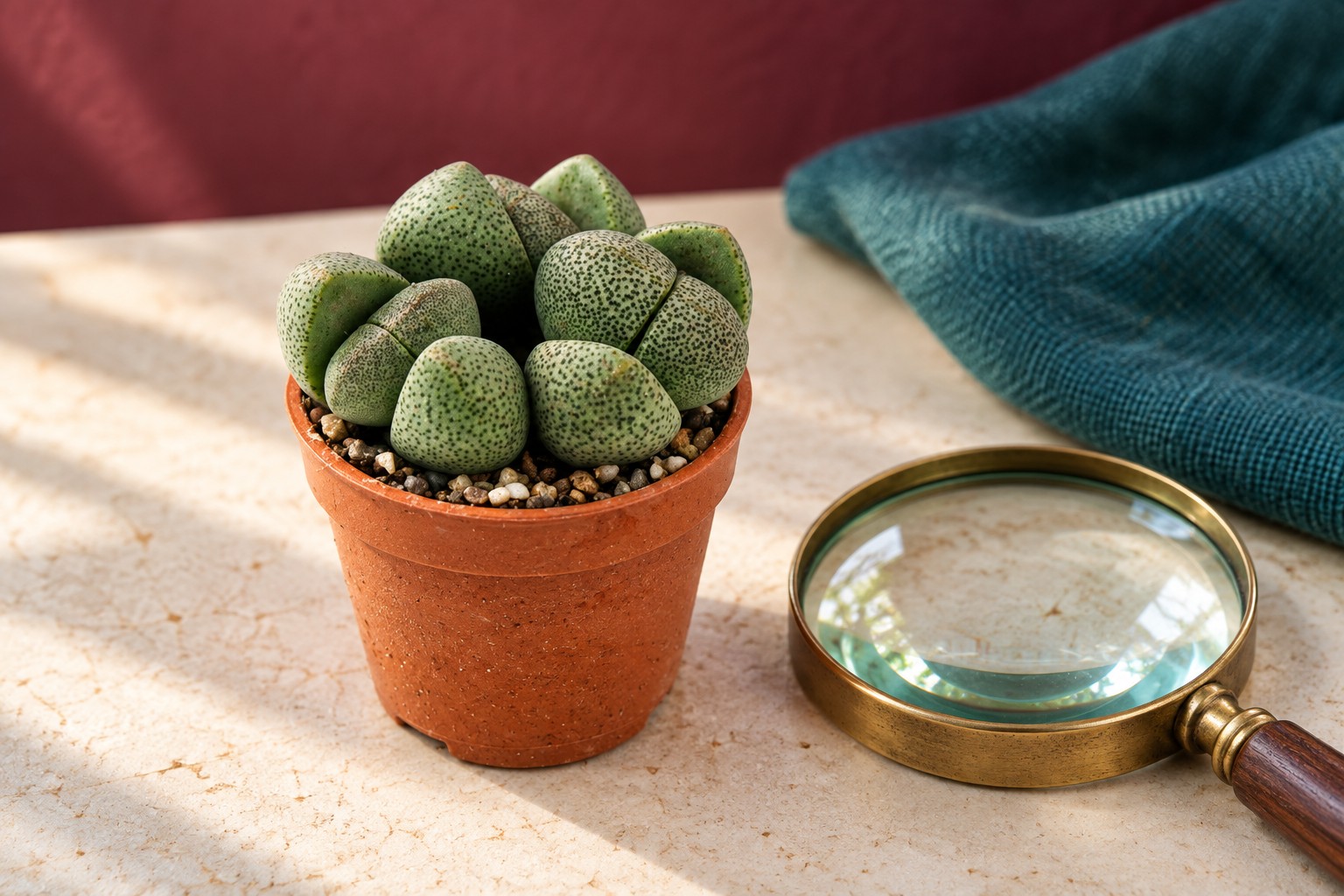
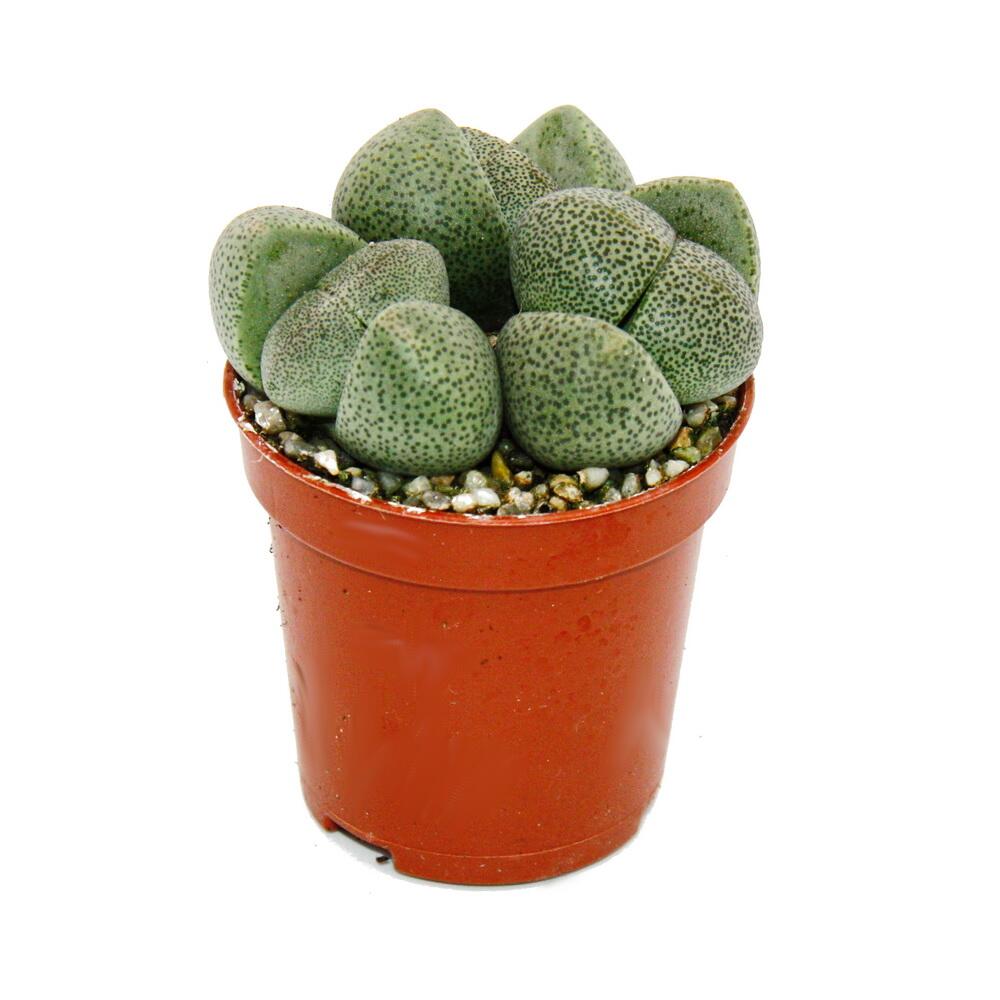
Pleiospilos nelii forms thick grey-green leaf pairs with dark dots. A central cleft divides the halves and makes the plant resemble a small split stone. It belongs to the ice-plant family and comes from the southern Cape region of South Africa. Sharing the German common name living stone does not make it botanically a Lithops species. The separate genus Pleiospilos has its own growth form. Watching the leaf pairs over time reveals which leaves are developing and which slowly give up their reserves.
A small offer with plenty of storage tissue
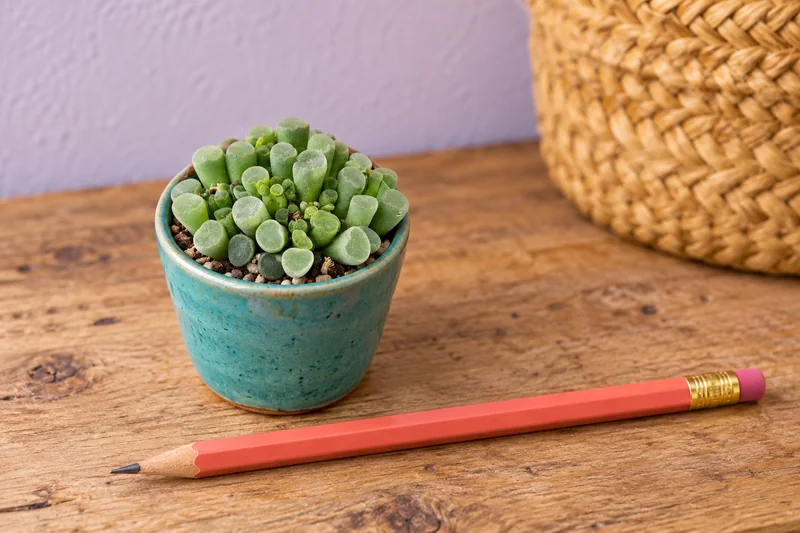
The shop states a 5.5 cm pot and about 6 cm overall height at roughly two years of age. The original photograph shows several speckled heads. Number and shape may naturally differ. Its low height should not tempt you to put it in a large constantly wet decorative bowl. A suitable small pot makes checks easier. Its camouflage shows well among other stones, but thick top dressing must not completely hide the root ball and plant base. The pot needs to remain accessible for care.
Plenty of light and root space that dries
A very bright position matters. Build up direct sun gradually after unpacking so the surface does not suddenly burn. Outdoors, the small pot needs protection from prolonged rain. Indoors, an airy well-drained mineral-rich mix is sensible. The container needs a drainage hole; excess water must escape. A closed moist glass landscape contradicts this cultivation aim. Although the plant occurs in dry landscapes, small pot cultivation belongs in a bright frost-free position in winter, not unprotected in a cold wet bed.
Water sparingly and respect the growth phase
During active growth, supply water sparingly again only after complete drying. For its cultivation under glass, the RHS describes cautious amounts from early summer to late autumn and dry conditions outside that period. This is guidance to compare with the plant’s actual condition. A weekly routine from a general shop recommendation is unsuitable here. When leaves remain plump and the pot is still moist, do not add water. Heat or winter rest may reduce demand markedly. Standing water remains unsuitable regardless of season.
Do not override leaf renewal with extra water
New leaf pairs develop from the centre while older leaves may gradually recede. One shrinking outer leaf therefore does not prove water shortage. Observe the whole plant and check the root ball. Do not forcibly pull off old leaves that are still alive. If many generations stay permanently plump on top of each other, critically review previous water amounts. Translucent soft tissue or a soft base also warrants checks. The correct response starts by distinguishing natural renewal, thirst and effects of wetness. More water is not the solution for all three situations.
Flowers and care without unnecessary interventions
Strong plants may develop large yellowish to orange flowers. No particular flowering period or flowering delivery is promised for the small specimen. During growth, restrained weakly dosed feeding following product instructions is enough; pause during rest. Repot only when needed and handle roots gently. Inspect flowers and sheltered gaps especially for pests. Propagation is possible through seed and existing suitable side shoots. For beginners, observing a complete annual cycle is more useful than early division of a still small healthy plant.
One plant, several views

Good to know
Is Pleiospilos a Lithops species?
No. Both are called living stones, but belong to different genera.
Must I immediately water shrinking outer leaves?
Not automatically. Older leaves may give up reserves during renewal. Check the whole condition and soil.
Can I give a little water every week?
A fixed weekly rhythm is unsuitable. First assess growth phase, root-ball dryness and leaf condition.
Where does Pleiospilos nelii come from?
The specialist source states the southern Cape region of South Africa. Namibia is not adopted as a confirmed native home for this species.
Sources and editorial note
- Product and delivery contents: Exotenherz
- Royal Horticultural Society: plant and care knowledge
- Royal Botanic Gardens, Kew: botanical classification
Sources checked: 15 September 2026. Product information and delivery contents follow the linked shop offer. Care has been checked against the stated specialist sources and remains subject to plant condition, position and season.