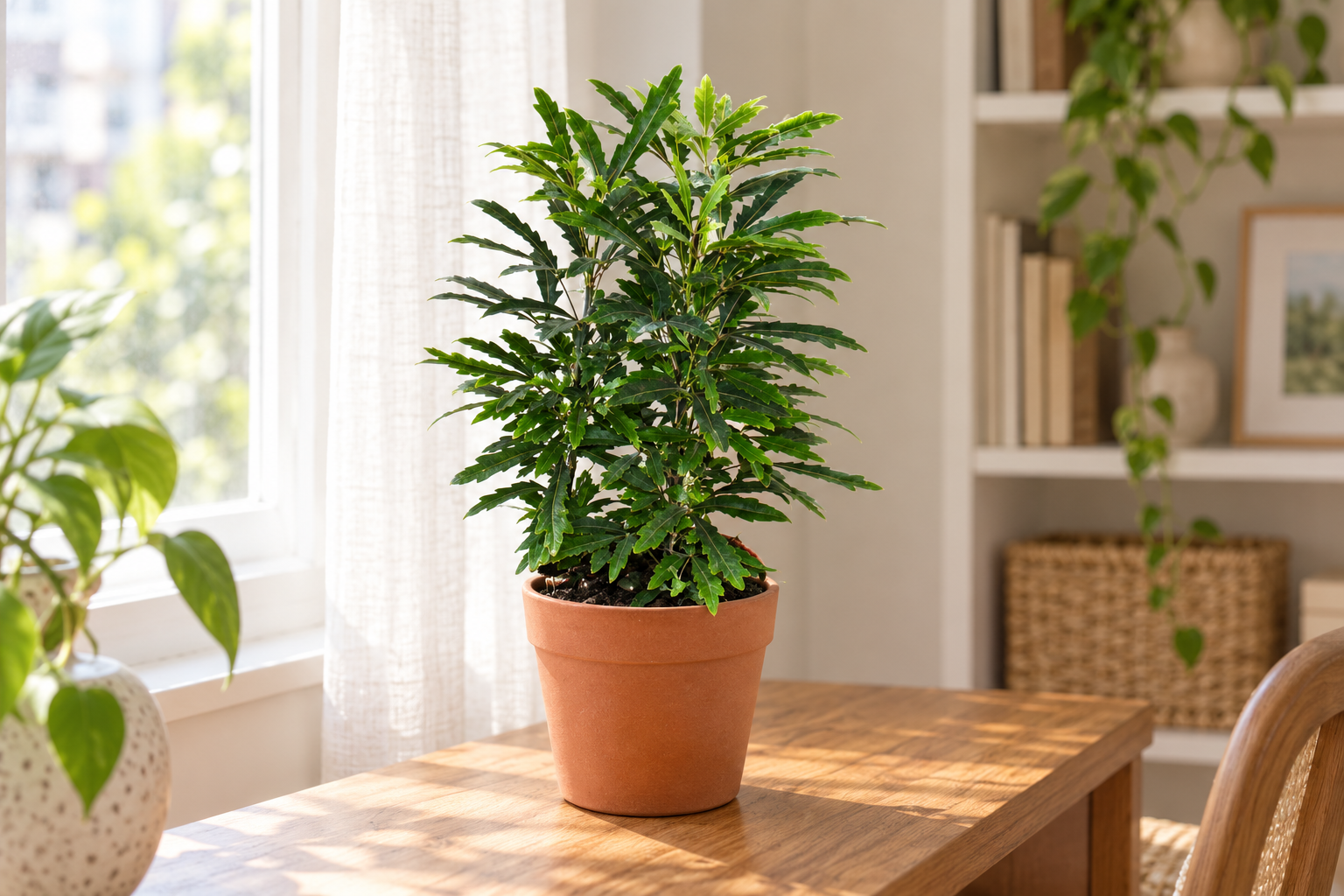
This plant at Exotenherz
Check the shop offer for current availability, price and what is included.
Product and delivery details are given in the individual offer.
Your care table
| Topic | What to do | Why it helps |
|---|---|---|
| Position | Keep bright with indirect or filtered daylight, protected from hot glass. | Narrow foliage needs light and a gentle transition after shipping. |
| Watering | Water evenly when the surface has slightly dried; do not dry out the young ball. | The young potted plant benefits from reliable moisture without constantly saturated soil. |
| Drainage | Drain the growing pot and remove outer-pot residual water. | Moist soil and root-zone air go together. |
| Room climate | Protect against cold draughts, avoid direct heating warmth and provide suitable humidity. | Consistent protected climate suits tropical origin. |
| Compost | Choose peat-free structurally stable humus-rich compost with reliable drainage. | The upright shrub needs an aerated ball that can be supplied evenly. |
| Feeding | Feed sparingly during active growth according to the label, reducing demand in winter. | Slow growth needs fewer additional nutrients than new shoots. |
| Repotting | Only when densely rooted, gently move into slightly more space. | Unnecessary frequent moving stresses delicate shoots and small roots. |
| Checks and pruning | Gently check leaflets; perform necessary cuts with clean tools and gloves. | Pests also sit on stalks; plant contact may irritate sensitive skin. |
Check the compost and pot weight. The care table explains how far the compost may dry.
Water only when needed. The water should reach the root ball without spilling over the rim.
Remove surplus water from the saucer or cachepot. Then return the plant to a suitable position.
One green leaf has many narrow parts
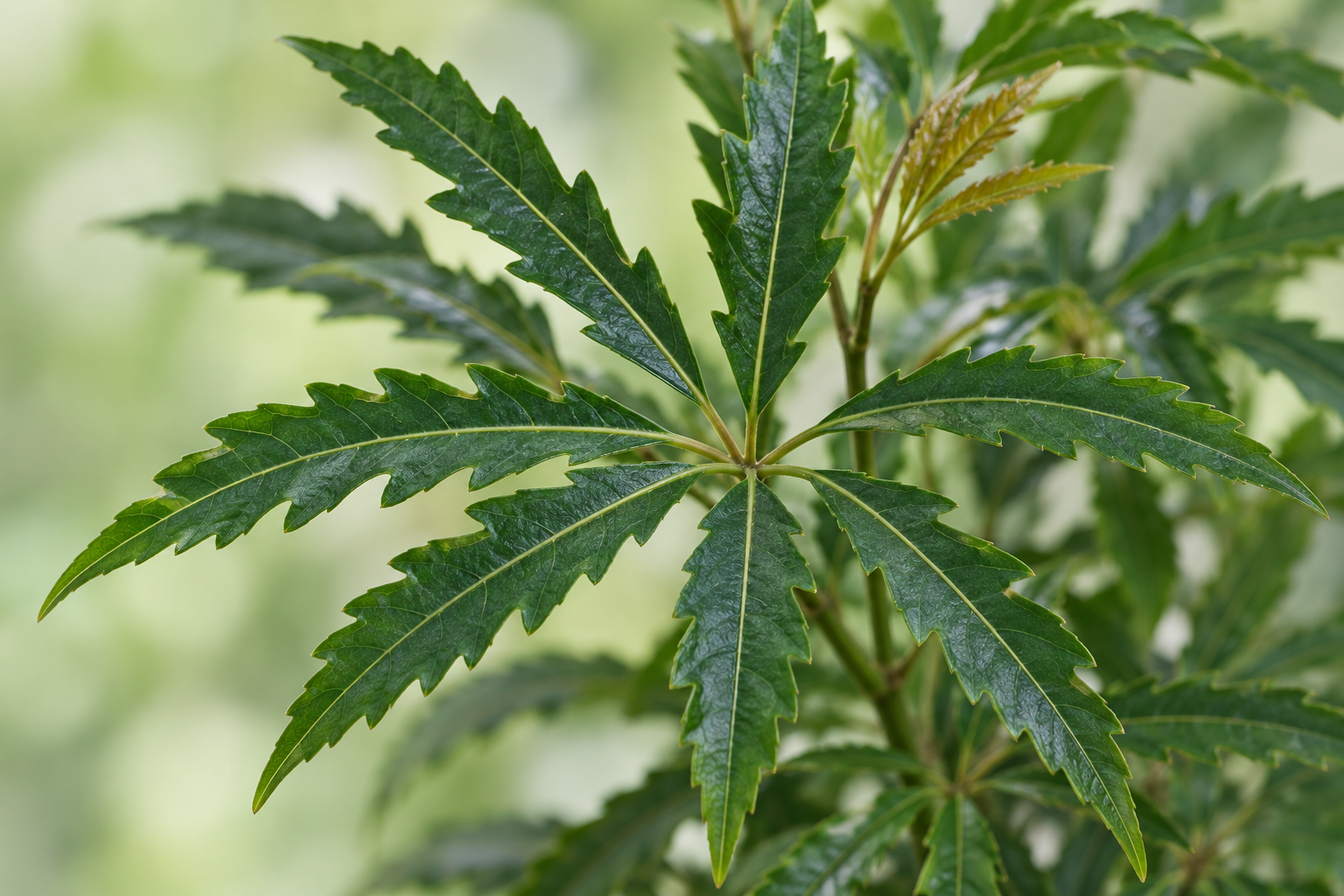
Follow a leaf stalk to its end. Narrow elongated leaflets spread like fingers around a shared attachment. Irregularly toothed edges enliven the surface even though the offered plant has green foliage. The clean original shows many such groups on slender upright shoots. From a distance a fine open silhouette appears; close up individual teeth and thin stalks become visible. A calm bright wall behind reveals this structure. It suits a plant position where foliage stands free instead of being compressed into a tight corner.
Dizygotheca and Plerandra denote the same species
The offer states Dizygotheca elegantissima. Kew’s currently accepted name is Plerandra elegantissima; Schefflera elegantissima and Aralia elegantissima also belong to older names of the same species. Those older names refer to the same species. False aralia belongs to the aralia family from southeastern New Caledonia. Palmate foliage explains German Fingeraralie but does not make it a smaller version of ordinary umbrella plant. Both have differently shaped leaflets and their own botanical identities. No cultivar is added here: the current offer names the green species form. Fine young foliage remains the description and image starting point.
Young delivery form and its later change
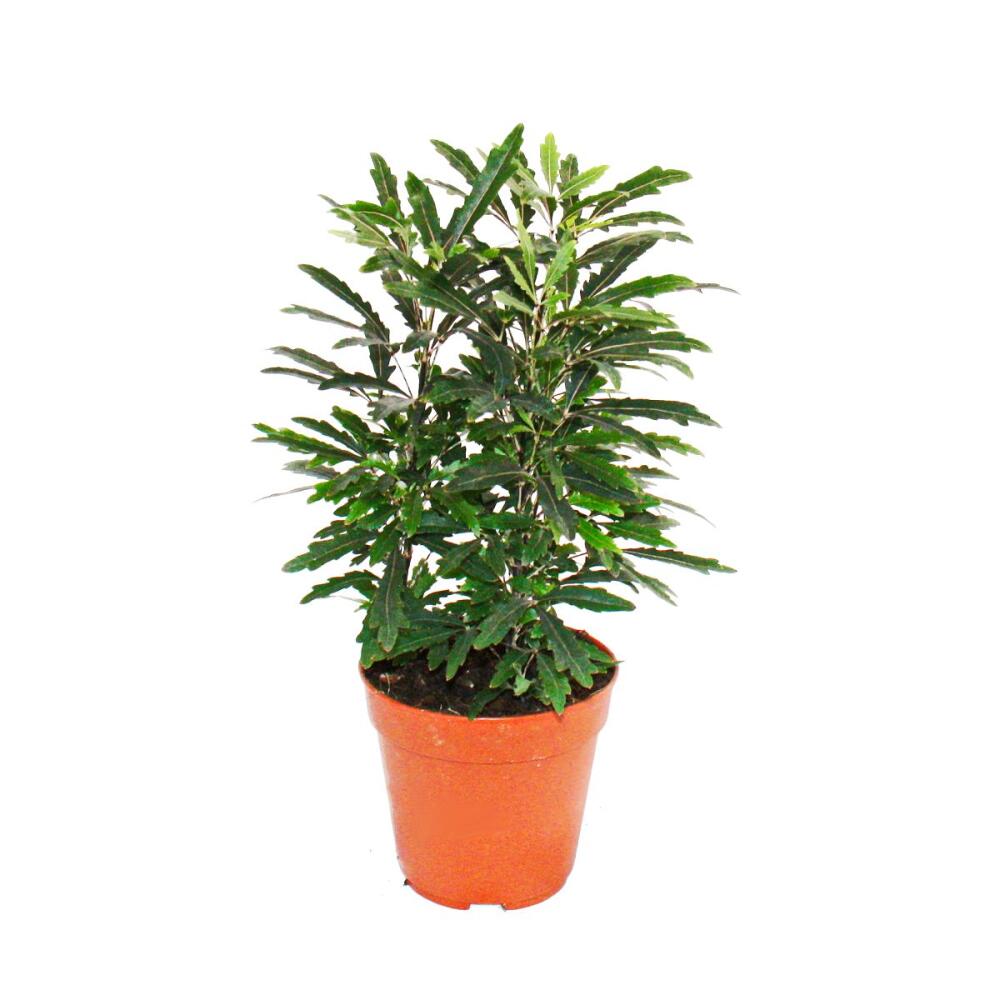
Currently one plant in a 12 cm pot at approximately 25 to 30 cm total height is offered. That describes the young potted plant including container, not a permanent maximum height. A much larger shrub may develop with age. Foliage also changes: adults make broader stronger leaflets than the narrow juvenile form. Different leaf shapes may even coexist. Such change is therefore not automatically evidence of a wrong plant. While unpacking hold the pot and release packaging without using individual shoots as handles. Initially give the young false aralia a suitable calm place where root ball and fine stalks remain accessible.
Light behind a gentle filter
A bright position with indirect daylight supports indoor cultivation. Do not suddenly impose hot direct sun behind glass after transport; a light curtain can distribute window light. Fine foliage should keep enough distance from glass. A deep dark shelf may protect it but offers too little light for reliable development. A place you can observe for several weeks is practical: new growth, leaf position and use become visible under similar conditions. Cold ventilation air is not directed through the plant. A radiator immediately below foliage changes climate more than pleasant room temperature first suggests.
Reliably supply the small ball
Regularly feel whether top soil has slightly dried. Then water slowly so the existing ball receives water evenly. Excess drains through the inner pot and is removed from the decorative container. The young plant is neither kept dry for long nor placed preventively into wet soil daily. Adult outdoor-plant drought tolerance in warm regions does not instruct care for a small indoor delivery ball. Pot size and actual conditions remain decisive. In winter adjust intervals when less water is used. With hanging or falling foliage first check moisture, light and airflow together instead of automatically adding water.
Gently care for fine shoots
Humus-rich structurally stable compost with free drainage combines even supply with root air. Moving into slightly more space makes sense only when the existing ball is densely rooted. Support pot and ball rather than pulling the thin crown. During active growth feed moderately according to the label, considering pre-fed compost. Remove dust carefully; vigorous rubbing or drawing narrow leaflets through fingers does not suit their fine shape. If cutting later becomes necessary use clean tools and gloves. Plant contact can irritate sensitive skin. This ornamental plant is not recommended for eating.
Winter observation instead of rigid schedules
During the lower-light season actual plant behaviour matters. Fewer fresh shoots may accompany reduced consumption; still check the ball regularly. Suitable room arrangement or a humidifier can support sufficient humidity. Brief misting alone does not permanently change room climate. Occasionally inspect stalk bases and undersides: scale insects, mealybugs or mites may appear there. Assess individual damaged leaflets specifically, whereas sudden extensive loss calls for closer checks. Indoor flowers are rare and not included in delivery. The young plant’s appeal lies in fine green leaf structure, allowed to follow its own course as it grows.
One plant, several views
Good to know
What is the correct botanical name?
The currently accepted name is Plerandra elegantissima. Dizygotheca elegantissima, the offer name, and Schefflera elegantissima are synonyms of the same species.
Is it a small Nora umbrella plant?
No. It is another species with especially narrow toothed leaflets; similar German names do not mean a shared cultivar.
How large is the young plant delivered?
The offer gives a 12 cm pot and about 25–30 cm total height. Later development may go far beyond this.
Why may leaves become broader later?
The species changes foliage with age. Adult leaves have broader leaflets than the narrow juvenile form.
Should the small ball stay dry for long?
No. With slightly dried surface water evenly and drain excess.
Is occasional misting enough against dry room air?
It changes humidity only briefly. A suitable protected position and room climate help more reliably.
Does it need a large new pot each year?
Not automatically. With dense rooting move gently into suitably slightly more space.
Are flowers included in delivery?
No. A young green foliage plant is described; indoor flowers are rare and not promised.
Sources and editorial note
- Exotenherz: offer and original photographs (03.10.2026)
- RHS: Schefflera elegantissima, protected container culture (03.10.2026)
- NC State Extension: Plerandra elegantissima, juvenile and adult foliage (03.10.2026)
- Kew POWO: Plerandra elegantissima, accepted name and synonyms (03.10.2026)
- UF/IFAS: Dizygotheca elegantissima, leaf development and habit (03.10.2026)
Shop offer, article number, GTIN, availability and originals directly checked on 03.10.2026. Specialist sources directly read. Plerandra elegantissima is the accepted species; shop name Dizygotheca elegantissima and Schefflera and Aralia elegantissima are synonyms, not new identities. Kew directly read using web.open; local403 fetch not presented as full-text evidence. Young potted-plant care separated from drought tolerance of adult outdoor specimens.