This plant at Exotenherz
Check the shop offer for current availability, price and what is included.
Product and delivery details are given in the individual offer.
Your care table
| Topic | What to do | Why it helps |
|---|---|---|
| Light | Place in very bright to sunny light and gradually acclimatise to stronger direct sun. | The leafy crown needs light; a sudden change stresses a specimen previously grown under protection. |
| Warmth | Keep warm throughout the year, at a minimum of 15 °C in winter; check temperature at the pot. | Cold panes and floors can chill sensitive plant parts. |
| Water | During growth, water once the substrate has dried; check moisture deeper down. | A dry surface does not prove a dry root ball. A permanent water reserve remains unsuitable. |
| Substrate | Use an open, well-structured potting mix and a container with free drainage. | After watering, the root area should regain air and be able to dry. |
| Nutrients | During active growth, feed moderately according to the product instructions; pause in winter. | Nutrients follow growth and cannot replace a suitable position. |
| Winter | Keep bright, airy and dry at a minimum of 15 °C; do not continue a rigid summer watering routine. | Little growth and wet soil do not suit the dry winter period. |
| Pruning and repotting | Prune sparingly, use only a slightly larger pot when needed and wear gloves. | Soft wood is sensitive to injuries; milky sap can irritate skin and eyes. |
| Checks | Check leaf undersides, shoot tips, trunk firmness and drainage together. | Spider mites or wet, cold roots need different action from a dry root ball. |
Check the compost and pot weight. The care table explains how far the compost may dry.
Water only when needed. The water should reach the root ball without spilling over the rim.
Remove surplus water from the saucer or cachepot. Then return the plant to a suitable position.
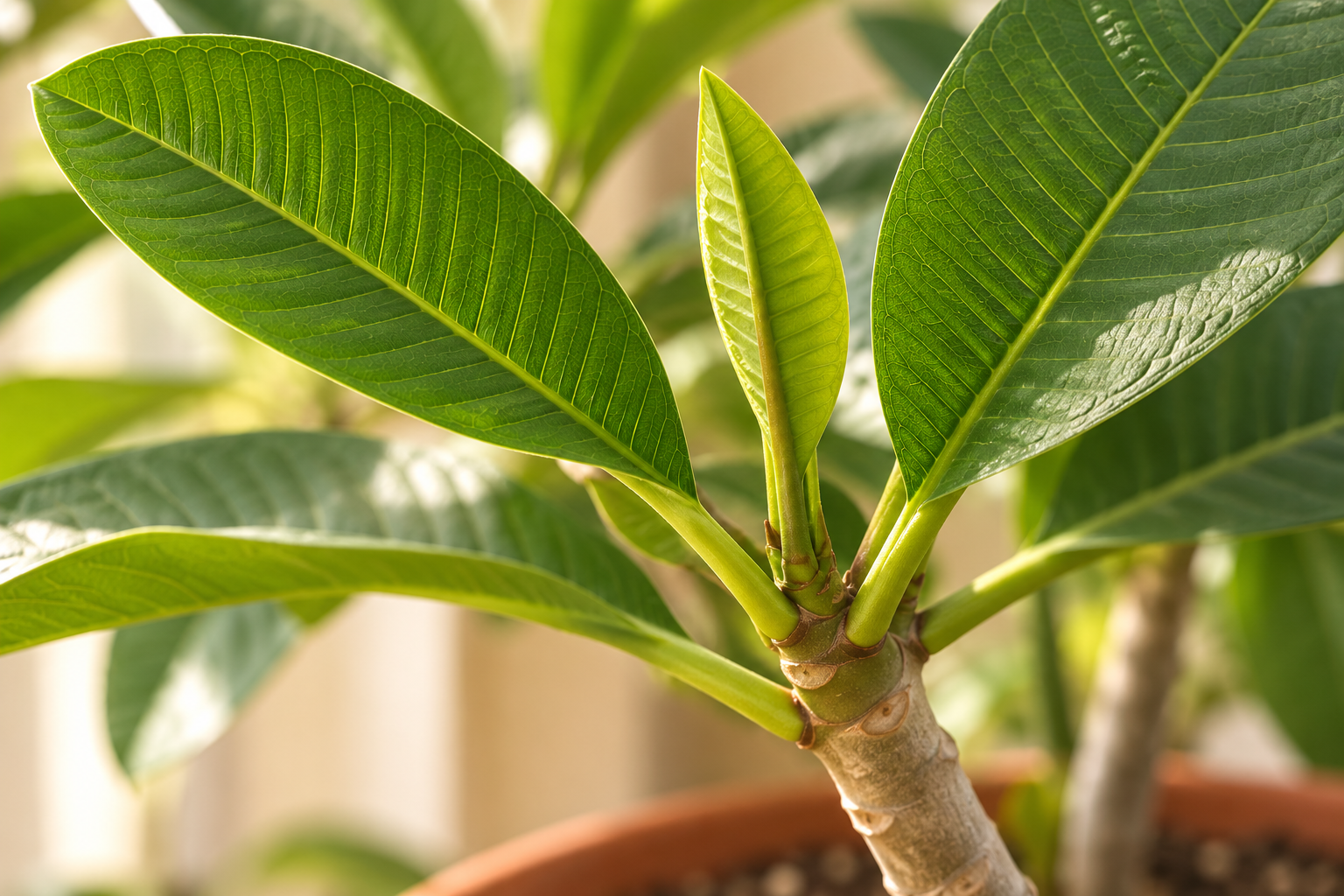
Branch tips with their own green crowns
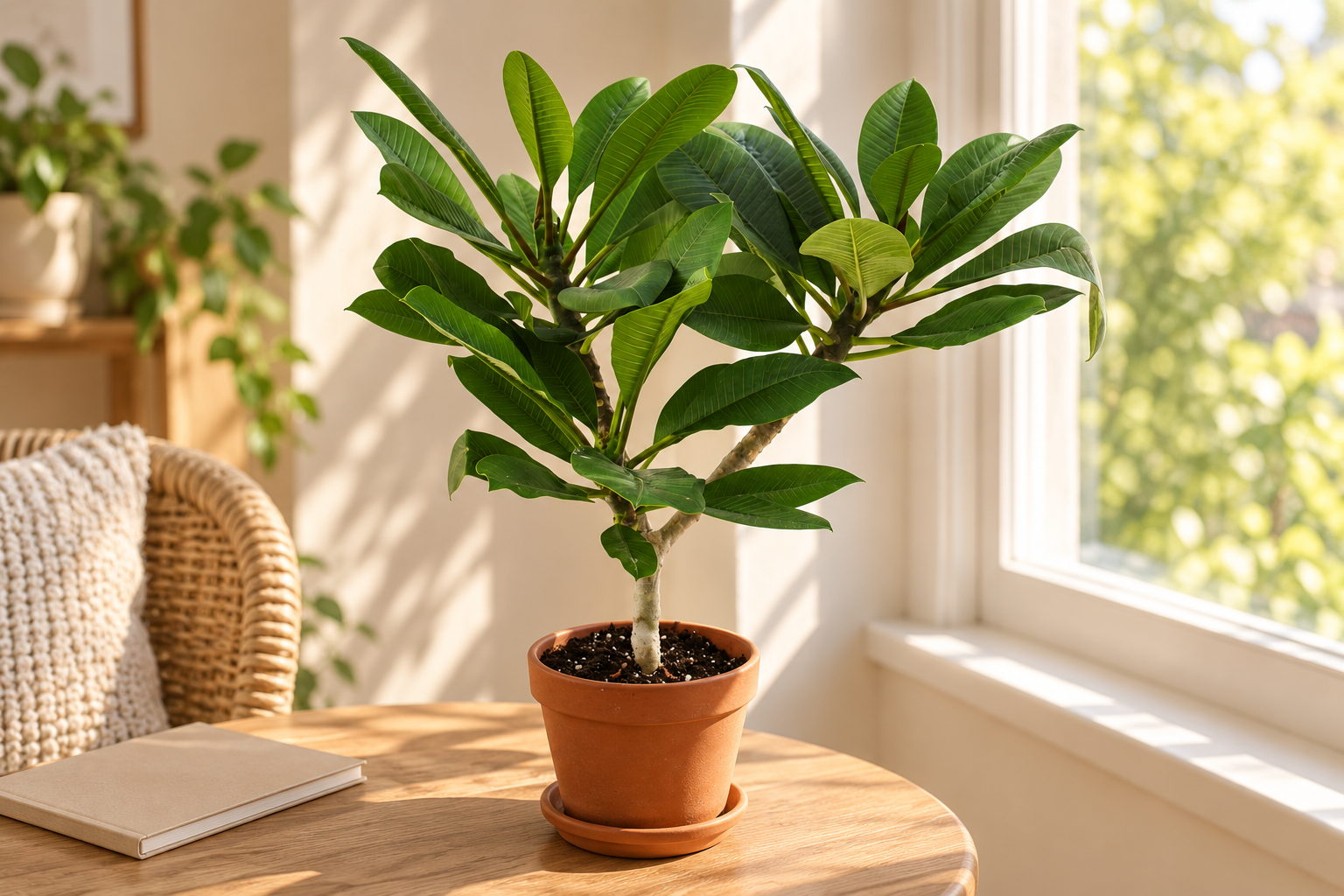
With this young plumeria, it is worth following the trunk with your eyes first. Stronger branches develop from the pale grey upright base, with foliage gathering at their ends. The elongated leaves have smooth edges and a clearly visible midrib with many side veins. Air remains between trunk and leaf groups; this is precisely what makes the silhouette interesting. A low table in a genuinely bright, warm room lets you appreciate it close up. Give the crown enough space at the sides so that long leaves are not constantly pressed against a pane, curtain or people walking past.
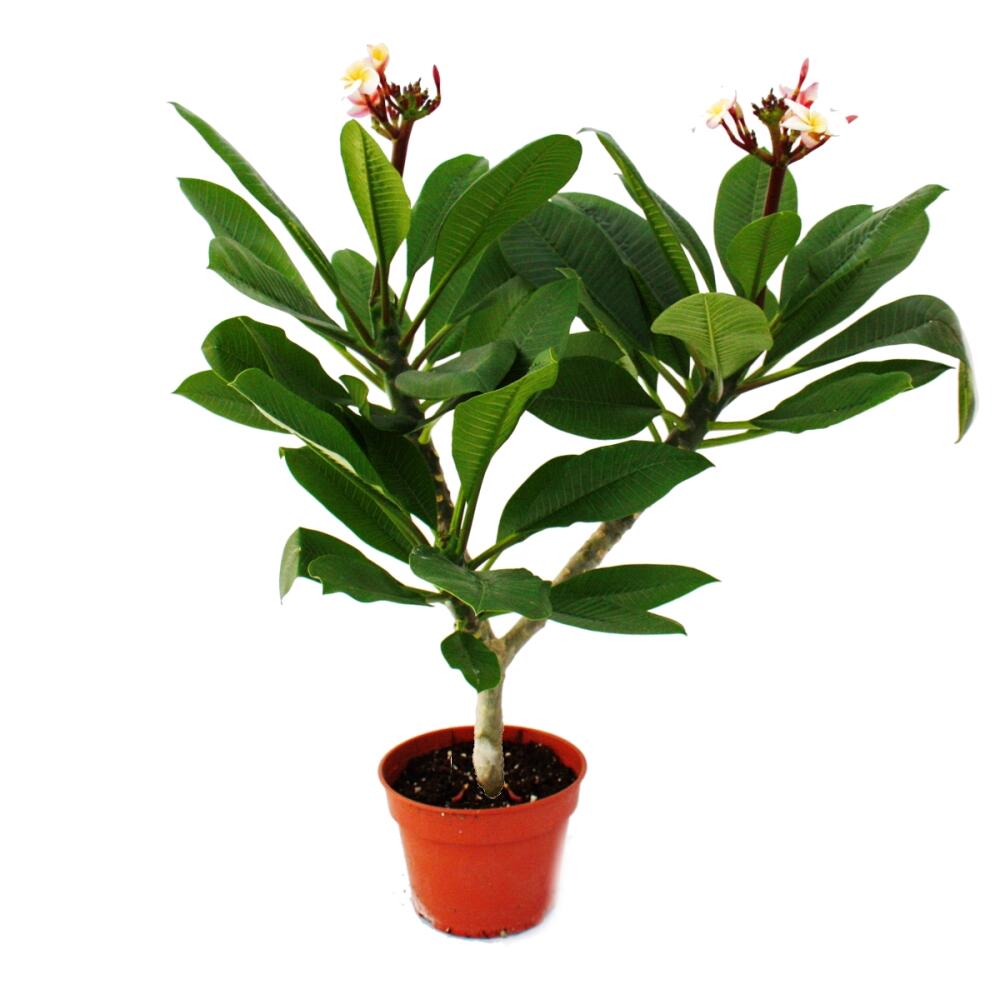
Frangipani with deliberately unspecified flower colour
Plumeria, frangipani and temple tree are names under which this plant group appears in trade. This particular offer specifies neither species nor cultivar. The plant therefore receives no additional botanical name here that its delivery information does not support. Its flower colour remains a surprise. Flowers in the original photograph show one possible appearance, but determine neither the colour of a specimen delivered later nor whether it is flowering at delivery. Choosing this group lets you first support healthy trunk and leaf development. A green leaf or similar shop photograph cannot reliably select a particular flower colour.
Room for the young delivery plant to develop
The shop text specifies a 17 cm pot and approximately 40–50 cm total height. The height includes the container and is not a later mature indoor size. Plumerias can grow considerably under other cultivation conditions; this does not establish a fixed height for this unnamed material in a living room. Plan space around the actual specimen and expand it when needed. A stable container helps when further leaves broaden the crown. A decorative outer pot needs an accessible inner-pot arrangement with drainage. The graphic trunk shape remains most visible when it does not disappear among many closely spaced neighbouring plants.
Check light and warmth together
Choose a very bright to sunny position with reliable warmth. After shipping or a period of lower light, increase direct sun carefully. The aim is a bright position where leaves receive enough light and the pot does not become extremely hot or cold unnoticed. Midday sun behind a broad pane can be strong; check air movement and temperature at the container too. The offered plumeria needs a minimum of 15 °C. Especially in winter, the area directly beside a cold pane can be much cooler than the rest of the room. A dark, warm corner therefore meets its needs no better than a bright, cold stairwell.
Water only after drying
During the growing phase, water when the substrate has dried. Check more than the thin upper layer of soil: pot weight and moisture deeper down help assess whether the root ball is still wet. Apply water slowly to the soil and let it drain fully. Water left in the outer pot undermines this care, even if only a little was poured from above. An open, well-structured mix with suitable mineral components helps drainage. During active growth, feed moderately according to the instructions. If the plant is resting, newly in pre-fertilised soil or has unusually soft shoots, extra fertiliser is not a suitable immediate response.
Allow a dry winter period
For winter, warmth, brightness and a dry, airy environment belong together. Keep the plumeria at a minimum of 15 °C, reduce watering considerably and do not feed during this period. A constantly wet root ball is especially unsuitable when growth is limited. Winter care is therefore not simply a scaled-down summer watering routine. Observe plant and pot regularly without trying to force missing growth with water. When growth resumes in spring under good light and warmth, you can adjust supplies gradually. A calendar date alone does not decide whether a still-resting specimen is using water again.
Handle the soft branches carefully
A plumeria does not need preventive hard pruning to produce prettier branching. Its soft wood can rot at cuts. Remove damaged material selectively using clean tools; professional advice is sensible for necessary major work. Wear gloves and keep escaping milky sap away from skin and eyes. When repotting, support the young trunk, retain the original planting depth and allow only moderately more root space. Spider mites can become a problem under glass, so check leaf undersides and shoot tips too. Soft, dark areas or wilting foliage in wet soil first call for checks of warmth, drainage and roots.
One plant, several views
Good to know
What colour will my plumeria flowers be?
Colour is unspecified for this offer. An original photograph or leaf shape does not guarantee a particular future flower colour.
Is a flowering plant promised?
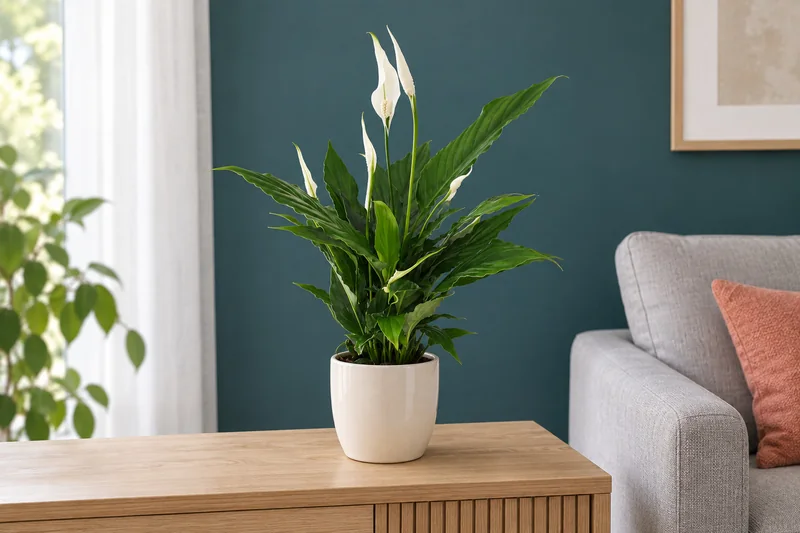
No. The original flower is an example. The AI scene deliberately shows a vegetative plant, and this portrait makes no promise of flowering delivery.
Is 40–50 cm its eventual mature height?
No. This is the stated total height of the offered plant including its 17 cm pot. No fixed mature indoor height is specified for the unnamed offer group.
Can it winter cool like some cacti?
This plumeria requires a minimum of 15 °C. A dry winter period does not authorise cold or frosty quarters.
Should I water again as soon as the surface is dry?
Check the root ball and container weight too. During growth, water after drying, allow free drainage and take the dry winter period into account.
Must I prune for more branches?
Preventive hard pruning is not a general requirement. Soft wood can rot at cuts; make necessary interventions selectively and protect yourself from irritating milky sap.
Sources and editorial note
- Exotenherz: complete own offer and unchanged associated original gallery
- RHS: complete frangipani guide on light, pot cultivation, water, dry warm winter phase and latex (directly read 04./05.10.2026)
Sources checked: 4/5 October 2026. The complete shop offer and associated original gallery were read and viewed; care was compared directly with the listed primary sources. Total height describes the offered young plant including its container; later growth guidance remains a separate reference.