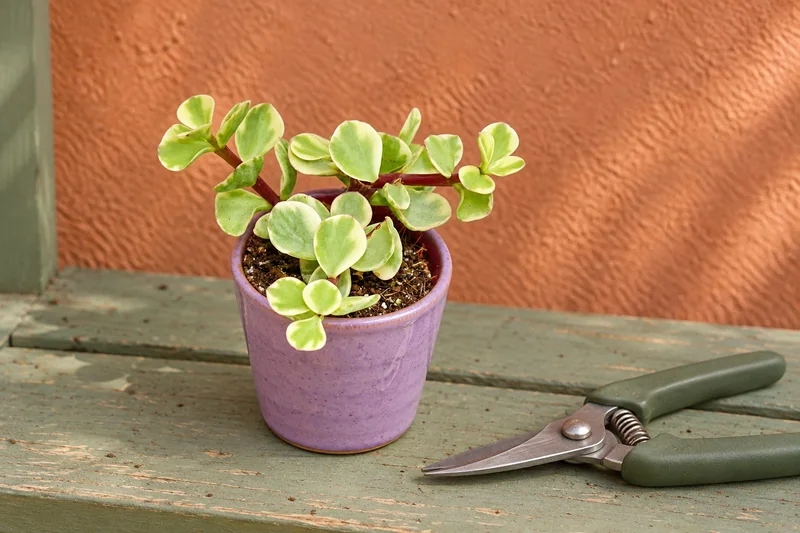
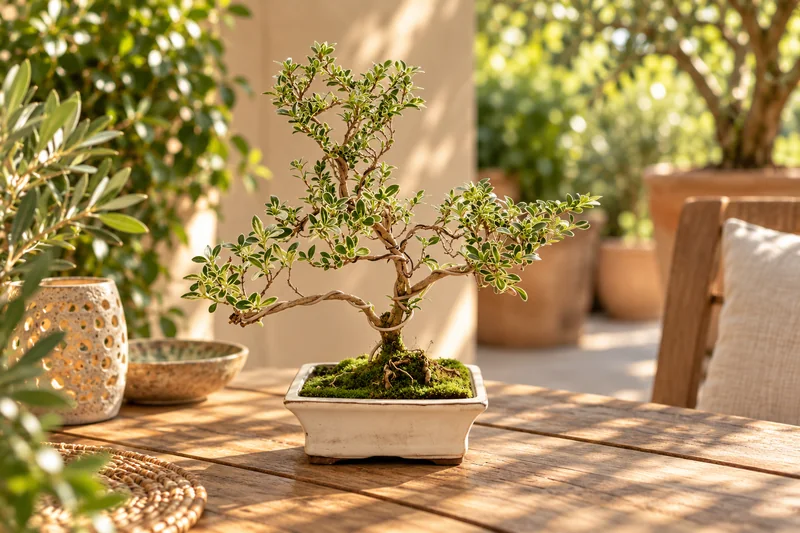
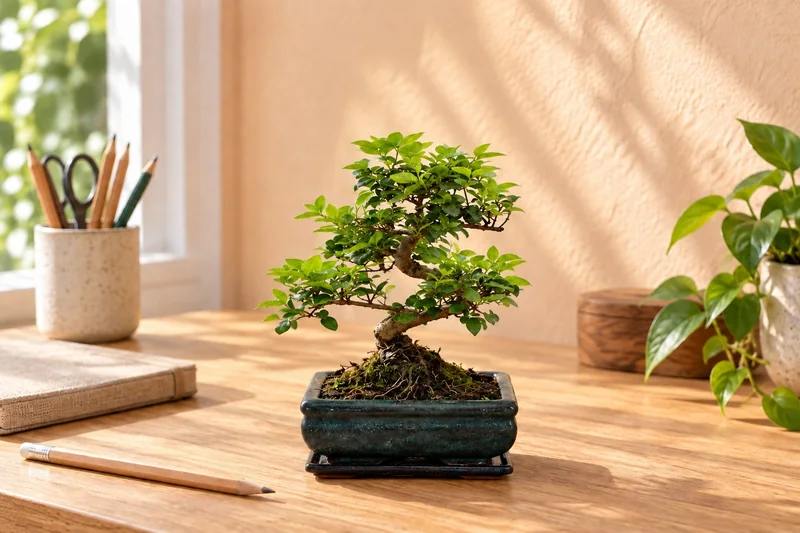
This plant at Exotenherz
Check the shop offer for current availability, price and what is included.
Product and delivery details are given in the individual offer.
Your care table
| Topic | What to do | Why it helps |
|---|---|---|
| Light | Very bright place; build intense sunshine gradually. | Lower green branches also need usable daylight. |
| Water | Let the ball dry between supplies and actually check it. | Leaves and shoots store reserves, but wet roots still need air. |
| Drainage | Water slowly, drain freely and empty the saucer. | The shallow bowl should not permanently stand in water. |
| Compost | Very freely draining structurally stable succulent or bonsai mix. | Coarse mineral parts hold air pores open in small root space. |
| Nutrition | Feed moderately during visible growth according to the label. | Little winter growth needs correspondingly less nutrition. |
| Pruning | Shorten individual new shoots above a leaf pair. | This accompanies branching and open crown shape. |
| Handling | Carry by container and do not force branches to bend. | Fleshy branches are fragile despite their tree-like impression. |
| Winter | Keep bright and frost-free; adapt water to growth. | Do not treat this species like a native hardy garden bonsai. |
Check the compost and pot weight. The care table explains how far the compost may dry.
Water only when needed. The water should reach the root ball without spilling over the rim.
Remove surplus water from the saucer or cachepot. Then return the plant to a suitable position.
A tree between small leaf pairs
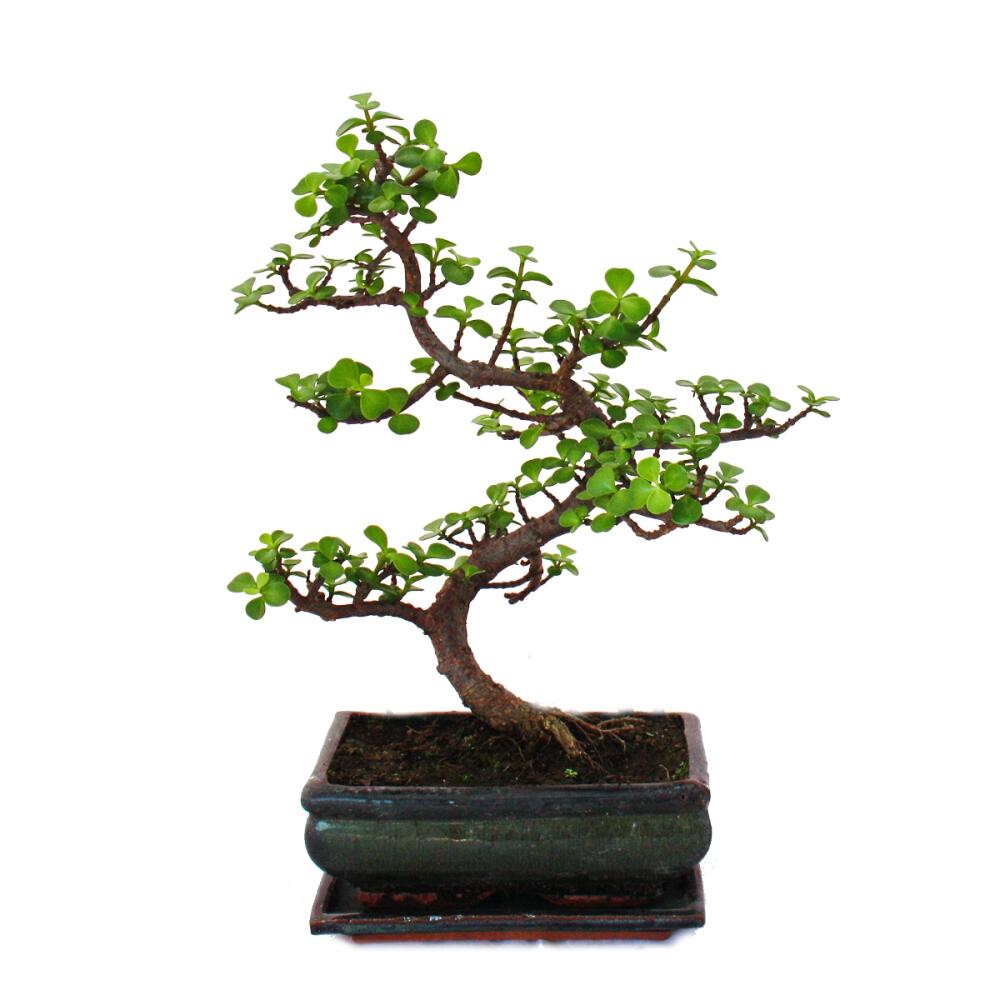
Green Portulacaria afra reveals its character between leaves. A curved brown trunk carries open side branches with small fleshy pairs on younger parts. Free gaps belong to this design: they reveal trunk movement and make the tree interesting from different angles. New branches often show reddish tones; older parts a grey-brown surface. The original shows an individual plant in a shallow rectangular bowl. A bright plant table gives space to observe it calmly. Leaves are much smaller than familiar Crassula ovata although both may be called jade trees commercially.
Green species, styled delivery plant
Portulacaria afra belongs to Didiereaceae. The succulent shrub occurs in parts of eastern and southern Africa, where it can grow much larger with enough space. Bonsai form comes from cultivation and design, not naturally unchanging miniature growth. The specific offer gives approximately ten years age, a bowl around 25 × 18 cm with matching saucer and approx. 35–45 cm total height including bowl. These are supplier approximations. You receive a comparable individual plant; precise trunk movement and bowl and saucer colour may differ. Green leaves have no cream edges here. Small pale-pink flowers are possible in the species but rare in pots and not promised on the offered tree.
Brightness follows the whole crown
Grip the bowl with both hands while moving and do not carry by trunk or branch. Despite woody inner structure fleshy branches can break. Choose a very bright place with abundant daylight reaching lower branches too. After transport or prolonged indoor cultivation build intense direct sun gradually. A reliably warm summer outdoor place is possible once frost risk passes; initially acclimatise protected, bringing inside before cold nights. The bonsai remains bright and frost-free in winter. With less growth a slightly cooler protected place may suit it, but not a cold dark storage surface.
Check the bowl before water flows
Leaves and shoots store water. The ball can therefore dry between supplies, while a constantly wet bowl is unfavourable. Check moisture beneath the surface and learn container weight. When water is needed add it slowly to compost and allow excess safely through holes. Empty the saucer afterwards. A shallow container has less compost reserve than a deep pot; sun, warmth and wind may quickly change this reserve. Water storage therefore does not replace checks. In low-light winter with reduced growth supply much more sparingly; in warm bright growth continue following actual consumption.
Maintain open root-space structure
Very freely draining succulent or suitable bonsai compost with stable mineral parts supports drainage. Fine dense sand alone creates no reliable air pores. Also check free holes and bowl stability; a heavy crown needs safe support. Repot when space is well rooted or compost loses structure. Prefer a strong growing tree and retain previous planting depth. Extensive root work belongs in experienced hands. Feed moderately during visible growth according to the label, considering already pre-fed compost. Reduce nutrition with little new growth.
Accompany shape through small decisions
First consider branches hiding the trunk or growing beyond the desired silhouette. Healthy individual new shoots can be shortened during active growth with clean tools just above a leaf pair. The plant may branch beneath. Do not remove all foliage at once while simultaneously repotting or testing a new position. Older trunk movement remains the starting point rather than bringing all branches to identical length. Do not forcibly bend thick fleshy branches. Healthy cut shoot sections may root in freely draining compost after brief cut-surface drying; no fixed success duration is assumed.
Treat leaf drop as observation first
Individual leaves falling after moving first call for assessing light, temperature and ball. Still-moist heavy compost does not automatically receive extra water just because the crown looks thinner. Shrinking leaves with a dry ball may instead indicate used reserves. Soft dark areas need checks for persistent wetness and root damage. Look at leaf pairs, branches and forks for scale insects or cotton-like mealybug deposits. Unchecked sprays are not a good first response on fleshy foliage. Small regular checks combine observation with care and help develop this green bonsai’s open shape.
One plant, several views

Good to know
Is the green jade tree a Crassula?
No. Portulacaria afra belongs to Didiereaceae. Similar trade names do not establish botanical equivalence with Crassula ovata.
Are trunk shape and bowl colour exactly as pictured?
The offer gives a comparable individual plant. Trunk movement and bowl and saucer colours may differ.
Can the bonsai stay unobserved for several weeks?
Water storage allows dry intervals but shallow root space requires regular checks. Duration and need depend on light, warmth and compost.
Does it stay 35–45 cm high by itself?
That is offered total height including bowl. New growth is accompanied through suitable cultivation and gentle pruning.
Where do I make a small shaping cut?
On healthy new shoots during active growth just above a leaf pair. Do not combine major work with further stress.
Can the bowl stay outdoors all year?
In our climate it remains protected and frost-free in winter. Use an outdoor summer position only with suitable temperatures and acclimatisation.
Sources and editorial note
- Exotenherz: directly checked offer and delivery measurements (accessed 03.10.2026)
- Wisconsin University Extension: species, green form, shallow bonsai bowl and care (accessed 03.10.2026)
- RHS: correct species profile, family and succulent culture (accessed 03.10.2026)
- Kew POWO: accepted name, family and distribution (accessed 03.10.2026)
- NParks: leaf pairs, succulent branches and bonsai suitability (accessed 03.10.2026)
Product, own offer description and full specialist sources directly compared on 03.10.2026. Total size including bowl and age are supplier approximations. Individual trunk movement and bowl colour may differ.