This plant at Exotenherz
Check the shop offer for current availability, price and what is included.
Check the shop for the current price, availability and offer contents.
Your care table
| Topic | What to do | Why it helps |
|---|---|---|
| Arrival | Carry by pot, check root ball and ties; slowly moisten dry soil. | The upright shoot needs support and the root ball a reliable starting supply. |
| Position | Grow sunny, warm and sheltered; ventilate regularly under glass. | Tomatoes need much light without overheating the growing area. |
| Planting | Move permanently outside after frost risk in warm weather; acclimatise first. | Tomatoes are frost-sensitive and dislike abrupt position changes. |
| Root space | Provide a roomy draining container or suitable vegetable soil. | The grower recommends more root space for further development. |
| Support | Tie loosely to stake or wire and inspect ties. | Tomatoes do not cling by themselves; growing stems must not be constricted. |
| Watering | Check moisture and pot weight; water slowly and remove excess. | Even moisture avoids strong supply swings; free drainage prevents standing water. |
| Feeding | During tomato fruit development, use suitable potassium-rich fertiliser as directed. | Pre-feeding and the actual product count; extra feed does not replace light. |
| Shoots | Remove tomato side shoots and above-ground potato growth as the grower recommends. | PotaTom differs from a compact bush tomato; identify shoots before cutting. |
| Flowers | Under glass, gently move open flower clusters if pollination needs assistance. | Gentle tapping can help pollen transfer but guarantees no fruit set. |
| Harvest | Pick ripe tomatoes individually; carefully lift tubers after tomato cropping ends. | Both steps follow development; no fixed quantity or duration promised. |
| Potato storage | Discard green tubers; store only dry undamaged ones cool, dark and frost-free. | Unsuitable or damaged tubers do not belong in storage. |
| Crop end | Act before frost, clean pots and supports and rotate the next bed location. | Cold ends unprotected tomato cropping; clean conditions help the next start. |
For young plants, feel the soil directly at the root ball. The surface and deeper soil may have different moisture levels.
Water thoroughly after planting; later, water according to the soil, weather and establishment rather than a fixed calendar.
Avoid standing water. For plants in containers, also check that water runs out of the drainage hole.
A tomato stem with a second story underground
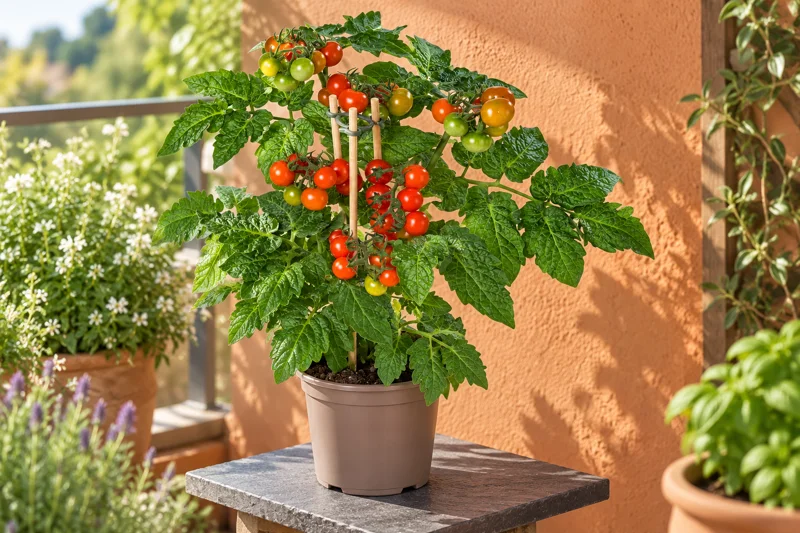
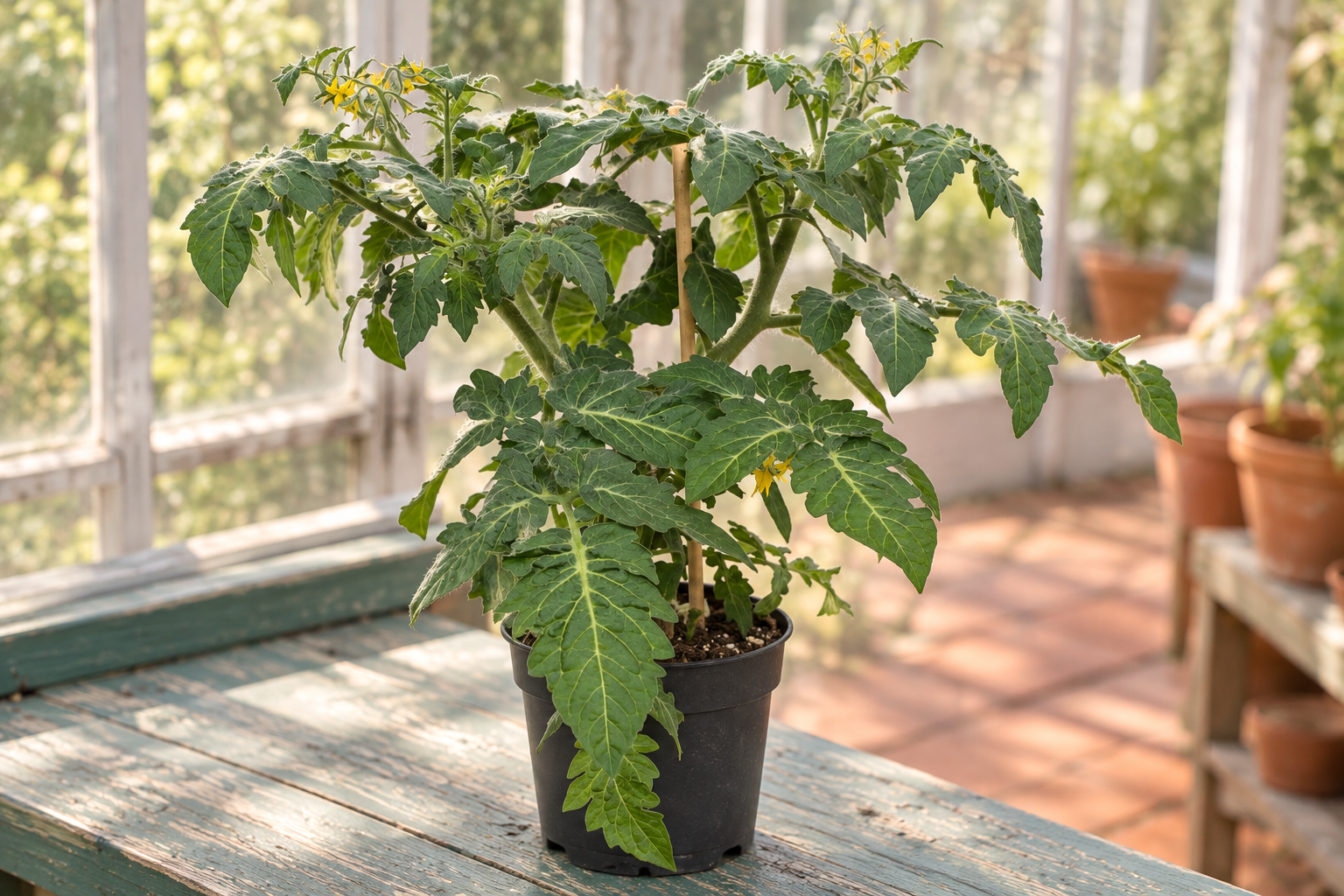
Green tomato foliage catches the eye first: divided leaves, an upright stem and room for flowers and later fruit. The other part lies underground. PotaTom is the named tomato-potato plant by Pick-&-Joy. The grower describes it as a graft, joining the tomato top to a potato rootstock. Tomatoes are Solanum lycopersicum and potatoes Solanum tuberosum. Joining them does not create a new botanical species. In practice it is one jointly cared-for plant whose above-ground fruit and underground tubers are harvested at different times. That sequence is the attraction: tomato development is visible, while tuber formation is revealed at the later harvest. Quantity depends on cultivation and development.
Unpack and plan an accessible place
Carry the pot and support the long stem when unpacking. Inspect root ball, existing support and ties before moving the plant. Slowly moisten dry soil and remove water collected in the outer pot. This portrait follows cultivation without assuming particular fruit at arrival. Plan a place where the root zone is reachable for watering and tomato shoots for inspection. A narrow passage or unstable decorative cover complicates both. The grower recommends a large pot or, preferably, planting in vegetable garden or greenhouse soil for further development. The pictured styling is an example, not fixed delivery contents.
Sun and frost-free warmth rather than a dark kitchen spot
A warm, sunny place sheltered from wind suits tomato cultivation. On terraces and balconies the pot must be stable too; a tall exposed crown catches wind. Regular greenhouse ventilation prevents unnecessary heat build-up. After protected cultivation, gradually acclimatise to stronger sun and outside air. Move permanently outside only after frost risk in reliably warm weather. A sunny afternoon says little about the following night. A kitchen picture can show the plant beautifully but cannot replace sufficient growing light. PotaTom is a frost-sensitive vegetable crop for the warm season, not a basis for unprotected winter cultivation or continuous indoor harvests.
Give roots room and guide the tomato securely
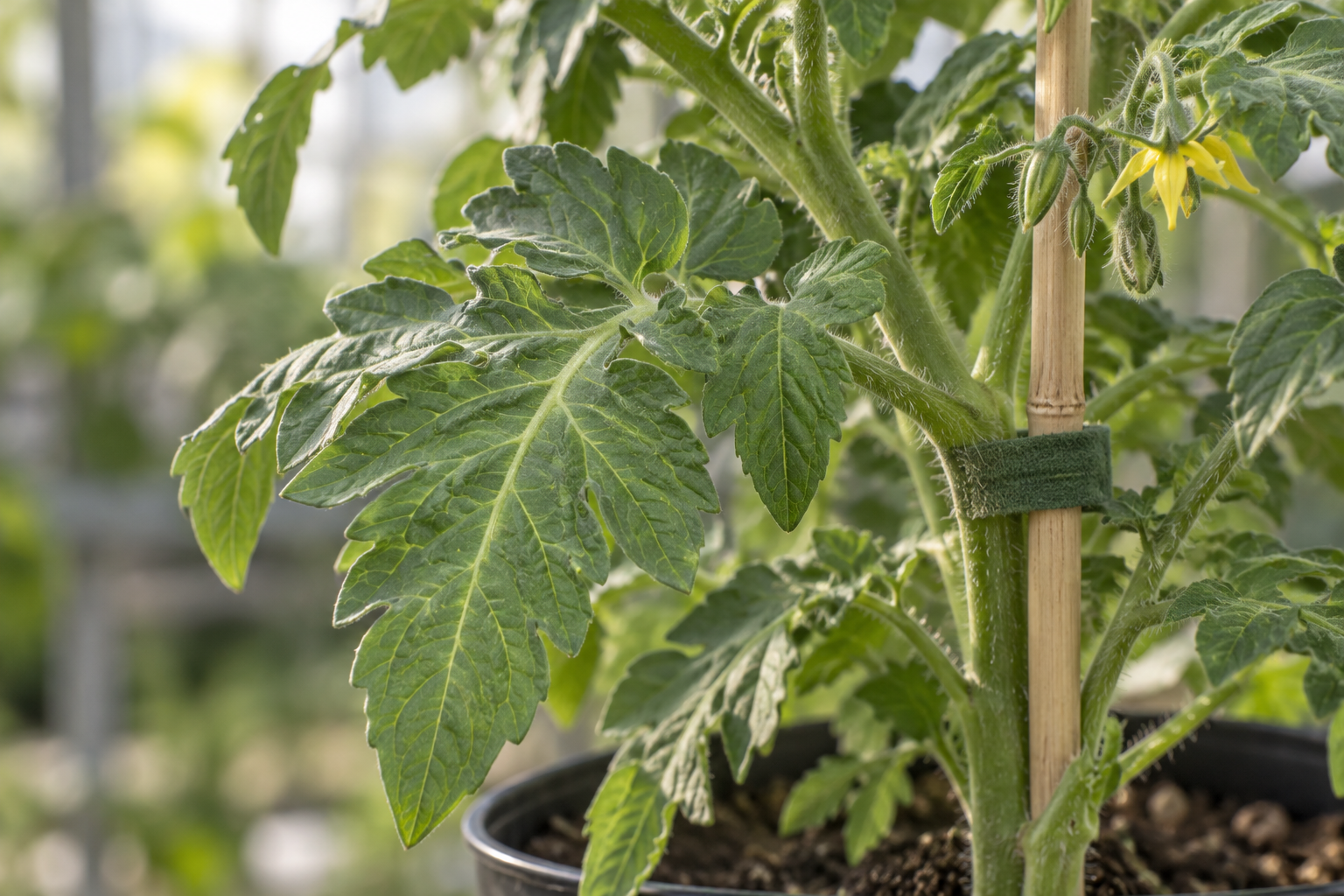
Choose a roomy container with clear drainage holes or suitable garden or greenhouse soil. Vegetable soil should retain moisture while draining excess. Compacted wet soil is as unsuitable as a small root ball that constantly dries between checks. Set a stable support that carries the plant while allowing watering access. The manufacturer recommends a stake or fixing to wire. Tie the tomato stem loosely with soft material and check as it grows. Tomatoes do not attach themselves. In beds, allow free space around foliage and access from the side; the actual crown determines space needed. Avoid squeezing it between neighbours when tending shoots or picking fruit.
Supply the root ball reliably without standing water
Feel the substrate and compare container weight rather than fixing a watering day. When needed, water slowly at root level to reach soil evenly. Surplus must drain freely; a closed cover must not form a reservoir around roots. Keep the root ball evenly moist without standing in water. Check more in sun and wind and allow for lower use on cool days. Strong swings from a dry root ball to abundant watering can encourage tomato cracking and other supply problems. A suitable potassium-rich fertiliser used according to its directions helps tomato fruit development. Already fertilised soil counts too. More fertiliser replaces neither light nor reliable water; dosage follows the actual product.
Distinguish PotaTom shoots before removing them
The grower specifies particular care: remove tomato side shoots and above-ground potato shoots. This differs from a compact bush tomato whose side shoots normally remain. Identify the shoot before acting. Tomato side shoots arise in the angle between leaf stalk and main stem. Selectively remove unwanted young shoots without randomly removing leaves, main stem or flower clusters. Above-ground potato shoots are also removed following the grower’s advice. Keep the plant guided on its support. Under glass the manufacturer recommends gently tapping a branch or flower cluster to aid pollination. General tomato guidance confirms that gently moving open flowers can help, without promising a fruit from every flower.
Pick tomatoes first, then examine the potatoes
Watch fruit development and pick individual ripe, fully coloured tomatoes without pulling the whole truss. Weather, light and care determine maturity; a photograph with different fruit colours sets no binding harvest date. PotaTom potatoes are harvested at the end of the tomato season. Once tomato harvesting is finished, the grower recommends cutting the above-ground stem and first leaving the underground part in soil to mature further. Actual development matters when lifting, not a fixed countdown. Loosen soil and lift tubers carefully. A container can be gently emptied at harvest’s end. Discard green potatoes and do not use them. Store only dry undamaged tubers in a dark, cool, frost-free place. Fruit count, tuber yield and storage duration are not promised.
Notice changes and end the crop cleanly
Drooping foliage calls first for checking root-ball moisture, drainage and current warmth. Do not automatically add water to already wet soil. Inspect leafy shoots and leaf undersides regularly. Grafted tomatoes can still suffer above-ground pests and diseases; joining to a potato does not replace observation. Examine spots, soft tissue or rapidly dying shoots more closely. Clean pots and supports for the next crop and rotate the bed location away from tomatoes and potatoes to avoid accumulating soil-related problems. Development slows on cooler days. Decide in time before frost about remaining harvest. The PotaTom concept removes neither light needs nor regular work on root ball and shoots.
One plant, several views
Good to know
Is PotaTom a new plant species?
No. The grower describes a tomato-potato graft: a jointly managed crop with two botanical components, not a new species.
Can I grow it like a bush tomato?
The manufacturer recommends removing tomato side shoots and above-ground potato shoots. This differs from compact bush-tomato management.
Will ripe fruit arrive?
This portrait fixes no fruit at arrival. Images are cultivation examples; ask about current delivery condition for the specific offer.
How often should I water?
According to real need. Check soil and weight, keep evenly moist and drain surplus. Warmth, wind and growth change water use.
When does harvesting start?
When individual tomatoes ripen. Development and yield depend on weather, position and care; no date or quantity guaranteed.
Can I dig the potatoes during tomato harvesting?
The grower describes potato harvesting after the tomatoes finish. Leave the underground part as undisturbed as possible until then and lift carefully afterwards.
Must every flower produce a tomato?
No. Under glass, gently moving open flowers may help pollination without guaranteeing full fruit set.
Is PotaTom an outdoor winter plant?
No. It is a frost-sensitive vegetable crop for the warm season. Decide before frost about remaining harvest.
Do the scenes show exact delivery contents?
They are AI-created cultivation examples based on our images. Decoration and the shown stage do not determine delivery contents or fruit set.
Sources and editorial note
- Exotenherz: our full PotaTom offer (6 October 2026)
- Pick-&-Joy: PotaTom, specific culture and harvest sequence (6 October 2026)
- Pick-&-Joy: named manufacturer post on the PotaTom graft (6 October 2026)
- RHS: general tomato cultivation guide (6 October 2026)
- RHS: general potato cultivation guide (6 October 2026)
- RHS: vegetable grafting, general context (6 October 2026)
Sources compared on 6 October 2026. This portrait describes the named PotaTom graft and its ongoing cultivation. Actual delivery condition and availability follow the current offer.