This plant at Exotenherz
Check the shop offer for current availability, price and what is included.
Check the shop for the current price, availability and offer contents.
Your care table
| Topic | What to do | Why it helps |
|---|---|---|
| Light | Allow bright filtered light to reach the lower stems too. | A hanging spot directly beneath a dark ceiling may lack light even near a window. |
| Water | Water thoroughly once the surface has dried; do not leave the root ball completely dry for a long time. | The flat green stems store water but belong to forest cultivation. |
| Drainage | Take the hanging pot down safely, water and let it drain before hanging it back. | Hidden water in a closed outer basket can otherwise easily go unnoticed. |
| Compost | Choose a loose, humus-rich mix with good air and water movement. | Epiphytic roots are poorly suited to heavy, constantly wet soil. |
| Feeding | Feed moderately according to the label when new stems appear. | Active growth needs supplies; little growth does not need a high dose. |
| Repotting | Gently move a well-rooted ball into a slightly larger hanging pot. | Trailing ribbons must not become trapped beneath the container during the move. |
| Care access | Check the hook, hanger and clear space regularly. | Longer shoots need room, and a freshly watered hanging pot is heavier. |
| Winter | Keep bright and frost-free; adapt watering intervals to slower consumption. | A long dry desert rest is not a general requirement for this forest cactus. |
Check the compost and pot weight. The care table explains how far the compost may dry.
Water only when needed. The water should reach the root ball without spilling over the rim.
Remove surplus water from the saucer or cachepot. Then return the plant to a suitable position.
Green ribbons rather than spiny spheres
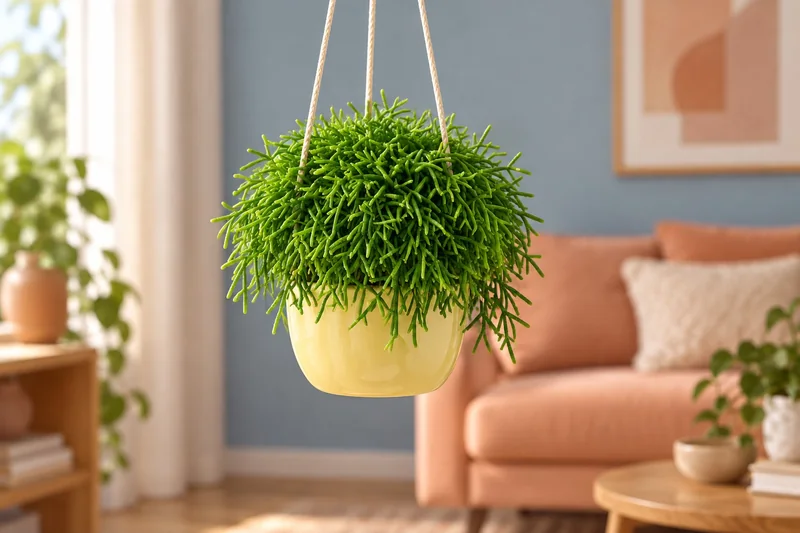
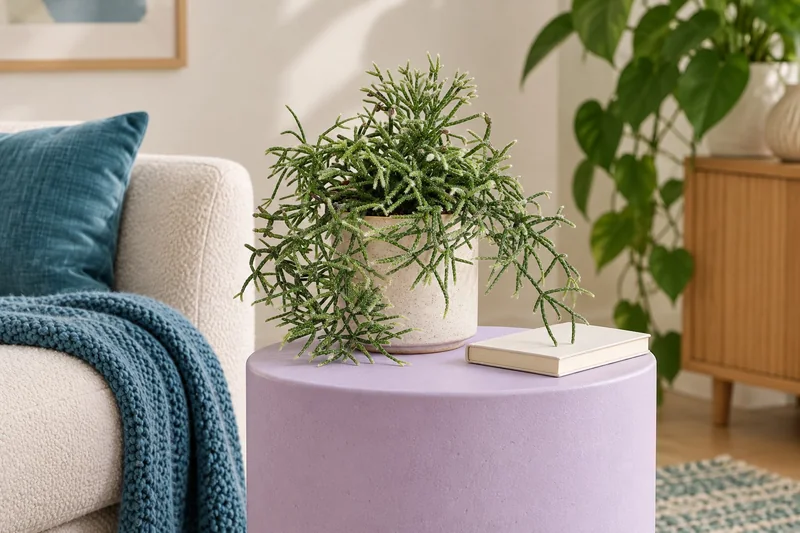
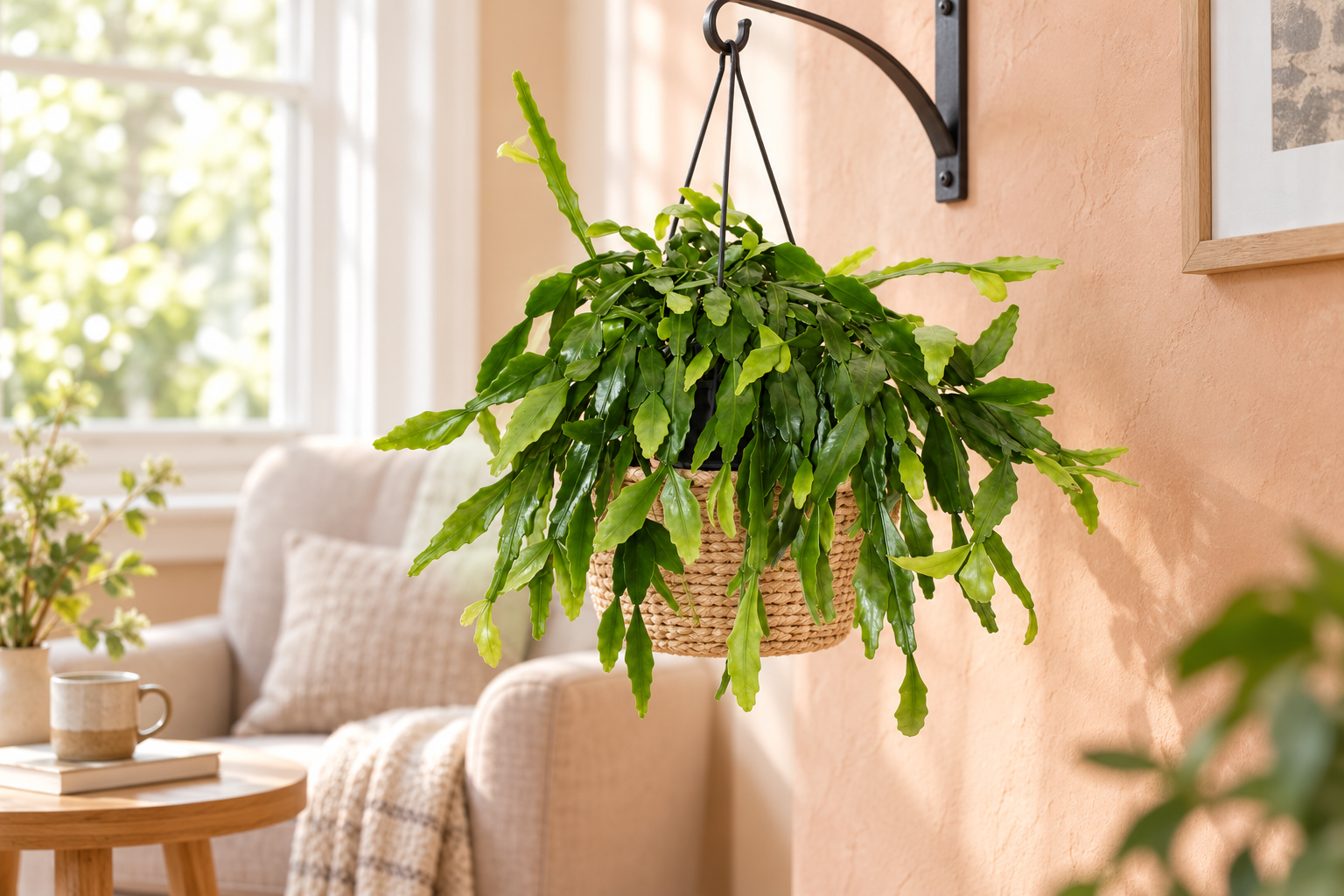
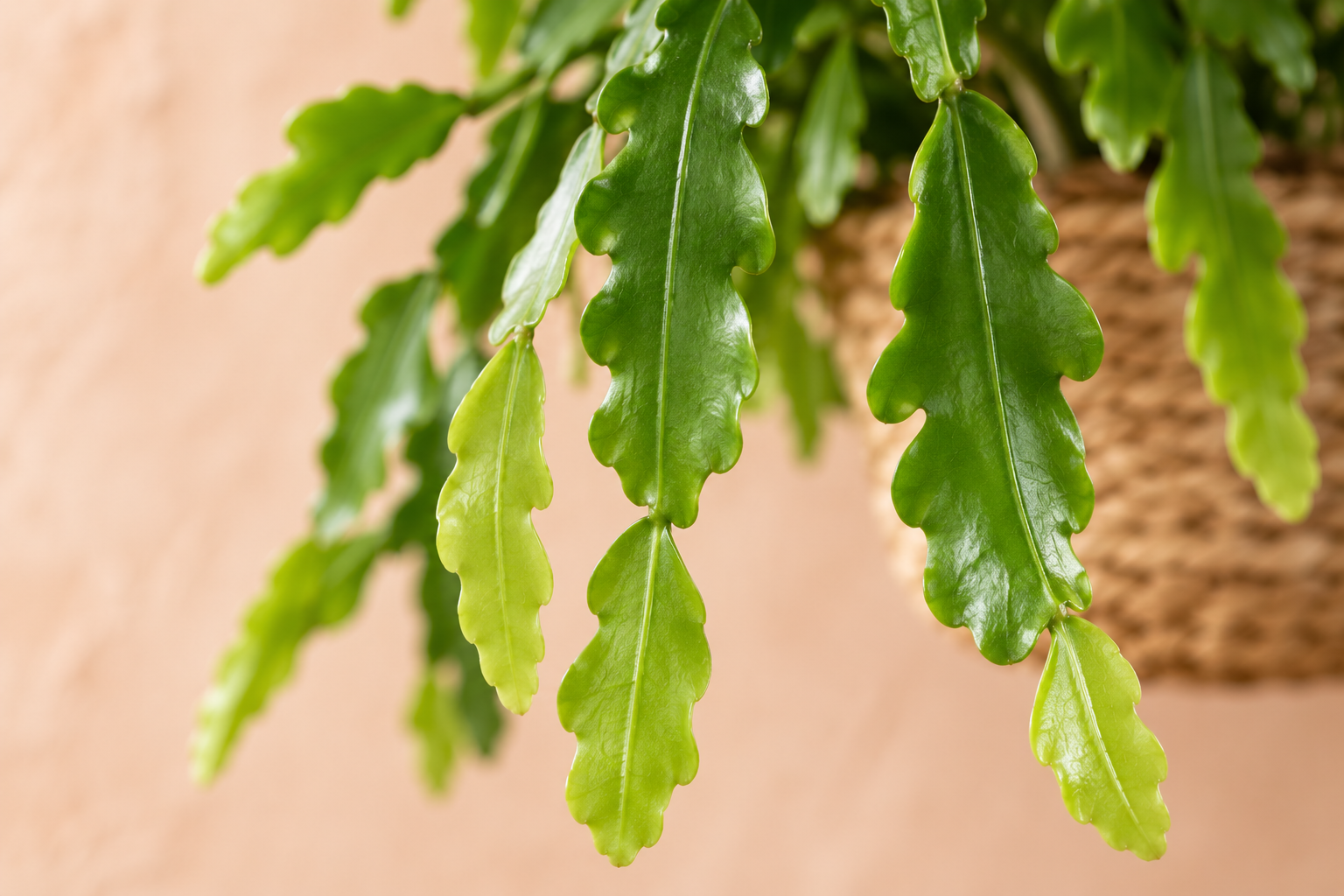
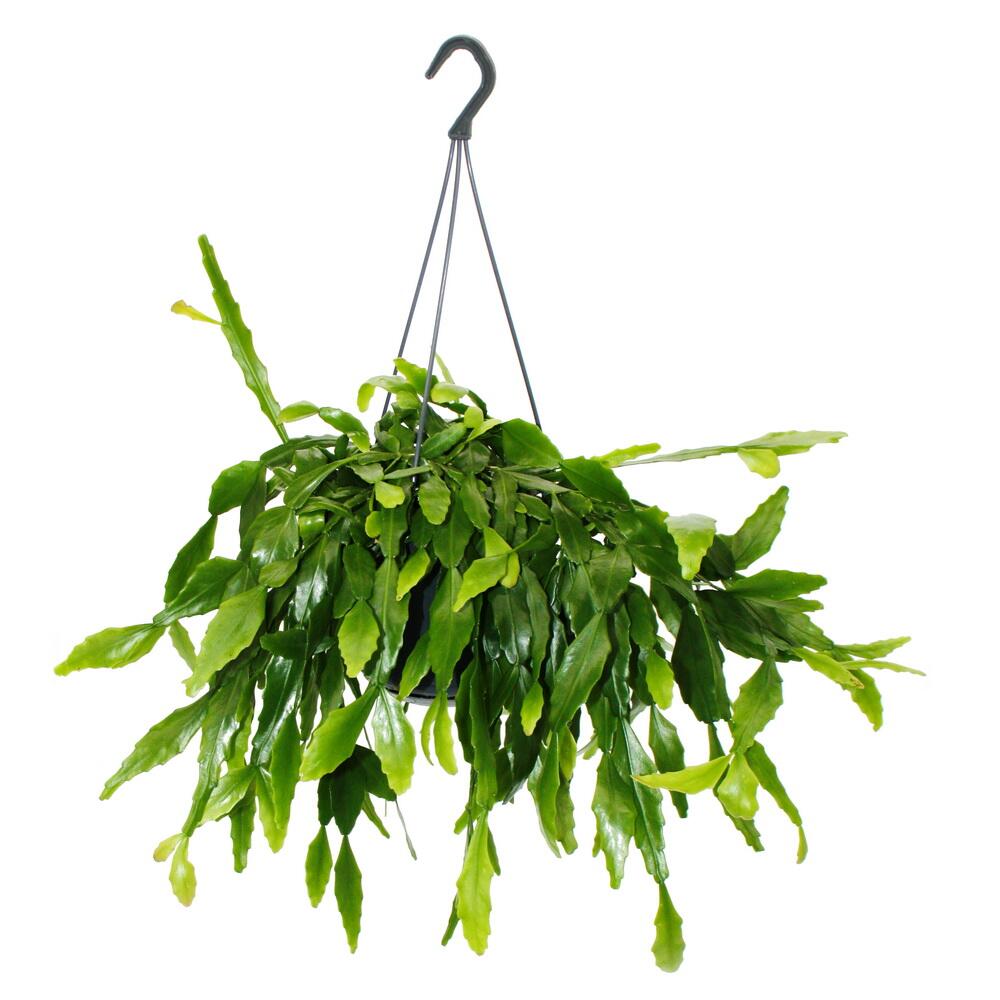
Rhipsalis crispata shows how different a cactus can look. Its stems are flat, elongated and distinctly wavy at the edges. Individual ribbons branch, rise a little at first and later fall over the hanging pot’s rim. A fine midrib becomes visible in the light. These are modified green stems, not ordinary fern leaves. Their lines are particularly easy to appreciate against a calm wall. A bright hanging spot beside a reading area gives the plant space without each ribbon tangling with curtains or a neighbouring plant’s leaves.
Total length is different from upright height
The shop offers this plant in a 15-cm hanging pot with about 30 to 35 cm total length. The measurement describes the trailing form, not an upright shrub of the same height. At home, clear space beneath the container therefore matters most. The original photograph shows the delivered plant’s flat wavy stems. New branches may later extend the outline. Rhipsalis crispata comes from Brazil and grows epiphytically, meaning on trees. In cultivation the pot replaces this airy root position; it should not become a permanently wet storage tank.
Light the hanging spot from top to bottom
Bright filtered light suits this forest cactus. A hanging pot directly behind glass in hot midday sunshine can soon become stressful instead. Check the actual path of the light: if the container hangs very high, a window lintel may shade the entire upper root ball while only the tips receive light. A slightly lower, easily accessible position is often more practical. After transport, increase new stronger light gradually. Protect from cold draughts when airing the room. The hanger must support the container and wet root ball safely; an attractive home scene only makes sense when care and attachment work reliably too.
Water without turning the outer basket into a basin
Take the hanging pot down safely to check moisture, or use an easily accessible position. Once the surface has dried, water the root ball slowly and thoroughly and let the excess drain away. Only then return the plant to its spot. A closed decorative basket can collect water at the bottom that is invisible from outside. Prolonged complete drying is also poorly suited to forest cactus cultivation. As well as the surface, check weight and moisture deeper in the pot. Limp ribbons alone do not tell you how much water is needed: a wet, poorly aerated root ball can impair supplies just as marked dryness can.
New compost should combine moisture and air
Choose a loose, humus-rich mixture with coarser components that maintain structure. It holds some moisture without compacting densely after every watering. When strongly rooted during growth, use a slightly larger hanging pot. Gently lay long ribbons aside and support the root ball rather than pulling the plant out by its stems. Container size must also match the hanger’s load capacity. During visible new growth, feed moderately according to the fertiliser label and account for pre-fed compost. With a currently wet or damaged root ball, clarify the water balance first; extra nutrients do not resolve this condition.
Let the wavy stems show their shape
Individual damaged stems or ones awkwardly long for the position can be shortened selectively with clean tools. The entire hanging plant does not need regular trimming to a horizontal edge. Small pale to cream-white flowers are possible on developed plants; a young delivered plant is not advertised with a fixed flowering time or flower quantity. Look for healthy new segments and undamaged edges. Edges can be damaged by rubbing against a wall or during rehanging. Sufficient distance from the background therefore helps the visual effect and preserves the characteristic green waves.
In darker months, observe carefully rather than rush
Choose a bright frost-free position for winter. With less growth, the compost stays moist longer, so the watering interval changes after checking. General dry-winter rules for desert cacti are not transferred unquestioningly to this forest cactus. Occasionally inspect branches and stem undersides for unusual deposits. Dry pale patches after strong sun and soft dark bases under constant wetness need different corrections. Considering timing, root ball and position together helps narrow down the cause. Only the next healthy shoot growth shows whether the adjusted care suits the chosen hanging spot.
One plant, several views
Good to know
Are these long leaves?
The flat green ribbons are cactus stems. Their wavy to lobed edges are part of this species’ typical structure.
What does 30 to 35 cm mean?
The offer means the hanging plant’s approximate total length. The measurement is not used as an upright growth height.
May the outer basket contain water after watering?
No. The root ball must be able to drain; remove water from a closed decorative outer basket afterwards.
Does the hanging plant need a lot of direct sun?
Bright filtered daylight suits it better. Avoid hot direct midday sun after transport, or acclimatise gently to stronger light.
Do I need to shorten all stems regularly?
No. The trailing structure is part of the plant. Only remove damaged parts or ones that interfere at the position selectively.
Can it stay completely dry in winter?
A blanket long dry rest is not recommended here. Keep bright and frost-free and water according to the root ball’s actual needs.
Sources and editorial note
- Exotenherz: offer and original photographs (02.10.2026)
- Specialist Rhipsalis collection: Rhipsalis crispata, with species description from Calvente’s botanical research (02.10.2026)
- RHS: forest cacti and succulents indoors (02.10.2026)
- NC State Extension: related Rhipsalis cultivation, no species assignment (02.10.2026)
Shop offer, product number, GTIN, availability and original images checked directly on 02.10.2026. Specialist sources read directly. The shop gives a total length of 30–35 cm; this is not reinterpreted as total height. Morphology compared with the original image and botanical species description. No unsupported final length or flowering month is promised.