This plant at Exotenherz
Check the shop offer for current availability, price and what is included.
Product details, availability and delivery information are provided in the shop offer.
Your care table
| Topic | What to do | Why it helps |
|---|---|---|
| Light | Bright and mostly indirect. | Hot midday sun can damage the forest cactus shoots. |
| Water | Water according to need after the surface begins to dry. | The root ball should not remain completely dry for long. |
| Drainage | Let residual water drain away. | Epiphytic roots need air. |
| Compost | Loose mix for epiphytic cacti. | Heavy potting compost alone is unsuitable. |
| Winter | Bright and frost-free; slightly moist rather than bone dry. | Water use decreases but does not disappear completely. |
| Fertiliser | Sparingly during growth. | High salt concentrations stress the roots. |
| Pruning | Remove only damaged or obstructive shoots. | Free trailing growth is part of its habit. |
| Propagation | Carefully root healthy shoot sections. | Wet, fresh cuts can rot. |
Check the compost and pot weight. The care table explains how far the compost may dry.
Water only when needed. The water should reach the root ball without spilling over the rim.
Remove surplus water from the saucer or cachepot. Then return the plant to a suitable position.
A small network with fine bristles
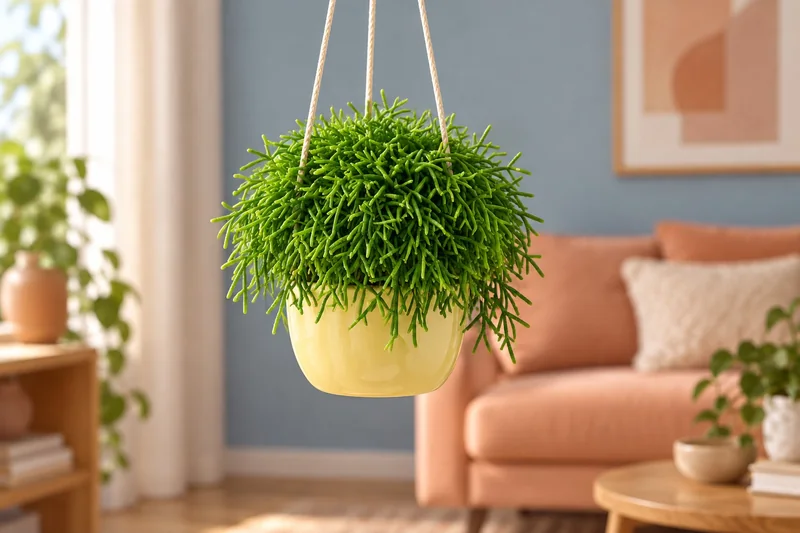
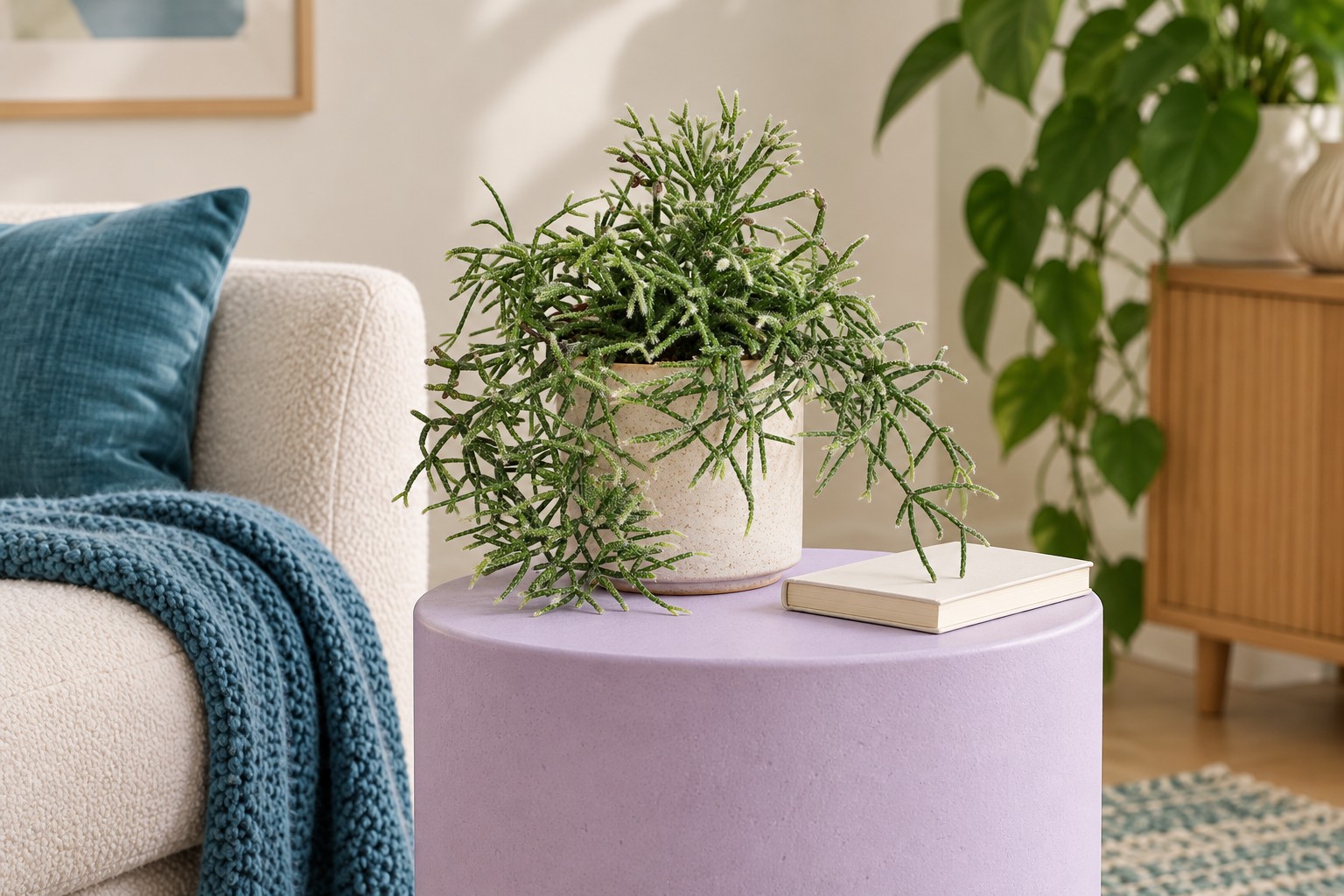
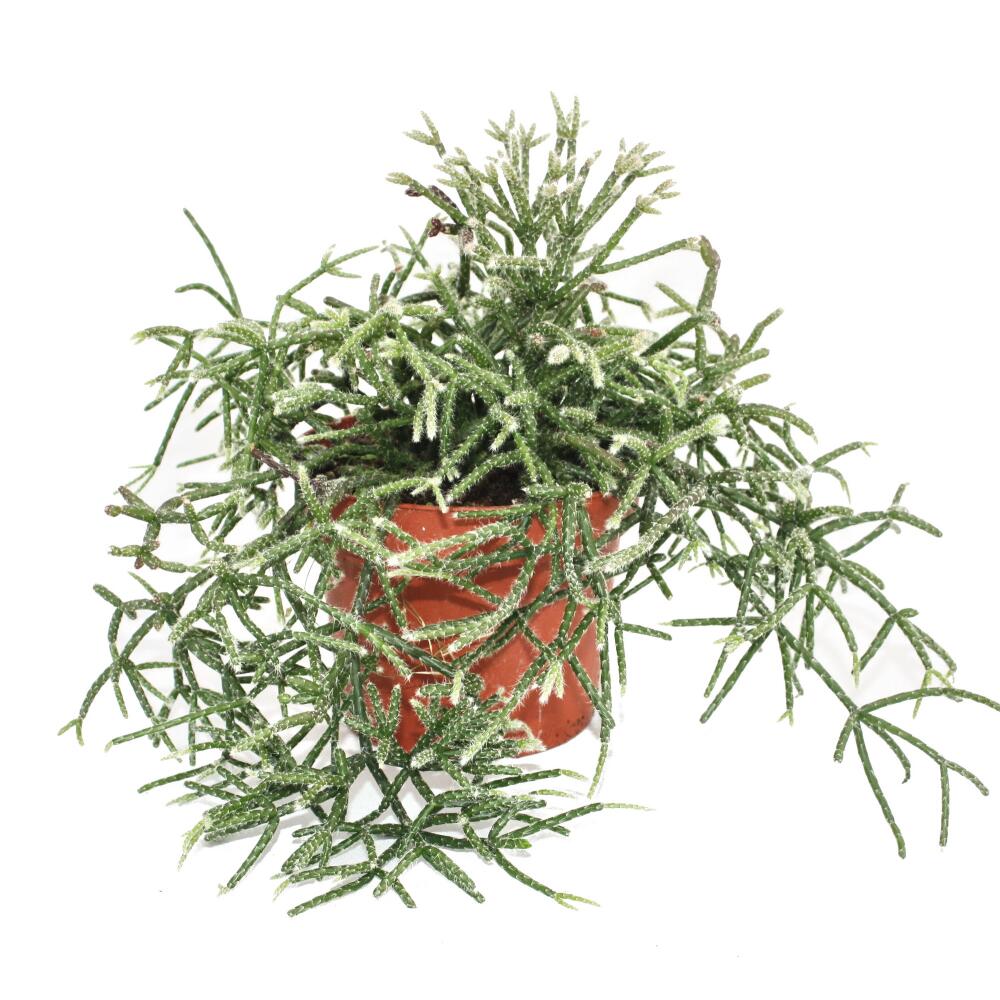
Slender green stem segments branch repeatedly and bear fine pale bristles. The young plant still grows partly upright and partly trailing. The offer lists a 12 cm pot and approximately 18–25 cm total height. Older specimens may suit a hanging basket, but the delivery illustration remains at this small size. A taller, bright plant stand allows the first trailing shoots to hang freely without being trapped between objects.
A cactus from a different habitat
Rhipsalis pilocarpa belongs to the Cactaceae family and comes from south-eastern Brazil. It grows epiphytically, using other plants as a support. It is not a parasite. The segmented green parts are stems and carry out photosynthesis. This lifestyle produces the most important care difference: a bright, airy position with controlled moisture suits it better than blazing midday sun and long periods of complete dryness. Its origin explains cultivation without requiring a permanently wet rainforest terrarium.
Gentle light and room for branches
Bright indirect daylight is a good foundation. Some gentle sun may suit it after acclimatisation, but avoid hot, unprotected midday sun behind glass. A bright living space or hanging basket close to a large light source works better than a dark hallway. Ensure the upper part of the plant receives light too. In summer, a warm sheltered outdoor position is possible. Bring it indoors before cool nights and avoid draughts when ventilating in winter.
Water regularly without wet feet
During growth, water moderately according to need once the upper layer of compost has begun to dry. The entire root ball should not repeatedly dry hard for weeks. Allow excess to drain after watering. A loose mix for epiphytic cacti retains some moisture without enclosing the roots in an airless medium. Give less in winter but keep the root ball slightly moist. Soft water is beneficial. Good indoor air and air movement help more than persistently dripping-wet shoots.
Repotting and propagation without major intervention
Repot carefully when roots or exhausted compost require it. A drainage hole remains important, even in a decorative hanging basket. Do not pull the branches apart when lifting the plant out. Healthy shoot sections can be rooted in a loose mix after the cut has dried briefly. Keep them only carefully moist at first. Feed sparingly according to the label during growth. Regular shaping is unnecessary; damaged or obstructive shoots can be selectively removed. The naturally loose branching gives this plant its character.
Observe flowers, fruit and rest
Well-developed plants may produce pale flowers and later red berries. Neither is promised on delivery, and the fruit is not presented as food. Overwinter in bright, frost-free conditions, preferably without major temperature changes. Dried thin end segments above a dry root ball point in a different direction from soft brown patches above wet compost. When changes occur, check moisture, light and roots first. Mealybugs may sit between branches, while the plant’s own evenly fine bristles are normal.
One plant, several views

Good to know
Is this really a cactus?
Yes, but an epiphytic forest cactus with different requirements from many desert cacti.
Should it dry out completely between waterings?
Not regularly for long periods. The surface may begin to dry while the root ball stays lightly moist under controlled conditions.
Are the white hairs pests?
Fine, evenly distributed bristles belong to the species. Nevertheless, inspect individual cotton-like nests more closely.
Can I put it straight into a large hanging basket?
Only if the roots need that space. An excessively large pot stays wet unnecessarily long.
Sources and editorial note
Sources checked: 15 September 2026. Product information and the contents of delivery follow the linked shop offer. Care advice was checked against the cited specialist sources and should still be adapted to the plant’s condition, position and season.