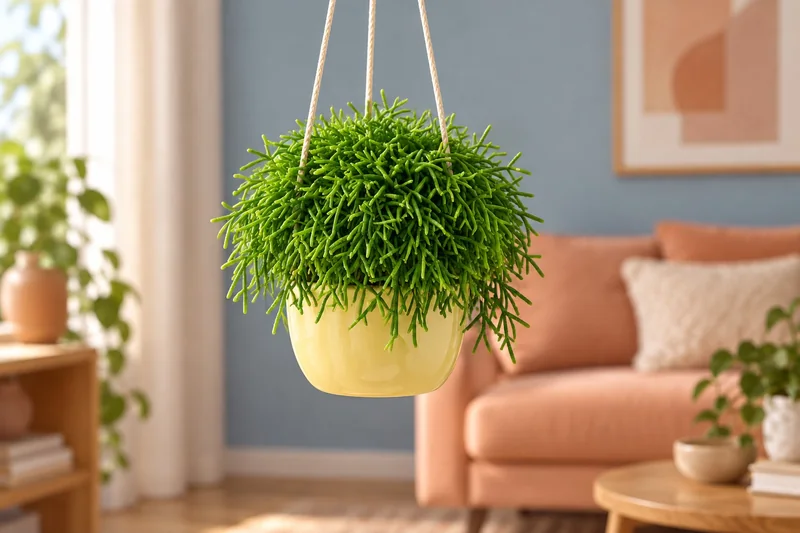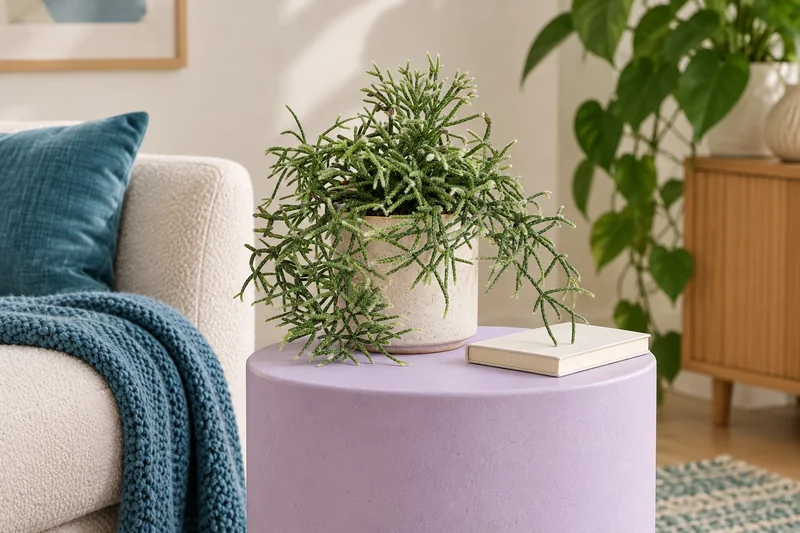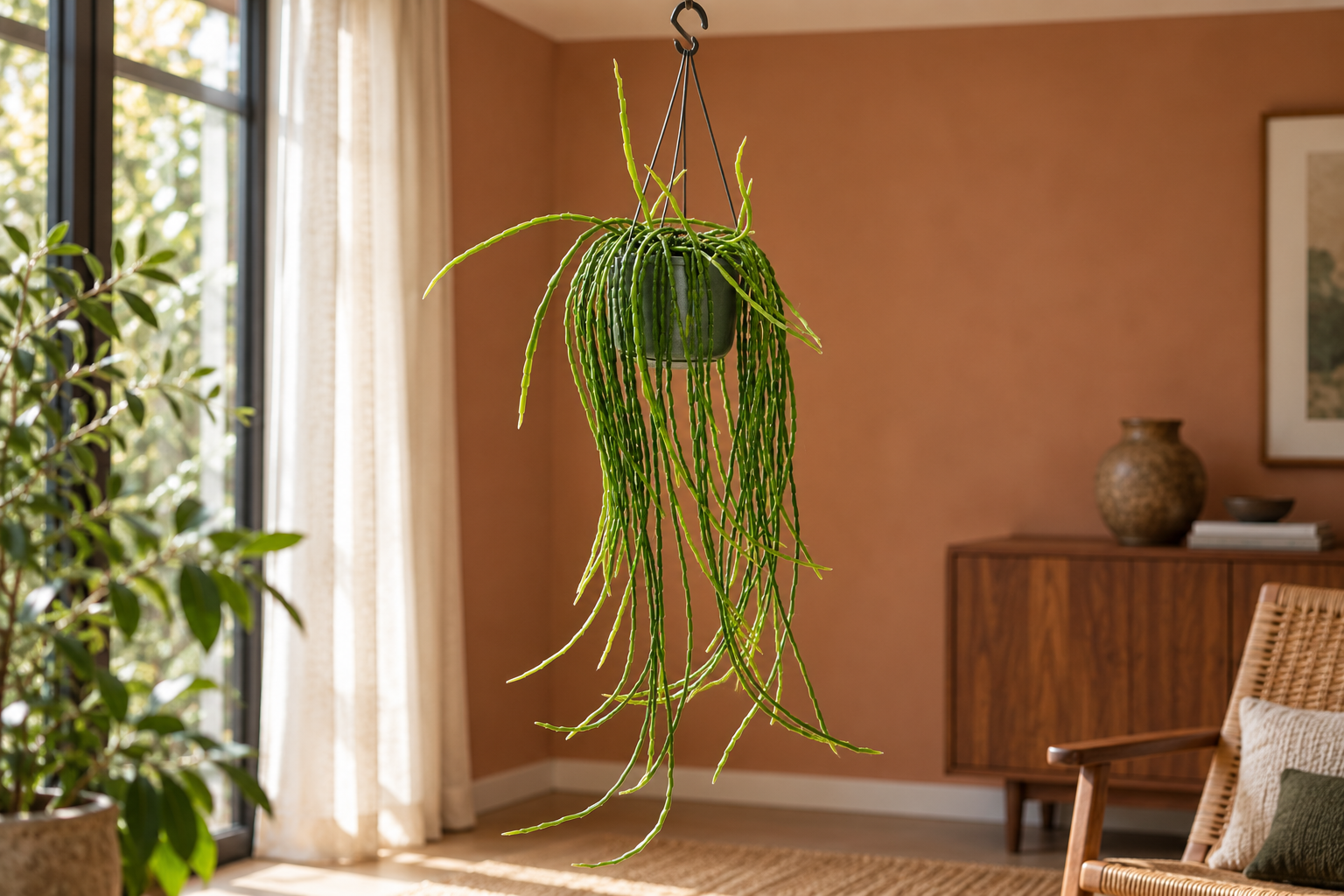
This plant at Exotenherz
Check the shop offer for current availability, price and what is included.
Check the shop for the current price, availability and offer contents.
Your care table
| Topic | What to do | Why it helps |
|---|---|---|
| Light | Choose a bright hanging spot without suddenly hot midday sun. | The green stem surface uses filtered forest light; heat behind glass can stress it. |
| Water | Water slowly and thoroughly once the surface has dried. | Reliable moisture supports long shoots, but the root ball also needs air between watering. |
| Drainage | Let the hanging pot drain and remove water from a closed outer pot. | High-hanging containers easily hide standing water. |
| Compost | Use loose, humus-rich compost with stable coarser components. | Epiphytic growth does not call for a heavy, constantly moist mass of soil. |
| Nutrients | Feed moderately according to the label during new shoot growth. | Long segmented chains grow with good basic supplies, not a high single dose. |
| Repotting | Give a little more container space only when the root ball is well rooted. | A very large reservoir pot changes drying and the weight of the hanging plant. |
| Shoot care | Keep space clear below the hanging pot and gently release tangled stems. | The long chains break more easily under pulling than a strong upright stem. |
| Winter | Retain a bright frost-free position and adapt moisture to slower consumption. | Little growth means less demand, but not automatically months of dry rest. |
Check the compost and pot weight. The care table explains how far the compost may dry.
Water only when needed. The water should reach the root ball without spilling over the rim.
Remove surplus water from the saucer or cachepot. Then return the plant to a suitable position.
A green line with many small turns
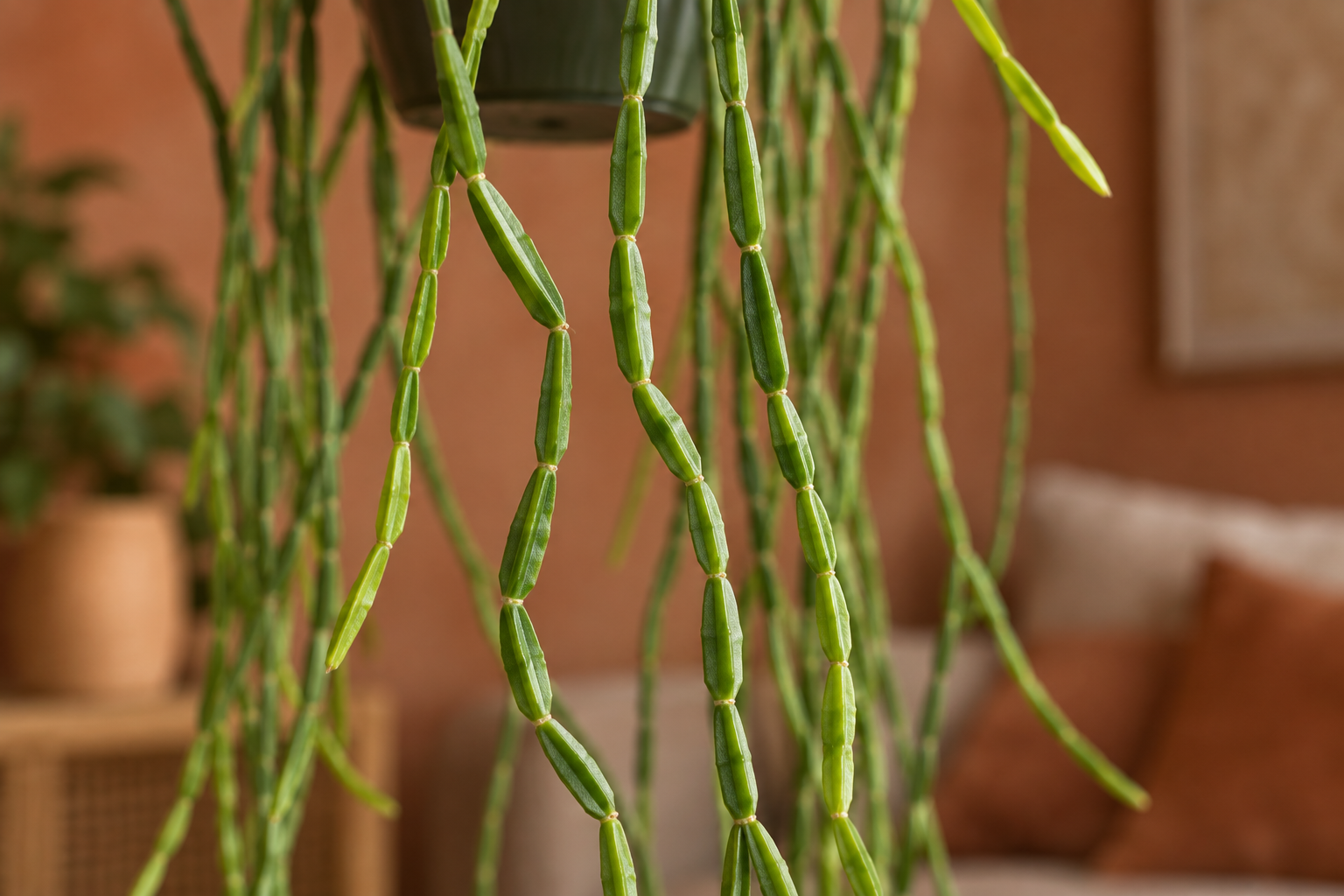
With Rhipsalis paradoxa, the long trailing growth catches the eye first. Up close, the slender stems do not resemble smooth cords: their segments have edges and the ribs change direction. This gives the green chains a lively contour. Some young tips remain a little upright, while longer shoots fall loosely downwards. Against a calm wall they form a fine, living pattern. The plant does not need particularly abundant flowers for this. The varied lengths and orientations of the stems already make its character visible in a well-lit living-room corner.
The offered hanging plant needs space below
The shop offers Rhipsalis paradoxa in a 15-cm hanging pot with approximately 50 to 60 cm total length. This is a delivery measurement for the trailing plant, not an upright total height or a later maximum shoot length. Plan enough clear distance beneath the pot so tips do not constantly rest on furniture. The botanical species comes from southern and southeastern Brazil and grows epiphytically. This forest origin explains the combination of light, a loose root environment and adapted moisture. The visible angular stems are no reason to treat it like a drought-focused desert cactus.
Light must also reach the hanging tips
A bright position with filtered daylight makes sense. If the container hangs near a window, check the actual light distribution right to the bottom. A dark ceiling recess or heavy curtain can permanently shade part of the plant. Increase stronger new sunshine cautiously after shipping and avoid hot midday sun behind glass. Think of care when hanging it too: you should be able to reach the pot safely without reaching between the long chains. A stable hook and suitable hanger will later carry the freshly watered root ball. Weight and clear space matter as much as a beautiful wall colour.
Long stems are supplied through the root ball
Before watering, check the compost surface and pot weight. Once the surface has dried, add water slowly until the root ball is moist throughout. Then let it drain completely and remove water from a closed outer pot. Long stems make the plant look large, while root space remains limited in the 15-cm container. Demand therefore does not depend on visible length alone. Standing water prevents roots working well; repeated long root-ball dryness can also impair shoots. Shrivelling or weak new growth is judged alongside root-ball moisture. Frequent misting does not replace suitable supplies in the pot.
Renew the root space gently
A loose, humus-rich mixture with stable coarser components combines moisture retention with air in the compost. If the root ball is densely rooted, give a little more container space during the growing period. Gently free the long stems during the move so they do not become trapped between pot and table. Do not pull the plant from its container by its segments. A bigger pot should not automatically become enormous: unrooted extra compost stays wet longer and loads the hanger. Feed moderately according to the fertiliser label during new growth. Fresh pre-fed compost and a winter growth pause change additional nutrient needs.
The chains should hang freely and keep growing
Individual stems may catch when changing position. Release them piece by piece rather than pulling the entire green curtain. Damaged shoots or ones that interfere at the position can be shortened selectively with clean tools. For a cutting trial, use healthy sections, let cut ends dry first and then place them in loose compost. Older developed plants can produce small white flowers; the delivered article is not presented with a fixed flowering date or fruit covering. Young stem shapes and older segments can differ a little. Compare the entire structure rather than immediately considering one new section wrong.
Stay in the good spot through winter
In this cultivation, Rhipsalis paradoxa needs a bright frost-free spot. With less daylight, growth often falls and the compost dries more slowly. Adapt watering according to checks; this does not imply an enforced months-long dry rest. Occasionally inspect segment bases and branches for unusual woolly deposits. Dry patches after strong light and soft dark areas in wet compost have different contexts. Correct the recognisable stress first and observe healthy new stems later. With freely hanging chains and an easily checked root ball, the plant remains attractive and straightforward to care for outside its growing period too.
One plant, several views
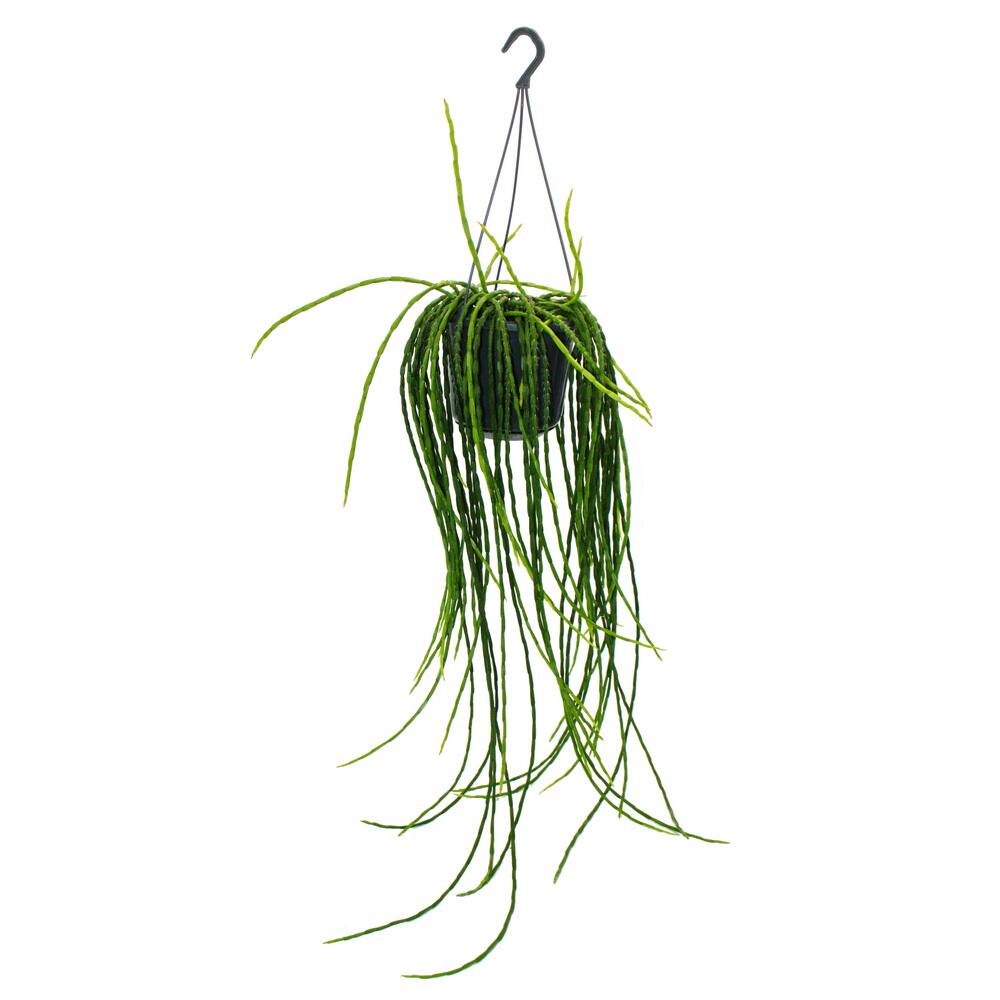
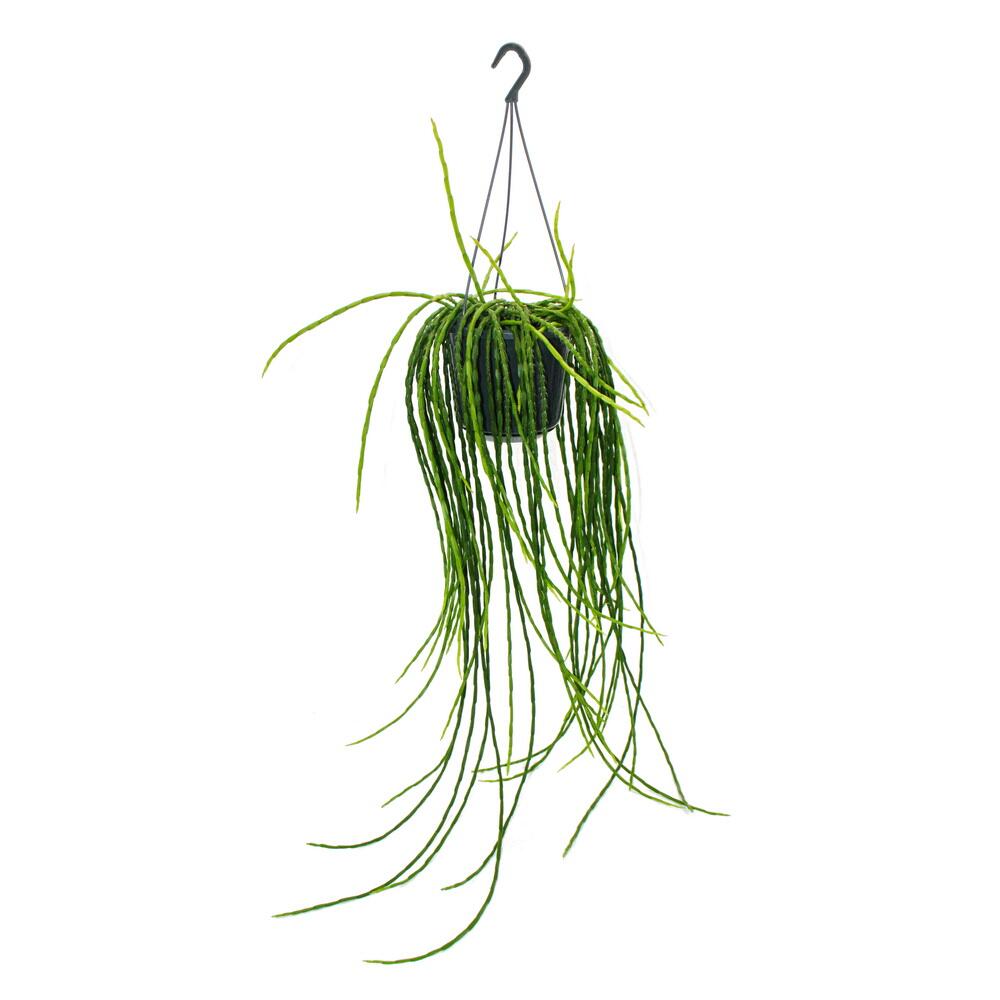
Good to know
Why are the stems sometimes called chains?
Their angular segments and alternating rib directions create a chain-like structure. They are cactus stems, not ordinary leaves.
Is 50 to 60 cm a growth height?
No. The offer gives the trailing hanging plant’s approximate total length. Its position accordingly needs space beneath the container.
Can it hang very high beneath the ceiling?
Only if enough daylight reaches it and care remains safe. An easily accessible bright spot is more practical.
Does daily misting replace watering?
No. The key is suitable supplies in the root ball followed by free drainage.
Do I need to cut off the long chains regularly?
This is unnecessary. Plan clear space and shorten only troublesome or damaged stems selectively.
Are slightly different young segments a problem?
Not automatically. Young and developed stems may look different. Consider the entire healthy structure together with the shop reference.
Sources and editorial note
- Exotenherz: offer and original photographs (02.10.2026)
- Kew Plants of the World Online: Rhipsalis paradoxa, accepted species and origin (02.10.2026)
- Specialist Rhipsalis collection: species description from primary botanical literature (02.10.2026)
- RHS: growing forest cacti indoors (02.10.2026)
- NC State Extension: related Rhipsalis cultivation as a comparison (02.10.2026)
Shop offer, product number, GTIN, availability and original images checked directly on 02.10.2026. Specialist sources read directly. Accepted species checked against Kew; juvenile reference form retained. Total length is not presented as height. No unsupported final length, frost hardiness or fixed flowering time is transferred.