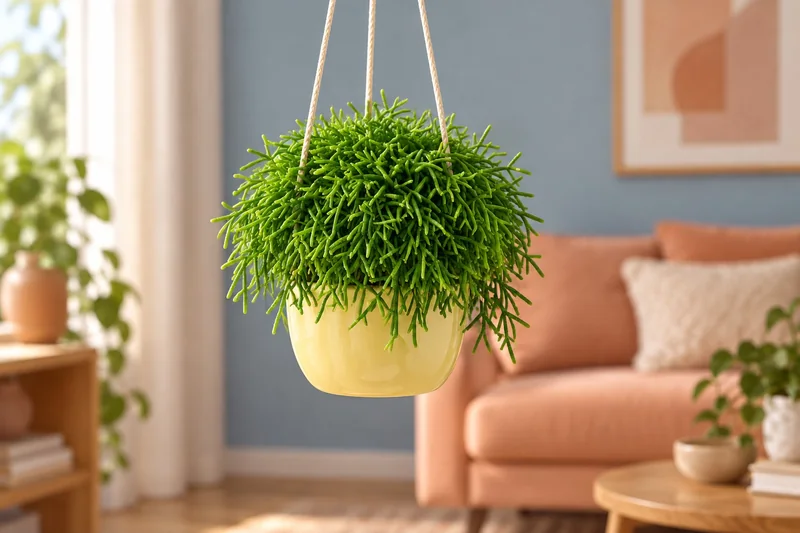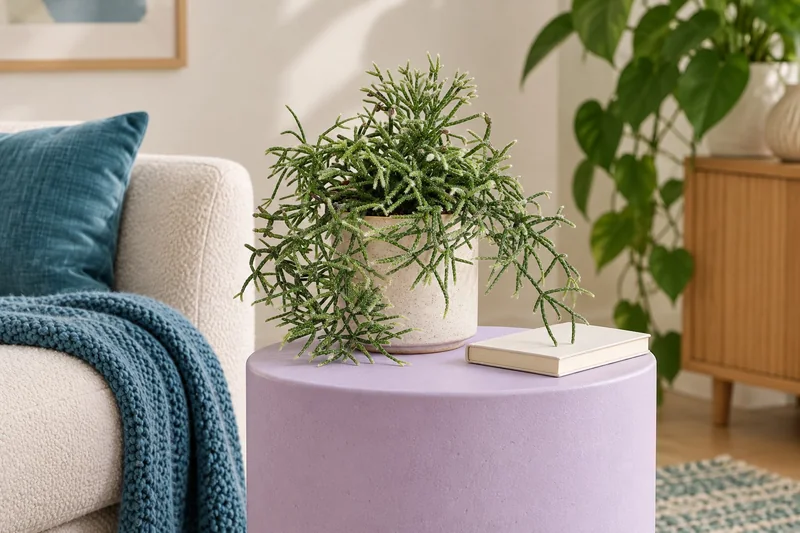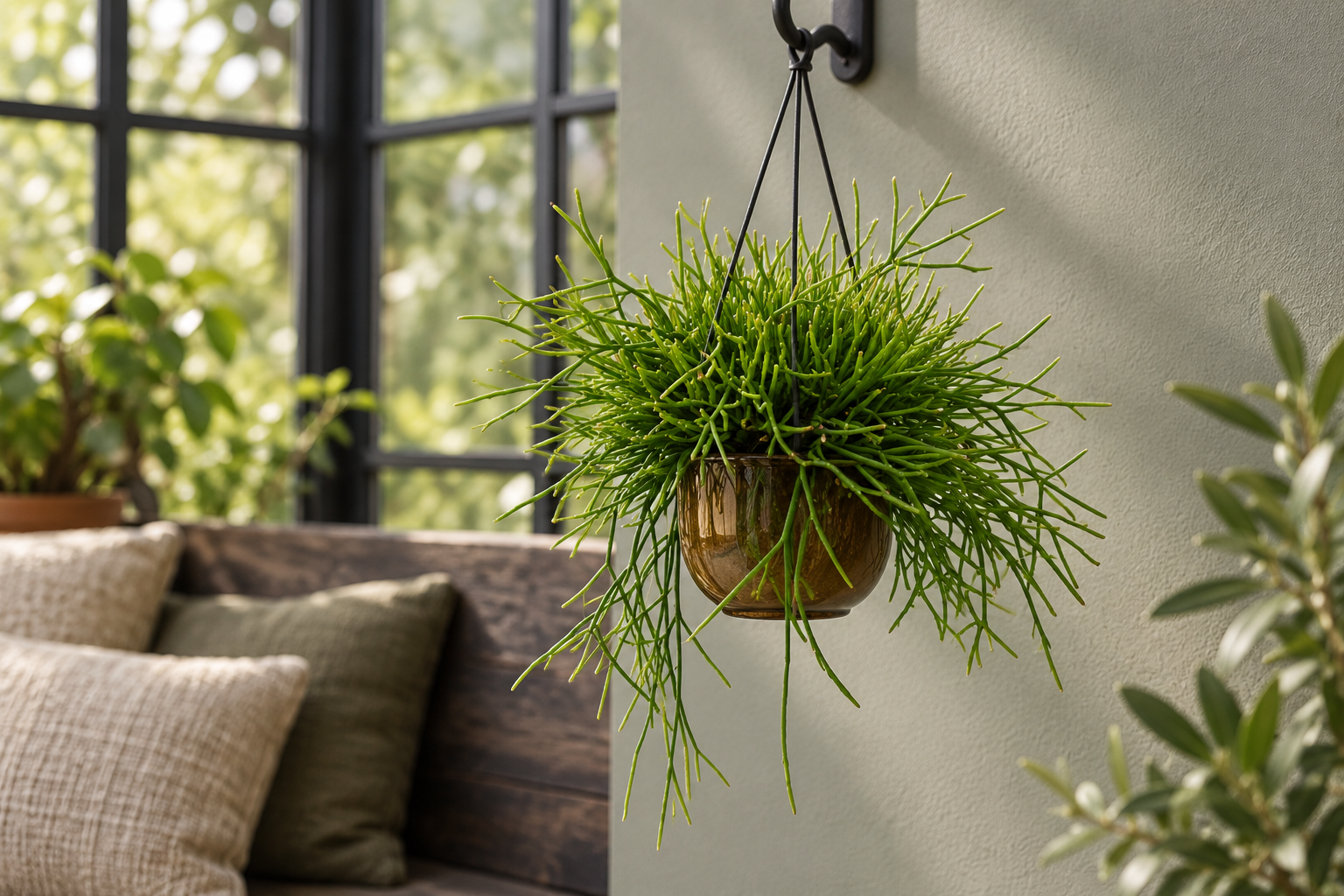
This plant at Exotenherz
Check the shop offer for current availability, price and what is included.
Check the shop for the current price, availability and offer contents.
Your care table
| Topic | What to do | Why it helps |
|---|---|---|
| Light | Position brightly with filtered daylight reaching the lower stems. | A forest cactus grows under different light conditions from a desert cactus. |
| Water | Supply the root ball thoroughly after slight drying of the upper compost. | Slender stems need reliable supplies, while roots do not tolerate waterlogging. |
| Drainage | Let the hanging pot drain and empty the decorative pot. | A dry upper shoot does not protect against hidden water below. |
| Compost | Choose loose, humus-rich forest cactus compost with structural components. | Moisture and air must remain available together around the roots. |
| Nutrients | Feed moderately according to the fertiliser label during visible growth. | New branching needs nutrients; quiet winter growth needs less. |
| Repotting | Gently give a little more pot space when well rooted. | Fine stems are supported during this, not used as a handle. |
| Shape care | Let healthy branches fall freely; remove damaged parts selectively. | Loose branching and hanging growth are its characteristic structure. |
| Winter | Keep frost-free and bright, without hot heating air; still check moisture. | Less growth reduces demand but does not justify months of complete dryness. |
Check the compost and pot weight. The care table explains how far the compost may dry.
Water only when needed. The water should reach the root ball without spilling over the rim.
Remove surplus water from the saucer or cachepot. Then return the plant to a suitable position.
A hanging plant with finely drawn lines
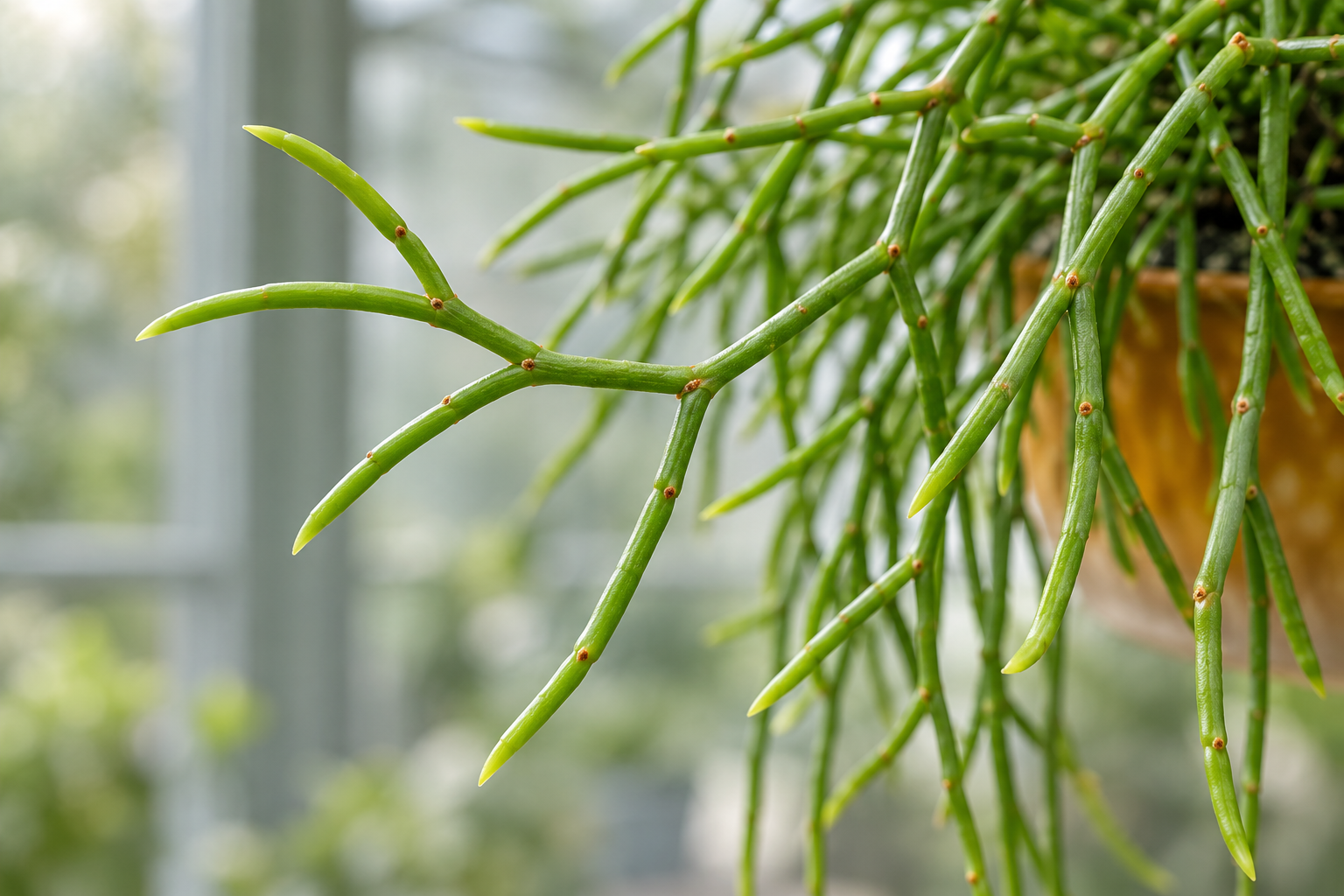
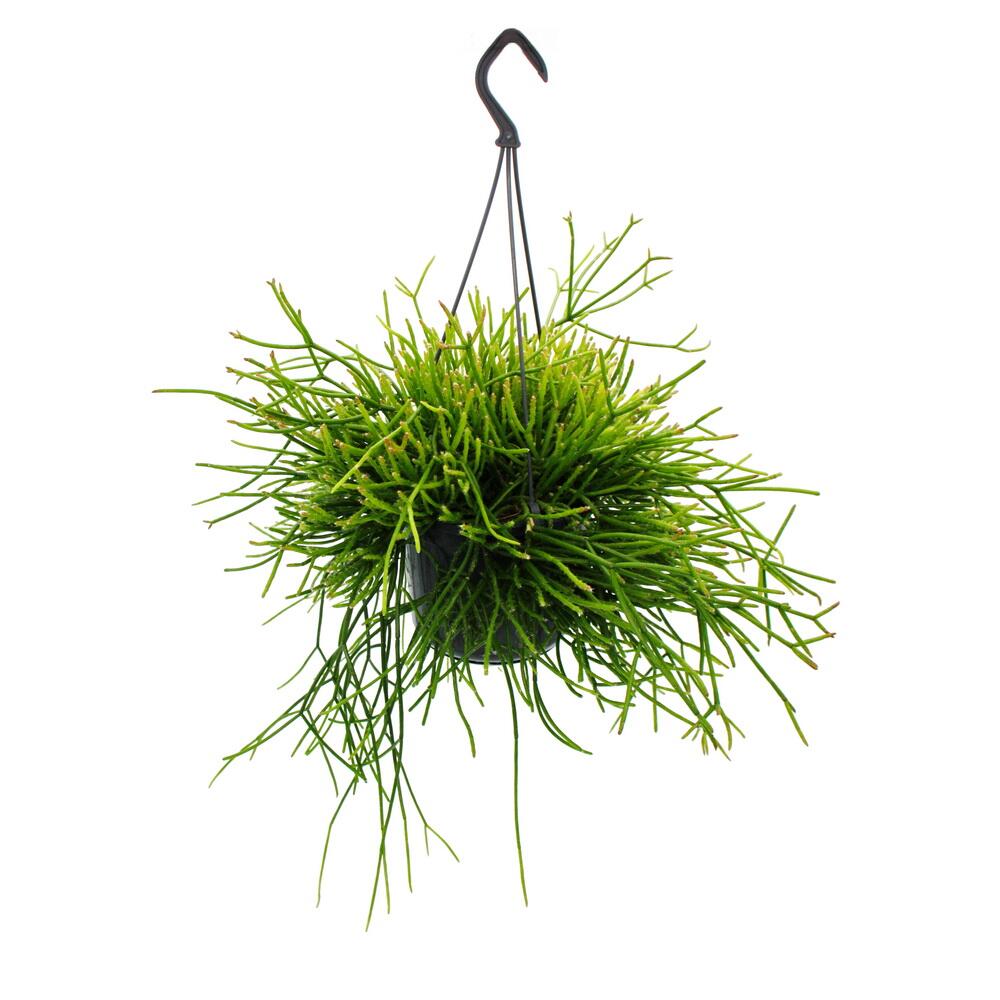
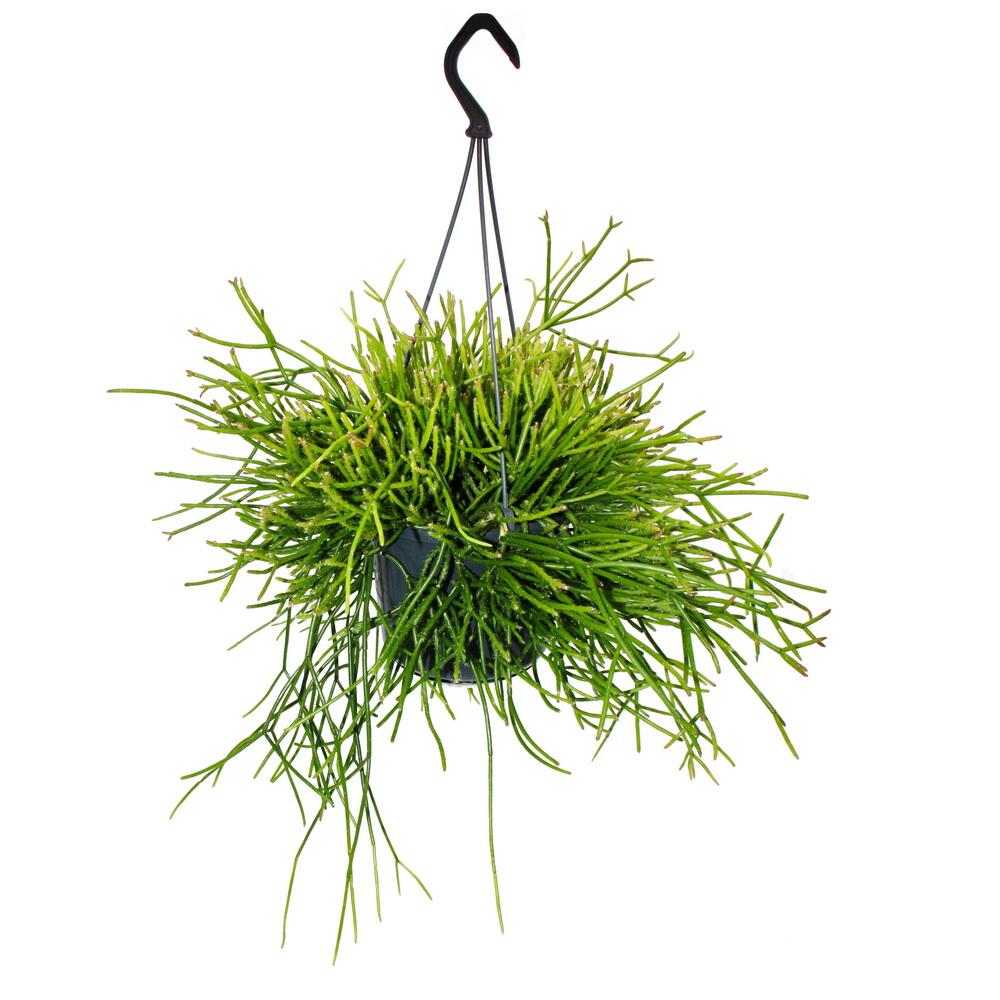
Rhipsalis pulchra stands out through the lightness of its stems. The slender round branches initially stand slightly apart, branch and later bend over the hanging pot rim. These are green cactus stems, not needle-like leaves of a small conifer. Upright and falling parts can be seen together on the young original plant. A calm wall gives this loose structure an attractive background. Enough clear space under the pot matters more than many props beside it. The plant is best discovered when you can still trace individual branches and do not keep bumping into them as you pass.
Keep delivery length separate from later growth
The offer describes a 15-cm hanging pot with about 25 to 30 cm total length. This measurement identifies the delivery condition, not a fixed eventual final length. Over time the species can form substantially longer hanging stems. The original photograph shows a young, comparatively compact plant; a large mature green curtain would be a different stage of development. Before hanging it, check the bracket and safe access for watering. An outer basket or decorative container needs a freely draining plant pot inside. Fine branches should remain free without being trapped between bracket and container.
Position the forest cactus brightly and protected
Rhipsalis pulchra comes from Brazil and also grows on trees in nature. Such roots find small organic accumulations in an airy environment; this is therefore not a desert cactus for a dry hot windowsill. Choose bright filtered daylight and protect it from suddenly intense midday sun. A bright garden-room wall or open living space may suit it if lower stems also receive light. Deep dark room corners are not good permanent positions. After shipping, do not impose heat, stronger sun and prolonged dryness all at once. A calm change of position is easier to judge through fresh growth.
With fine stems, remember the root ball
Feel the upper compost gently and notice the hanging pot’s weight. After slight drying, water slowly until the root space is evenly supplied, then let the excess drain completely. During warm growth phases the small pot may become lighter faster than in darker winter conditions. A rigid calendar therefore fits poorly. Slightly sunken stems can fit a dry plant; if they are in wet soil at the same time, first examine root condition. Constant topping-up may then worsen the situation. More humid surrounding air does not replace supplies for the root ball either, while misting does not make water in the decorative pot harmless.
Loose compost supports further development
Use humus-rich, permeable forest cactus compost with structure, for example from suitable fine bark and mineral components. The compost should hold water briefly while still allowing air to the roots. When the root ball is densely rooted, give only a little more pot space during a growth phase. Hold the root ball, support the stems and release tangled branches individually. Do not press newly added compost unnecessarily firmly. Moderate feeding follows visible growth and the fertiliser label. Fresh pre-fed compost counts towards supplies. If you only look at the visible green portion, it is easy to overlook how small the root space of such a young hanging plant actually is.
Accompany branching rather than shape strictly
The fine green branches need no support that forces every stem upwards. Healthy trailing growth belongs to the species. Remove broken or clearly damaged parts with clean tools and shorten awkward lengths only selectively. Suitable healthy stem sections can be used for a cutting trial in airy compost after the cut end dries briefly. Keep the trial bright and protected without trying to force rooting through constant wetness. When taking down or moving the hanging pot, allow enough hands for the container and branches. A mechanically bent stem needs a different assessment from gradual change across the whole plant.
Follow the short days attentively
In winter the hanging plant stays bright and frost-free, ideally without hot dry air directly from a radiator. When hardly any new branches develop, water and nutrient demand fall. Keep checking the compost rather than imposing a long completely dry rest. Distance from cold glass and light at the lower branches matter particularly now. Check between the fine stems for unusual deposits and changes. Thin dry tips, soft dark bases and sudden bleaching after strong sunshine are different signs. First adjust the visibly unfavourable factor and observe new growth. The loose shape becomes more beautiful through suitable cultivation.
One plant, several views
Good to know
Are the thin green parts leaves?
No. They are slender round cactus stems that branch and hang down over time.
Does the hanging plant stay 25 to 30 cm long?
This is the offer’s stated total length. Older stems can continue lengthening with suitable care.
Does this cactus need full sun?
It is a forest cactus. Bright filtered daylight suits it better than suddenly intense hot midday sun.
Should I keep it dry for a long time?
Check the root ball regularly. Supply thoroughly after slight drying and let drain; months of complete dryness are not the care aim here.
What compost is suitable?
Loose, humus-rich forest cactus compost with good air movement and drainage. A heavy, constantly wet root ball does not suit its roots.
Do I need to tie the branches upwards?
No. They may grow freely over the edge. Plan enough space and protect them from breakage when taking the hanging pot down.
Sources and editorial note
- Exotenherz: offer and original photographs (02.10.2026)
- Rhipsalis.com: Rhipsalis pulchra; species description according to specialist botanical publications (02.10.2026)
- RHS: forest cacti within indoor cactus cultivation (02.10.2026)
- NC State Extension: related forest cactus Rhipsalis baccifera; cultivation comparison (02.10.2026)
Shop offer, product number, GTIN, availability and original images checked directly on 02.10.2026. Specialist sources read directly. Species description read directly; stem shape and young development stage compared with the original. NC State entry used only as an explicitly identified cultivation comparison. 25–30 cm is total length, not upright growth height.