This plant at Exotenherz
Check the shop offer for current availability, price and what is included.
Check the shop for the current price, availability and offer contents.
Your care table
| Topic | What to do | Why it helps |
|---|---|---|
| Position | Bright indirect light, protected from hot direct sun. | Broad pale margins stay visible without strong radiation on little leaves. |
| Water | Keep moderately moist, let surface dry slightly, drain surplus. | Rosettes and daughters need water; permanently wet soil deprives roots of air. |
| Runners | Let thin red connections hang freely; release before moving. | Daughters initially remain attached by sensitive runners. |
| Substrate | Humus-rich loose potting soil with free drainage. | Even moisture reserves help provided water does not stand. |
| Feed | Cautious label-based provision during fresh growth. | The little plant needs food but no concentrated dose into dry soil. |
| Daughters | Set a healthy rosette on slightly moist soil and root while attached. | Runner supply supports it until own roots develop. |
| Repotting | Carefully move well-rooted balls to a suitable slightly larger pot. | Much extra wet soil and buried rosette bases complicate balance. |
| Winter and checks | Frost-free bright without direct heater warmth; inspect undersides occasionally. | Lower growth reduces demand; sap-feeding pests can be spotted early. |
Check the compost and pot weight. The care table explains how far the compost may dry.
Water only when needed. The water should reach the root ball without spilling over the rim.
Remove surplus water from the saucer or cachepot. Then return the plant to a suitable position.
A pale margin around little hairy leaves
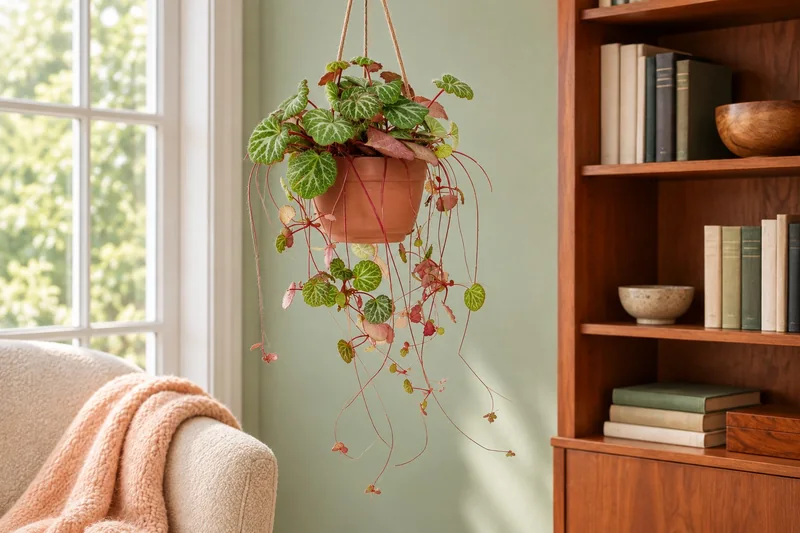
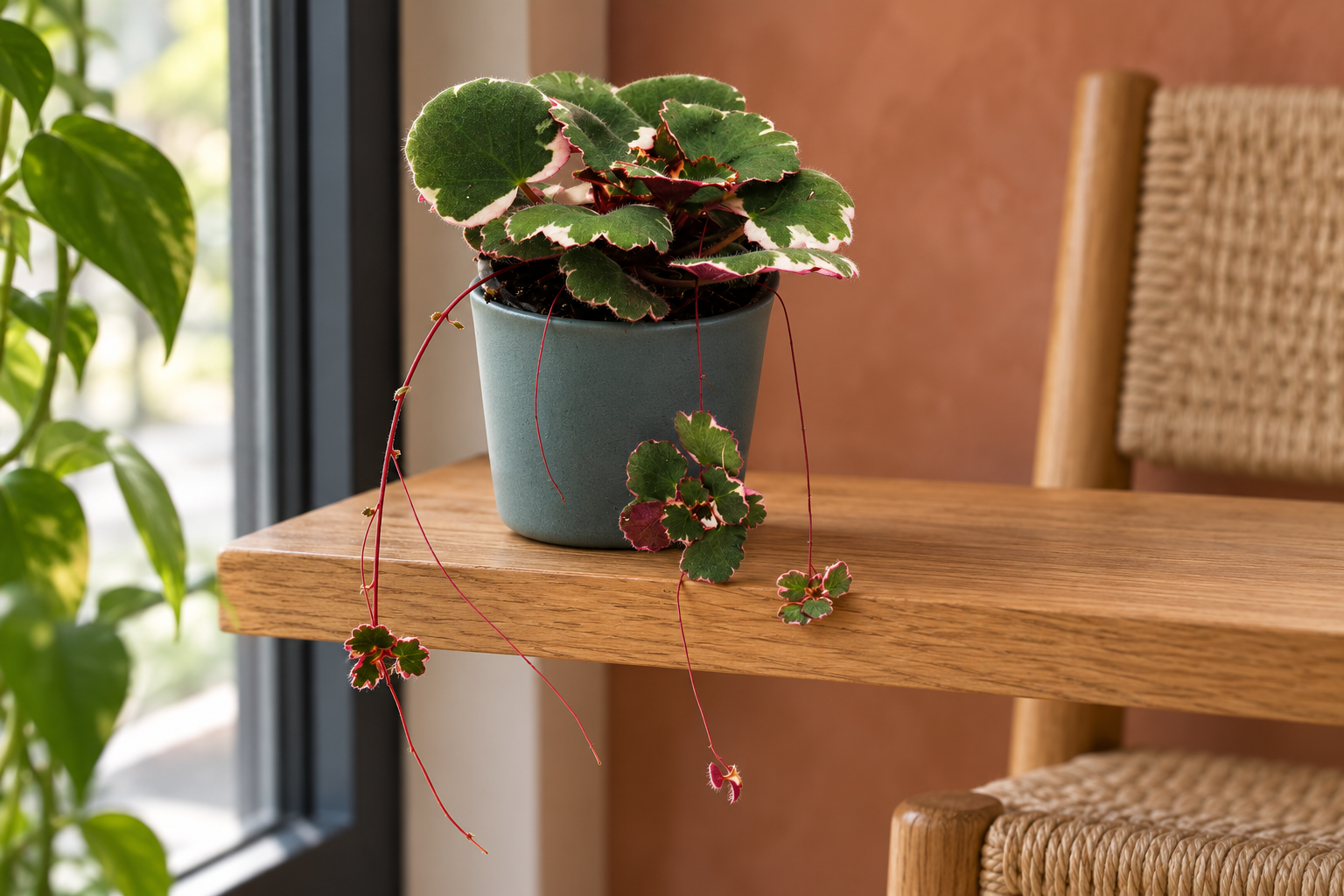
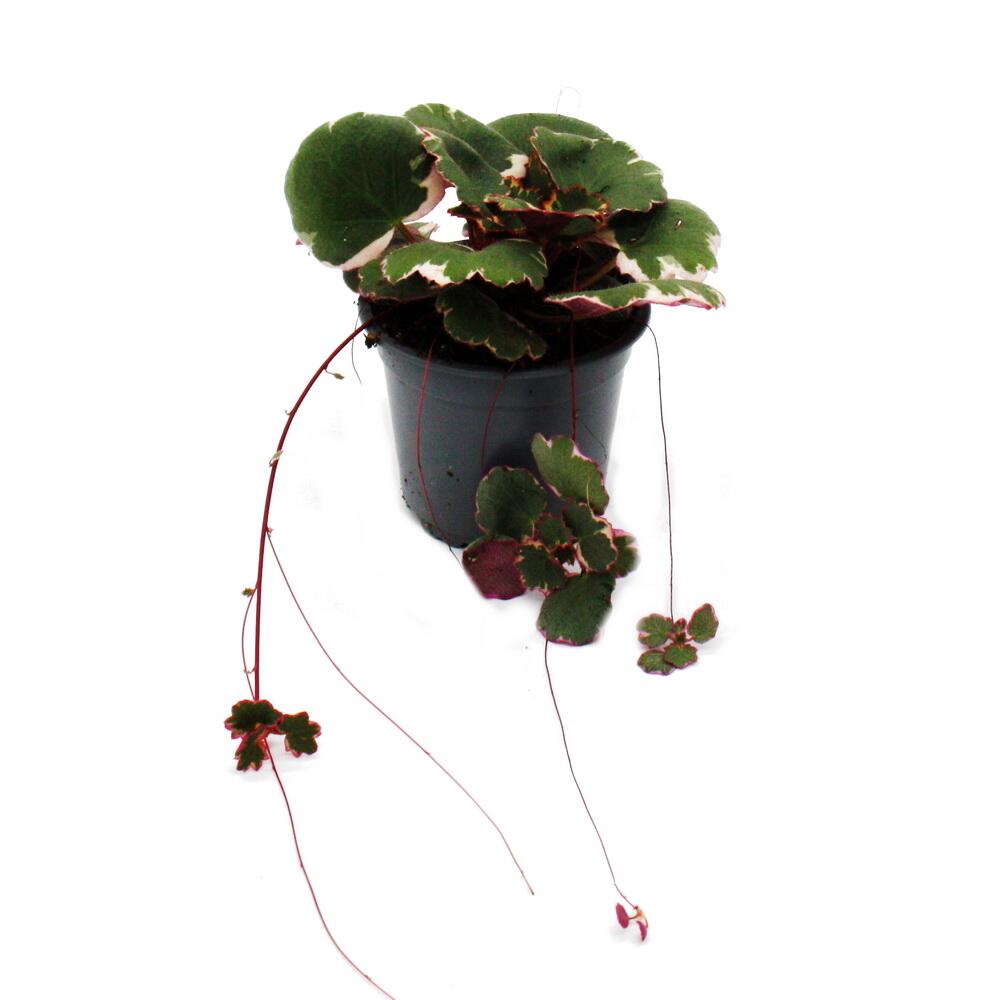
Tricolor carries colour mainly at the edges. A broad whitish margin, pink-blushed in places, surrounds reddish-green leaf areas. Fine hairs and gently scalloped edges give round leaves a soft contour. Beneath compact foliage thin red runners end in little daughter rosettes. A bright console or open shelf lets you watch both: mother stays above, young rosettes hang below. Leave space underneath so threads do not catch handles, textiles or other plants when passing.
Tricolor is a saxifrage with runners
The named selection belongs to Saxifraga stolonifera, a rosette-growing saxifrage with above-ground runners. English trade sometimes calls the species strawberry begonia, although neither strawberry nor begonia. RHS lists Tricolor with stolonifera and older fortunei placement as a synonym of this selection. Margins clearly differ from the green base form. A developed stand may reach about thirty centimetres height; trailing runners describe a different direction. Small white loose panicles may appear later. Leaves and daughters remain the lasting indoor observation motif.
Look beneath the pot when unpacking too
The current offer gives a ten-centimetre pot and roughly twenty-five centimetres shoot length, not a tall upright plant. First locate runners and release them individually from packaging. Do not pull the mother out by little rosettes. Check soil and drainage before water. Moist delivery needs no extra outer-pot reserve. Initially place the young saxifrage sheltered and bright. A decorative scene cover belongs to furnishings; an accessible inner pot for moisture and weight is more important for care.
A light position away from hot glass
Indirect daylight suits this foliage beauty. Pale edges need no fierce sun to show; strongly sunlit glass may damage little leaves. Shelves suit permanently only if enough daylight truly arrives. A cooler sheltered area is often preferable to warmth immediately above a heater. In summer gently acclimatise Tricolor to a shaded protected outdoor place. Bring inside before cold nights. RHS gives at least five degrees for this selection. Frost-free indoor care is therefore more reliably planned than winter in an unprotected balcony pot.
Moderate moisture for mother and daughters
Loose soil should stay evenly moderately moist. Feel the top layer and lift the pot before water. A slightly drying surface prompts deeper assessment; the entire little ball should not repeatedly dry completely. Water soil and let surplus drain. More daughter rosettes mean more living leaf area supplied by the mother. Demand may rise in warmth and fall in cooler dark winter. Wilted leaves alone do not decide. If soil is wet already, assess roots, warmth and drainage instead of adding water.
Let a daughter form its own roots first
For propagation place a suitable young rosette on slightly moist loose soil in a second little pot or free appropriate substrate space. Leave the red connection initially intact. If needed secure gently without squeezing or deeply burying the base. Once rooted and stable cut the runner with clean scissors. Wait for tiny newly formed daughters. Not every long thread must disappear for tidiness. Freely hanging rosettes explain Tricolor’s appeal and demonstrate a new plant’s formation.
Accompany the little stand through the year
A suitable holed pot and loose humus-rich soil provide the basis. Repot carefully only when roots fill well; a huge container keeps too much unused moisture. During visible growth cautious feed by label can support provision. Winter demand often falls. Remove dry leaves carefully without pulling healthy runners and occasionally check undersides for animals or webs. After summer outdoors inspect little rosettes too. Possible flowers briefly alter shape, then the low tuft and threads remain. The plant grows beyond its delivery reference without losing its light character.
One plant, several views

Good to know
What does Tricolor mean?
The named selection with broad whitish to pink margins around reddish-green foliage.
What is current delivery size?
10 cm pot and about 25 cm shoot length, not fixed upright total height.
Are rosettes at thread ends different plants?
Daughters of the same saxifrage, attached to the mother by thin runners.
Must I cut them immediately?
No. A daughter may root on moist soil first, then be separated.
Is Tricolor a begonia?
No. Saxifraga belongs to Saxifragaceae. Strawberry begonia describes a similar impression only.
Can it winter outdoors?
Sheltered frost-free pots are preferable for this named selection; RHS gives at least 5 °C.
How much sun can it take?
Bright indirect light provides a suitable basis. Avoid hot direct sun behind glass.
Why is a daughter wilting?
Check runner damage or trapping first, then mother moisture. Do not automatically water more.
Sources and editorial note
- Exotenherz: offer and original images (03.10.2026)
- RHS: Tricolor naming, margins and temperature (03.10.2026)
- NC Extension: Saxifraga stolonifera runners and indoor culture (03.10.2026)
Offer, article number, GTIN, availability and originals directly checked03.10.2026. Specialist sources directly read. Named RHS Tricolor selection including fortunei name form compared; green species alreadycanonical, no potvariant. Clean exactgallery1 chosen;gallery2greenbase internallyexcluded. Currentshootlength nottotalheight.