This plant at Exotenherz
Check the shop offer for current availability, price and what is included.
Check the shop for the price, current availability and what is included.
Your care table
| Topic | What to do | Why it helps |
|---|---|---|
| Light | Bright and filtered. | Harsh direct sun can damage the silvery foliage. |
| Water | Allow the root ball to dry appreciably before watering again. | The slow-growing plant cannot tolerate constantly wet roots. |
| Drainage | Remove excess water completely after watering. | No permanent water residue should remain in the outer pot. |
| Substrate | Humus-rich, loose and structurally stable. | Roots need air between waterings. |
| Temperature | Evenly warm, without cold draughts. | The tropical species is not frost-hardy. |
| Fertiliser | Moderately during active growth according to product instructions. | Overfeeding does not make slow growth healthier. |
| Climbing shoots | Guide loosely along a support if needed. | Young shoots and nodes must not be constricted. |
| Checks | If leaves curl, check root ball moisture first. | Both dryness and damaged wet roots can cause problems. |
Check the compost and pot weight. The care table explains how far the compost may dry.
Water only when needed. The water should reach the root ball without spilling over the rim.
Remove surplus water from the saucer or cachepot. Then return the plant to a suitable position.
Milky silver on firm leaf surfaces
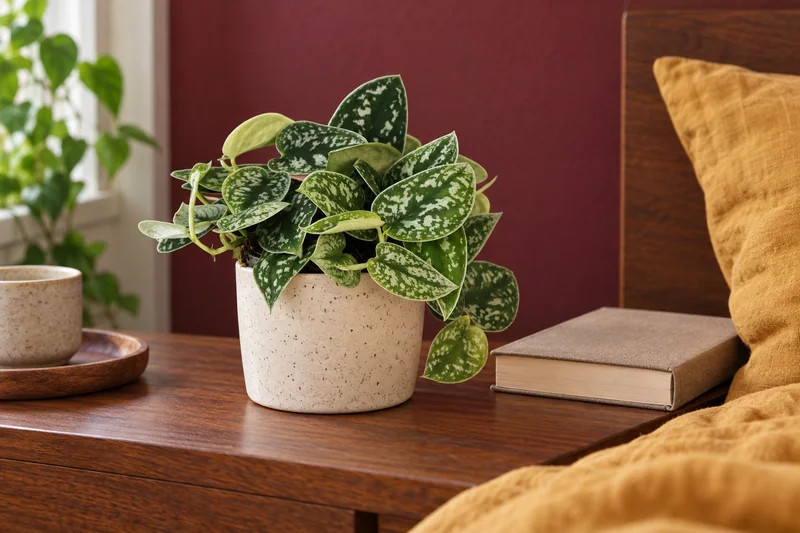
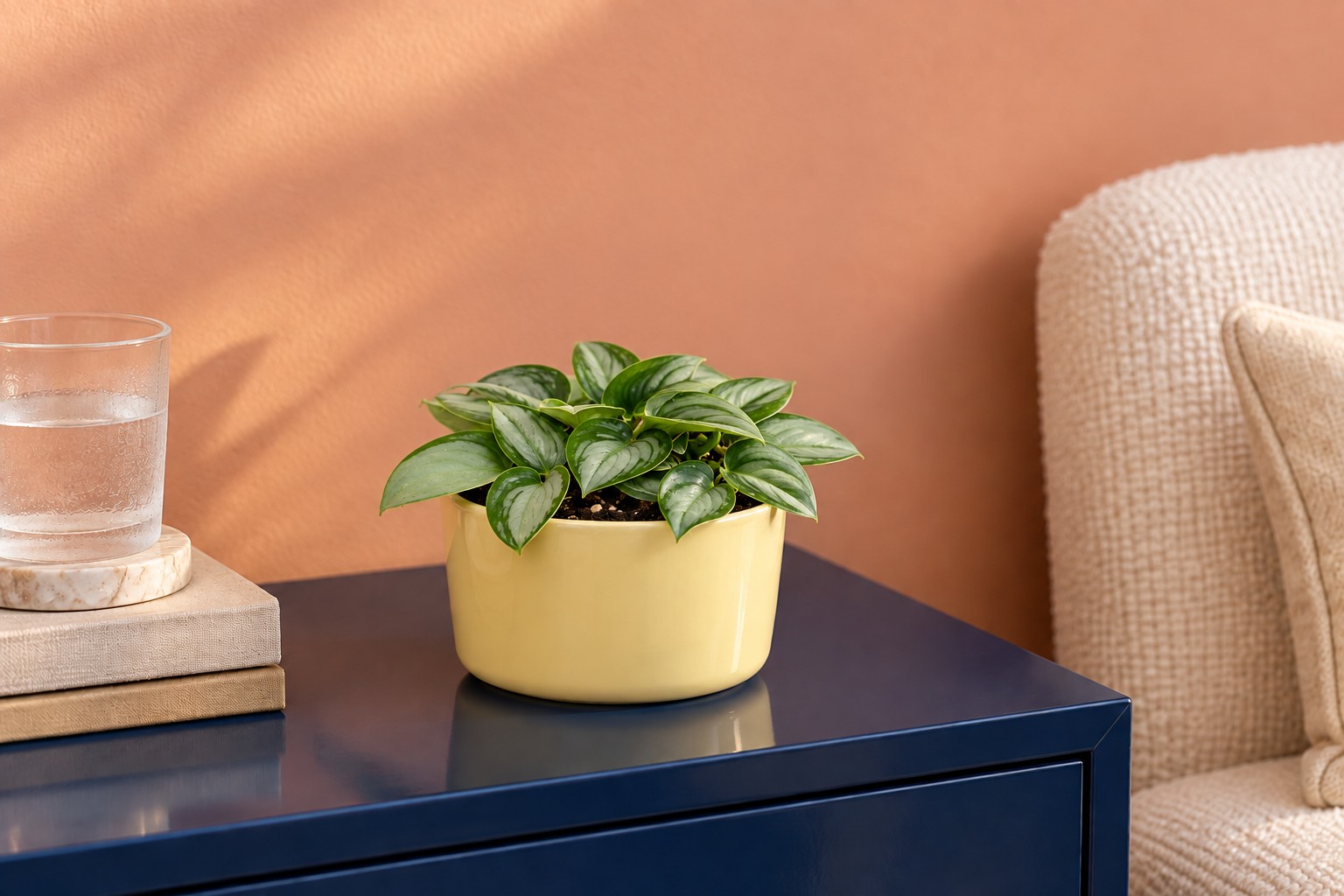
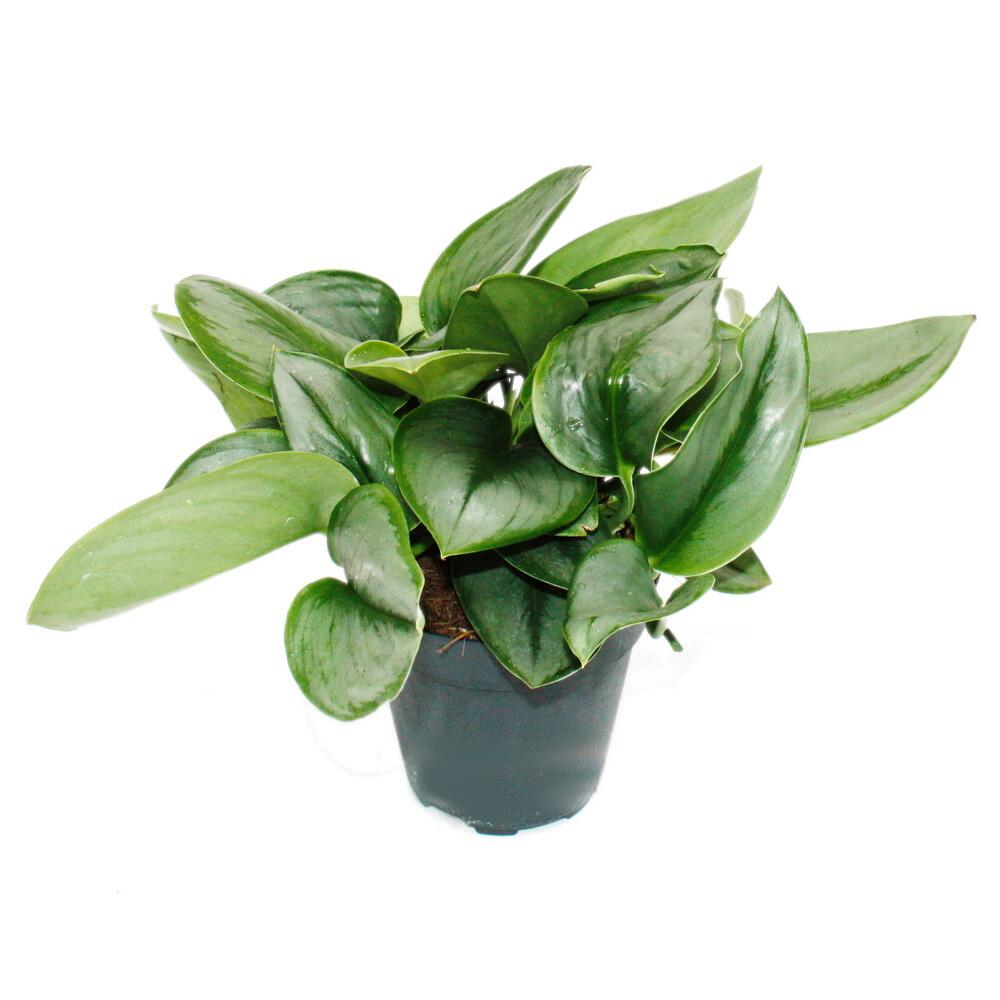
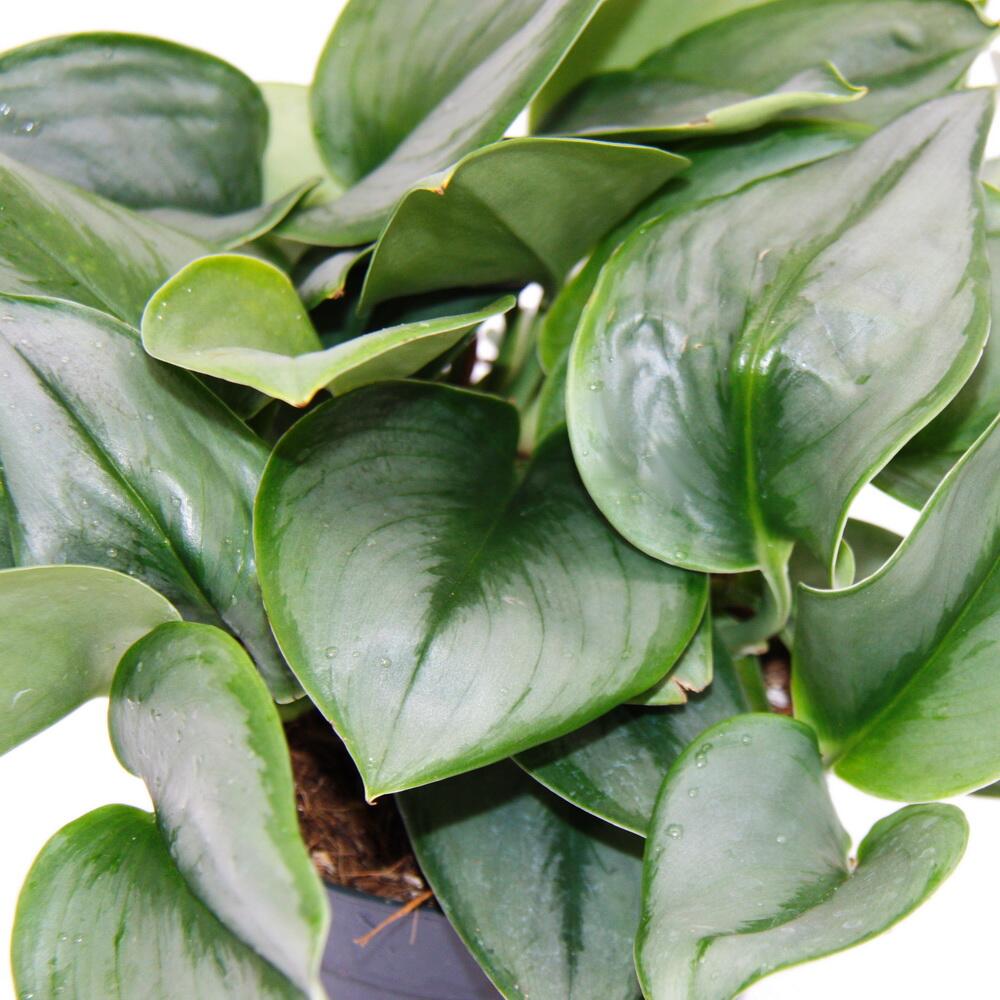
The leaves look silvery to milky green, with a darker edge and a recognisable midrib. Their surface is firm and glossy. This distinguishes the form from the nearly black foliage of Dark Form and the spotted silvery pattern of many Scindapsus pictus. The shop says pictus Trebie Moonlight. NC State and Costa Farms, however, list Moonlight under Scindapsus treubii; the original image also matches this trade form. This differing name remains documented. The silver is natural foliage ornament, not a reason to polish the surface with care products.
A low young plant rather than ready-made long vines
The shop offer specifies a 12 cm pot and approximately 15 cm overall height. The plant therefore begins as a low tuft of leaves. The scene shows this small scale; long metre-spanning vines are not part of the guaranteed delivery condition. Over time, shoots may grow along a surface, trail or use a suitable support. When choosing a position, consider both current size and later growth. An outer pot or the furnishings shown are included only when explicitly named in the current offer.
A bright position without hot direct sun
Filtered light and normal even indoor warmth support healthy new leaves. In a dark corner, Moonlight may initially look unchanged but does not automatically continue growing well there. Its relatively quiet growth is not a deficiency that must be fixed with ever more light or fertiliser. Harsh direct sunshine after transport or a shadier position can damage leaf surfaces. Avoid cold draughts and a chilling surface underneath. An open bright surface may suit it better than a cramped dark shelf corner.
Look deeper into the root ball before watering
The firmer leaves store moisture. Allow the root ball to dry appreciably before the next watering and do not check only the thin top layer of soil. NC State recommends more drying for Scindapsus treubii than for tropical plants kept constantly moist. Then water thoroughly and remove excess. In winter, intervals usually grow longer with lower consumption. Permanently wet soil encourages root problems. Strong curling or limp leaves still do not always mean thirst: a wet damaged root ball can cause similar symptoms.
Loose soil and patience with growth
Use a loose humus-rich mix with sufficient structure and a draining container. Move into a slightly larger pot only when needed. An oversized container with much unrooted wet soil does not speed up the slow climber. Fertilise moderately during active growth according to product instructions. Guide a new shoot loosely along a climbing support if needed, without squeezing nodes and leaf stalks. Remove dust carefully with a soft damp cloth. Support young leaves and do not try to intensify their silver markings by rubbing vigorously.
Cuttings, pests and a safe position
For vegetative propagation, a stem section needs a healthy node; a decorative single leaf alone is not a reliable new climbing plant. Rooting takes patience and suitable warmth. Check leaf undersides and shoot bases for mealybugs, aphids and spider mites. New dark soft spots at the base or roots call for checking watering. The plant is not suitable for eating. Irritating calcium oxalate crystals are especially relevant with nibbling children and pets. A high surface helps only if it also provides adequate light and a secure position.
One plant, several views
Good to know
Why does the shop say Scindapsus pictus?
The trade name differs. Specialist sources list Moonlight under Scindapsus treubii; that identification is compared with the original image and disclosed here.
Is it the same plant as Dark Form?
Both are assigned to Scindapsus treubii but are different trade forms: Moonlight is silvery, Dark Form very dark green.
Must the soil always remain moist?
No. Allow appreciable drying before the next watering, then remove excess water.
Why does it grow so slowly?
Moonlight grows comparatively quietly. Healthy leaves and roots matter; additional fertiliser does not replace suitable cultivation.
Sources and editorial note
- Product and delivery contents: Exotenherz
- NC State Extension: plant profile
- Costa Farms nursery: plant and care knowledge
Sources checked: 15 September 2026. Product information and the contents of delivery follow the linked shop offer. Care advice was checked against the cited specialist sources and should still be adapted to the plant’s condition, position and season.