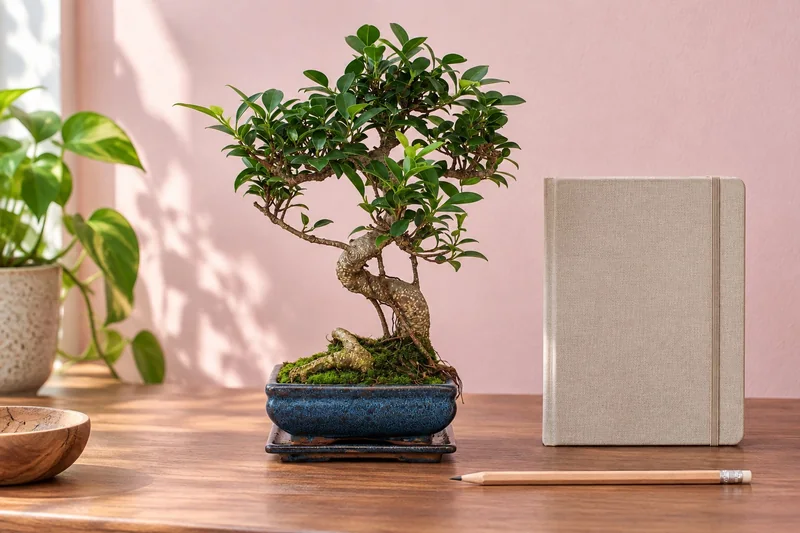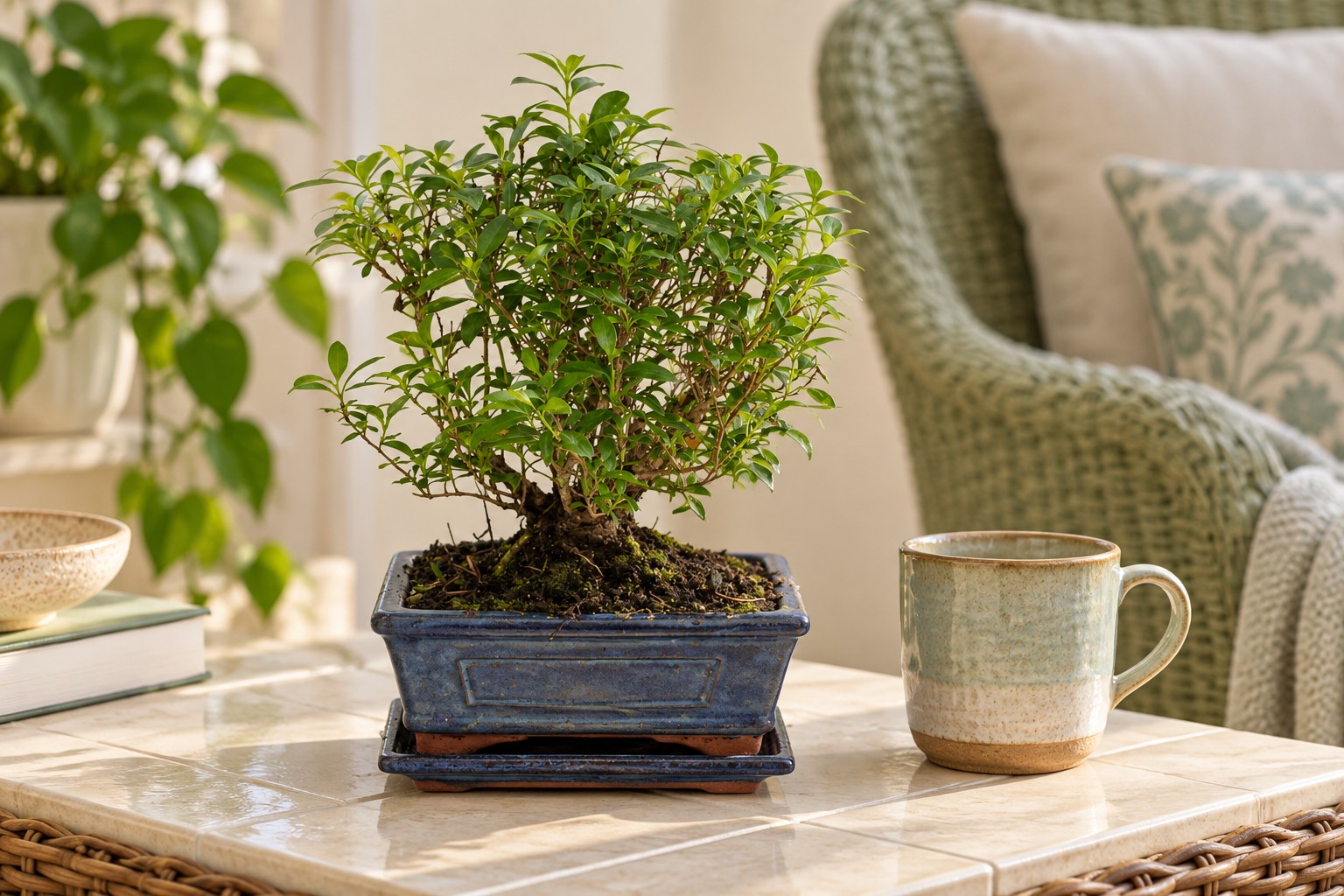
This plant at Exotenherz
Check the shop offer for current availability, price and what is included.
Product details, availability and delivery information in the shop.
Your care table
| Topic | What to do | Why it helps |
|---|---|---|
| Light | Bright, with gentle sun after acclimatisation. | Persistently dark positions cause weak growth. |
| Water | Water thoroughly as the surface begins to dry slightly, then drain. | Do not let the root ball dry out or stand constantly wet. |
| Compost | Free-draining yet moisture-retaining bonsai mix. | A small bowl needs balanced water management. |
| Feeding | Only during healthy growth, weakly according to the product instructions. | Clarify leaf drop or stalled growth first. |
| Summer | Sheltered outdoors with reliably mild nights above approximately 10 °C. | Abrupt temperature changes and cold wind stress Serissa. |
| Winter | Very bright and frost-free, approximately 10–20 °C. | More warmth increases the need for light. |
| Shaping | Gently shorten extended shoots; prune roots moderately. | Delicate branches and roots deserve careful handling. |
| Observation | Watch for leaf drop, sap-feeding pests and fine webs. | Reassess water use when leaves are lost. |
Check the compost and pot weight. The care table explains how far the compost may dry.
Water only when needed. The water should reach the root ball without spilling over the rim.
Remove surplus water from the saucer or cachepot. Then return the plant to a suitable position.
The charm is in the small things
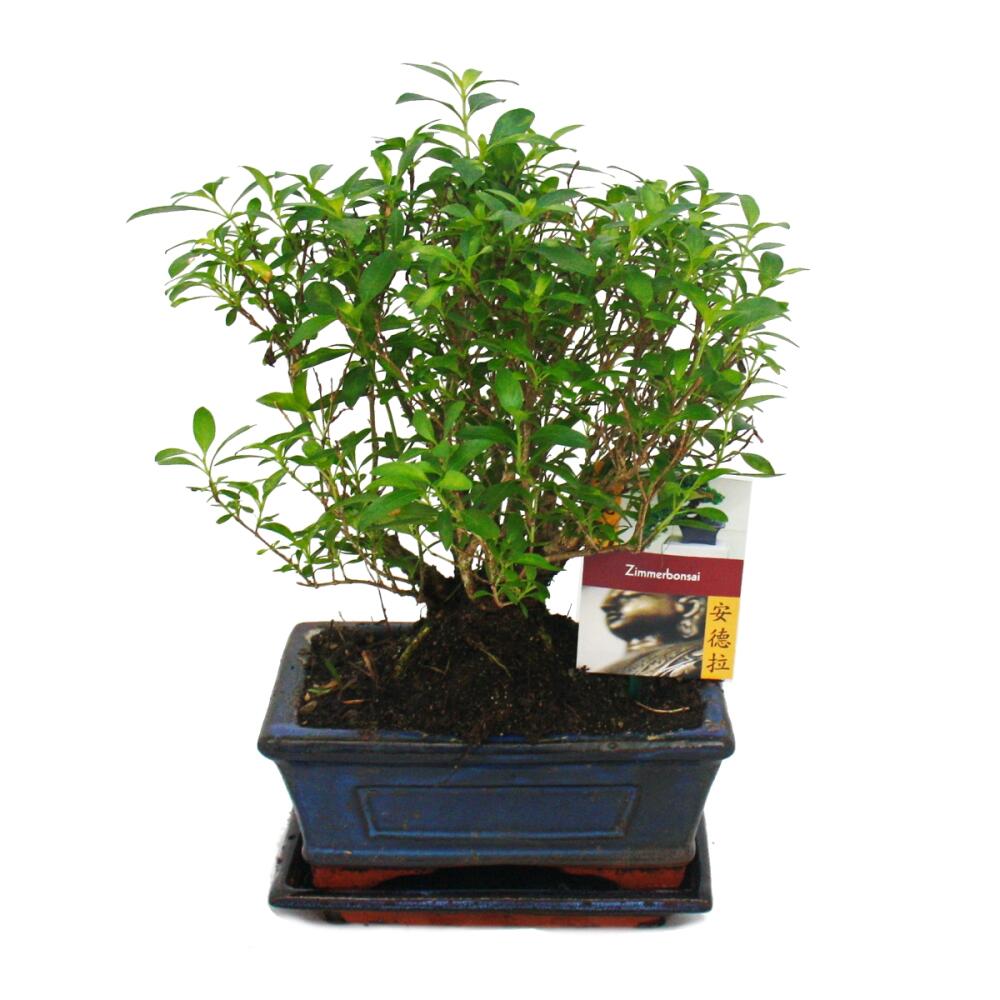
Serissa is one of the bonsai you enjoy viewing up close. Fine branches and an increasingly characterful trunk base show between the small leaves. Serissa japonica is the current name; Serissa foetida remains on many labels. The popular name tree of a thousand stars refers to its small flowers. Even without flowering, the plant remains interesting. An abundant flowering crown is neither a requirement for a healthy tree nor a delivery promise.
A small bowl with limited reserves
The shop offers a tree around five to seven years old with approximately 20–25 cm total height. The bowl measures around 15 × 10 × 7 cm. It is a small, living individual specimen: crown shape and bowl colour may vary. It looks very personal on a bright side table. Ensure, however, that the crown receives light and is not permanently shaded by an armchair, curtain or shelf above it.
Choose a good position and keep it
Serissa likes plenty of light and tolerates a sheltered summer position outdoors after acclimatisation. Nights should reliably remain above approximately 10 °C. Bright conditions at around 10–20 °C are sensible for overwintering; the warmer the room, the more important sufficient light becomes. Avoid cold draughts and immediate proximity to heating. It may lose leaves after a move. Check the chosen position thoroughly instead of carrying the tree somewhere else every other day afterwards.
Keeping moist does not mean standing in water
Fine roots should neither dry completely nor remain without air for long. Check the surface and water slowly over the whole bowl when it begins to dry slightly. Excess water must drain. If Serissa has lost many leaves, it usually uses less water; adapt amounts and intervals to its actual condition. A drooping-looking tree with wet compost does not need speculative extra watering.
Develop the crown gently
On a vigorously growing tree, extended shoots can be shortened carefully. During attractive flowering, the scissors may wait if no other shaping is required. We are restrained with root work: check root condition and season first, then change only what is necessary. A loose bonsai mix with working drainage makes later care easier. After major stress, wait for healthy new growth before cutting again or feeding more strongly.
Recognise care mistakes early
Fine webs and pale speckles may indicate spider mites; sticky patches and deformed shoot tips deserve inspection for aphids or other sap-feeding pests. Persistently wet, bad-smelling compost requires root inspection. The species’ characteristic smell from injured plant parts alone is not, however, certain evidence of rot. Briefly note position changes and watering when problems occur. This small care routine often reveals what the tree lacks before several well-intended interventions stress it further.
One plant, several views
Good to know
Why does my Serissa lose leaves after purchase?
A position change may trigger this. Check light, temperature and root-ball moisture; avoid unnecessary moving afterwards and blanket increases in watering.
Does Serissa always flower in June?
No. Flowering depends on condition, light and cultivation. The German name Junischnee does not fix a date.
Can Serissa stay on the balcony all year?
Not unprotected under our winter conditions. It needs a bright, frost-free position in good time.
Is daily misting more important than watering?
No. Moisture in the root ball remains decisive. Misting replaces neither good light nor reliable water supply.
Sources and editorial note
- Product and delivery contents: Exotenherz
- NC State Extension: plant profile
- Bonsai Empire: species-specific bonsai care
Sources checked: 16 September 2026. Product information and the contents of delivery follow the linked shop offer. Care advice was checked against the cited specialist sources and should still be adapted to the plant’s condition, position and season.