This plant at Exotenherz
Check the shop offer for current availability, price and what is included.
Check the shop for the price, current availability and what is included.
Your care table
| Topic | What to do | Why it helps |
|---|---|---|
| Light | Bright with filtered daylight. | Thin leaves tolerate no sudden hot sun. |
| Water | Thoroughly wet with low-lime water or bathe briefly. | Moisture must reach the leaf surface. |
| Draining | Gently tilt the rosette and dry airily. | Water must not remain trapped in the base. |
| Attachment | Place loosely and accessibly. | The plant must remain removable without damage. |
| Growing medium | Do not plant in wet compost. | Loose epiphytic cultivation needs free air contact. |
| Winter | Keep warm enough and avoid prolonged wetness. | Leaves dry more slowly in cool conditions. |
| Feed | Occasionally use suitable feed very moderately. | The small leaf mass needs no heavy salt supply. |
| Handling | Do not rub or squeeze fine leaves. | Scales and leaf threads are sensitive. |
Take the tillandsia off its support. Do not rub the leaves; preserve the delicate silvery scales.
Use low-lime water at room temperature. The care table explains whether thorough misting or a short soak is suitable.
Gently shake off the water. Tilt rosettes downwards, hang loose strands without bunching them together and allow them to dry with good airflow.
Fine leaf threads with an important surface
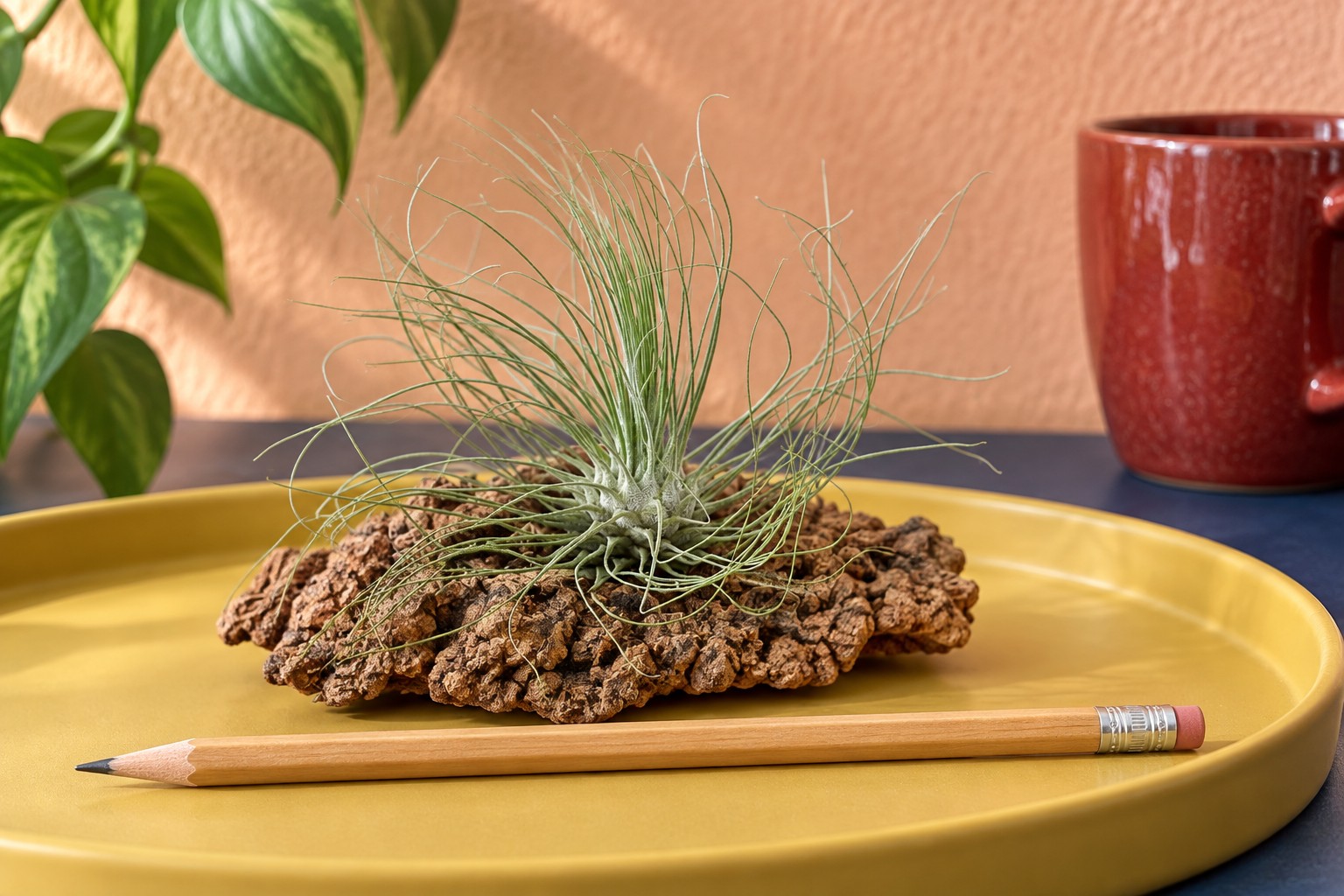
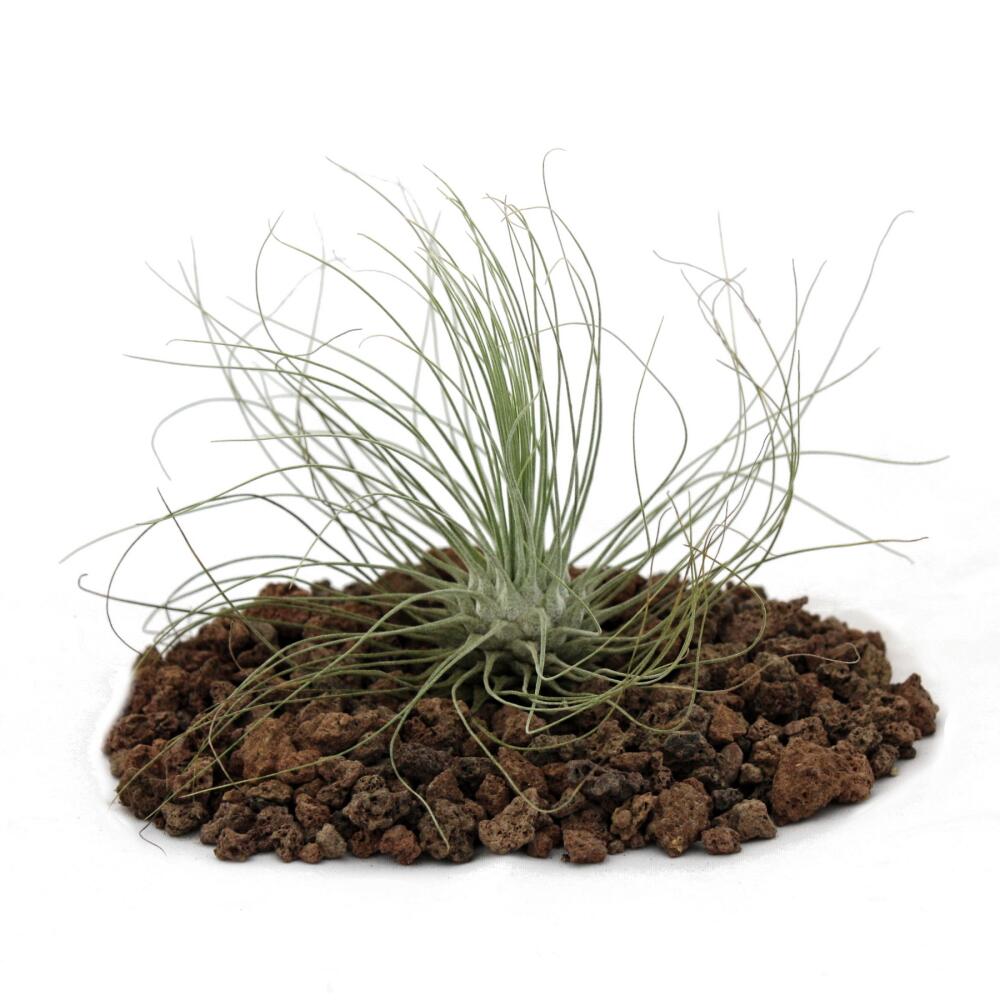
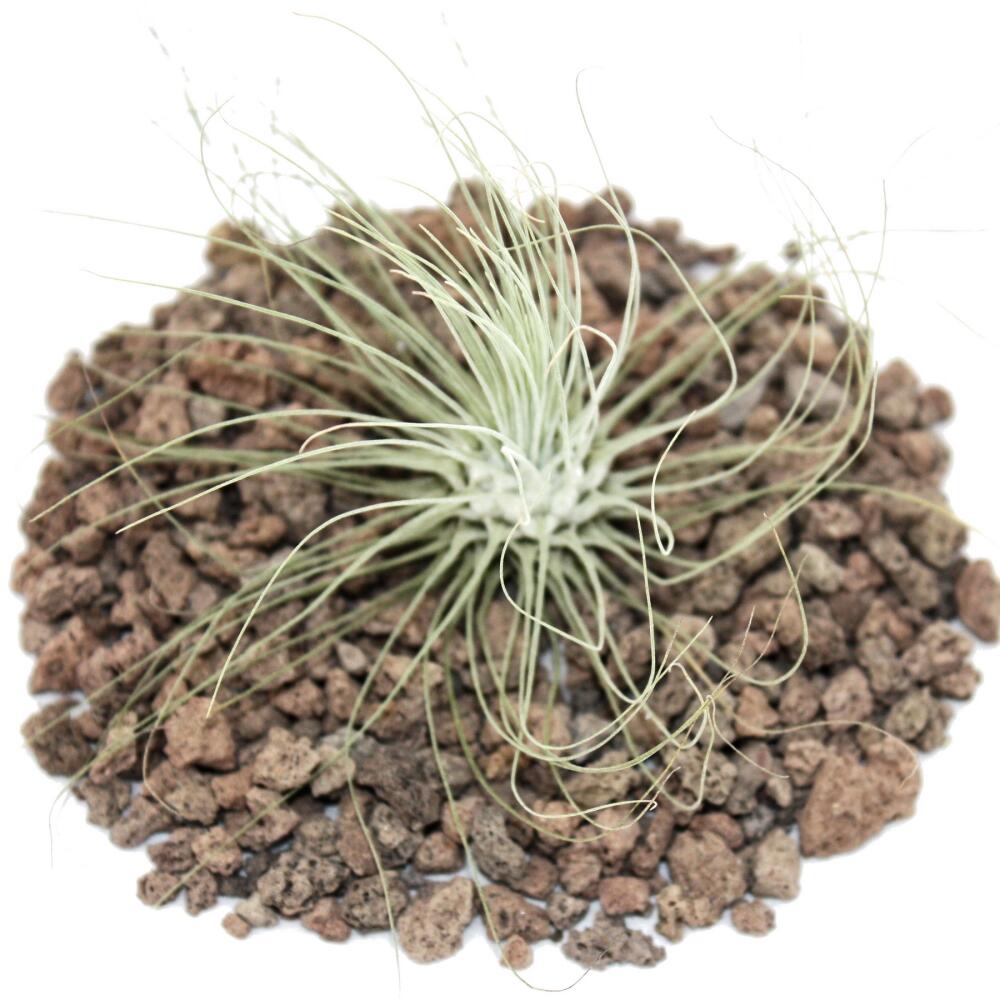
Many narrow almost hair-like leaves radiate out from a small base. Their silvery surface carries fine scales involved in water uptake. Delicate foliage is neither moss nor artificial decoration. The plant is offered loose and needs airy support. A small open piece of cork or suitable holder gives a view of its shape. Do not press the base deeply into wet compost or trap leaf threads between stones.
Interpret the trade name carefully
Argentea is also used in trade for fine-threaded plants around Tillandsia fuchsii. According to Kew, true Tillandsia argentea Griseb. is native to Cuba and Jamaica, whereas T. fuchsii comes from Mexico and Guatemala. Origin information and sample shop image fit the widespread fuchsii trade complex better. Without supplier confirmation, this is not taken as a reliable new identification. This portrait therefore describes the fine-threaded commercial form actually shown and makes the identification boundary visible.
Small size needs an accessible position
Approximately 8 to 10 cm plant size without a pot is given. The new scene shows a correspondingly small rosette, not a large spherical clump. A bright open position with filtered daylight suits well. Direct hot sun and strong radiator heat can rapidly dry thin leaves. Air movement remains necessary nevertheless. Position so it can regularly be removed for watering. Tight glued decoration hampers necessary care and may retain moisture at the base.
Supply water without injuring leaf threads
Use clean low-lime room-temperature water. Thoroughly wet the rosette; in suitable loose cultivation a short bath may ease even supply. Afterwards gently drain and tilt the base so no water remains trapped. Do not wring like a cloth or rub fine leaves together. Watering frequency depends strongly on warmth, humidity and air movement. A little mist may be insufficient in very dry rooms.
Allow drying again between waterings
After every watering the surface must reliably dry. A decorative dish must not collect water beneath the base. In cooler winter, especially ensure the plant does not stay wet long. Use suitable tillandsia or bromeliad feed only occasionally and very moderately according to the label. Do not remove hard-water deposits with brushes. Later daughter rosettes may initially stay together. Do not tear off tiny pups early; a stronger shared clump is easier to care for.
Distinguish damage from normal development early
Individual old outer leaf threads may dry. But if many tips become brittle, the rosette very limp or the base soft and dark, check cultivation closely. Dryness and rot need different corrections. Additional bathing will not heal a rotten centre. Do not mistake the natural silvery surface for dust or use leaf-shine products. The small tillandsia rewards careful observation: just a few millimetres of healthy new growth show that light, water and air fit together.
One plant, several views
Good to know
Is the botanical species reliably identified?
The trade name argentea is used differently. Without additional confirmation, the exact identification of this fine-threaded commercial form remains open.
How large is the loose plant?
Approximately 8 to 10 cm plant size is stated; no pot belongs to this offer.
Can I simply plant it in potting compost?
The loose form presented here is attached or placed airily. Wet dense compost at the base is unsuitable.
Should the silvery coating be removed?
No. Fine scales belong to the functional leaf surface.
Sources and editorial note
- Product and delivery contents: Exotenherz
- Bromeliad Society of Australia: botany and commercial forms
- Royal Botanic Gardens, Kew: botanical classification
- Royal Botanic Gardens, Kew: botanical classification
- Royal Horticultural Society: plant and care knowledge
Sources checked: 15 September 2026. Product information and delivery contents follow the linked shop offer. Care has been checked against the stated specialist sources and remains subject to plant condition, position and season.