This plant at Exotenherz
Check the shop offer for current availability, price and what is included.
Product and delivery details are given in the individual offer.
Your care table
| Topic | What to do | Why it helps |
|---|---|---|
| On arrival | Check the three root balls individually for moisture and care for them in shelter until planting. | The young delivery form is green; flowers and fruits are not a promised delivery state. |
| Position | Choose a sunny sheltered position with fertile free-draining soil. | Light and an airy root space support later development. |
| Planting level | Set the crown at soil level, cover roots and water well. | A buried crown or exposed roots make establishment harder. |
| Spacing | About 30 cm as the shop’s guide; allow air and access between rosettes. | The small plants later form more leaves and runners. |
| Watering | Check root balls and soil, watering the root zone when needed. | Small containers dry faster, but constantly wet soil is still unfavourable. |
| Fruit protection | Reduce soil contact and prolonged fruit wetness; remove rotting berries. | Fruits lying damp are harder to keep healthy. |
| Harvest | Watch pale fruit development and achenes; do not wait for completely red skin. | Snow White remains white-fruited and can develop pink cheeks. |
| Runners | Remove unnecessary shoots; separate wanted daughter plants only after rooting. | Many runners can crowd the area and reduce visibility. |
| After harvest | Remove old damaged leaves, retaining the crown and fresh leaves. | The long-lived plant must keep developing for the next annual cycle. |
For young plants, feel the soil directly at the root ball. The surface and deeper soil may have different moisture levels.
Water thoroughly after planting; later, water according to the soil, weather and establishment rather than a fixed calendar.
Avoid standing water. For plants in containers, also check that water runs out of the drainage hole.
A strawberry that shows ripeness differently
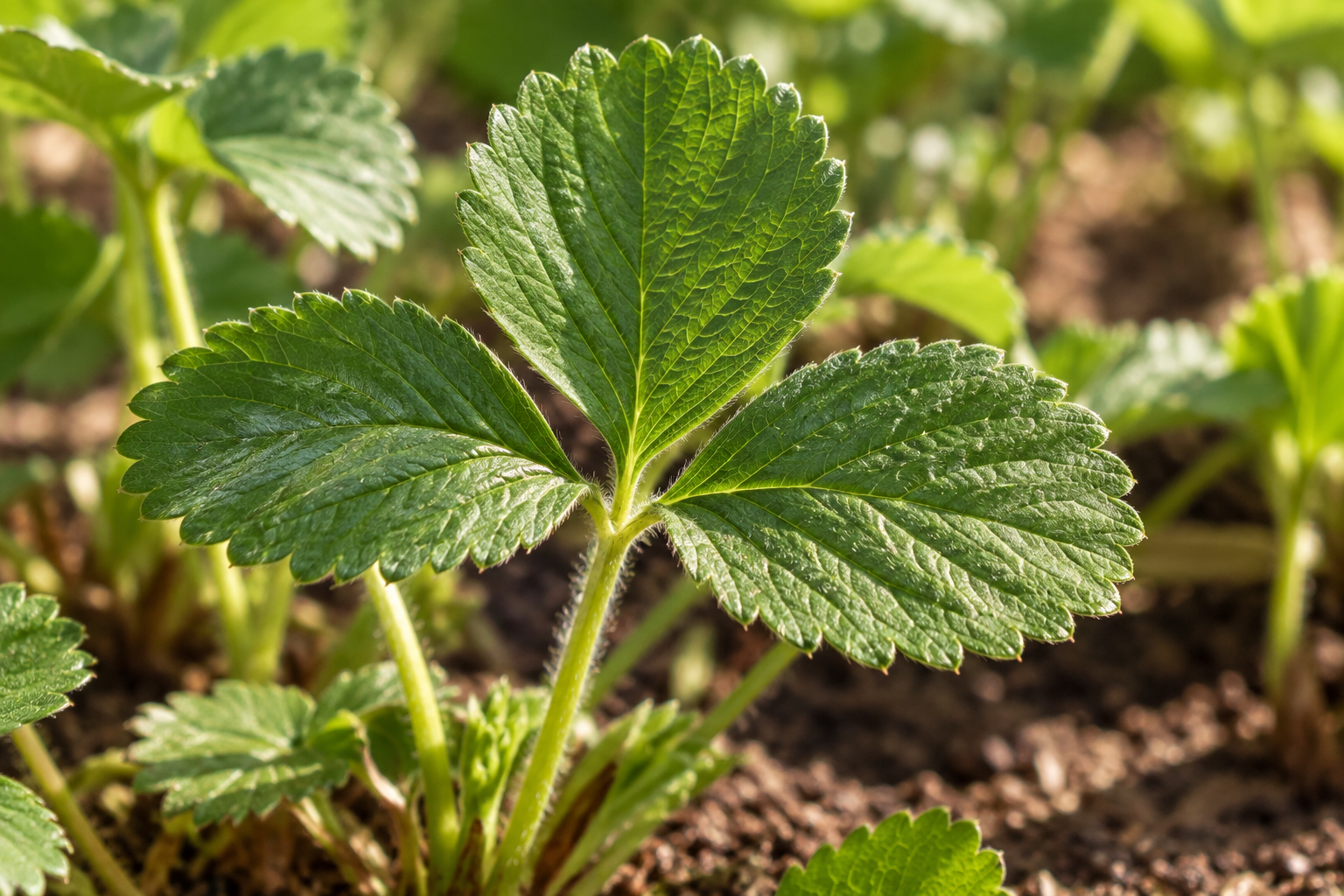
Snow White belongs to garden strawberries, Fragaria × ananassa, and thus to Rosaceae. Green leaves with three toothed leaflets stand above the short crown; white flowers and the namesake pale fruits may follow later. This cultivar is not a red-fruited strawberry simply picked unripe. The breeder describes white flesh, rounded to oval fruits and yellow to red achenes on the surface. Some berries develop pink cheeks. Looking for fully red fruit skin therefore does not help with the harvesting decision here. The breeder also lists Snow White under the cultivar designation hanswhit. The selection crops once and ripens rather late to very late. That cannot provide an exact harvest day for your garden.
Three young rosettes first need a place
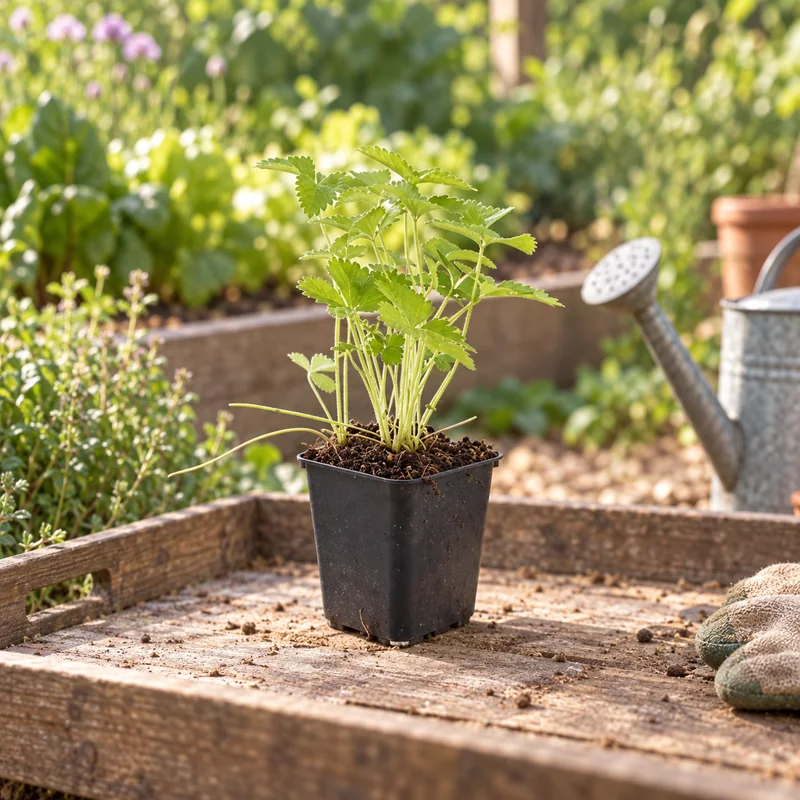
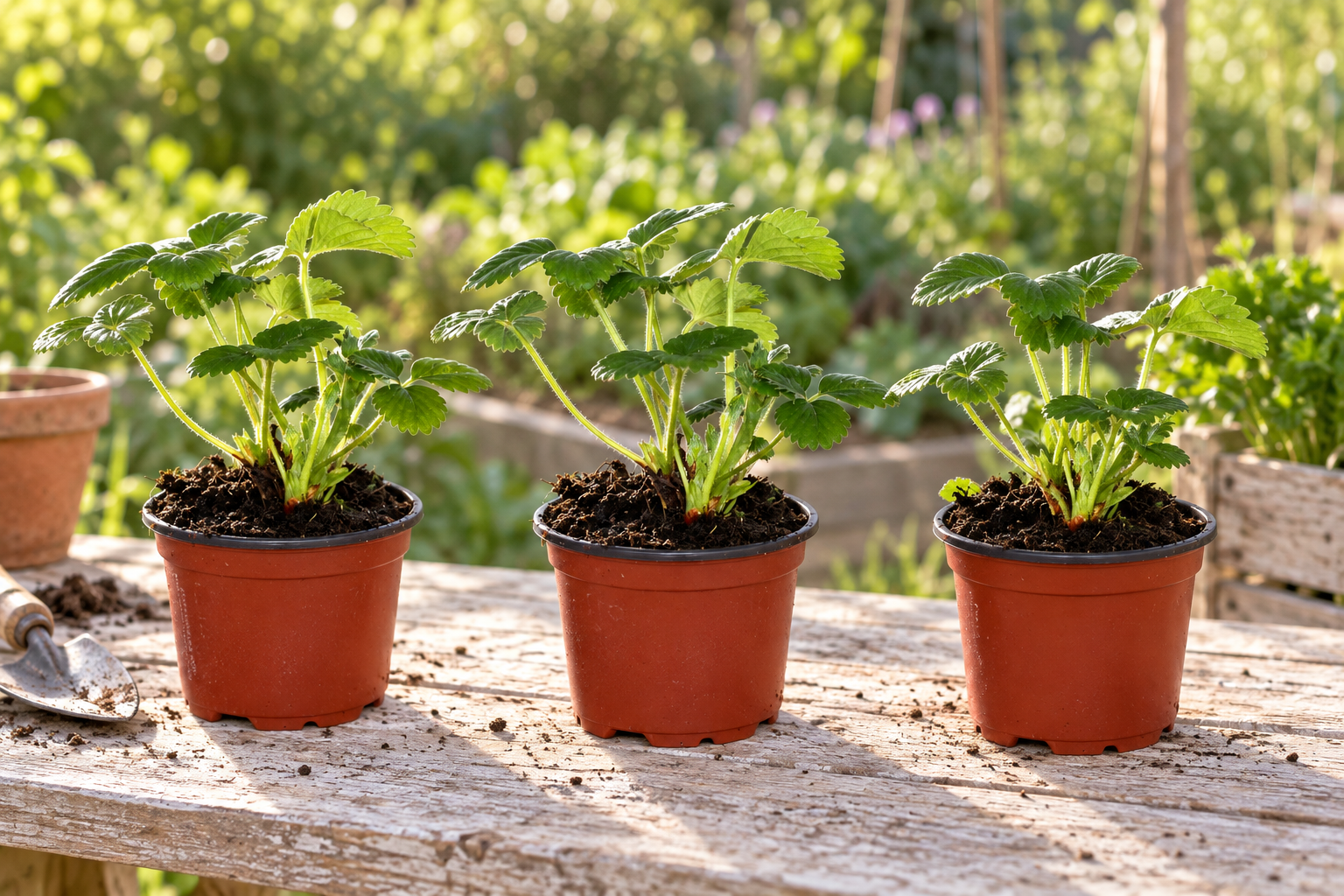
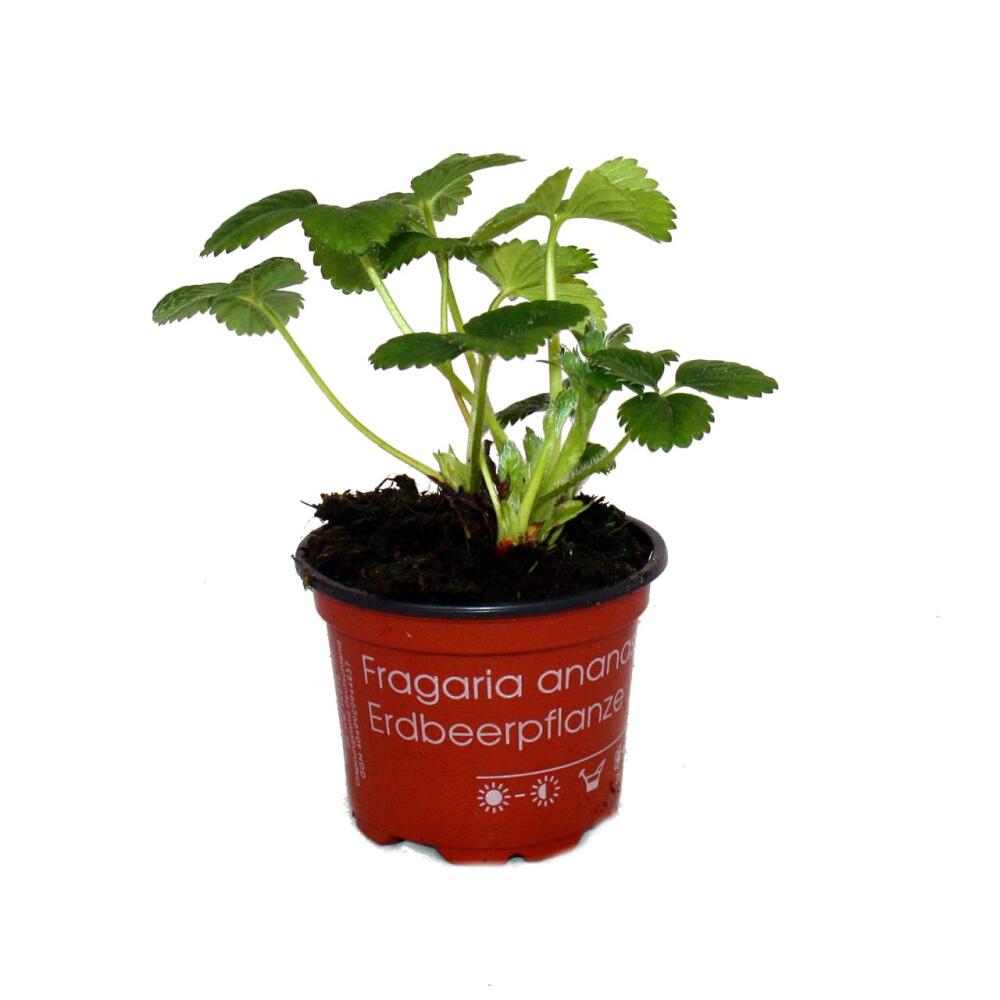
The offer comprises three young plants in 9-cm pots. No delivery height is stated there. The clean original shows a green strawberry rosette without flowers or fruits; this young starting form also accompanies the garden scene. After unpacking, check each root ball’s moisture and keep plants sheltered until planting. Three small nursery pots are not yet a finished fruiting bed and should not remain so tightly restricted for the entire season. Garden strawberries are low long-lived plants; as a general specialist guide, RHS gives about 10–50 cm height. This is a broad range for Fragaria × ananassa, not a precise Snow White delivery height or fixed cultivar final height. Later space is created chiefly by leaves and runners around the crown.
Sunshine, loose soil and an accessible crown
A sunny sheltered position supports development in the edible garden. Bright partial shade is also named in the offer; the plant should still receive enough light there for good fruit development. Choose fertile free-draining soil that remains evenly moist without forming lasting wet pockets. In a bed, the area can be improved beforehand with well-rotted organic material. In a container, you need a sufficiently large vessel with open drainage holes and room for all intended plants. The short crown at the base should stay easily accessible because new leaves arise there. Soil packed closely over it or a constantly wet bundle of mulch is unsuitable. Also plan access for picking and runner checks rather than squeezing rosettes between tall neighbouring plants.
Crown height is crucial when planting
Spring and late summer to early autumn are suitable planting times when soil remains workable without frost. In warm weather, careful water supply accompanies the first weeks. Moisten dry root balls before planting. The crown is set level with the soil surface: neither buried deeply nor planted too high with exposed roots. The shop gives about 30 cm planting distance. Check space for later leaves, air between rosettes and harvesting access; a generous bed may allow a little extra distance. Water at soil level after planting and check whether soil has settled. If the crown then sits too deep, correct its position early without repeatedly disturbing fresh roots.
Retain moisture but keep berries dry
In dry periods, young plants need regular checks of root balls and soil. A small pot or sunny balcony dries faster than a deep bed. Water the root zone when needed rather than routinely over all foliage. Once fruits develop, avoid letting them lie on damp bare soil where possible. A suitable loose supporting layer can reduce soil contact; the crown remains clear. Dense wet leaves and berries that stay damp for long make grey mould checks harder. Remove damaged or rotting fruits promptly. Additional feeding follows soil nutrition and container culture. Well-prepared garden soil needs a different amount from a planter; follow the product’s dosage rather than constantly adding more without need.
Support white fruits and check the harvest attentively
Snow White is a single-cropping selection. Its rather late ripening depends on position and weather; a young plant need not show a full crop in its first season. Check developing berries regularly. The pale background colour remains, pink cheeks may appear and achenes are yellowish to red. Completely red fruit skin is not the goal for this cultivar. Learn aroma and ripeness in your own plants by combining colour, fruit development and a carefully sampled berry. The shop recommends a red-fruited garden strawberry nearby to support fertilisation. This does not guarantee an increased harvest. First observe actual flowering and fruit set. Late frosts can damage open flowers, so flowering needs more attention than merely looking at green leaves.
Use runners deliberately rather than crowding the bed
The breeder describes vigorous growth with many runners. These long shoots can form daughter rosettes and gradually fill the area. Remove unneeded runners early if you want to keep the mother plants easy to oversee. For new plants, let a healthy daughter root into soil first and only detach it when it has its own roots. After the single harvest, old damaged leaves may be removed; the crown and fresh leaf development are retained. Check drainage in winter and moisture in containers on frost-free days. A perennial bed does not remain equally vigorous indefinitely: after several years, renewal with healthy young plants in a suitable place is worthwhile. Keep the cultivar identification so a Snow White daughter does not get lost among unlabelled strawberry rows.
One plant, several views
Good to know
Are the white berries just unripe red strawberries?
No. Snow White is a white-fruited garden strawberry cultivar. The flesh stays white; individual fruits can develop pink cheeks.
How do I recognise harvest time?
Watch pale fruit development and yellow to red achenes; do not wait for completely red skin. Carefully sampling a berry helps you learn ripeness at your own position.
How large do the delivered plants get?
The offer names three young plants in 9-cm pots and no delivery height. General later garden strawberry heights must not be adopted as delivery measurements.
Does Snow White crop repeatedly throughout summer?
The breeder lists it as single-cropping with late to very late ripening. Exact timing depends on your own position and weather.
Do I need a red strawberry beside it?
The offer recommends a red-fruited garden strawberry nearby to support fertilisation. A particular increased harvest is not guaranteed; observe actual fruit set.
Why is the crown barely visible after planting?
It may sit too deeply beneath soil. The crown should stay at soil level while roots are covered. Mulch must not be piled over it either.
How do I obtain new plants from runners?
First let a healthy daughter rosette form its own roots in soil. Only then detach it from the connecting shoot. Unnecessary runners can be removed.
Sources and editorial note
- Exotenherz: delivery offer and original photographs
- Hansabred: breeder profile Snow White
- RHS: care, runners and harvest
- RHS: garden strawberry, habit and cultivation
Young delivery form and later fruit development are described separately. Check availability in the shop.