This plant at Exotenherz
Check the shop offer for current availability, price and what is included.
Check the selected shop offer for price, availability and delivery contents.
Your care table
| Topic | What to do | Why it helps |
|---|---|---|
| Position | Bright indirect daylight with lateral space. | The green fan receives light without hot sun patches. |
| Warmth | Grow warm, not below 15 °C according to the offer. | A cold pot base and draughts may impair root supply. |
| Water check | Assess edge moisture and pot weight together. | Surface alone does not describe moisture throughout the root ball. |
| Watering | Water slowly onto soil as the root ball becomes drier. | Supply roots without repeatedly waiting for severe wilt. |
| Drainage | Let all excess drain and empty the outer pot. | Even moisture still requires air in the root zone. |
| Leaf care | Remove dust gently with a soft damp cloth. | Supported leaves become clean and changes observable. |
| Substrate | Use a structured moisture-holding mix and draining pot. | A compact persistently wet mix makes cultivation difficult. |
| Feeding | Feed sparingly during growth according to a suitable label. | Excessive feed may stress tips and roots. |
| Checking | Assess wilted leaves with root-ball checks first; remove dead parts. | Dryness, wetness and normal ageing need different responses. |
Check the compost and pot weight. The care table explains how far the compost may dry.
Water only when needed. The water should reach the root ball without spilling over the rim.
Remove surplus water from the saucer or cachepot. Then return the plant to a suitable position.
A green fan with white hoods
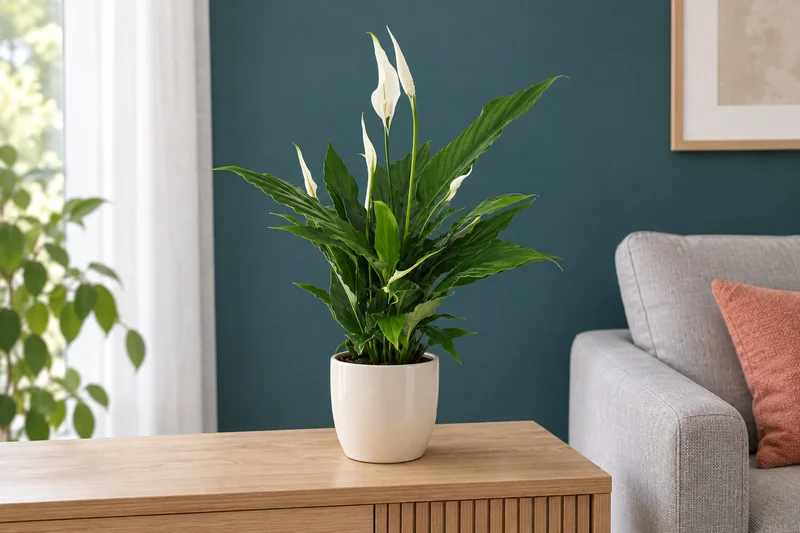
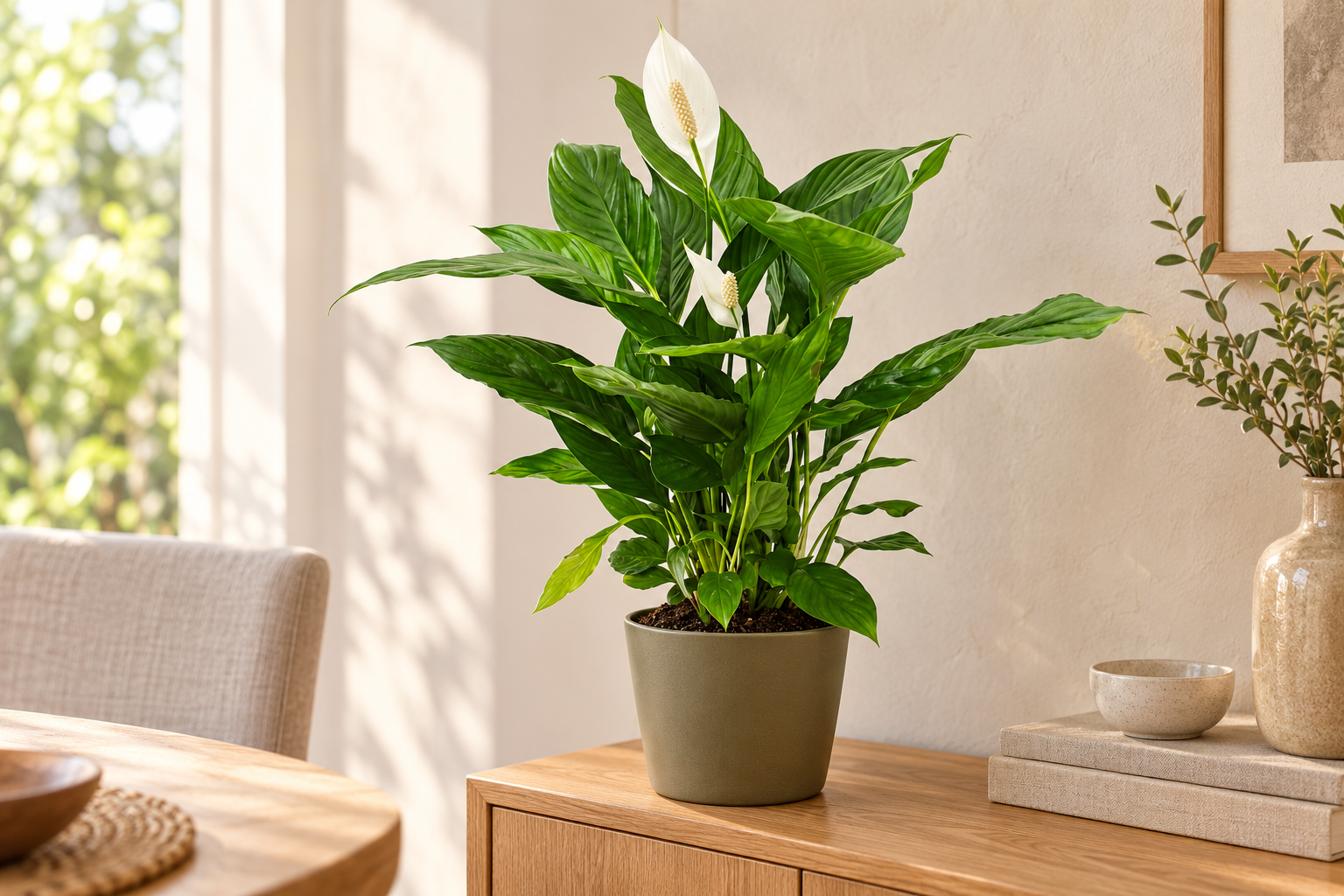
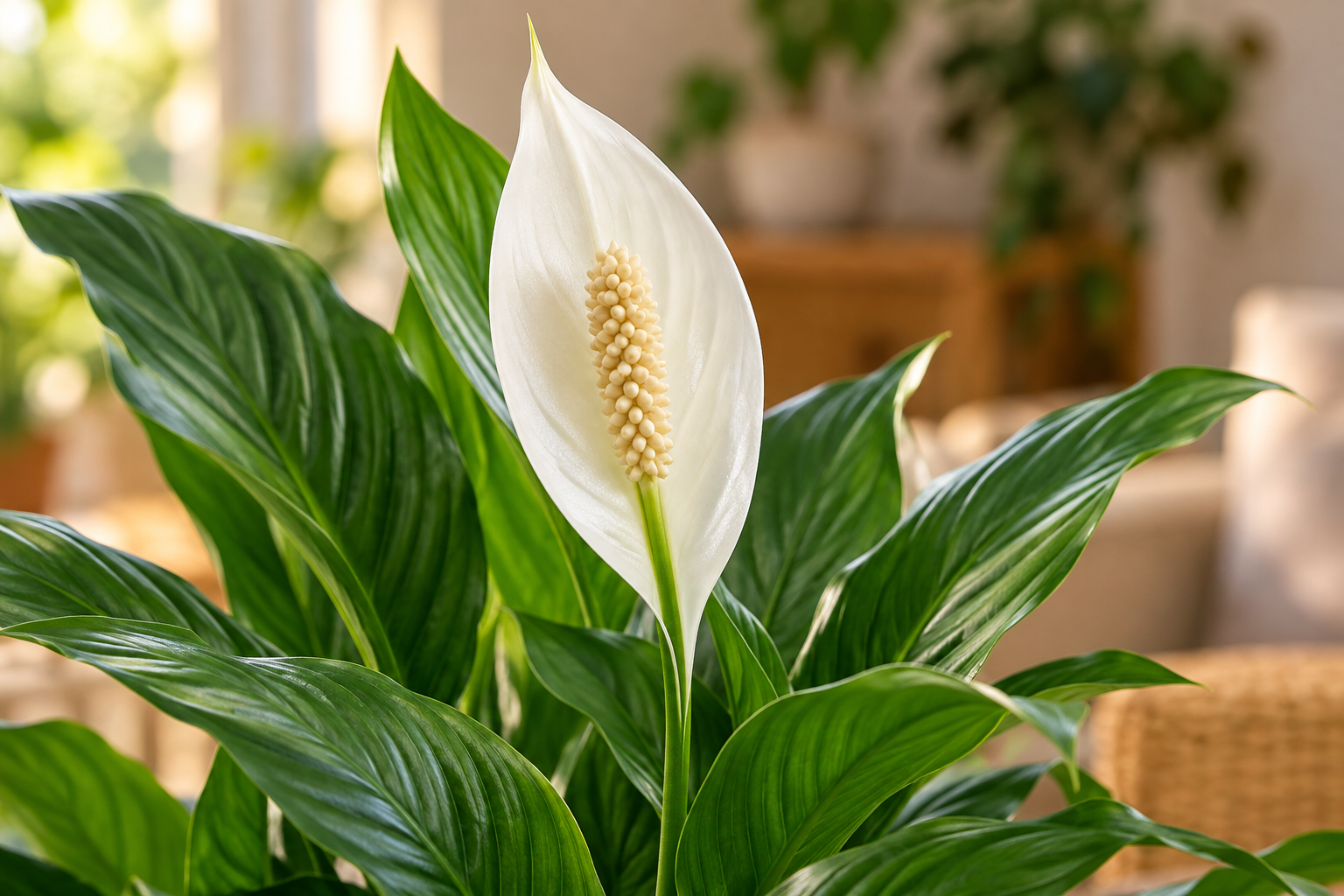
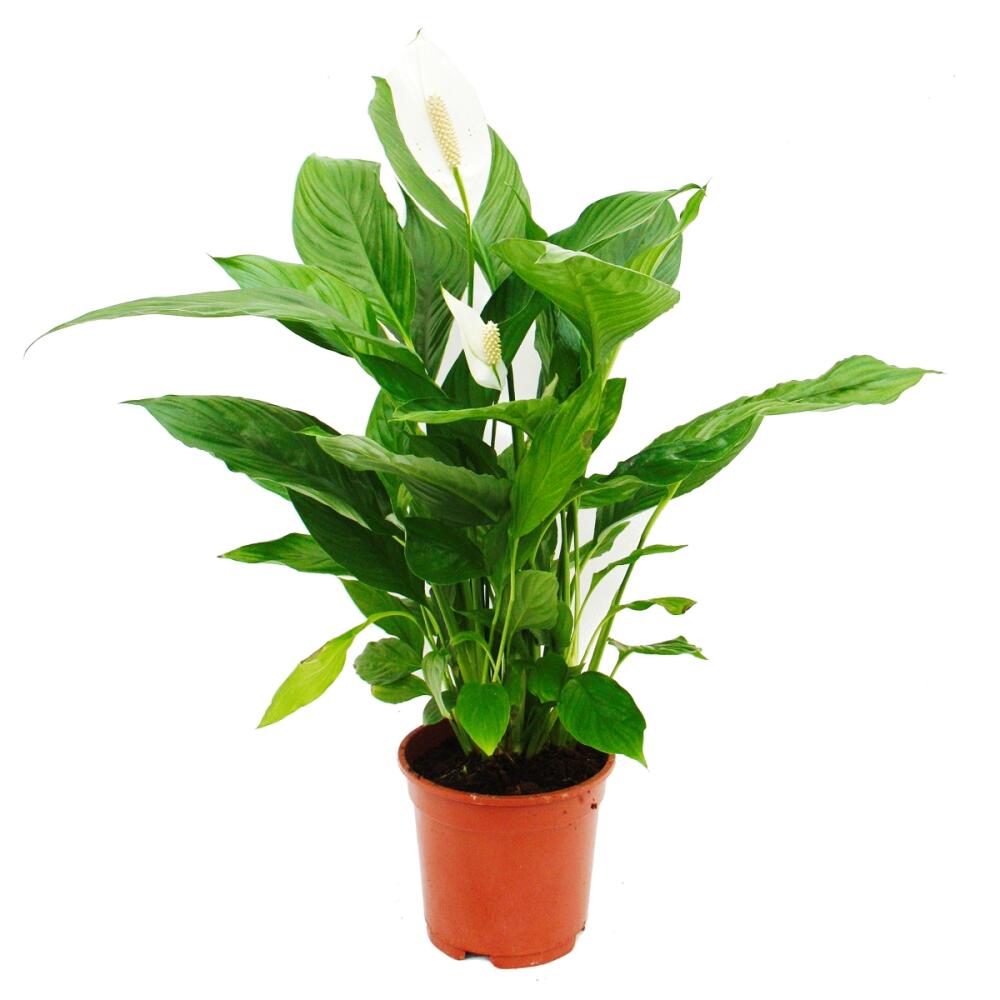
Cupido builds its effect from many individually stalked leaves. The dark green surfaces are elongated, pointed and distinctly veined. Some stand higher, while others bend sideways. This forms a loose green fan in which white bracts remain clearly visible. In our photograph, each carries a pale spike. The small true flowers are on this spike; the white hood is a bract. Allow some lateral space rather than squeezing foliage between other pots. A low bright shelf permits observation of leaf position and new shoots, while keeping the inner pot accessible for checks and watering.
What the name Cupido describes
The peace lily belongs to Spathiphyllum within the arum family. Cupido is documented as a named horticultural and trade designation. A specialist guide describes fan-shaped growth with hood-shaped bracts; breeder KP Holland now lists a Cupido range. Our offer names Cupido without an additional selection within that range. RHS records the name status as unresolved. The offered plant is therefore presented under its trade name and not assigned to another particular variety. The visible green foliage matches our photograph. New leaves, bracts and their position may change during cultivation. No particular inflorescence at a particular date follows from this.
Allow for the offered size indoors
Our Cupido offer describes a seventeen-centimetre diameter pot and fifty to sixty centimetres overall height, including the pot. This medium size needs a secure support and room for sideways leaf tips. During transport, support the pot rather than lifting by foliage. After unpacking, check root-ball condition and drainage first. A dry surface alone says little about moisture inside. The AI scene illustrates a furnishing idea in suitable growing size; the decorative container and neighbouring objects are decoration. White bracts visible in the original or scene capture a developmental stage rather than an unchanging delivery promise.
Brightness without hot sun patches
A bright place with indirect daylight displays the leaf fan well. Protection should soften strong hot rays without banishing the plant deep into the room. Check through the day whether broad leaf surfaces heat directly. A thin curtain or a little more distance from glass may improve the position. Cupido is grown warm; the offer states temperatures not below fifteen degrees. Avoid a cold pot base and ventilation draughts too. Near heating may be warm, but leaves and root ball dry faster. Reassess light and warmth at the actual plant position when seasons change.
Even root-ball moisture with free drainage
Cupido should not repeatedly dry until completely wilted. Check moisture at the edge and lift the inner pot carefully. When the root ball is noticeably drier and the pot lighter, water slowly onto soil. Water can then reach roots rather than bypassing them at the sides. Excess must drain afterwards and the outer pot is emptied. Permanently heavy wet soil is no replacement for even supply. If foliage droops, check the root ball first: dry and waterlogged roots require different responses. Heat can affect leaf position too. Spraying alone does not supply the root ball. The useful rhythm follows light, warmth, pot weight and plant condition.
Care for leaf surfaces and root space
Dust collects on elongated leaves. Wipe it gently with a soft damp cloth, supporting the leaf with the other hand. This is also an opportunity to check bases and undersides. A stable mix holding moisture while allowing drainage helps the roots. Repot when space is clearly needed, not merely because of a decorative container change. A slightly larger draining pot is more manageable than a large reserve of persistently wet soil. During visible growth, supply suitable nutrients sparingly according to the label. Account for existing feed, and first improve conditions when roots are compromised or persistently wet.
Interpret changes correctly
Older bracts may change colour and later decline. Only truly spent or dead parts are removed with a clean tool without injuring young leaf stalks. Brown tips warrant considering water management, heat, dry air and feeding together. Repeated severe drooping should not become the normal watering signal. If only an outer old leaf changes, look at new leaves in the centre. Several soft bases in wet soil instead require a closer root inspection. Keep the care position accessible enough to see these differences. Cupido develops according to actual room conditions, remaining alive rather than following a fixed flowering calendar.
One plant, several views
Good to know
Is Cupido a clearly registered variety?
Cupido is documented as a trade and horticultural name. RHS name status is unresolved; our offer gives no additional selection within the Cupido range.
Which measurements apply to the offer?
17 cm pot and 50–60 cm overall height including pot. Sideways leaves need extra room.
Are white bracts always present?
The depicted developmental stage can change. No particular flowering display or date is promised.
Can the pot stand permanently in water?
No. The root ball is supplied evenly, excess water drains and the decorative container is emptied.
Why do leaves droop?
Check root-ball moisture, weight and heat first. Water shortage and damaged wet roots can both alter leaf position.
Is regular misting enough?
Misting cannot replace root-ball supply. Moisture and drainage are checked independently.
When does Cupido need a larger pot?
When root space is clearly limited. Add only a little space and retain free drainage.
Sources and editorial note
- Exotenherz: own offer and original (4 October 2026)
- RHS: Spathiphyllum Cupido, unresolved name status and genus features (4 October 2026)
- UF IFAS: complete Spathiphyllum growing guide and named Cupido habit (4 October 2026)
- KP Holland: fully read Cupido trade range (4 October 2026)
Shop offer, originals and specialist sources checked on 4 October 2026. Check current shop availability.