This plant at Exotenherz
Check the shop offer for current availability, price and what is included.
Check the shop for the current price, availability and offer contents.
Your care table
| Topic | What to do | Why it helps |
|---|---|---|
| Light | Place very bright to sunny; introduce intense sun gradually. | Its low form needs light; sudden hot sun can damage the skin. |
| Substrate | Use granular, well-drained cactus compost. | The body sits low over the root ball and its base should not remain wet. |
| Water | During growth, water in a controlled way after drying and let it drain. | A low cactus stores water but needs living roots. |
| Winter | Keep very bright, frost-free and preferably cooler with very little water. | Low light and plentiful water promote weak growth or root problems. |
| Surface | Leave white dots and woolly areoles intact. | These features belong to the skin and are not ordinary dust. |
| Nutrients | Use weakly dosed cactus fertiliser only during growth. | Slow development does not need constant strong feeding. |
| Repotting | Move to a suitably larger pot and preserve the old base height. | The cactus body should not sink deeper into new damp soil. |
| Observation | Check new soft or sunken patches promptly. | Skin colour, dryness, cold and root-ball condition need to be assessed together. |
Check the compost and pot weight. The care table explains how far the compost may dry.
Water only when needed. The water should reach the root ball without spilling over the rim.
Remove surplus water from the saucer or cachepot. Then return the plant to a suitable position.
The star is visible even without flowers
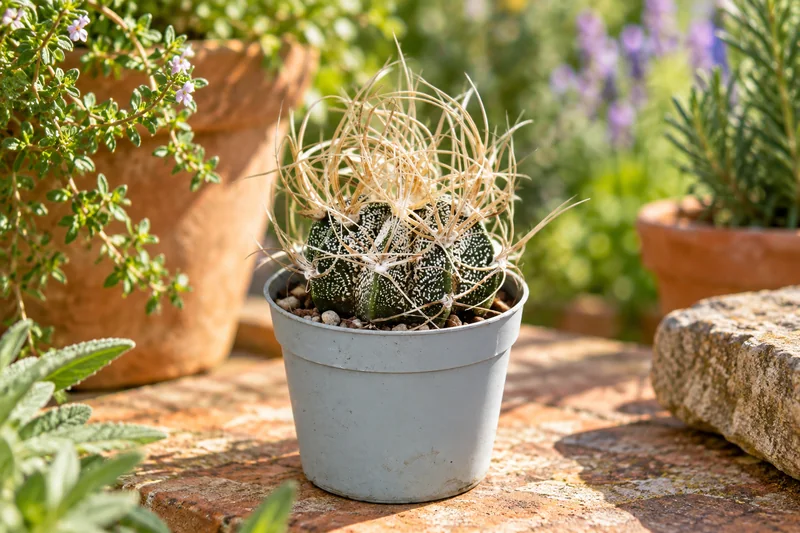
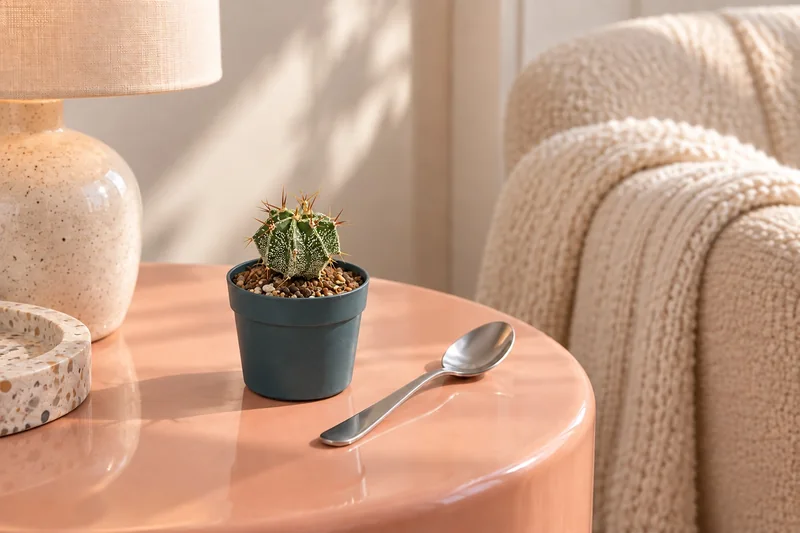
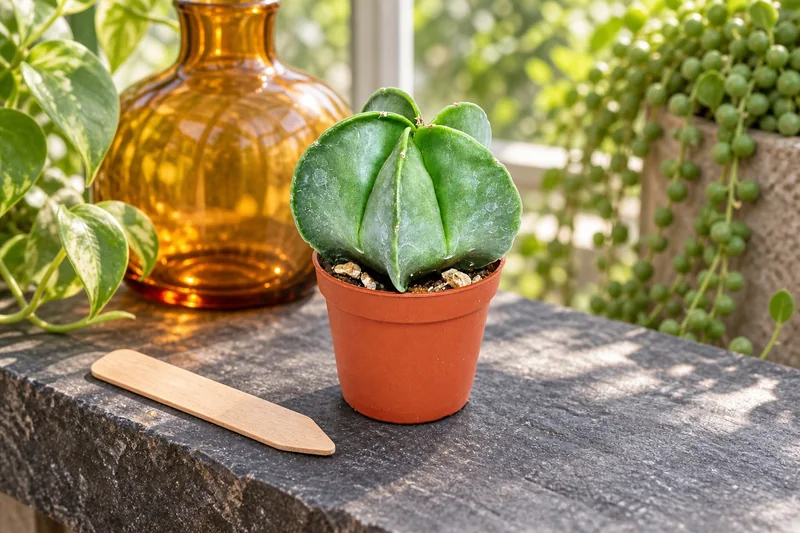
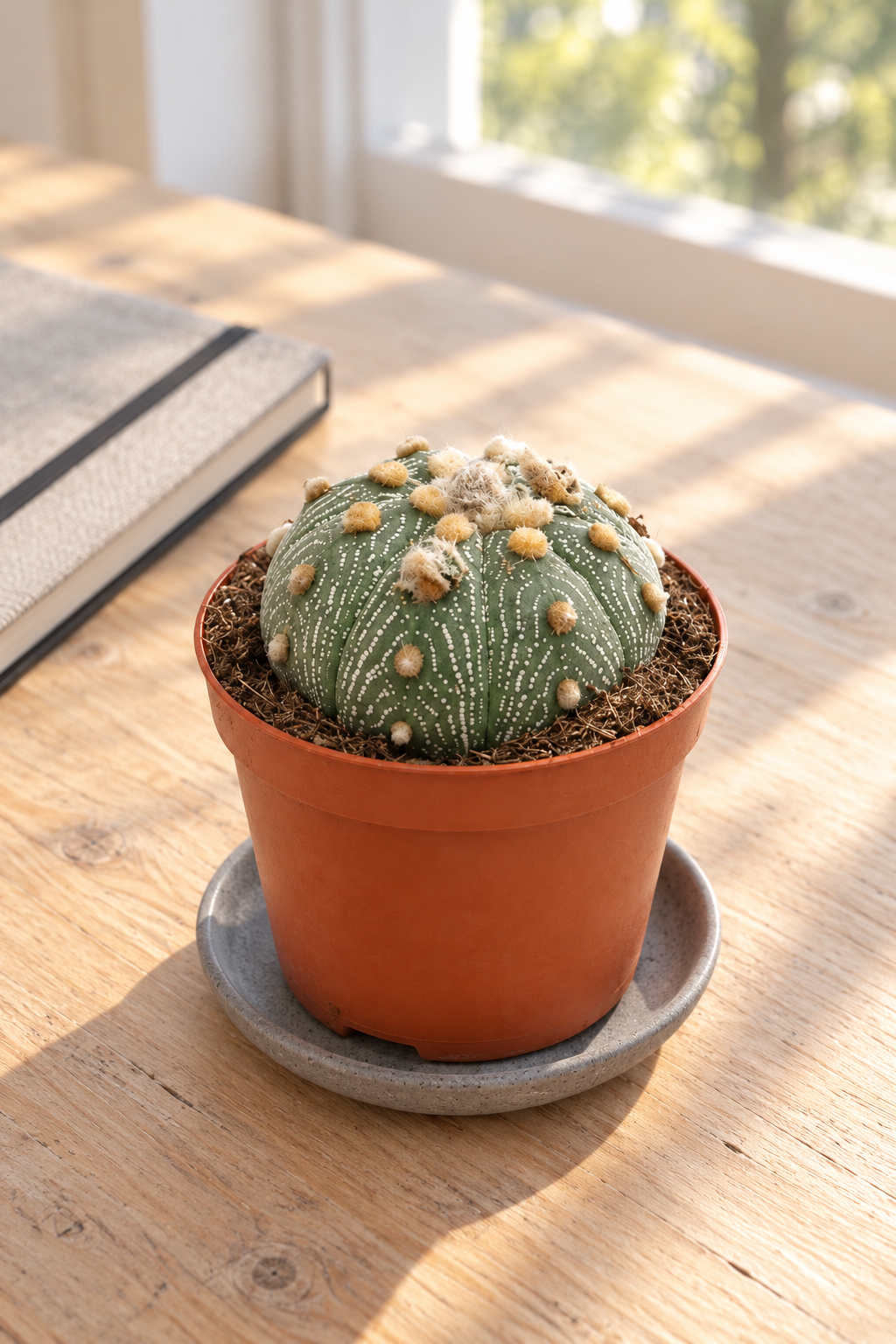
Seen from above, Astrophytum asterias usually has eight broad ribs meeting at the centre. From the side, its body looks flat to slightly domed. Small white epidermal dots and round woolly areoles lie on the green surface, making the shape readable even in slanting light. The star cactus has no spines. Preserve this special surface during care rather than wiping it like a dirty leaf. The young plant is in an 8.5 cm pot at approximately 10 cm total height including the container. In the original photograph, its body sits low above the rim. A small bright spot can therefore be a good place to observe its fine details.
Width says more than great height
The species comes from southern Texas and northern Mexico. Its botanical description gives a body diameter of up to about 15 cm, while it remains low and flattened. This is a size guide for the species, not a short-term promise for the offered specimen. The delivery height of about 10 cm includes the pot and must not be read as body height. Astrophytum asterias is not equivalent to a tall Astrophytum column either. Leave space around the pot rim and watch the ribs develop. Its slow growth is more visible as a little extra width and new areoles than as a suddenly tall stem. The compact shape needs patience and a suitable position.
Plenty of light without sudden sun changes
A very bright sunny position supports a firm natural structure. Indoors, well-lit glazing is much more helpful than a distant decorative sideboard. After shipping, increase direct sun in stages. The cactus may have come from differently protected cultivation, so hot south-facing glass is not a sensible first test of its resilience. Air around the pot and a clear view of its skin help observation. Assess new pale dry patches after a move differently from the existing white dots. On a summer terrace, the plant also needs protection from persistent rain and gradual adjustment to stronger light.
Do not bury the body base in moisture
Granular cactus compost and free drainage are important for pot cultivation. Its natural origin is not an invitation to fill a small indoor pot with heavy wet soil. The root zone dries differently in a container than in a large patch of ground. A thick top layer can look dry while the core still holds water. Check the whole root ball. At repotting, keep the base at its previous height; do not bury the green body more deeply. A pot only suitably larger is enough. Large volumes of soil without roots stay moist longer after watering and make the next water decision harder.
Growth and winter rest need different amounts
During the bright growing phase, water after drying so that it reaches the root ball, then allow it to drain freely. Leave the saucer empty after drainage. Pot weight before and after watering helps you learn this small root zone. In winter, a very bright frost-free and preferably cooler position with very little water is sensible. Warmth alone does not turn a dark position into a growing phase. If the body changes noticeably, check soil and firmness before watering again. Add nutrients only during growth, weakly dosed according to product directions. A slow small cactus does not need constant fertilising to justify its place.
The woolly dots belong to the plant
Pale areoles are normal cactus structures. Leave the white flecks on its skin in place too. When repotting, hold the root ball and container; do not rub away the soft wool or squeeze it as a handle. A new uneven fluffy coating, especially at the base or between existing areoles, can nevertheless deserve a closer look. Check soft spots and newly sunken areas too. One colour change alone does not determine the cause. Light changes, temperature and water condition give a clearer picture together. Compare with your own photograph of the same specimen when assessing a slow change.
A flower is later development
Developed Astrophytum asterias can bear yellow flowers with red to orange centres. Timing in a pot depends on development and cultivation. Flowering months at its natural site are not adopted here as a fixed calendar in a German living room. The associated offer shows a non-flowering cactus, and its star shape remains the main subject. Bright growing conditions and a suitable rest can accompany further development, but do not guarantee a flower on a particular date. In spring, give the plant more opportunity to grow by gently increasing sun and water to suit its condition. The small delivered plant becomes an observable, quietly growing specimen.
One plant, several views
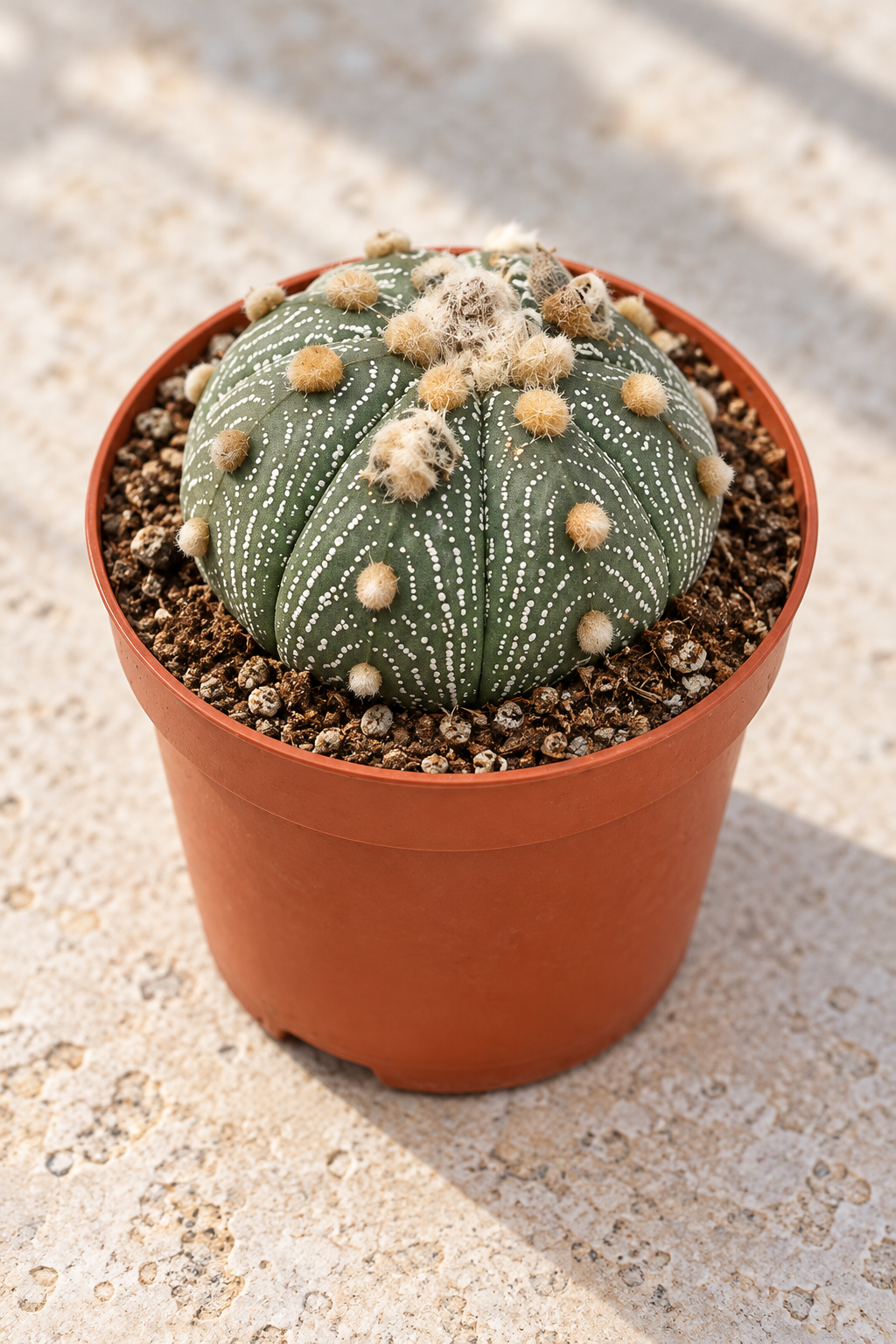
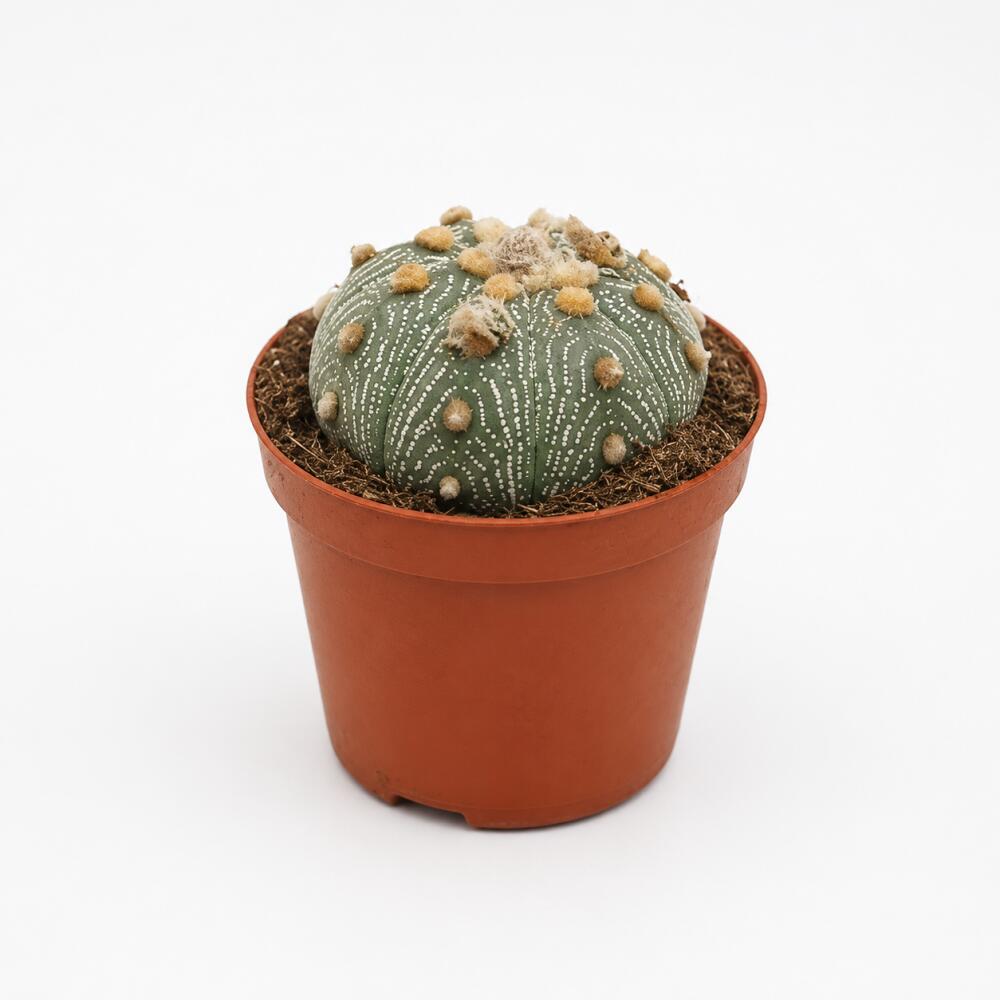
Good to know
Does the star cactus have spines?
Astrophytum asterias is spineless. Woolly areoles and white skin dots remain characteristic features.
Are the white dots pests?
Regular dots and areoles belonging to the plant are normal. Check new uneven deposits separately.
How large does it become?
The species description gives up to about 15 cm body diameter with a low shape. The delivery height of about 10 cm including the pot is different.
When does it flower indoors?
That depends on development and cultivation. Wild-site months are not a binding indoor calendar.
Can I put it on a dark shelf?
A permanently dark position is unsuitable. Plenty of light matters for a firm structure.
What matters when repotting?
Granular soil, a drainage hole, suitable container size and keeping the previous body-base height.
Sources and editorial note
- Exotenherz: currently orderable individual offer (accessed 3 October 2026)
- RHS: correct species identification Astrophytum asterias (accessed 3 October 2026)
- Texas Parks and Wildlife: species morphology and body diameter (accessed 3 October 2026)
- RHS: practical cactus cultivation (accessed 3 October 2026)
Current individual offer and specialist sources read directly on 3 October 2026; botanical identity/SKU checked against Canon 642 and new parallel portraits. RHS identifier 1876 verified; incorrect receipt 1644 superseded and never used. TPWD primary description: diameter ≤15 cm and yellow flower with red-orange centre; wild March–May deliberately not copied as an indoor flowering calendar; no protection or commercial-origin claim.