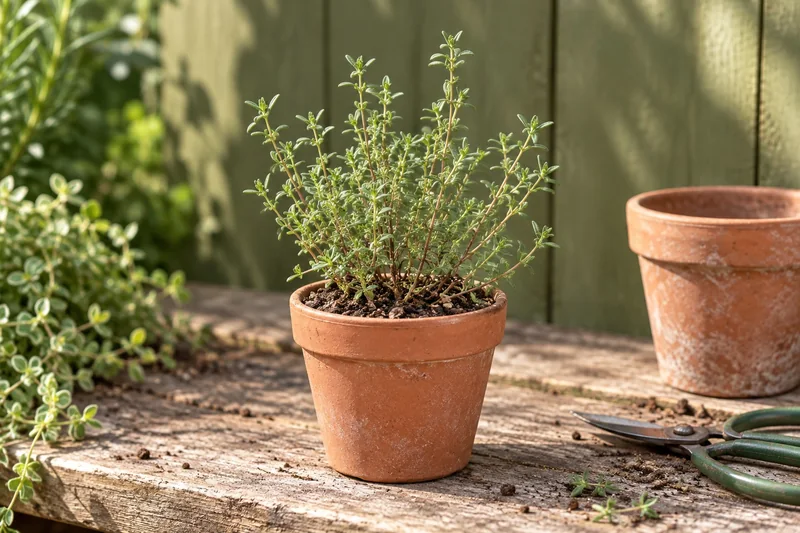
This plant at Exotenherz
Check the shop offer for current availability, price and what is included.
Check the shop for the current price, availability and offer contents.
Your care table
| Topic | What to do | Why it helps |
|---|---|---|
| Light | Choose a sunny garden spot. | The low cushion develops better in light than among shading perennials. |
| Planting | Set the root ball at its previous level and water well initially. | Even a drought-tolerant cushion must first establish roots. |
| Water | Check during establishment; water later as needed. | Young root balls and containers dry faster than established garden plants. |
| Soil | Plant in freely draining, fairly lean soil without standing wetness. | Wet heavy soil harms particularly in the cold season. |
| Fertiliser | Supply very sparingly only if needed. | Abundant feeding can encourage soft, loose growth. |
| Pruning | Trim lightly within leafy areas after flowering. | This keeps the shape compact without heavily injuring bare old wood. |
| Winter | Ensure drainage and protect containers from prolonged saturation. | Winter hardiness does not replace suitable soil structure. |
| Inspection | Observe cushion centre, neighbouring plants and root-ball moisture. | Overly dense neighbouring foliage may remove light and air. |
For young plants, feel the soil directly at the root ball. The surface and deeper soil may have different moisture levels.
Water thoroughly after planting; later, water according to the soil, weather and establishment rather than a fixed calendar.
Avoid standing water. For plants in containers, also check that water runs out of the drainage hole.
A small garden area with plenty of character
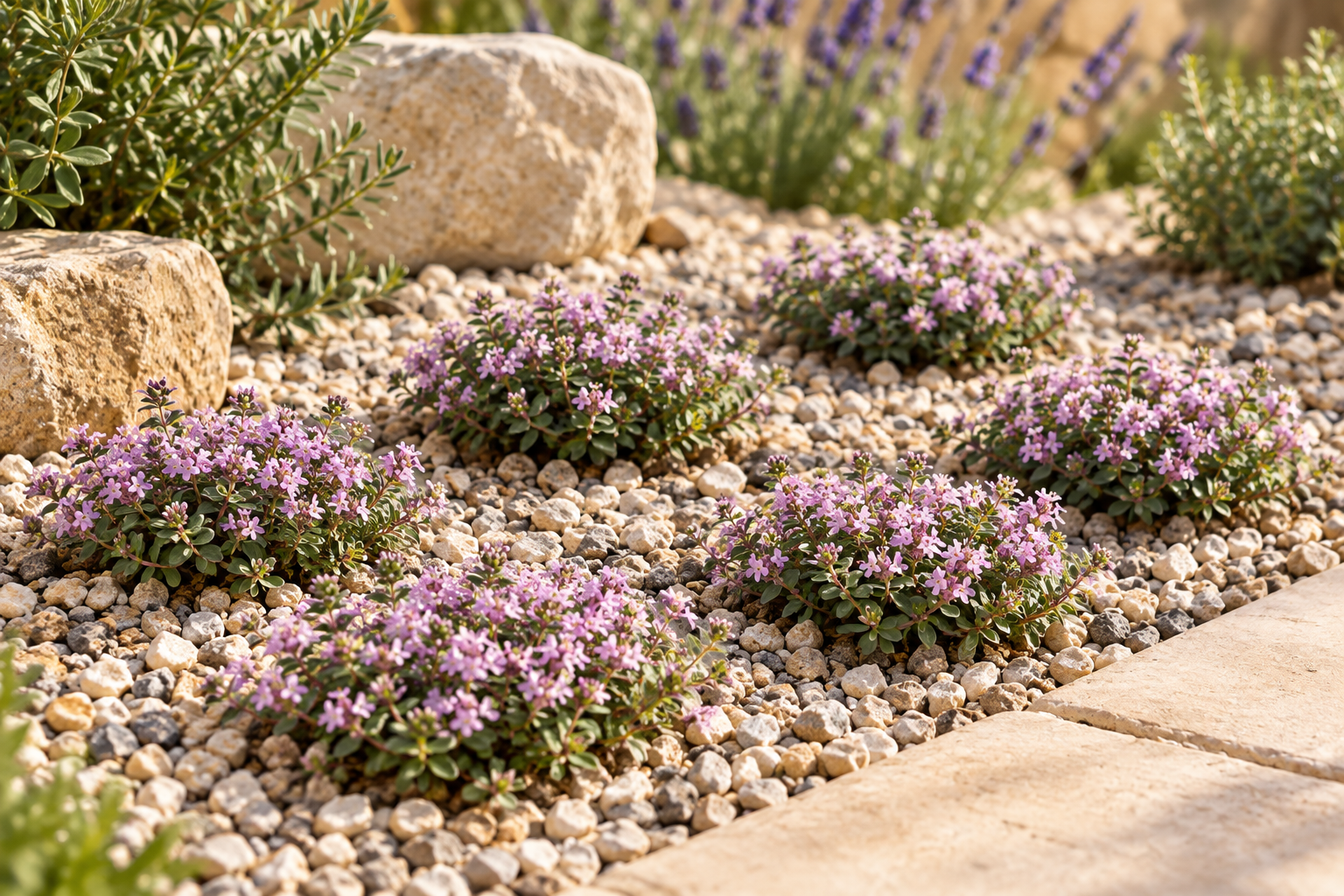
With Purple Beauty it is worth crouching down. Only up close do the tiny leaves and closely set purplish-pink flowers become fully apparent. This creeping thyme grows low and can connect small cushions over time. A warm stone edge gives fine foliage a beautiful calm background. We like this plant where people sometimes look more closely while passing. It need not immediately cover an entire area. A few well-positioned young cushions already show how the garden spot may develop later.
The delivered plant and later carpet are different things
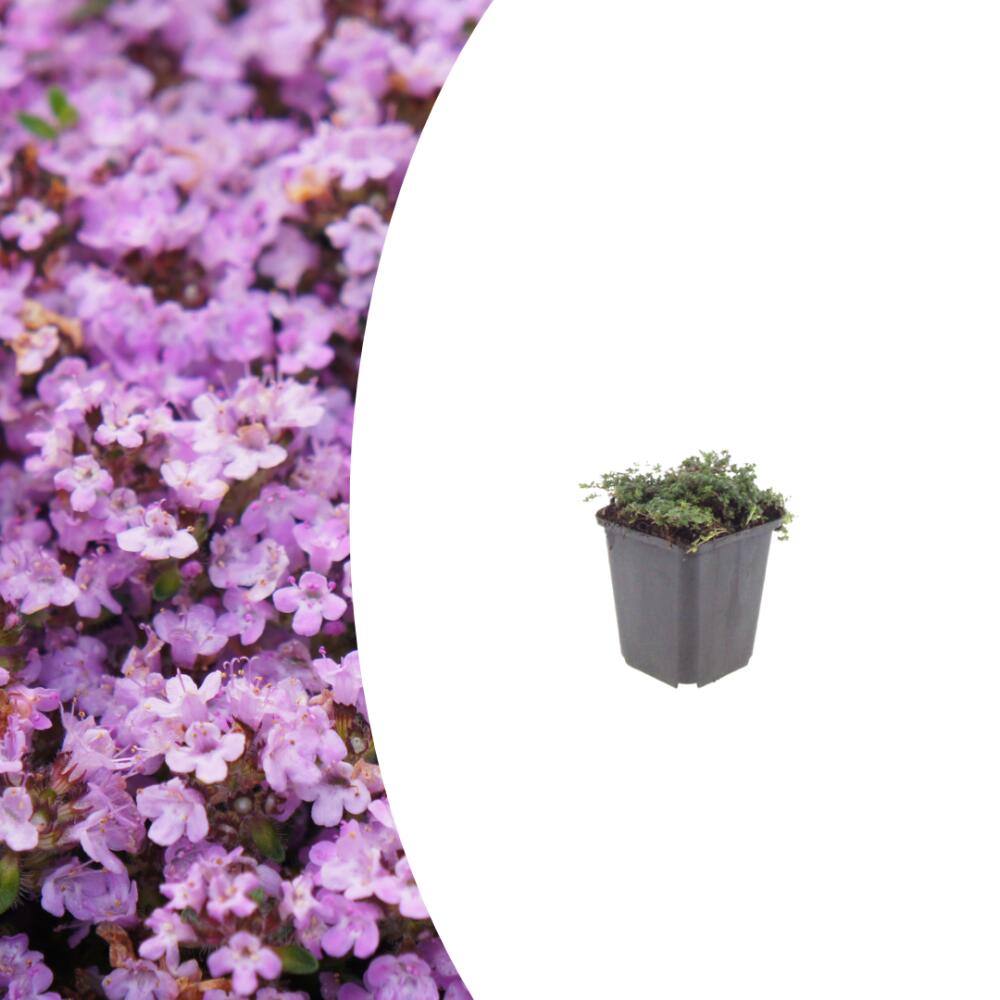
The shop offers plants in 9-cm pots with about 10 to 25 cm total height, depending on the chosen set. Different quantities are available. This delivery measurement includes the pot; in a bed the cushion usually stays much lower, roughly up to ten centimetres above ground. The name Purple Beauty is also listed in the Coccineus Group. The shop name Thymus praecox remains for identification. A flower close-up explains the possible later effect and does not mean every young cushion flowers fully at delivery.
Between stones, the soil still needs preparation
A sunny border edge, freely draining bowl or bright rock garden suits it well. Water must be able to drain around the roots. Improve heavy compacted soil first; a thin gravel layer on top does not by itself solve wet ground underneath. Cushions should not disappear among taller plants. As design guidance choose about twenty to thirty centimetres spacing, considering the desired eventual area. A denser start closes faster but leaves less room for observation and care. Distribute positions first, then plant root balls.
The young root ball is not forgotten dry
Spring or an early, still-mild autumn is favourable for planting. The soil should be frost-free and not waterlogged. Place the root ball at its previous height, settle soil gently around it and water thoroughly. Check regularly until roots grow into surrounding ground. Drought tolerance of an established plant is no invitation to leave fresh young plants unsupplied. Later, suitable beds usually need much more restrained watering. A small bowl or trough still needs separate checks because little soil is available as a reserve.
Little feeding keeps the form calm
Low growth suits fairly lean, freely draining soil. Not every spring care session therefore needs a heavy fertiliser dose. First observe leaf colour and new shoots and note whether fresh compost is already fed. Too many nutrients may encourage a loose soft structure. We prefer removing shading neighbouring foliage and checking moisture before feeding a weak area more heavily. In containers adapt supplies to actual growth. The finest effect comes when small firm shoots form a continuous but not overfed carpet.
Follow the small shape after flowering
Purplish-pink flowers usually appear in early summer. Weather, position and development stage shift the start and duration. Afterwards trim cushions lightly within leafy parts to keep them compact. Do not cut deeply into old leafless wood. Small clean tools make individual shoots easier to see. Remove dead remains and check that enough light reaches the centre. An uneven cushion need not become perfect in one operation. Gently reshape and wait for fresh growth rather than cutting the whole carpet hard back.
A lasting border edge needs winter care too
Purple Beauty remains in the garden as a perennial dwarf shrub. In suitable freely draining soil it survives the cold better than in a constantly wet hollow. Position containers so drainage holes stay free and rainwater does not stand in saucers. One brown shoot in spring is checked and removed if needed; do not infer the whole root ball’s condition from every winter view. Remember especially the sunny spots where cushions keep growing evenly. The next early summer often shows more clearly how beautifully stone and small flowering greenery fit together.
One plant, several views
Good to know
How high does the cushion grow in a bed?
Usually up to about 10 cm above ground. The shop’s total height of 10–25 cm describes the delivered plant including its pot.
What colour are the flowers?
Purplish pink to violet pink; the colour effect changes with light and development.
When does Purple Beauty flower?
Usually in early summer, depending on weather and position. Flowering at delivery is not guaranteed.
What spacing suits it?
About 20–30 cm as design guidance. Consider desired coverage and neighbouring plants.
Must I water freshly planted thyme?
Yes. Check the young root ball during establishment; only established plants tolerate dry periods better.
What sets are available?
The shop offers 6, 12, 24, 48 and 60 plants. Currently orderable child offers appear among the shop links.
Sources and editorial note
- Exotenherz: offer and original photographs (02.10.2026)
- RHS: Purple Beauty (02.10.2026)
- RHS: planting and caring for thyme (02.10.2026)
- Jekka’s: their own cultivation of Purple Beauty (02.10.2026)
Shop offer, product number, GTIN, availability and original images checked directly on 02.10.2026. Specialist sources read directly. Shop name retained, specialist group classification explained. Spacing is editorial design guidance; height above ground separated from delivery total height. Check child offers individually before inclusion.