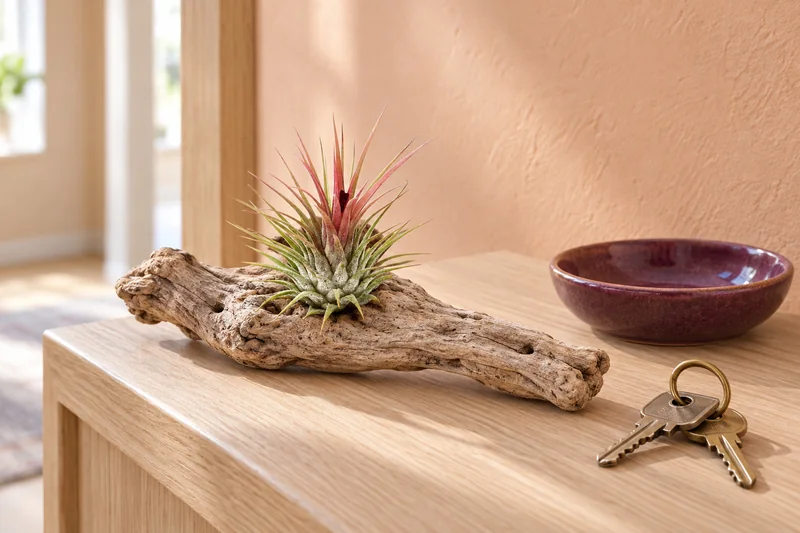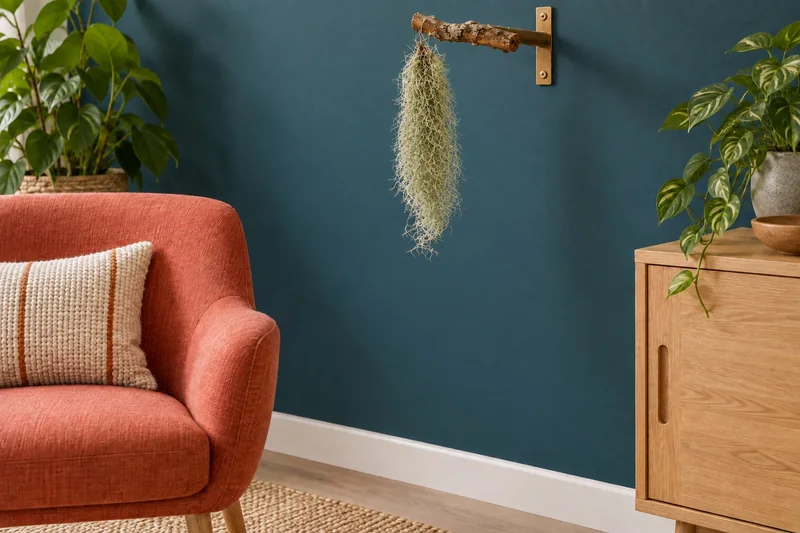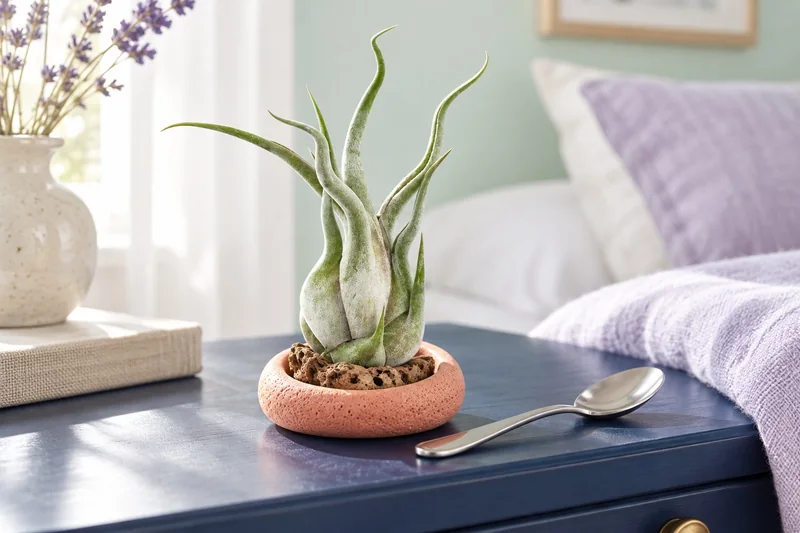
This plant at Exotenherz
Check the shop offer for current availability, price and what is included.
Check the shop for the price, current availability and what is included.
Your care table
| Topic | What to do | Why it helps |
|---|---|---|
| Position | Bright, warm and with free air movement. | The rosette needs light and reliable drying. |
| Water | Thoroughly wet with low-lime water or bathe briefly. | Scaled leaves absorb moisture. |
| Draining | Tilt the rosette and empty its centre. | Water must not remain hidden between leaves. |
| Support | Open without permanently wet filling material. | The strong base remains healthy and inspectable. |
| Sun | Acclimatise slowly to stronger brightness. | Sudden hot sun can damage the surface. |
| Feed | Occasionally use suitable feed very moderately. | Excess salts stress leaf surfaces. |
| Pups | Allow adequate growth before separating. | Strong offsets cope better independently. |
| Surface | Do not rub off scales or use leaf shine. | The natural silvery coating remains functional. |
Take the tillandsia off its support. Do not rub the leaves; preserve the delicate silvery scales.
Use low-lime water at room temperature. The care table explains whether thorough misting or a short soak is suitable.
Gently shake off the water. Tilt rosettes downwards, hang loose strands without bunching them together and allow them to dry with good airflow.
A strong rosette with a silvery surface
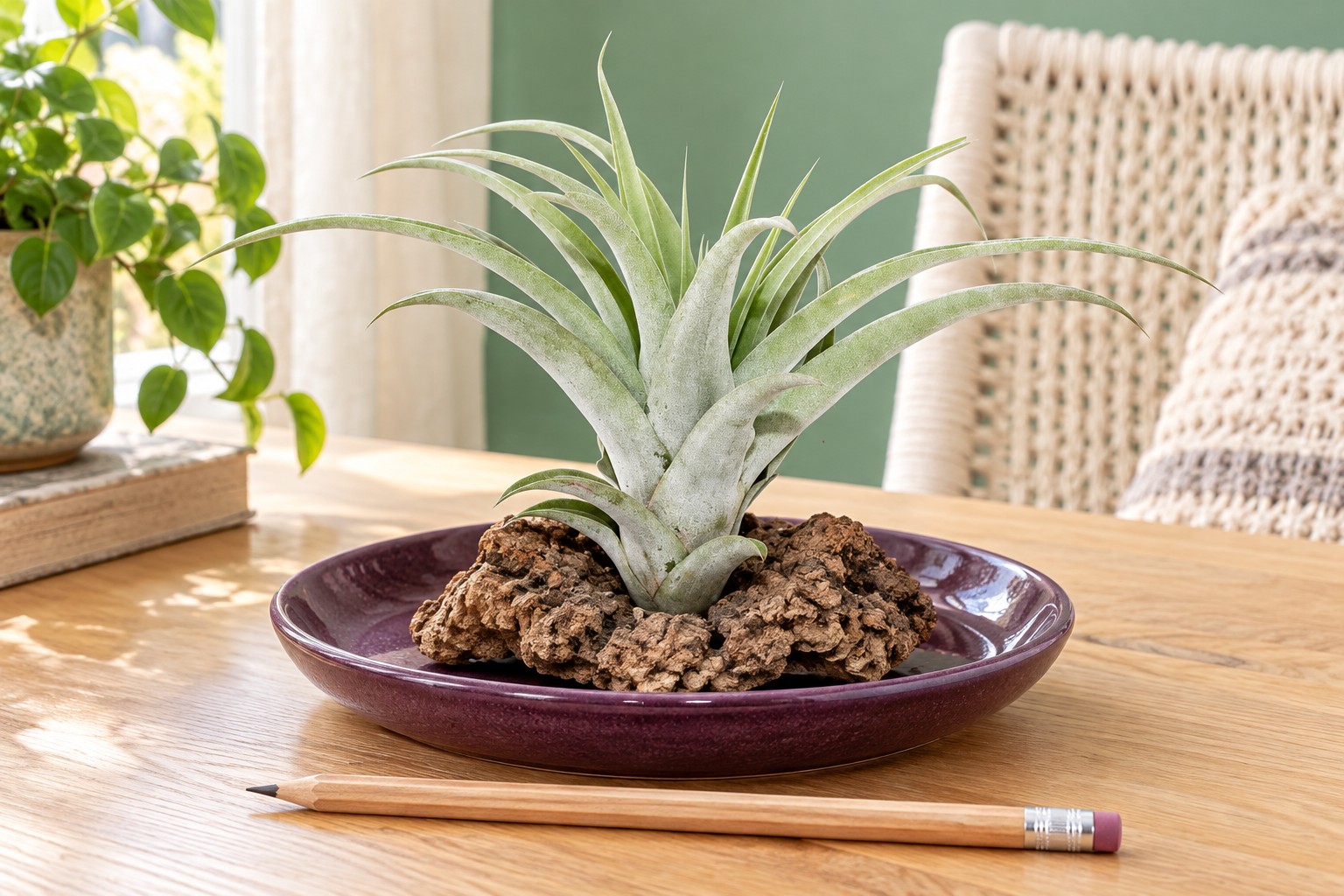
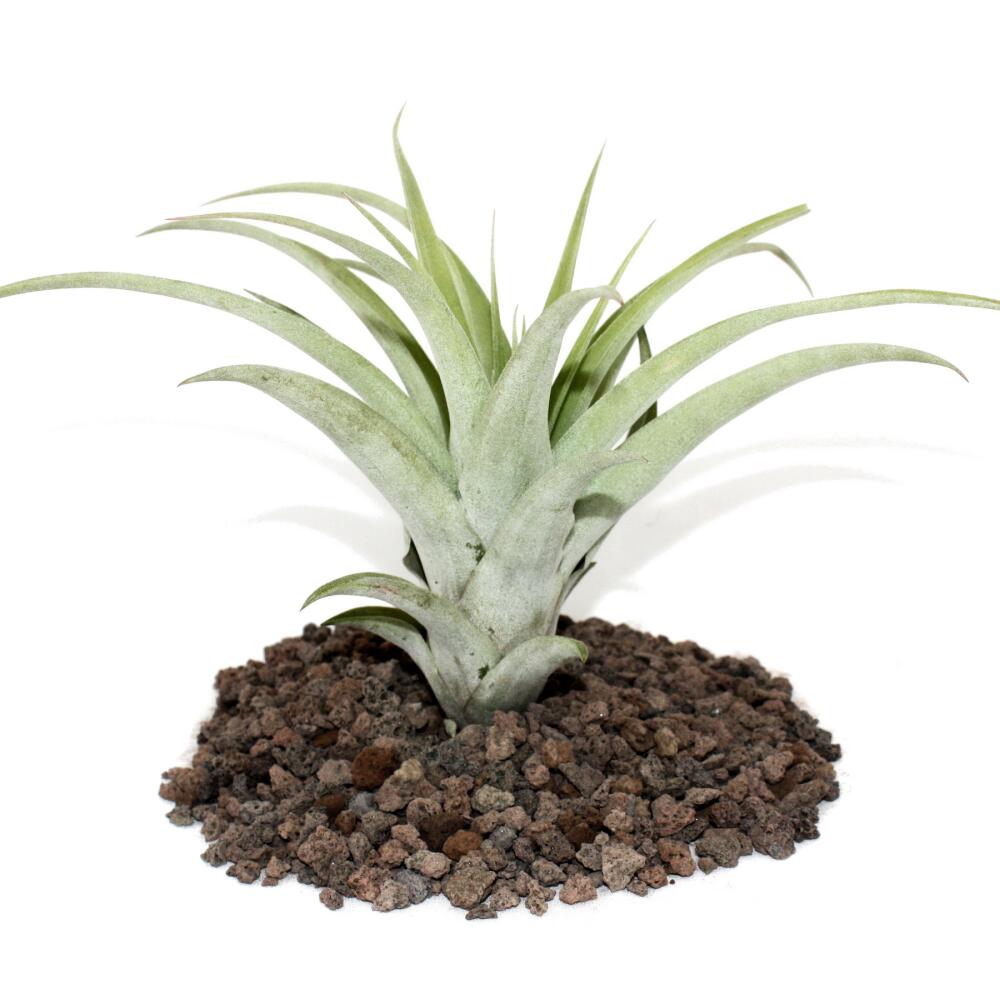
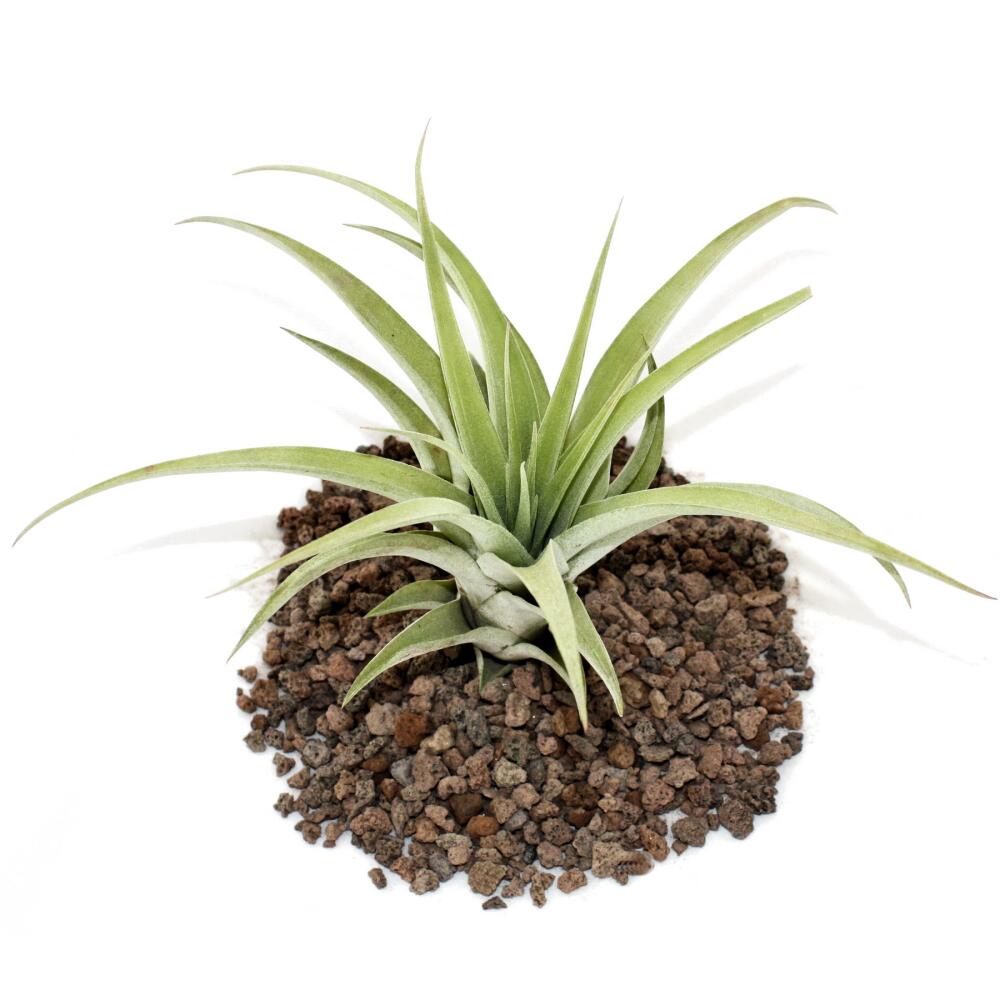
Leaves sit closely above one another and form a strong conical base. Their narrowing tips curve outwards. Fine scales give the surface a silvery-green appearance. They are functional plant parts, not paint to wipe off. The displayed offer is listed as Tillandsia capitata. The new scene follows this natural leaf colour. Names such as Peach, Orange or Yellow Star are not added, because the offer guarantees no such clearly named form.
Origin explains airy growth
The species occurs from Mexico to Honduras and on Caribbean islands from Cuba to Hispaniola. It can grow on other plants or rocks and belongs to the bromeliads. Its support provides anchorage and is not parasitically drained. In a living room the loose plant can be displayed on a suitable open piece of cork. A small dish must only support the decoration, not serve as a permanently filled water basin. The base remains free and easy to inspect.
Use the stated size appropriately
The shop states approximately 12 to 18 cm plant size without a pot. The scene shows a rosette in this size range without inflating it into a large specimen. A bright position with filtered daylight highlights its silvery structure. Avoid hot direct sun after shady cultivation and acclimatise slowly to a brighter position. Warm room conditions suit well. A dark shelf does not become suitable simply because the plant needs no soil.
Water thoroughly and empty the centre
Use clean low-lime room-temperature water. In loose cultivation thoroughly wet the leaf surfaces or bathe briefly. Then gently tilt to drain water from the rosette centre. Do not push a wet base back into tight decoration. Between waterings the surface should reliably dry. Warmth, humidity and air movement determine frequency. Demand rises in a dry warm place; cooler conditions keep moisture between leaves longer. Permanent soaking is no substitute for regular care.
Support flowers and pups without rushing
An inflorescence may form at sufficient maturity. Colour and timing depend on the specimen and its conditions and are not promised here as fixed delivery features. An individual rosette usually flowers once, but often forms daughter plants. Initially leave these with the healthy clump and separate gently only at adequate size. During active growth occasionally use suitable tillandsia or bromeliad feed very moderately according to its label. Do not stress the natural surface with highly concentrated solutions or leaf shine.
Inspecting underneath is worthwhile
Upper leaves can still look good while moisture has already remained too long at the base. Regularly lift the rosette carefully from its holder and check firmness, smell and drying. Gently remove completely dry loose outer leaves; do not peel away firm healthy ones. Brown brittle tips may indicate dry stress or sunburn; soft dark patches fit wetness problems more closely. Not every change calls for a new treatment. Recognising the cause and then providing stable suitable conditions is what matters.
One plant, several views
Good to know
Is this an orange or peach-coloured variety?
The offer shows a silvery-green Tillandsia capitata. No additional named colour form is guaranteed.
May the decorative dish contain water?
No reserve should remain after watering. The rosette must be able to drain and dry airily.
Does it need a pot with soil?
The loose delivery form is openly attached or placed. A dense wet layer of soil at the base is unnecessary.
What happens after flowering?
The mother rosette may gradually decline and form daughter plants. Healthy pups continue to be cultivated.
Sources and editorial note
- Product and delivery contents: Exotenherz
- Royal Botanic Gardens, Kew: botanical classification
- Bromeliad Society of Australia: botany and commercial forms
- Royal Horticultural Society: plant and care knowledge
Sources checked: 15 September 2026. Product information and delivery contents follow the linked offer. Care has been checked against the stated specialist sources and remains subject to plant condition, position and season.