This plant at Exotenherz
Check the shop offer for current availability, price and what is included.
Check the shop for the price, current availability and what is included.
Your care table
| Topic | What to do | Why it helps |
|---|---|---|
| Light | Bright with filtered daylight. | The small rosette needs light without heat build-up. |
| Water | Thoroughly wet leaves with low-lime water. | Fine scales take up moisture. |
| Drying | Let dry in airy conditions after every watering. | Persistent moisture encourages base rot. |
| Pot | Moisten loose growing material only as needed. | The small pot must not be a water reservoir. |
| Warmth | Grow warm without cold draughts. | Cold wetness dries too slowly. |
| Feed | Occasionally supply suitable bromeliad feed moderately. | High salt additions stress the leaf surface. |
| Pups | Separate only sufficiently large daughter rosettes. | Small pups benefit from the shared clump. |
| Leaves | Do not rub off or polish scales. | Their natural surface is functionally important. |
Check the leaves, rosette base and loose growing medium. The pot must not remain constantly wet.
Thoroughly wet the leaves with lukewarm, low-lime water. Lightly moisten the airy growing medium only as needed; follow the instructions in the article.
Remove remaining water and let the rosette dry with good air circulation. Do not leave the small pot standing in a cachepot filled with water.
A soft colour impression without soft cotton
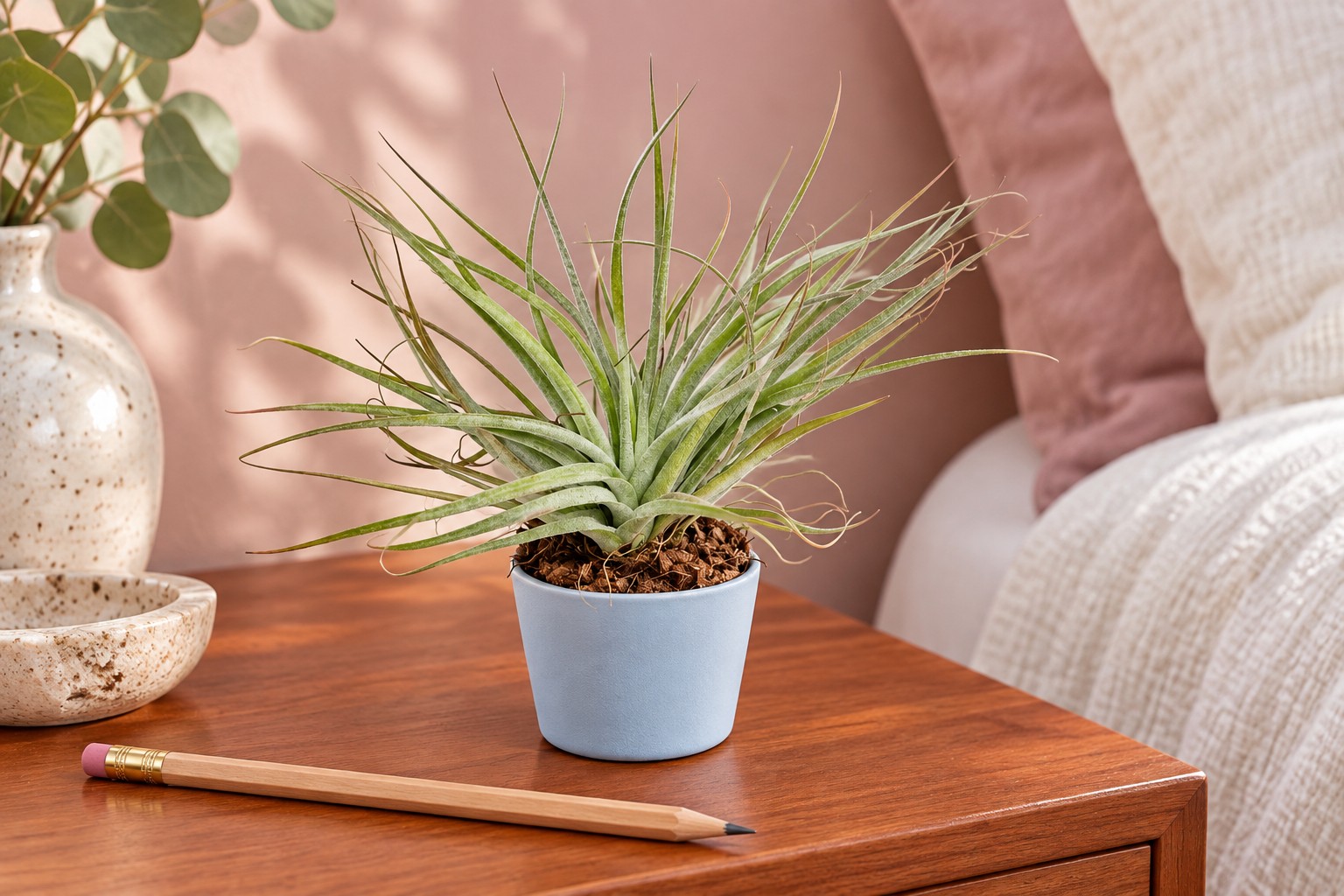
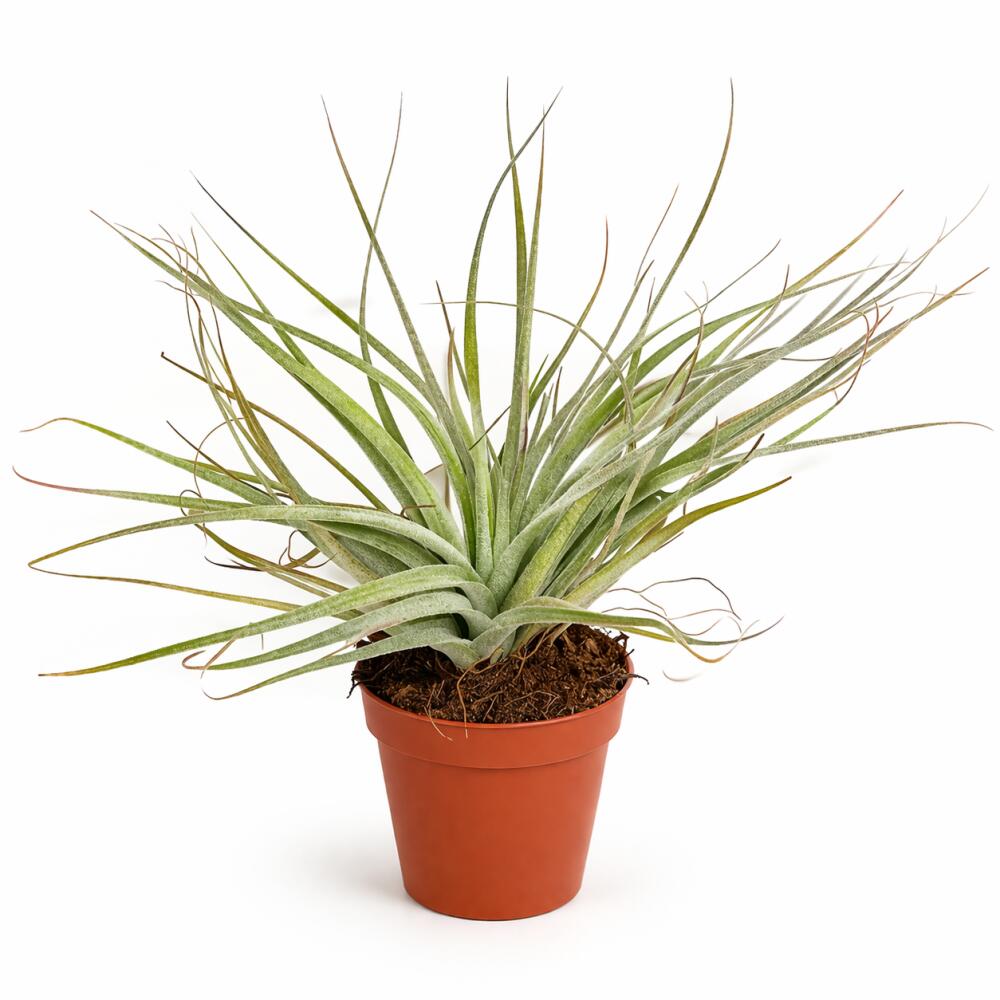
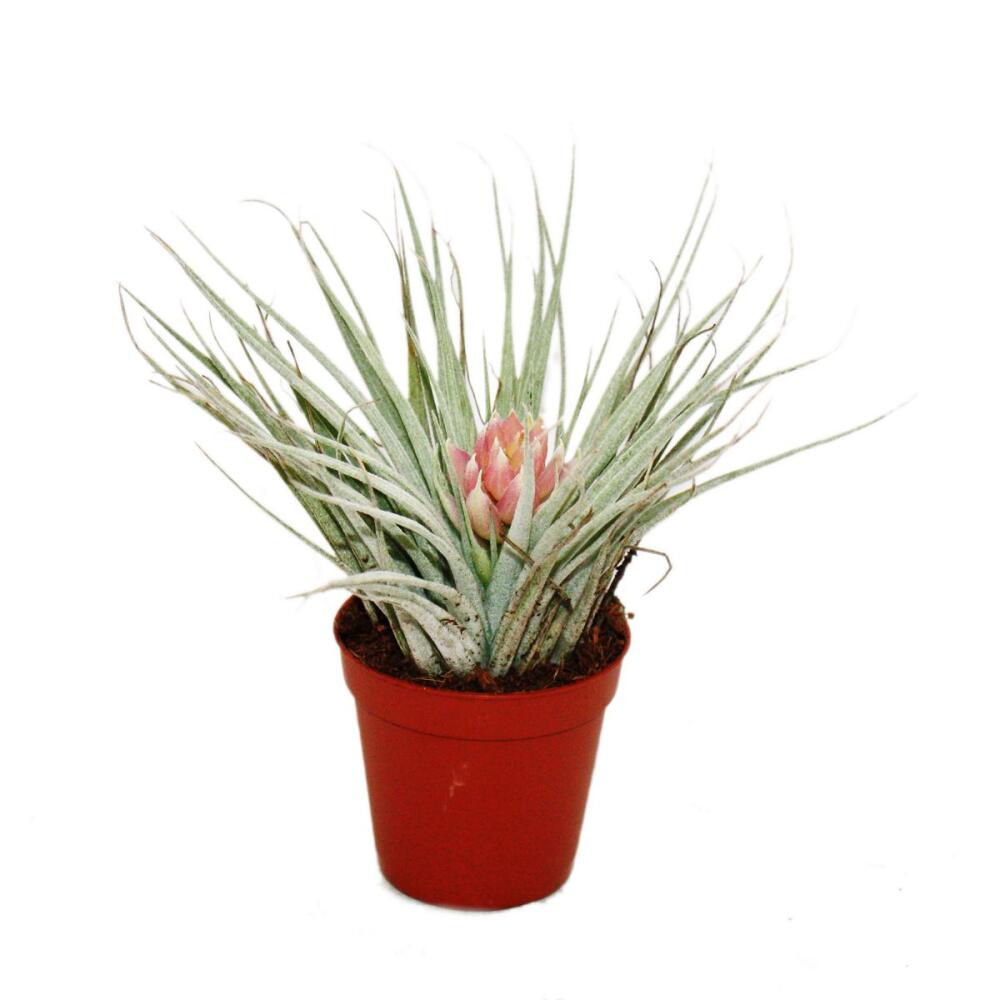
Many narrow leaves curve outwards from the rosette. Their silvery surface comes from fine scales that can absorb water in tillandsias. This structure belongs to the plant and is not polished off. Cotton Candy is traded as a crossing group from Tillandsia stricta and T. recurvifolia. Different forms circulate under the name, so a particular registered clone identity is not guaranteed. The shown offer has a silvery-green rosette; a vivid pink flower is not artificially added.
The small nursery pot is the delivery form
The offer states a pot of 5.5 cm diameter but no definitive plant height. The scene shows a correspondingly small example. In the original, the rosette stands in loose growing material. Do not therefore pre-emptively pull it from the pot simply because tillandsias are also sold loose. Roots may serve anchorage. With later redesign, the base must remain airy and the plant easily accessible for watering. Dense compost over the rosette base or a continuously moist moss wrapping are unsuitable.
Brightness and air matter equally
A bright spot with filtered daylight is favourable. In hot sun behind glass the small rosette may dry rapidly or scorch. An open surface is better than a tightly closed glass vessel. Warm room conditions without cold draughts ease cultivation. After watering the plant must dry promptly; cold damp air slows this process. A bathroom may suit if it provides enough daylight and air exchange. High humidity alone does not reliably nourish the plant.
Supply leaves without soaking the pot
Use clean low-lime room-temperature water. Thoroughly wet the leaves rather than passing a barely visible mist by them. Afterwards check that the rosette dries completely again. Slightly moisten loose growing material only as needed; the tiny pot does not stand in water. A warm dry room may need more frequent watering than cooler winter. A plant already firmly held in the pot should not be torn out for a bath. In later loose cultivation, short baths followed by thorough draining are a possible method.
Flowers and daughter rosettes belong to the life cycle
At sufficient maturity, coloured bracts and small flowers may appear. Their expression depends on commercial form and cultivation conditions. A rosette generally flowers once, subsequently forming daughter rosettes. Do not discard the mother immediately after flowering while it carries healthy tissue and growing pups. Small offspring may initially remain together. Only carefully separate stronger daughter rosettes. During active growth, occasionally use suitable tillandsia or bromeliad feed very moderately according to the label.
Care for the rosette with a light touch
Do not bend, rub or treat leaves with shine products. Dry lower remnants may be carefully removed if they release without pulling healthy leaves. Soft dark bases and rotten smell call for checking prolonged wetness. Strongly curled dry leaf tips may instead indicate too little water. First assess the whole condition rather than merely spraying more often. For extended absence, plan suitable care: even a small air plant does not live for weeks solely from its decorative spot.
One plant, several views
Good to know
Is Cotton Candy delivered loose?
This offer states a 5.5 cm nursery pot. Care takes this delivery form into account.
Is the silvery coating dust?
Fine scales belong to the plant and support water uptake. They should not be wiped off.
Does every delivery flower pink?
A particular flowering condition is not guaranteed here. The scene shows the green silvery foliage plant.
Must I discard the mother plant after flowering?
No. A healthy mother rosette and growing pups may initially remain together.
Sources and editorial note
- Product and delivery contents: Exotenherz
- Bromeliad Society of Australia: botany and commercial forms
- Royal Horticultural Society: plant and care knowledge
Sources checked: 15 September 2026. Product information and delivery contents follow the linked shop offer. Care has been checked against the stated specialist sources and remains subject to plant condition, position and season.